TLP:CLEAR · Disclosure is not limited.
West Africa: Jihadist Pressure Intensifies Amid Fragmented Security Responses
Time window: Last 1 day · Audience: General analyst · Type: Situation report · DTG: 2026-09-09 19:35Z · Overall confidence: MEDIUM
BLUF
Reporting now supports a likely jihadist surge in the central Sahel, centred on JNIM activity across Mali, Burkina Faso and Niger, with networks extending into northern Benin and Togo. The evidence does not establish a uniform surge across all West Africa, while Nigeria and Cameroon present separate, severe security and humanitarian pressures.
Executive summary
The previous assessment treated a regional jihadist surge as unconfirmed because it lacked approved evidence. New reporting indicates sustained JNIM and Islamic State affiliate activity in the central Sahel, including a February 2026 JNIM offensive, attacks targeting airports in Bamako and Niamey, and networks reaching northern Benin and Togo. Niger combines persistent jihadist threats with an attempted mutiny, the disappearance of journalist Moussa Kaka and restricted access for foreign personnel. In Cameroon, an armed group killed a police officer and kidnapped five teachers in Wum on 8 September 2026. Nigerian casualty and sectarian-targeting claims indicate severe violence but remain contested. Global reporting on attacks against education shows a worsening humanitarian burden, but those figures do not establish a West Africa-specific trend.
Change from previous assessment
The previous brief had no approved evidence and treated the regional jihadist surge as unconfirmed. This run adds reporting on JNIM's February 2026 offensive, its reach into northern Benin and Togo, attacks targeting Bamako and Niamey airports, the 8 September Wum attack and Niger's political-security pressures. The assessment has therefore moved from insufficient to medium overall confidence, with a likely central-Sahel surge added. Nigerian casualty and sectarian-targeting claims remain contested rather than resolved.
Key judgments
- JNIM and Islamic State affiliates are likely sustaining cross-border jihadist activity in Mali, Niger and Burkina Faso, while JNIM networks extend into northern Benin and Togo. Reporting of a coordinated JNIM offensive launched in February 2026 and attacks targeting airports in Bamako and Niamey supports a likely central-Sahel surge, but does not establish a uniform surge across all West Africa. Confidence is medium because the evidence combines major-media and think-tank reporting with lower-reliability blog reporting and lacks consistent incident-level corroboration. (Confidence: medium · ASSESSED)
- I&W: Within 1-3 months, two independent incident reports or datasets attribute new road ambushes, IED attacks, assaults on security posts or airport attacks to JNIM or Islamic State affiliates in at least two of Mali, Burkina Faso, Niger, Benin and Togo. (1-3 months)
- I&W: Within 1-3 months, independent reporting fails to corroborate any new JNIM or Islamic State affiliate attack outside established areas and revises the reported regional scope of the February offensive. (1-3 months)
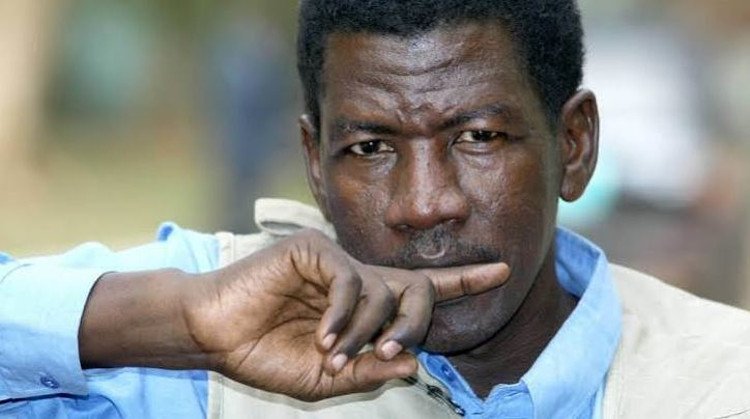
- Niger is likely to remain a high-risk operating environment. Reporting describes jihadist attacks in Tillabéri, Tahoua and Diffa, a Level 4 US travel advisory, a very high British kidnapping warning, and constrained consular and medical support outside Niamey. The attempted mutiny and Moussa Kaka's disappearance add governance uncertainty. Confidence is low because the geographic risk and service-access claims rely mainly on a low-reliability blog, while the political reporting comes from a single NGO account. (Confidence: low · ASSESSED)
- I&W: Within 0-14 days, US or UK travel advice records a new kidnapping or attack in Niamey, Tillabéri, Tahoua or Diffa. (0-14 days)
- I&W: Within 1-3 months, Nigerien authorities establish Moussa Kaka's whereabouts and publish findings on his 31 August disappearance, while the highest-level travel warnings are lowered or access outside Niamey is restored. (1-3 months)
- Armed violence is likely to keep disrupting education in Cameroon's Northwest and Southwest Regions. On 8 September 2026, an unidentified armed group reportedly killed a police officer and kidnapped five teachers at a teacher training centre in Wum. Separatist groups have fought government forces for about 10 years and had announced a school-year lockdown, but the Wum attackers have not been attributed to them. Confidence is medium because the current incident has major-media reporting, while the broader conflict chronology and burden rely on less consistent reporting. (Confidence: medium · ASSESSED)
- I&W: Within 0-14 days, one of the five kidnapped teachers remains in captivity or a second attack or lockdown affects a school or teacher-training facility in Cameroon's Northwest or Southwest Region. (0-14 days)
- I&W: Within 1-3 months, all five teachers are released and no new attack or lockdown affecting an education facility is reported in either region. (1-3 months)
- Reported violence in Nigeria is likely severe in the Middle Belt, but its scale and sectarian pattern remain unresolved. Intersociety reports 3,083 Christians killed and 3,193 abducted between January and August 2026, with most incidents in the Middle Belt, while Nigerian authorities state that terrorists attack Muslims, Christians and people of no faith. Confidence is low because the casualty estimates come from Intersociety reporting and are challenged by a competing official account; the data do not independently establish perpetrator identity or a Christian-specific pattern. (Confidence: low · ASSESSED)
- I&W: Within 1-3 months, independent incident-level data corroborate the reported death and abduction totals, the Middle Belt concentration and a consistent Christian-targeting pattern. (1-3 months)
- I&W: Within 1-3 months, independent reporting materially revises the reported totals or shows most incidents outside the Middle Belt, while documenting comparable attacks on Muslims and people of no faith. (1-3 months)
- Large parts of Burkina Faso and rural Mali are likely to remain permissive operating environments for JNIM and Islamic State affiliates. Reporting places these areas outside effective state control and describes ambushes, IEDs and assaults on security posts, while JNIM has conducted attacks targeting airports in Bamako and Niamey. Confidence is medium because the state-control assessment comes from major-media reporting and the operational pattern is supported by mixed-source analysis rather than a common incident database. (Confidence: medium · ASSESSED)
- I&W: Within 1-3 months, armed groups conduct a new road ambush, IED attack or assault on a security post in rural Mali or Burkina Faso, alongside reported JNIM network activity in northern Benin or Togo. (1-3 months)
- I&W: Within 1-3 months, authorities report sustained restoration of state control in the named rural areas and no new attack using the reported tactics. (1-3 months)
Outlook & scenarios
Continued cross-border attrition (55%)
JNIM and Islamic State affiliates continue road ambushes, IED attacks and assaults on security posts in Mali, Niger and Burkina Faso, while JNIM networks preserve access into northern Benin and Togo. Bamako and Niamey remain vulnerable to strategic attacks. State forces contain individual attacks without restoring control in rural Burkina Faso and Mali.
Fragmented containment (30%)
Security forces reduce the frequency of high-profile attacks around Bamako, Niamey and other strategic sites, but attacks and kidnappings continue in Tillabéri, Tahoua, Diffa, Nigeria's Middle Belt and Cameroon's Northwest Region. Humanitarian and education disruption persists.
Capital shock and southward expansion (15%)
Wildcard: JNIM or an aligned network combines a new attack on a capital or airport with southward expansion into northern Benin or Togo, while a fresh mutiny or unresolved detention in Niamey fragments the security response. This produces cross-border displacement and sharper external travel and consular restrictions.
Recommendations
- Establish a daily 0-14-day collection watch for JNIM and Islamic State affiliate activity in Mali, Burkina Faso, Niger, northern Benin and northern Togo, prioritising road ambushes, IEDs, assaults on security posts and attacks on airports.
- Separate confirmed incidents from attribution claims in Nigeria and Cameroon. Require incident-level corroboration, locations, victim profiles and named perpetrators before treating casualty totals or sectarian targeting claims as established.
- Maintain a dedicated Niger watch covering Niamey, Tillabéri, Tahoua and Diffa, with separate tracking of jihadist attacks, Moussa Kaka's disappearance, the attempted mutiny, foreign security personnel and changes to US and UK travel advice.
- Track attacks on teachers, schools and training centres as early indicators of wider access and displacement pressures in Cameroon's Northwest and Southwest Regions.
- Retain the central-Sahel surge as the lead assessment, but do not generalise it to all West Africa until independent reporting confirms sustained activity in additional countries or establishes a region-wide trend.
Confidence & uncertainty
Overall confidence is medium. High-confidence multilateral reporting supports the scale of global education disruption, while major-media and think-tank reporting corroborate central-Sahel and Cameroon developments. Confidence is lower for Niger's access conditions and Nigeria's casualty totals because much of that reporting comes from blog or NGO material, while the Nigerian government contests the sectarian framing. The set also contains a minor disagreement over whether Cameroon's conflict began in 2016 or 2017.
Intelligence gaps
- [EEI 1.1 · UNCOVERED] Intercepted or captured operational messages, orders, or timelines indicating planned attacks, named targets, or attack windows (dates/times) for specific towns, facilities, or convoys. Recommended collection: SIGINT
- [EEI 1.2 · UNCOVERED] Observed movement of armed groups, armed convoys, or weapons caches toward or within 20-100 km of named population centers, military bases, border crossing points, or major road/rail routes. Recommended collection: IMINT
- [EEI 1.3 · UNCOVERED] Recent local reporting, social‑media posts, or detainee/source statements claiming operational readiness, recruitment of attack teams, or calls for immediate attacks against specific targets. Recommended collection: OSINT
- [EEI 2.1 · PARTIAL] Estimated numbers of fighters (by group) present in defined districts/regions and recent trends (increasing, stable, decreasing) based on ground reports, detainee statements, or biometric registration. Recommended collection: HUMINT
- [EEI 2.2 · UNCOVERED] Identification and geolocation of training camps, safe havens, or arms depots, including imagery of training activity, firing ranges, or stockpiled weapons and explosives. Recommended collection: IMINT
- [EEI 2.3 · UNCOVERED] Seizures, battlefield recoveries, or credible reports describing types and quantities of weapons and munitions in use (e.g., RPGs, mortars, MANPADS, vehicle‑borne IED components) and recent changes in lethality. Recommended collection: LAW_ENFORCEMENT
- [EEI 2.4 · UNCOVERED] Reports of foreign fighter arrivals/departures, external trainers or advisors present, or documented external technical assistance (IED construction, communications encryption) to named groups. Recommended collection: SIGINT
- [EEI 3.1 · UNCOVERED] Documented instances and amounts of extortion/taxation on towns, markets, transporters, or humanitarian agencies, including receipts, lists of taxed goods, and affected road segments. Recommended collection: HUMINT
- [EEI 3.2 · UNCOVERED] Seizures or interdictions showing volumes and origins/destinations of trafficked commodities used for revenue (gold, drugs, charcoal, timber), and intercepted communications detailing smuggling routes or buyers. Recommended collection: LAW_ENFORCEMENT
- [EEI 3.3 · UNCOVERED] Financial intelligence on suspicious cross‑border transfers, known money‑courier movements, or identified donor networks linked to named groups, including remittance patterns and intermediary accounts. Recommended collection: FININT
- [EEI 4.1 · PARTIAL] Changes in government/security force posture: troop deployments/withdrawals by unit and location, declared states of emergency, curfews, checkpoints established or removed, and equipment transfers/arrivals. Recommended collection: OSINT
- [EEI 4.2 · PARTIAL] Evidence of improved or degraded cross‑border security cooperation: joint patrols, information‑sharing agreements, troop movements across borders, or closing/opening of border crossings. Recommended collection: HUMINT
Red cell review: CONCUR WITH COMMENT
TLP:CLEAR