TLP:CLEAR · Disclosure is not limited.
West Africa: Jihadist Pressure, Military Responses and Contested Security Claims
Time window: Last 1 day · Audience: General analyst · Type: Situation report · DTG: 2026-09-09 22:34Z · Overall confidence: MEDIUM
BLUF
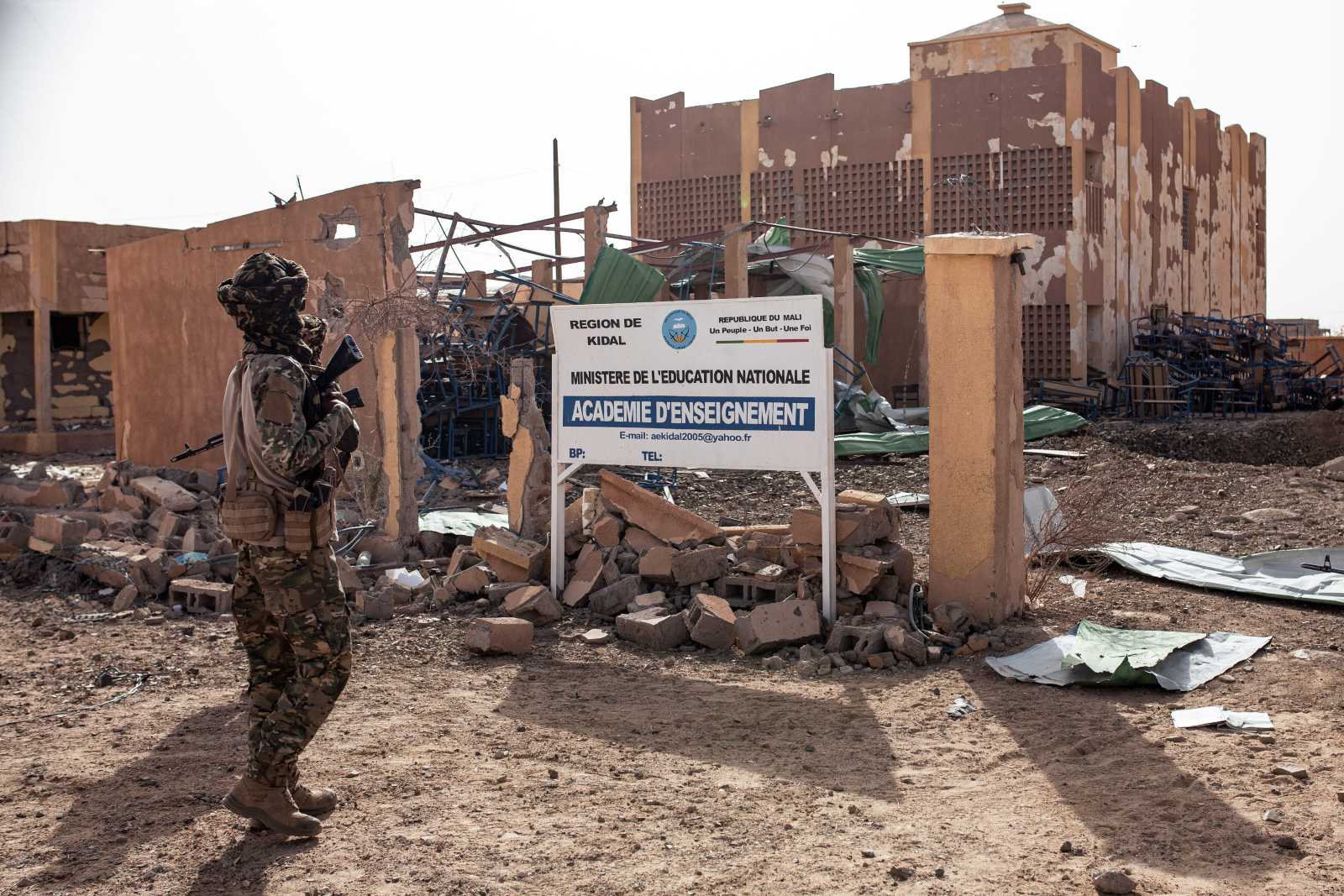
JNIM's reported operating network spans Mali and Burkina Faso into northern Benin and Togo, while the April 2026 JNIM-FLA offensive and the FLA's claim over Kidal show that Mali remains a central pressure point. The evidence supports persistent insecurity, not a high-confidence region-wide surge; Nigeria's reported Boko Haram truce excludes ISWAP, and Niger's military response is linked to contested Russian and French attributions.
Executive summary
The supplied reporting indicates sustained jihadist and armed-group pressure across the western Sahel. JNIM and the Azawad Liberation Front launched a major coordinated offensive in Mali in April 2026, the FLA claimed Kidal, and JNIM networks reportedly extend into northern Benin and Togo. In Niger, an attempted mutiny in Niamey was reportedly contained with support from Russia's Africa Corps, while the Nigerien government accused France without presenting detailed evidence. In Nigeria, a reported ceasefire with Boko Haram excludes ISWAP, which remains engaged in clashes with Boko Haram. The material supports persistent insecurity and continued military responses, but conflicting source quality and the absence of a consistent dated incident series prevent a high-confidence assessment of a new region-wide surge.
Change from previous assessment
Since the 8 September brief, the assessment has shifted from a Nigeria-centred focus to a broader West Africa picture. New reporting adds JNIM's reported reach into northern Benin and Togo, the April 2026 JNIM-FLA offensive and FLA claim over Kidal, the contained Niamey mutiny with reported Africa Corps support, and Moussa Kaka's disappearance. Confidence in a new region-wide surge has not increased because the current material lacks a consistent dated attack series and contains conflicting NASA location data. The prior judgments on sustained ISWAP pressure and the unverified Boko Haram truce remain active.
Key judgments
- Jihadist and allied armed-group pressure is likely to remain high across Mali and Burkina Faso and to persist in northern Benin and Togo over the next 1-3 months. JNIM's reported networks run from Mali and Burkina Faso into northern Benin and Togo, while JNIM and the Azawad Liberation Front launched one of Mali's largest coordinated offensives since 2012 in April 2026 and the FLA claimed Kidal. The material also reports that Mali's Defence Minister Sadio Camara was killed during that offensive. The detailed current reporting is concentrated in one major-media account, so confidence is medium rather than high. (Confidence: medium · ASSESSED)
- I&W: Confirm: Two independent reports document a JNIM attack, network activity or an operation involving the FLA in northern Benin, Togo, Kidal or elsewhere in Mali within 0-14 days. (0-14 days)
- I&W: Break: No JNIM or FLA operation is reported in Mali, Burkina Faso, northern Benin or Togo for 1-3 months, and credible reporting shows that the FLA's Kidal claim was reversed. (1-3 months)
- A new region-wide surge in West Africa is unlikely to be established from the 8-9 September 2026 reporting. The supplied material documents conflict since 2012, the April 2026 Mali offensive and JNIM's cross-border network, but the four NASA FIRMS thermal detections recorded on 9 September had zero high-confidence detections, and the stated bounding box conflicts with the West Africa label. NASA also states that thermal data record heat rather than cause. This is a medium-confidence assessment because the dataset contains a direct geographic contradiction and no consistent dated incident series. (Confidence: medium · ASSESSED)
- I&W: Confirm: Independent, dated reporting records multiple attacks in at least two West African states during the next 0-14 days. (0-14 days)
- I&W: Break: Corrected geolocation shows the NASA FIRMS detections were outside West Africa, or no additional incident series emerges over 1-3 months. (1-3 months)
- ISWAP is likely to sustain operational pressure around Lake Chad and in northeastern Borno over the next 1-3 months, while the reported Boko Haram ceasefire is unlikely to reduce the wider threat. ISWAP is excluded from the reported agreement and Boko Haram-ISWAP clashes have continued. The ceasefire is reported by sources with contacts among Boko Haram members and conflicts with the Nigerian government's public rejection of negotiations. Confidence is medium because the ISWAP exclusion and inter-group clashes are sourced reporting, but the ceasefire's existence and extension are not publicly confirmed. (Confidence: medium · ASSESSED)
- I&W: Confirm: A dated ISWAP attack on a Nigerian military or civilian target is reported in Lake Chad or northeastern Borno within 0-14 days. (0-14 days)
- I&W: Break: Nigeria and Boko Haram publicly confirm an extension that includes ISWAP, followed by no reported ISWAP incident in Lake Chad or northeastern Borno for 1-3 months. (1-3 months)
- Nigeria is likely to continue a dual-track response of military expansion and reported engagement with Boko Haram over the next 1-3 months. President Bola Tinubu's plan calls for 30,000 recruits and four additional divisions; reporting says the Office of the National Security Adviser and the Department of State Services led talks; and sources report a 40-day extension after the release of 360 civilians from Ngoshe. The government publicly rejects negotiations, so the engagement track is contested and confidence is medium. (Confidence: medium · ASSESSED)
- I&W: Confirm: Nigeria publishes evidence of recruitment toward the 30,000-person target, activates one of the four additional divisions, or confirms further ONSA and DSS engagement with Boko Haram within 1-3 months. (1-3 months)
- I&W: Break: Abuja formally cancels the reported engagement track and the 40-day extension is not confirmed by either the Nigerian government or Boko Haram-linked sources. (0-14 days)
- Niger is likely to retain reliance on Russian security support in Niamey over the next 1-3 months, but the foreign role in the attempted mutiny will remain unresolved. The supplied reporting says Russia's Africa Corps helped contain the mutiny and Russian personnel helped loyalist forces regain a strategic airbase; Niger's government accused France without presenting detailed evidence. These are competing, partly unverified attributions from a single NGO account, so confidence is low. (Confidence: low · ASSESSED)
- I&W: Confirm: Additional Russia's Africa Corps personnel or Russian security support at the strategic airbase in Niamey is publicly reported within 0-14 days. (0-14 days)
- I&W: Break: An independent inquiry presents evidence that neither Russian personnel nor Africa Corps supported loyalist forces, or credibly establishes French involvement in the mutiny. (1-3 months)
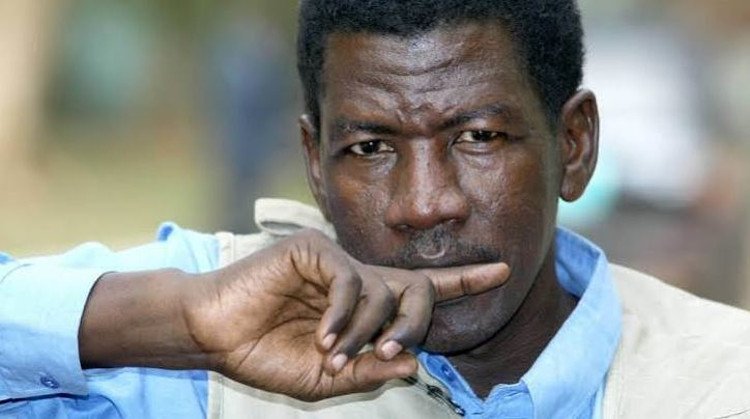
- Niger's domestic security and information environment is likely to remain under pressure over the next 1-3 months, and kidnapping risk is likely to remain a concern even in Niamey. Journalist Moussa Kaka has been missing since leaving the Radio Télévision Saraounia offices in Niamey at about 19:00 on 31 August 2026; Reporters Without Borders has called for an investigation; and US reporting warns of heightened kidnapping risk in the capital. Confidence is low because the kidnapping and travel-risk reporting comes primarily from a low-reliability blog, while the Kaka reporting comes from a single NGO account. (Confidence: low · ASSESSED)
- I&W: Confirm: Nigerien authorities publish Moussa Kaka's whereabouts or announce a formal investigation into his disappearance within 0-14 days. (0-14 days)
- I&W: Break: Kaka is located and released, and US authorities withdraw the warning that kidnapping risk extends to Niamey over the next 1-3 months. (1-3 months)
Outlook & scenarios
Persistent JNIM and FLA pressure across the western Sahel (55%)
JNIM maintains pressure from Mali and Burkina Faso into northern Benin and Togo, while the FLA remains active around Kidal. National governments increase military activity without producing evidence of a new region-wide surge. Nigeria continues army expansion while ISWAP remains outside the Boko Haram channel.
Nigeria contains Boko Haram activity but not ISWAP (45%)
The reported Boko Haram truce is extended for 40 days and remains associated with the release of civilians from Ngoshe. ISWAP continues operating around Lake Chad and northeastern Borno, leaving Nigeria with a partial security gain and a continuing military requirement.
Niger consolidates a Russian-supported security posture (30%)
Nigerien authorities retain control of the Niamey airbase and deepen operational reliance on Russia's Africa Corps. The government continues to attribute the mutiny to foreign interference, while the disappearance of Moussa Kaka remains unresolved and pressure on the information environment persists.
Wildcard: repeat of an April-style coordinated offensive (10%)
JNIM and the FLA mount another coordinated offensive affecting Kidal and sites around Bamako, while ISWAP exploits the continuing rivalry among jihadist groups in northeastern Nigeria. This would sharply raise pressure on governments already relying on expanded military responses, but the supplied evidence does not establish that such an offensive is imminent.
Recommendations
- Prioritise 0-14 day collection on JNIM activity along the Mali-Burkina Faso corridor into northern Benin and Togo. Separate JNIM reporting from FLA activity around Kidal and record whether the two groups operate jointly.
- Treat the Boko Haram ceasefire and its reported 40-day extension as unconfirmed. Seek separate confirmation from Nigerian authorities, the Office of the National Security Adviser, the Department of State Services and Boko Haram-linked contacts, while maintaining a separate incident log for ISWAP in Lake Chad and northeastern Borno.
- Require two-source confirmation before attributing the Niamey mutiny to France or treating Russia's Africa Corps support as established. Track Africa Corps activity, the strategic airbase in Niamey, Nigerien official statements and any independent inquiry.
- Do not use the NASA FIRMS detections as evidence of attacks in West Africa until the stated coordinates are reconciled with the regional label. Record thermal detections separately from confirmed security incidents.
- For US personnel and travel analysis, retain the Level 4 Niger risk posture as the baseline, treat Niamey as exposed to kidnapping risk, and plan around consular services that are often limited to the capital region.
- Track Moussa Kaka's whereabouts and any Nigerien investigation as an indicator of the security authorities' handling of dissent and media activity. Reassess the domestic stability judgment if authorities publish a verified account of his disappearance or if further journalist detentions are reported.
Confidence & uncertainty
Overall confidence is medium. The assessment has several high-confidence elements from official or major-media reporting, including JNIM's reported geographic reach, the April 2026 Mali offensive and the NASA FIRMS data caveat. Confidence is reduced by single-source reporting on the Boko Haram ceasefire, competing accounts of the Niamey mutiny, low-reliability reporting on Niger travel risks and the contradiction between NASA's West Africa label and its stated coordinates. The supplied material also lacks a consistent, independently corroborated incident series for 8-9 September 2026.
Intelligence gaps
- [EEI 1.1 · UNCOVERED] Recent jihadist attack incidents in the last 72 hours: exact locations (GPS or nearest town), date/time, target type (market, military base, convoy, village, border post), weapon systems used, and reported casualty counts. Recommended collection: open source/social_media
- [EEI 1.2 · PARTIAL] Observed jihadist force movements and posture within 100 km of major towns or critical infrastructure: convoy sightings, checkpoints established/removed, concentrations of fighters, and annotated route preparations. Recommended collection: aerial ISR/imagery
- [EEI 1.3 · PARTIAL] Host-nation and partner military defensive measures near population centers and key infrastructure: troop redeployments, new checkpoints/curfews, roadblocks, air sortie launches, and activation of rapid reaction units (locations and unit IDs if available). Recommended collection: military liaison/satellite
- [EEI 1.4 · UNCOVERED] Humanitarian indicators of imminent threat to civilians: sudden internal displacement flows or mass movements within 72 hours, shelter/IDP site openings, and major road closures affecting civilian evacuation routes. Recommended collection: humanitarian/NGO
- [EEI 2.1 · UNCOVERED] Reports or imagery confirming weapons and materiel holdings: number and types of heavy weapons observed or seized (mortars, artillery, technicals, IED caches, MANPADS), locations of caches, and recent rearmament deliveries. Recommended collection: imagery/HUMINT
- [EEI 2.2 · UNCOVERED] Active recruitment and propaganda indicators: new recruitment messages/accounts, numbers of claimed/new recruits by region, youth/ethnic group targeting, and physical recruitment events or forced conscriptions. Recommended collection: social_media/HUMINT
- [EEI 2.3 · PARTIAL] Cross-border operational indicators: seizures or sightings of convoys crossing borders, capture/abandonment of border posts, patterns of fighters moving between neighboring countries, and use of transnational smuggling routes. Recommended collection: border_patrol/satellite
- [EEI 2.4 · UNCOVERED] Financing and logistics flows that sustain operations: recent seizures of cash/drugs/minerals, transactions or remittances linked to identified networks, and commercial transport companies or ports repeatedly used for shipments to insurgent-held areas. Recommended collection: financial/customs
- [EEI 3.1 · PARTIAL] Force posture and sustainment: foreign and host-nation troop deployments (unit types, strength estimates, bases used), changes in airbase activity (sortie rates, aircraft types, times), and frequency of logistics convoys or resupply flights. Recommended collection: diplomatic/military_reporting/satellite
- [EEI 3.2 · PARTIAL] Combat effectiveness indicators from recent engagements: verified casualty and equipment loss counts for state forces and jihadist units, territory regained or lost after operations, and number of operations meeting objectives versus failures. Recommended collection: open source/military_reports
- [EEI 3.3 · UNCOVERED] Critical sustainment vulnerabilities: reported ammunition/fuel shortages, road/bridge interdictions affecting supply lines, strikes on logistics hubs, and closure rates of key supply routes. Recommended collection: logistics/imagery
Red cell review: CONCUR WITH COMMENT
TLP:CLEAR