TLP:CLEAR · Disclosure is not limited.
West Africa: JNIM and GSIM Pressure, Fragmented Military Response
Time window: Last 1 day · Audience: General analyst · Type: Situation report · DTG: 2026-08-19 15:56Z · Overall confidence: HIGH
BLUF
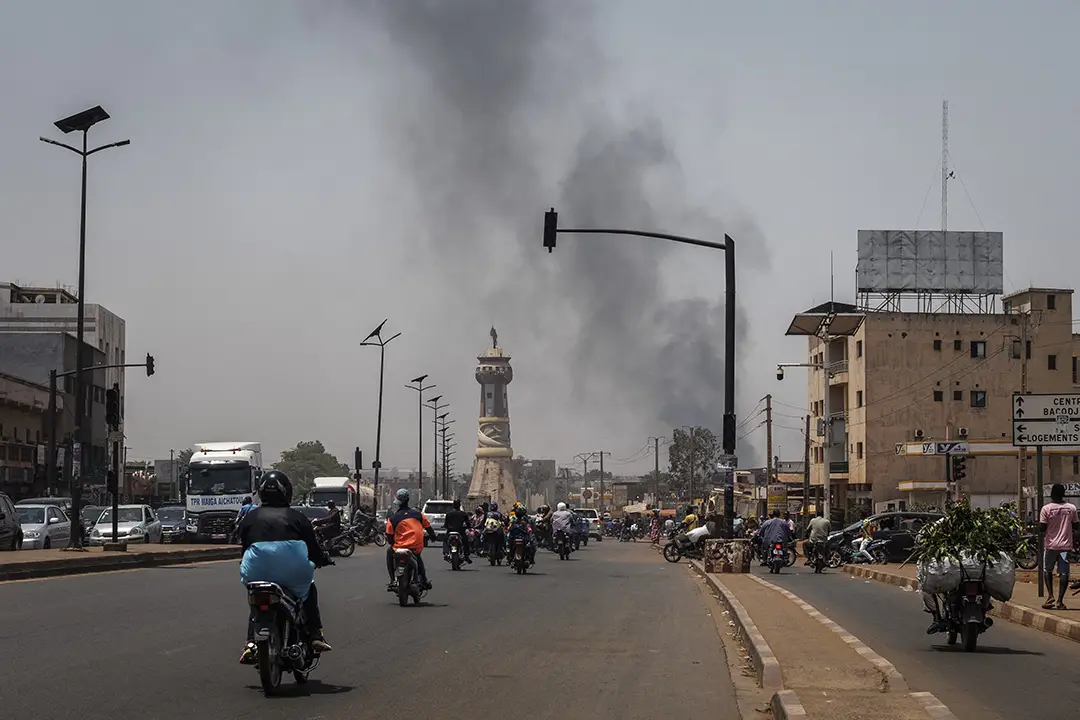
JNIM and GSIM are likely to sustain pressure beyond Mali into Benin and north-western Nigeria while retaining the ability to disrupt Bamako through economic coercion. Mali’s Alliance of Sahelian States partners have not deployed forces under their defence agreement, while Togo and Chad are pursuing separate security responses.
Executive summary
Available reporting indicates a durable and widening threat centred on GSIM and JNIM, each assessed in reporting at about 6,000 active fighters. GSIM and JNIM are both reported to have expanded beyond Mali into Benin and north-western Nigeria, while the economic blockade of Mali is attributed inconsistently to the two groups. Regional responses remain fragmented: the Alliance of Sahelian States has not deployed forces under its defence agreement, Togo has imposed a state of emergency in its northern region, and Chad and France appear to be reviving bilateral military cooperation. The reporting does not establish a verified one-day surge in attacks during this reporting window.
Change from previous assessment
Since the 1 August brief, the assessment now has more specific evidence of GSIM and JNIM activity beyond Mali, including Benin and north-western Nigeria, and clearer evidence that regional defence arrangements have not produced force deployment. The response assessment has been refined from general junta entrenchment to a fragmented model involving Togo’s state of emergency and a reported Chad-France military revival. The prior judgment on jihadist battlefield drone use is retired because this run provides no approved West Africa claim supporting it. The prior expectation of elevated violence is retained in narrower form, while confidence in the blockade’s attribution is lowered and the humanitarian trend is assessed as insufficiently supported.
Key judgments
- GSIM and JNIM are very likely to sustain cross-border pressure over the next 1-3 months, including in Benin and north-western Nigeria, while retaining the capacity to impose economic pressure on Mali and Bamako. Reporting places each group at about 6,000 active fighters and attributes an economic blockade of Mali to GSIM in one account and JNIM in another, reducing confidence in the exact attribution. (Confidence: medium · ASSESSED)
- I&W: Confirm: a publicly documented GSIM or JNIM attack or territorial operation occurs in Benin or north-western Nigeria. (0-14 days)
- I&W: Break: credible reporting states that the economic blockade of Mali has ended and attributes no continuing coercive campaign to GSIM or JNIM. (1-3 months)
- Mali’s authorities are likely to face continued difficulty containing the security crisis over the next 1-3 months. JNIM is reported to have driven Malian government forces and Russian mercenaries from northern Mali, while Mali’s Alliance of Sahelian States partners have failed to deploy forces under their regional defence agreement. Analysts nevertheless assess that GSIM’s chances of taking control of Mali remain low without support from competing terrorist groups. (Confidence: medium · ASSESSED)
- I&W: Confirm: Mali’s Alliance of Sahelian States partners announce and execute a force deployment under the regional defence agreement. (0-3 months)
- I&W: Break: Malian government forces and Russian mercenaries re-establish sustained control across northern Mali and report no further territorial setbacks. (1-3 months)
- West African governments are likely to pursue fragmented, security-first responses rather than a unified regional campaign over the next 1-3 months. Togo has declared a state of emergency in its northern region, Chad and France appear to be reviving a military partnership ended in November 2024, the G5 Sahel joint military force was dissolved in 2023, and the Alliance of Sahelian States has not activated its defence agreement. The Chad-France assessment rests on a single medium-reliability report. (Confidence: medium · ASSESSED)
- I&W: Confirm: Togo extends or expands the state of emergency in its northern region, while Chad and France announce a new operational military cooperation measure. (1-3 months)
- I&W: Break: Nigeria and Senegal, with neighbouring states, announce and deploy a coordinated multilateral campaign focused on the Mali border. (1-3 months)
- Confidence in attributing Mali’s economic blockade to one specific group is low. One report identifies GSIM as responsible, while another identifies JNIM, and the approved reporting does not resolve whether the two labels reflect separate operations or inconsistent attribution. (Confidence: low · REPORTED)
- I&W: Confirm: GSIM or JNIM issues a formal, independently corroborated claim of responsibility for the blockade. (0-14 days)
- I&W: Break: authoritative reporting attributes the blockade to an actor other than GSIM or JNIM. (1-3 months)
- It is unlikely that the present evidence alone establishes a current increase in civilian deaths across West Africa. The only quantified humanitarian claim reports that Fulani Terror Groups accounted for 44 per cent of civilian deaths from late 2019 to 2025, but this is low-confidence, single-source local-media reporting and does not establish a 2026 trend. (Confidence: insufficient · ASSESSED)
- I&W: Confirm: two independent high-reliability sources publish matching 2026 civilian fatality totals for Mali, northern Togo or Katsina State. (1-3 months)
- I&W: Break: a high-reliability 2026 casualty series demonstrates a sustained increase in civilian deaths in the named locations. (1-3 months)
Outlook & scenarios
Continued cross-border pressure and fragmented responses (60%)
GSIM and JNIM likely maintain pressure from Mali into Benin and north-western Nigeria, while Bamako remains exposed to economic coercion. Togo maintains its northern state of emergency, and Chad and France continue separate bilateral security cooperation without restoring a region-wide force.
Regional containment effort (25%)
An unlikely but plausible shift is a coordinated effort by Nigeria and Senegal with neighbouring states to counter GSIM and JNIM along Mali’s southern approaches. This scenario requires the Alliance of Sahelian States to move from a stated defence agreement to actual force deployment.
Mali security and regime shock, low-probability high-impact wildcard (15%)
An unlikely, high-impact outcome is that GSIM receives personnel, money and weapons from a national army or support from competing terrorist groups, takes control of Mali and contributes to the fall of the junta that has ruled since 2020. Such an outcome would upend the security dynamic across West Africa.
Recommendations
- Maintain separate analytic records for GSIM and JNIM. Do not merge the two groups or attribute the Mali blockade to one group without independent corroboration.
- Prioritise collection over the next 14 days on Benin, north-western Nigeria, northern Togo, Bamako and northern Mali. Track named-group claims, cross-border operations and evidence of continuing economic disruption around Bamako.
- Monitor the Alliance of Sahelian States for a formal force deployment under its regional defence agreement. Record the participating states, deployment locations and duration of any operation.
- Track Chad-France military contacts for evidence that the reported revival of their partnership has produced operational support, rather than political signalling alone.
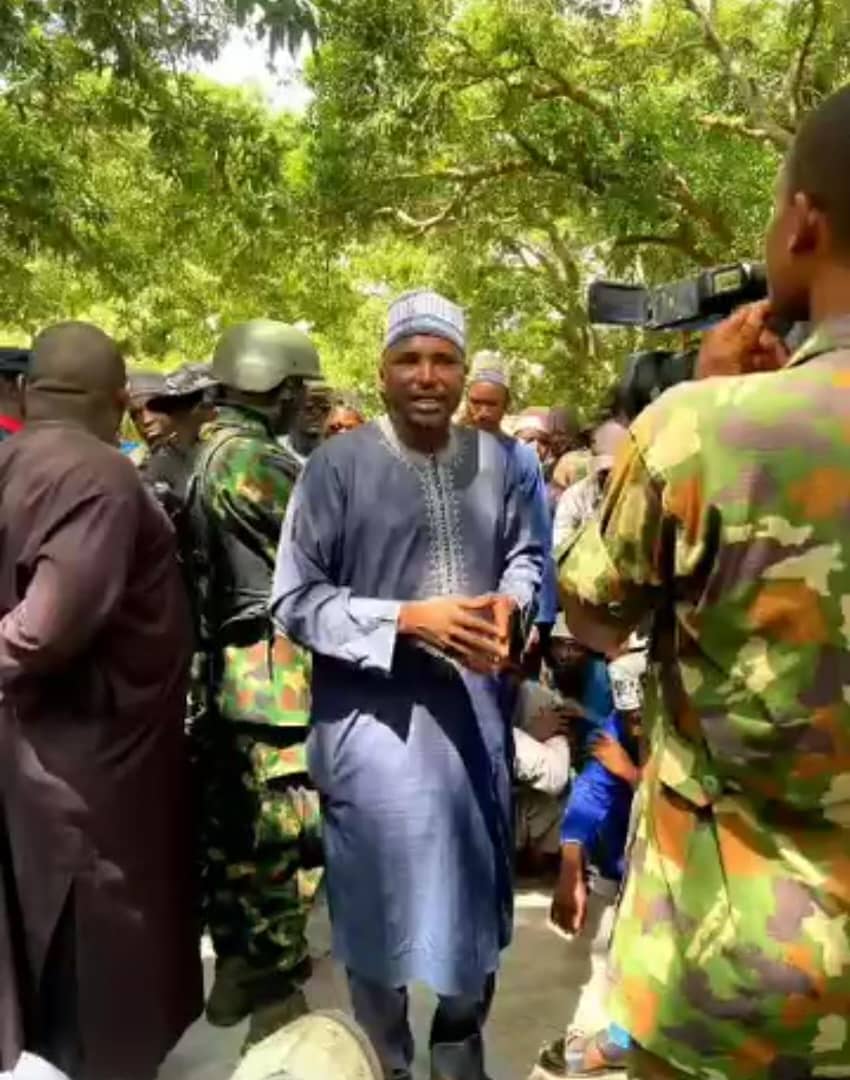
- Treat the 15 August 2026 meeting between Kankara landowners and Ado Aleru as unresolved local-media reporting. Seek confirmation from Nigerian federal authorities, the Katsina State Police Command and the named landowners before using it to assess negotiation policy.
- Do not use the 44 per cent civilian-death figure as a current regional trend. Establish a separate 2026 casualty baseline using at least two independent high-reliability sources.
Confidence & uncertainty
Overall confidence is high for the core factual picture because multiple high-confidence claims from major-media reporting support GSIM and JNIM expansion beyond Mali, the Mali blockade, the failure of Alliance of Sahelian States partners to deploy forces and Togo’s northern state of emergency. The main uncertainties concern the exact attribution of the blockade, the operational substance of Chad-France cooperation and the current humanitarian trend. Those issues are reflected in lower confidence for the relevant judgments.
Intelligence gaps
- [EEI 1.1 · UNCOVERED] Recent jihadist attack incidents in the last 72 hours: exact locations (GPS or nearest town), date/time, target type (market, military base, convoy, village, border post), weapon systems used, and reported casualty counts. Recommended collection: open source/social_media
- [EEI 1.2 · UNCOVERED] Observed jihadist force movements and posture within 100 km of major towns or critical infrastructure: convoy sightings, checkpoints established/removed, concentrations of fighters, and annotated route preparations. Recommended collection: aerial ISR/imagery
- [EEI 1.3 · PARTIAL] Host-nation and partner military defensive measures near population centers and key infrastructure: troop redeployments, new checkpoints/curfews, roadblocks, air sortie launches, and activation of rapid reaction units (locations and unit IDs if available). Recommended collection: military liaison/satellite
- [EEI 1.4 · PARTIAL] Humanitarian indicators of imminent threat to civilians: sudden internal displacement flows or mass movements within 72 hours, shelter/IDP site openings, and major road closures affecting civilian evacuation routes. Recommended collection: humanitarian/NGO
- [EEI 2.1 · UNCOVERED] Reports or imagery confirming weapons and materiel holdings: number and types of heavy weapons observed or seized (mortars, artillery, technicals, IED caches, MANPADS), locations of caches, and recent rearmament deliveries. Recommended collection: imagery/HUMINT
- [EEI 2.2 · UNCOVERED] Active recruitment and propaganda indicators: new recruitment messages/accounts, numbers of claimed/new recruits by region, youth/ethnic group targeting, and physical recruitment events or forced conscriptions. Recommended collection: social_media/HUMINT
- [EEI 2.3 · PARTIAL] Cross-border operational indicators: seizures or sightings of convoys crossing borders, capture/abandonment of border posts, patterns of fighters moving between neighboring countries, and use of transnational smuggling routes. Recommended collection: border_patrol/satellite
- [EEI 2.4 · UNCOVERED] Financing and logistics flows that sustain operations: recent seizures of cash/drugs/minerals, transactions or remittances linked to identified networks, and commercial transport companies or ports repeatedly used for shipments to insurgent-held areas. Recommended collection: financial/customs
- [EEI 3.1 · PARTIAL] Force posture and sustainment: foreign and host-nation troop deployments (unit types, strength estimates, bases used), changes in airbase activity (sortie rates, aircraft types, times), and frequency of logistics convoys or resupply flights. Recommended collection: diplomatic/military_reporting/satellite
- [EEI 3.2 · PARTIAL] Combat effectiveness indicators from recent engagements: verified casualty and equipment loss counts for state forces and jihadist units, territory regained or lost after operations, and number of operations meeting objectives versus failures. Recommended collection: open source/military_reports
- [EEI 3.3 · PARTIAL] Critical sustainment vulnerabilities: reported ammunition/fuel shortages, road/bridge interdictions affecting supply lines, strikes on logistics hubs, and closure rates of key supply routes. Recommended collection: logistics/imagery
Cited sources
[1] adf-magazine.com · Un régime terroriste au Mali compromettrait la région (B) · sha256:0e9dac9d98f3 [2] adf-magazine.com · Terrorist Rule in Mali Would Upend Region (B) · sha256:f14da53baf47 [3] bfmtv.com · Deux ressortissants français, des "réalisateurs" travaillant "pour une société de production", détenus au Togo (A) · sha256:7079c27fc1ba [4] news24.com · Chad’s quiet return to French military support (B) · sha256:41cf24d3125a [5] Truth Nigeria · Another Fulani Kingpin Plays the Victim in ‘Peace’ Negotiations in Katsina State - Truth Nigeria (D) · sha256:8587d57518c5
Source content hashes were computed at collection time; the cited text is preserved unmodified for the life of this product.
Red cell review: CONCUR WITH COMMENT
TLP:CLEAR