TLP:CLEAR · Disclosure is not limited.
West Africa: JNIM Multi‑Site Strikes in Mali and Cross‑Border Reach as Lake Chad Violence Persists
Time window: Last 1 day · Audience: General analyst · Type: Situation report · DTG: 2026-07-05 12:29Z · Overall confidence: LOW
BLUF
JNIM and allied Tuareg rebels pressed multi‑site attacks in Mali on 4 July, while a JNIM‑claimed strike in Niamey signals cross‑border reach. Côte d’Ivoire’s north remains at risk despite no recent attacks, and violence across the Lake Chad Basin, including Taraba State, Nigeria, is trending higher. Reporting on outcomes in Mali is contested and casualty figures remain unclear.
Executive summary
Insurgents struck across Mali on 4 July, including Gao, Anéfis, Aguelhok, Sévaré and Kéniéroba. Residents reported pre‑dawn blasts in Sévaré and continued gunfire and rockets against the Gao army camp, and a Kéniéroba prison attack was reportedly repelled. Local and state‑aligned outlets differ on whether the operation failed or achieved gains. Separately, JNIM claimed on 2 July to have seized at least three military positions in Mali and to have attacked Niamey’s airport and airbase, which Niger says killed 11 security personnel. In Côte d’Ivoire, the government has stood up the Northern Operational Zone and CROAT while the United States maintains a ‘Do Not Travel’ warning for the northern border area; officials note no recent violent extremist incidents. In Nigeria and the wider Lake Chad Basin, recorded incidents and deaths have risen since 2024, with at least 10 people killed in recent Taraba State attacks and civilians arming for self‑protection. Satellite thermal detections rose to 32 across West Africa on 5 July but require corroboration and do not by themselves evidence a surge in jihadist violence.
Change from previous assessment
New details since the 4 July brief include resident accounts of pre‑dawn blasts in Sévaré and continued fire on the Gao army camp, a reported attack on Kéniéroba prison being repelled, and JNIM’s 2 July claims of seizing Malian positions. The JNIM‑claimed strike in Niamey is now paired with a government casualty figure of 11 security personnel. NASA FIRMS detections increased to 32 across West Africa on 5 July but remain non‑diagnostic. In Nigeria, local reporting notes at least 10 killed in Taraba and civilians purchasing blades for self‑defence, aligning with UNHCR data showing an 80 percent rise in recorded incidents since January 2024. Overall confidence is reduced due to contested Mali narratives and limited independent verification.
Key judgments
- JNIM and the Tuareg-led Azawad Liberation Front very likely mounted a coordinated multi-site offensive in Mali on 4 July, striking Gao, Anéfis, Aguelhok, Sévaré and Kéniéroba, with pre‑dawn blasts in Sévaré and continued fire against the Gao army camp; the outcome is contested between claims of failure and reports of ongoing fighting. (Confidence: medium · ASSESSED)
- I&W: Independent geolocated imagery from Sévaré or Gao confirming blast damage or impact points consistent with reported firing. (0-14 days)
- I&W: Verified corrections from Malian authorities and major wires retracting reports of Sévaré blasts and overnight fire at Gao, with no corroborating imagery emerging. (0-14 days)
- JNIM is likely expanding operational reach across the Mali, Niger theatre, claiming to have seized at least three Malian military positions on 2 July and to have struck Niamey’s airport and airbase, which the Nigerien government said killed 11 security personnel. (Confidence: medium · ASSESSED)
- I&W: Credible imagery or official confirmation of damage at Niamey’s Diori Hamani airbase, or another JNIM-claimed strike on a capital-linked target. (1-3 months)
- I&W: Publicised Niger Interior Ministry roll‑up of the Niamey cell followed by a lull in JNIM claims against strategic sites. (1-3 months)
- The Anéfis to Kidal axis is likely to remain contested in the near term, given reports of FLA control of Kidal on 25 April, renewed clashes there on 26 April, and fresh attacks including Anéfis on 4 July. (Confidence: medium · ASSESSED)
- I&W: New geolocated checkpoints or control markers posted by FLA or FAMa along the N18 corridor between Anéfis and Kidal. (0-14 days)
- I&W: Documented escorted civilian convoys operating from Gao to Kidal with official notices reopening the route. (1-3 months)
- In northern Côte d’Ivoire, the cross‑border jihadist threat remains elevated though no recent attacks are recorded: Abidjan’s Northern Operational Zone and CROAT are active, JNIM is identified as the principal threat, and Washington warns against travel to the northern border area. (Confidence: medium · ASSESSED)
- I&W: Ivoirian forces report an interdiction, IED find, or clash in Savanes, Poro or Tchologo along the Burkina Faso frontier. (1-3 months)
- I&W: A downgrade of the U.S. travel advisory for northern Côte d’Ivoire or a visible scale‑back of ZON posture. (3-6 months)
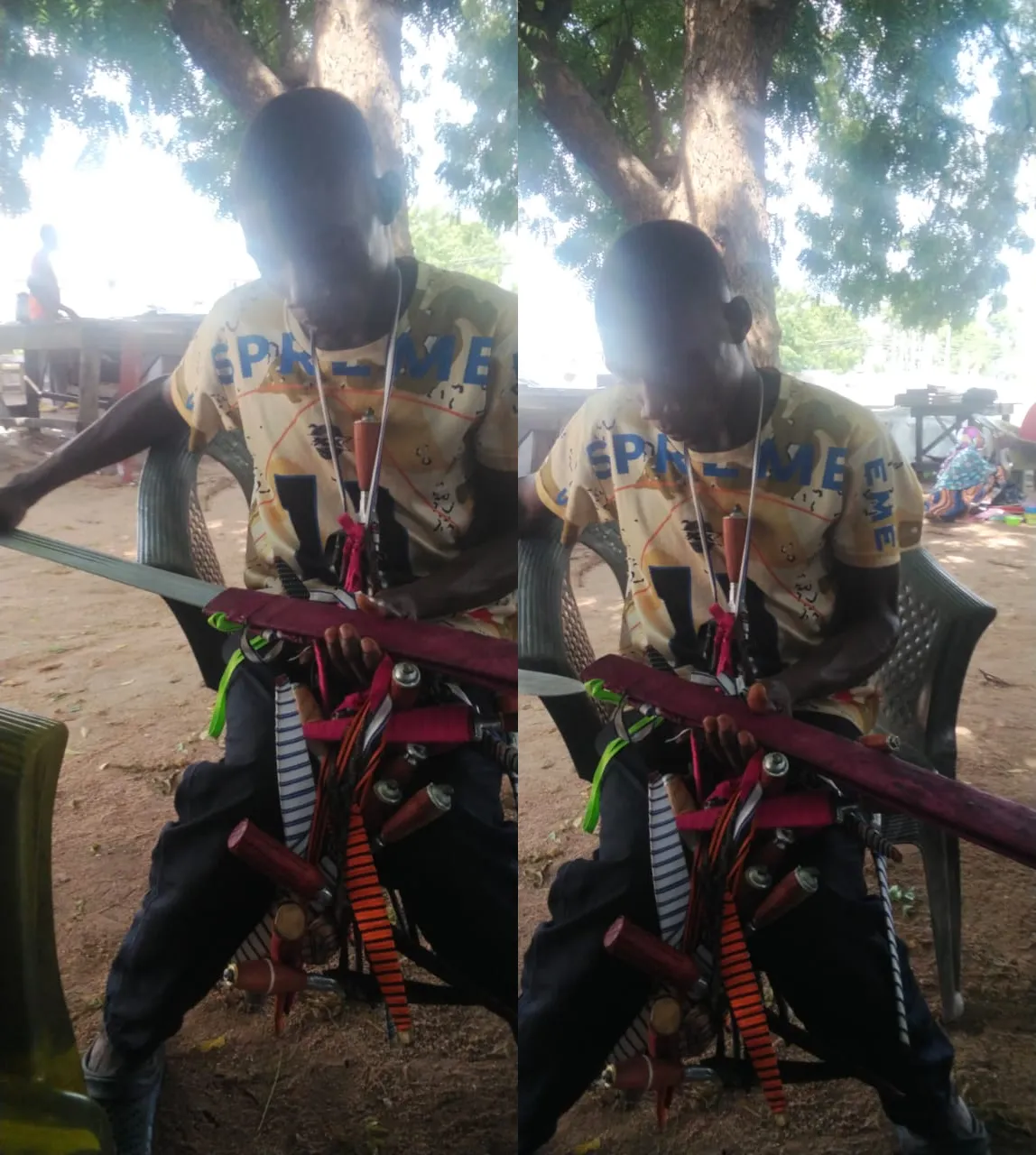
- Violence and humanitarian harm in Nigeria and the wider Lake Chad Basin are likely to persist at elevated levels, with roughly 1,800 incidents and over 5,700 deaths recorded from September 2025 to May 2026 and an 80 percent rise in incidents since January 2024, alongside at least 10 people killed in recent Taraba State attacks and civilians arming for self‑protection. (Confidence: medium · ASSESSED)
- I&W: UNHCR or OCHA updates show sustained month‑on‑month incident counts or new displacement above early‑2026 baselines. (1-3 months)
- I&W: Local reporting of additional 10+ casualty attacks in Taraba or adjacent Benue or Adamawa. (0-14 days)
- Cluster submunitions were very likely present in northern Mali in May 2026, increasing risks to civilians, as geolocated imagery shows unexploded ShOAB‑0.5 bomblets in Tadjmart following Malian Armed Forces airstrike announcements, and Russia’s Africa Corps is reported to support Malian operations. (Confidence: medium · ASSESSED)
- I&W: Additional geolocated photos from Gao, Kidal or Ménaka regions showing identical submunitions or technical analysis of remnants. (1-3 months)
- I&W: Transparent FAMa disclosure and independent verification ruling out cluster munition employment, with no further OSINT finds. (3-6 months)
- Satellite thermal detections, which rose to 32 across West Africa on 5 July with only one high‑confidence hit, are very unlikely on their own to evidence a regionwide surge in jihadist attacks without independent corroboration. (Confidence: high · ASSESSED)
- I&W: Multiple FIRMS points align with geolocated attack damage confirmed by independent reporting the same day. (0-14 days)
- I&W: Local agencies attribute a majority of the 32 anomalies to agricultural burns or wildfires. (0-14 days)
Outlook & scenarios
Sustained insurgent pressure in Mali, Niger corridor (60%)
JNIM and allied Tuareg elements keep tempo with dispersed raids and stand‑off fire on urban garrisons such as Gao and Sévaré, while cells attempt further strikes on strategic facilities in Niger following the Niamey attack. The Anéfis, Kidal axis stays fluid, hindering government logistics and enabling periodic insurgent propaganda claims of base seizures.
Malian junta consolidates with allied support (35%)
Malian forces, assisted by foreign partners, stabilise key nodes, push back along the Anéfis, Kidal corridor and contain urban harassment in Gao and Sévaré. Insurgent claims continue but shift to peripheral targets as garrison hardening and air operations disrupt planning cycles.
Coastal pressure grows on Côte d’Ivoire’s northern border (25%)
JNIM seeks to re‑open cross‑border routes from Burkina Faso, probing Savanes, Poro and Tchologo. Ivoirian forces in the ZON interdict several incursions, but an attempted IED or small‑unit raid tests local defences. Travel advisories remain elevated and cross‑border trade corridors face intermittent disruption.
Recommendations
- Task commercial satellite imagery over Gao and Sévaré within 24-72 hours to validate reported blast and impact sites; prioritise the Gao army camp and western Sévaré.
- Establish a control‑status tracker for the Anéfis, Kidal corridor using geolocated checkpoints, convoy notices and open radio reporting to monitor shifts in the next 30 days.
- Exploit JNIM claims from 2-5 July and cross‑reference with Nigerien and Malian communiqués to confirm or falsify reported base seizures and the Niamey strike details.
- For Côte d’Ivoire, monitor Savanes, Poro and Tchologo for interdiction reports, IED finds and border post activity; set a collection requirement against ZON operational updates.
- Integrate UNHCR Lake Chad Basin incident and displacement datasets into a rolling dashboard and set alert thresholds for spikes in Borno, Yobe, Taraba, Benue and Adamawa.
- Treat FIRMS thermal anomalies strictly as tips; require geolocation and independent reporting before coding any point as a conflict event in analytic products.
- Maintain dual casualty tallies for Mali events where sources conflict; flag single‑source claims and avoid line‑graphing uncorroborated numbers in external‑facing materials.
Confidence & uncertainty
Much of the Mali 4 July reporting comes from a mix of local outlets and state‑aligned narratives that contradict on outcomes, while casualty and battle‑damage figures remain unverified. JNIM’s claims of seizing positions rely on group messaging with limited independent confirmation, and the Niamey casualty number is from a single government statement. Nigeria and Lake Chad Basin statistics are aggregated and lagging, and Taraba State reports are local and recent. NASA FIRMS data are robust but not event‑attributable without corroboration. On balance, corroboration across independent, reliable sources is insufficient to raise confidence above low at this time.
Alternative analysis (red cell)
The record is internally inconsistent and often rests on single-source or actor‑attributed claims that permit alternative interpretations. A more cautious reading is that recent reporting reflects a mix of localized clashes, actor self‑attribution, and ambiguous indicators (thermal detections, unexploded ordnance) rather than clear, sustained expansion or a coordinated multi‑site campaign; resolving this requires independent geospatial, forensic, and authoritative operational confirmation.
Intelligence gaps
- [EEI 1.1 · UNCOVERED] Intercepted or captured operational messages, orders, or timelines indicating planned attacks, named targets, or attack windows (dates/times) for specific towns, facilities, or convoys. Recommended collection: SIGINT
- [EEI 1.2 · PARTIAL] Observed movement of armed groups, armed convoys, or weapons caches toward or within 20–100 km of named population centers, military bases, border crossing points, or major road/rail routes. Recommended collection: IMINT
- [EEI 2.1 · UNCOVERED] Estimated numbers of fighters (by group) present in defined districts/regions and recent trends (increasing, stable, decreasing) based on ground reports, detainee statements, or biometric registration. Recommended collection: HUMINT
- [EEI 2.2 · UNCOVERED] Identification and geolocation of training camps, safe havens, or arms depots, including imagery of training activity, firing ranges, or stockpiled weapons and explosives. Recommended collection: IMINT
- [EEI 2.3 · UNCOVERED] Seizures, battlefield recoveries, or credible reports describing types and quantities of weapons and munitions in use (e.g., RPGs, mortars, MANPADS, vehicle‑borne IED components) and recent changes in lethality. Recommended collection: LAW_ENFORCEMENT
- [EEI 2.4 · UNCOVERED] Reports of foreign fighter arrivals/departures, external trainers or advisors present, or documented external technical assistance (IED construction, communications encryption) to named groups. Recommended collection: SIGINT
- [EEI 3.1 · UNCOVERED] Documented instances and amounts of extortion/taxation on towns, markets, transporters, or humanitarian agencies, including receipts, lists of taxed goods, and affected road segments. Recommended collection: HUMINT
- [EEI 3.2 · UNCOVERED] Seizures or interdictions showing volumes and origins/destinations of trafficked commodities used for revenue (gold, drugs, charcoal, timber), and intercepted communications detailing smuggling routes or buyers. Recommended collection: LAW_ENFORCEMENT
- [EEI 3.3 · UNCOVERED] Financial intelligence on suspicious cross‑border transfers, known money‑courier movements, or identified donor networks linked to named groups, including remittance patterns and intermediary accounts. Recommended collection: FININT
- [EEI 4.2 · UNCOVERED] Evidence of improved or degraded cross‑border security cooperation: joint patrols, information‑sharing agreements, troop movements across borders, or closing/opening of border crossings. Recommended collection: HUMINT
Cited sources
[1] nbcnews.com · Insurgents stage attacks across Mali, army says situation ‘under control’ (A) · sha256:257c108027c7 [2] African Initiative · Une nouvelle attaque coordonnée de terroristes a échoué au Mali (D) · sha256:c892222e97c1 [3] Jerusalem Post · Al-Qaeda affiliate claims responsibility for attacks on military sites in Mali (B) · sha256:bbb339e166e2 [4] Wikipedia · 2026 Mali offensives (B) · sha256:bd795149abdb [5] U.S. Department of State · Cote d'Ivoire Travel Advisory (A) · sha256:d92eb303ef23 [6] youm7.com · العنف يجبر 3.5 مليون شخص على النزوح في تشاد. مفوضية اللاجئين: تدهور حاد في الأوضاع الإنسانية و8.2 مليون شخص يحتاجون لمساعدات إنسانية ومسؤول أممي يحذر من انعدام الأمن وتصاعد الهجمات. ويؤكد: يقوض الاستقرار الهش (B) · sha256:dfe63c56a17f [7] nationalaccordnewspaper.com · Taraba killings: Demand for cutlasses, knives surges as residents seek self-defence (D) · sha256:41dc0381c410 [8] Bellingcat · Banned Russian Submunitions Found After Mali's Military Announces Airstrikes - bellingcat (A) · sha256:6788d3465fd7 [9] NASA FIRMS · NASA FIRMS thermal detections — West Africa (1d) (A) · sha256:57a7055fa48d
Source content hashes were computed at collection time; the cited text is preserved unmodified for the life of this product.
Red cell review: PARTIAL DISSENT
TLP:CLEAR