TLP:CLEAR · Disclosure is not limited.
West Africa: JNIM Pressure and Mali's Military Response
Time window: Last 7 days · Audience: General analyst · Type: Situation report · DTG: 2026-08-21 18:09Z · Overall confidence: MEDIUM
BLUF
JNIM's reported coordinated attacks in Mali in April and July 2026, including attacks in Bamako and Kati and the reported death of Defence Minister Sadio Camara, show that the Malian military government has not contained the threat. The most likely near-term path is continued JNIM pressure, while a direct US operation against JNIM has a roughly even chance of moving beyond reconnaissance discussions.
Executive summary
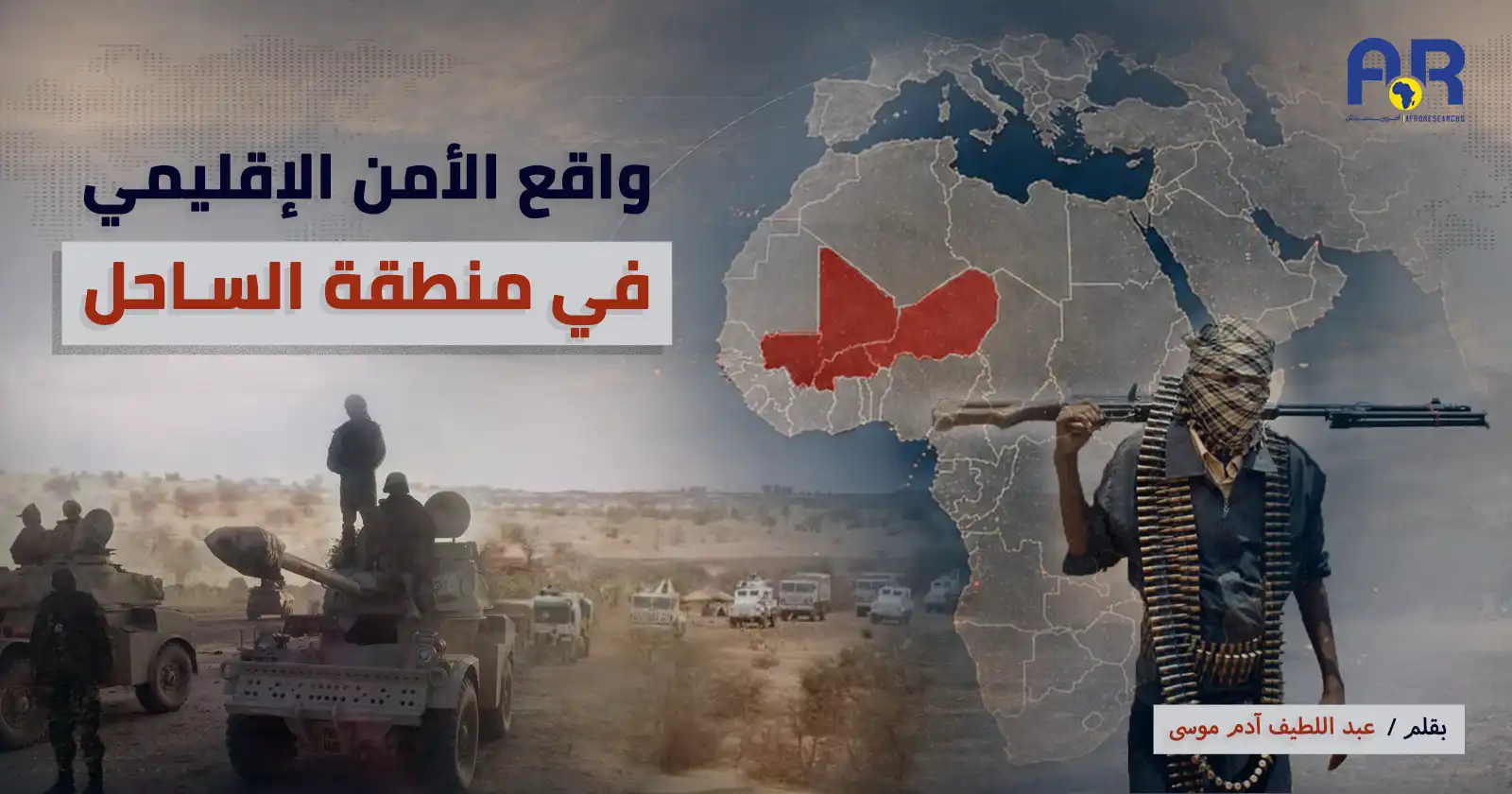
Available reporting shows JNIM conducting coordinated attacks across Mali in April and July 2026, with reported activity in Bourem, Bamako, Kati, Sévaré, Senou and Mopti. The FLA reportedly controlled Kidal by 25 April, while JNIM has maintained a fuel blockade on Bamako since September 2025. Nigeria recorded 1,505 reported kidnapping victims in the first four months of 2026, indicating a separate but concurrent security burden. The United States and Mali were nearing an agreement on reconnaissance flights in March, and the Trump administration is considering a military operation against JNIM. Attribution of the April offensive and the prospects for US implementation remain uncertain.
Key judgments
- We assess that JNIM has demonstrated a high operational reach across Mali. Reporting describes coordinated attacks in April and July 2026, including attacks at Bourem, Bamako, Kati, Sévaré, Senou and Mopti. The April offensive reportedly killed Defence Minister Sadio Camara, while the FLA held Kidal by 25 April. The April reporting assigns roles to both JNIM and Tuareg or FLA forces, so responsibility for individual attacks remains unresolved. This assessment relies on major-media reporting and lacks independent official confirmation of the full sequence. (Confidence: medium · ASSESSED)
- I&W: Confirm: Within 0-14 days, two or more attacks are reported in at least two of Bamako, Kati, Mopti, Sévaré, Senou, Bourem or Kidal and are attributed to JNIM by independent official or local reporting. (0-14 days)
- I&W: Break: Within 1-3 months, no further attacks are reported in those named locations and the Malian military government reports restored control in Kidal. (1-3 months)
- JNIM's fuel blockade on supplies to Bamako is likely to remain a direct pressure tool against the Malian military government, increasing the risk that economic disruption will complicate its security response. Mali accounted for 26.5% of Senegal's total exports in 2024, indicating that disruption to Mali's external supply links would affect a major trade relationship. Current reporting does not establish how effectively the blockade is being enforced in August 2026, which limits confidence. (Confidence: medium · ASSESSED)
- I&W: Confirm: Within 0-14 days, reporting records new fuel restrictions, sustained shortages or disrupted fuel deliveries in Bamako that are attributed to JNIM's blockade. (0-14 days)
- I&W: Break: Within 1-3 months, fuel deliveries to Bamako resume on previously blocked routes and no new blockade reporting appears. (1-3 months)
- There is a roughly even chance that the United States will move from reconnaissance discussions to a military operation against JNIM in Mali within 1-3 months. The Trump administration is reported to be considering such an operation, while the United States and Mali were nearing an agreement on American reconnaissance flights in March 2026. This is a low-confidence assessment because the operation remains under consideration and reporting states that President Trump's announcements do not always get implemented as written. (Confidence: low · ASSESSED)
- I&W: Confirm: Within 0-14 days, US and Malian authorities announce an agreement authorising American reconnaissance flights over Mali or announce a military operation against JNIM. (0-14 days)
- I&W: Break: Within 1-3 months, no reconnaissance agreement or military operation is announced and the Malian military government publicly reiterates partnerships with Russia, Turkey, China or Iran. (1-3 months)
- West African security pressure is likely to persist through the next three months, but the available claims do not support treating Mali's JNIM campaign and Nigeria's kidnapping burden as a single coordinated offensive. US Africa Command warned of increased terrorist activity in the Sahel in late 2025, while Nigeria recorded 1,505 reported kidnapping victims in the first four months of 2026. The different measures and time periods, and the absence of perpetrators in the Nigerian figure, reduce confidence in any region-wide assessment. (Confidence: medium · ASSESSED)
- I&W: Confirm: Within 0-14 days, a new JNIM attack is reported in Mali alongside a new official or major-media report of kidnapping incidents in Nigeria. (0-14 days)
- I&W: Break: Within 1-3 months, no new JNIM attack is reported in Mali and Nigeria records a sustained month-on-month fall in reported kidnapping victims. (1-3 months)
- Mali's security environment is unlikely to stabilise through military action alone. France's Operation Serval and Operation Barkhane did not stop armed-group expansion, while the withdrawal of foreign military presence affected security coordination in the Sahel. JNIM subsequently conducted coordinated attacks across Mali in April and July 2026. The historical comparison is thin and partly single-source, so confidence is low. (Confidence: low · ASSESSED)
- I&W: Confirm: Within 1-3 months, JNIM launches another coordinated attack in Mali despite a stated Malian or foreign military operation. (1-3 months)
- I&W: Break: Within 1-3 months, the Malian military government reports no new JNIM attack and restored security coordination with a named foreign partner. (1-3 months)
Outlook & scenarios
Persistent JNIM pressure without direct US action (50%)
JNIM sustains attacks across Mali and retains the Bamako fuel blockade as leverage. The Malian military government and Russia's Africa Corps continue to describe the attacks as a thwarted coup attempt, while the United States remains at the reconnaissance or planning stage.
US operation against JNIM (25%)
The United States moves from reconnaissance discussions to a military operation against JNIM in Mali. JNIM responds with attacks near Bamako, Kati or other previously targeted locations, forcing the Malian military government to manage both an external operation and an internal security challenge.
Malian and Russian security response hardens (15%)
The Malian military government and Russia's Africa Corps maintain the coup narrative and Mali deepens its security partnerships with Russia, Turkey, China or Iran. FLA control of Kidal and continuing JNIM activity leave the Malian military government facing separate pressures in northern and central Mali.
Low-probability, high-impact compound crisis (10%)
A direct US operation against JNIM coincides with further FLA or Tuareg separatist activity and coordinated attacks near Bamako and Kati. The simultaneous pressures produce a wider crisis for the Malian military government and sharply reduce the prospects for restored security coordination.
Recommendations
- Maintain a daily named-location watchlist for Bamako, Kati, Bourem, Mopti, Sévaré, Senou and Kidal. Record attack date, claimed perpetrator, casualty figures and any reported change in territorial control.
- Separate JNIM, FLA and Tuareg separatist activity in reporting. Do not merge claims of JNIM attacks, FLA control of Kidal and Malian government allegations of a coup attempt without confirming the actor and sequence.
- Treat any US-Mali announcement on reconnaissance flights as distinct from evidence of a military operation. Track official announcements, visible movement from planning to execution and any subsequent reporting of action against JNIM.
- Monitor fuel availability in Bamako and Mali-bound flows through Senegal, using Mali's 26.5% share of Senegal's 2024 exports as a baseline for assessing disruption to the bilateral trade relationship.
- Maintain separate security trend lines for Mali and Nigeria. Record JNIM attacks in Mali separately from Nigeria's reported kidnapping victims, and avoid attributing Nigerian kidnappings to jihadist groups unless the reporting identifies the perpetrators.
Confidence & uncertainty
Overall confidence is medium. The core Mali picture is supported by high-confidence event records from major-media reporting, including the April and July 2026 JNIM operations, while the US Africa Command warning and Nigeria kidnapping data provide broader context. Confidence is reduced because several claims contain single-source elements, the April division of responsibility between JNIM and FLA or Tuareg forces is not fully resolved, the Bamako blockade is dated from September 2025, and a US operation remains only under consideration.
Cited sources
[1] alestiklal.net · Sahara Conflict Parties Meet in Madrid: Is Washington Imposing a Solution on Algeria and Morocco? (B) · sha256:6a54bc347c84 [2] Wikipedia · 2026 Mali offensives (B) · sha256:9be552056d6b [3] alakhbar.info · من "الحليف الحتمي" إلى "العدو الاستعماري": مسار الانهيار في العلاقات الفرنسية-المالية (B) · sha256:04dd2eebf299 [4] gcaptain.com · US Will Impose 'Toughest Sanctions in History' on Iran, Bessent Says (A) · sha256:f0cfb2f74f65 [5] Christianity Today · Nigeria Rescues More Mass Kidnapping Victims but Struggles to Stop Violence (B) · sha256:9f13881870a5 [6] afroawareness.com · واقع الأمن الإقليمي في منطقة الساحل (D) · sha256:e3357f011104
Source content hashes were computed at collection time; the cited text is preserved unmodified for the life of this product.
TLP:CLEAR