TLP:CLEAR · Disclosure is not limited.
West Africa: JNIM Pressure Deepens Mali’s Security Crisis
Time window: Last 1 day · Audience: General analyst · Type: Situation report · DTG: 2026-09-20 00:06Z · Overall confidence: MEDIUM
BLUF
It is very likely that JNIM’s 10 September attack on the Dioura military camp caused a major setback for the Malian army, although the casualty total remains disputed. JNIM and its Tuareg separatist allies are likely to sustain pressure on Mali, while Niger’s security and governance crisis is likely to complicate the US-backed Dasa uranium project and its export planning.
Executive summary
Reporting on 19 September strengthens the assessment that the Dioura attack was a major Malian military loss. Several accounts place Malian fatalities at about 100 or more, report substantial numbers of prisoners, and state that the base remained abandoned eight days after the assault. JNIM’s higher casualty claim remains unverified, and the Malian army has not released an official toll. Separate reporting indicates that selected ISWAP and JAS members used AI tools for technical and military advice during 2023 and 2024, but this evidence is retrospective and does not establish an effect on attacks in the current reporting window. In Niger, jihadist attacks, internal military instability, Russian security reliance and disputes over mining assets are converging with new US financing for the Dasa uranium project.
Change from previous assessment
Since the 18 September 2026 brief, the core assessment that Dioura represented a major Malian military setback is unchanged, while the current reporting provides additional detail on the military police estimate, prisoner numbers and the base’s continued abandonment. Confidence remains medium because the casualty totals are still contested. This brief adds Niger’s US-backed Dasa financing, export-route risk and the interaction with Russian security reliance, jihadist attacks and mining disputes. It also adds a low-confidence assessment of retrospective AI use by ISWAP and JAS. No new corroborated reporting in this run supports a revision of the prior judgements on the Borno attacks.
Key judgments
- It is very likely that JNIM’s 10 September 2026 assault on the Dioura military camp produced a major operational setback for the Malian army. Multiple accounts report approximately 100 or more Malian soldiers killed, roughly 30 wounded and about 30 prisoners, or more than 80 prisoners. Local sources also reported that the base remained abandoned eight days after the attack. JNIM claimed 150 soldiers killed and 93 captured, while earlier reporting placed deaths at 50 to 80 Malian soldiers and five Africa Corps mercenaries. The Malian army has not issued an official toll, so the exact losses remain unresolved. (Confidence: medium · ASSESSED)
- I&W: CONFIRM: Within 0-14 days, the Dioura base remains unoccupied or Malian authorities acknowledge a large casualty and prisoner total consistent with the higher estimates. (0-14 days)
- I&W: BREAK: Within 0-14 days, the Malian army reoccupies Dioura with its equipment intact and publishes an official toll materially below 50 fatalities. (0-14 days)
- It is likely that JNIM and its Tuareg separatist allies will sustain repeated attacks against Mali’s junta, military positions and army movements over the next three months. The assessment rests on the Dioura assault, the mid-July ambush of a convoy travelling from Anefis towards Gao, and a series of attacks since late April that included the capture of Kidal and the killing of Mali’s defence minister. (Confidence: medium · ASSESSED)
- I&W: CONFIRM: Within 0-30 days, JNIM or its Tuareg allies claim another attack on a Malian military position or convoy near Dioura, Kidal, Anefis or Gao, with independent reporting of casualties or equipment losses. (0-30 days)
- I&W: BREAK: Within 30-90 days, Malian forces reoccupy Dioura, restore regular movement along the Anefis-Gao axis and record no comparable attack on the named locations. (1-3 months)
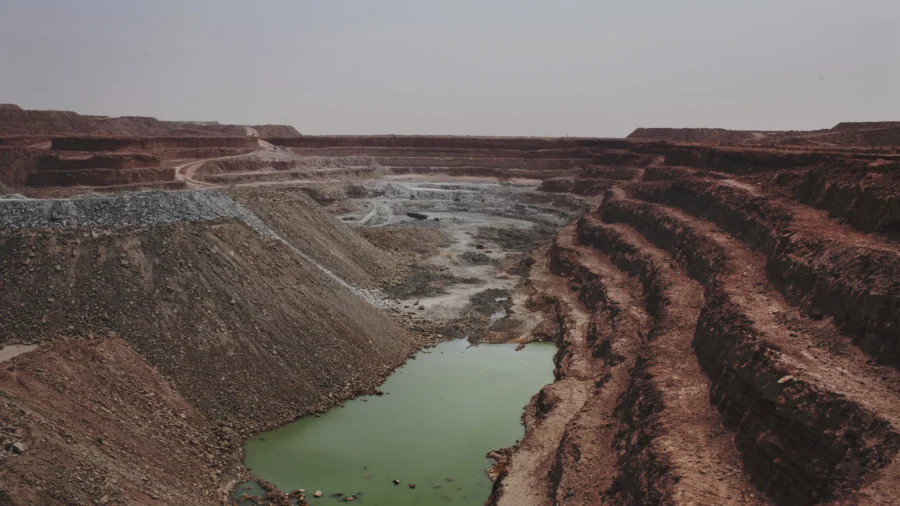
- It is likely that Niger’s security and governance crisis will complicate implementation and export planning for the Dasa uranium project over the next three months. The US government has approved financing of up to $414 million through the US Development Finance Corp, while Global Atomic is exploring an alternative route north through Algeria because coastal transport corridors have become increasingly risky. Niger’s reliance on Russian paramilitaries, repeated jihadist attacks, the recent attack by mutinous soldiers on a military airbase and the presidency, and Orano’s arbitration against the government add unresolved political and security risks. (Confidence: medium · ASSESSED)
- I&W: CONFIRM: Within 0-90 days, Global Atomic announces a route change, a security-related delay or a revised implementation timetable for Dasa. (1-3 months)
- I&W: BREAK: Within 0-90 days, Dasa reaches a defined construction or export milestone using an identified route without a reported security-related delay. (1-3 months)
- It is likely that selected ISWAP and JAS members had organised access to AI chatbots for technical and military advice during 2023 and 2024, including advice linked to explosives. The evidence is thin, retrospective and largely based on interviews with 27 former members reported through one local-media source. It does not establish that AI use caused an attack or materially increased lethality during the current reporting window. (Confidence: low · ASSESSED)
- I&W: CONFIRM: Within 0-90 days, an independent study, additional former fighters or recovered group material corroborates named AI units, supplied laptops or paid chatbot accounts. (1-3 months)
- I&W: BREAK: Within 0-90 days, the Cambridge researchers materially qualify the operational claims or evidence shows that the interviews did not establish actual AI use by ISWAP or JAS members. (1-3 months)
Outlook & scenarios
Sustained JNIM pressure in Mali (65%)
It is likely that JNIM and its Tuareg separatist allies continue attacks against Malian bases and army movements over the next one to three months. Dioura remains abandoned or only partially restored, and the Malian army reports further losses without resolving the casualty dispute.
Malian containment after Dioura (30%)
Malian forces restore access to Dioura, conduct operations against the attackers and prevent another major loss of a military position. JNIM retains the ability to ambush movements, but the pattern of base abandonment does not repeat.
Niger resource-security friction (35%)
The Dasa financing remains approved, but security conditions, route uncertainty and disputes over mining assets delay implementation or force Global Atomic to pursue a more costly northern export route through Algeria.
Wildcard: second major Malian military collapse (10%)
JNIM and its Tuareg allies inflict another Dioura-scale defeat on the Malian army or seize another major position. Mali’s junta responds with intensified operations, while the loss prompts a wider reassessment of external security support and project access in the central Sahel.
Recommendations
- Within 0-14 days, prioritise a Dioura verification package covering the base’s current status, the Malian army’s official casualty and prisoner figures, evidence of recovered or removed weapons, and the timing of any military reoccupation.
- Maintain separate analytic branches for the lower Dioura estimate and the higher estimate. Do not use JNIM’s 150-killed and 93-captured figures as confirmed losses unless independent reporting supports them.
- For the next 30 days, track JNIM and Tuareg activity around Dioura, Kidal, Anefis and Gao, with particular attention to attacks on convoys, abandoned positions and claims carried on JNIM’s Al-Zallaqa platform.
- Treat the AI reporting as an emerging capability indicator rather than evidence of improved attack effectiveness. Seek the original Cambridge methodology, additional interview corroboration and post-attack evidence before elevating the assessment.
- For Niger coverage, maintain a joint security and commercial watchlist for Dasa financing milestones, the proposed Algeria route, coastal corridor access, attacks on government or security facilities, and changes in control of mining assets.
- Use the next three months to test whether external financial support for Dasa is matched by secure transport access and stable government control. Flag any divergence as an indicator of wider project and policy risk.
Confidence & uncertainty
Overall confidence is medium. The Dioura assessment rests on several accounts, including AFP reporting citing security sources, a military police report described by a general staff officer, a local official and local sources observing the abandoned base. Confidence remains below high because the Malian army has not published an official toll, JNIM’s figures are self-reported and earlier casualty estimates conflict. The Niger assessment draws on major-media reporting and company statements but includes forward-looking inferences about project execution. The AI assessment is low confidence because it is retrospective, based on former-member interviews and reported through a single local-media source.
Intelligence gaps
- [EEI 1.1 · UNCOVERED] Intercepted or captured operational messages, orders, or timelines indicating planned attacks, named targets, or attack windows (dates/times) for specific towns, facilities, or convoys. Recommended collection: SIGINT
- [EEI 1.2 · PARTIAL] Observed movement of armed groups, armed convoys, or weapons caches toward or within 20-100 km of named population centers, military bases, border crossing points, or major road/rail routes. Recommended collection: IMINT
- [EEI 1.3 · PARTIAL] Recent local reporting, social‑media posts, or detainee/source statements claiming operational readiness, recruitment of attack teams, or calls for immediate attacks against specific targets. Recommended collection: OSINT
- [EEI 2.1 · UNCOVERED] Estimated numbers of fighters (by group) present in defined districts/regions and recent trends (increasing, stable, decreasing) based on ground reports, detainee statements, or biometric registration. Recommended collection: HUMINT
- [EEI 2.2 · UNCOVERED] Identification and geolocation of training camps, safe havens, or arms depots, including imagery of training activity, firing ranges, or stockpiled weapons and explosives. Recommended collection: IMINT
- [EEI 2.3 · PARTIAL] Seizures, battlefield recoveries, or credible reports describing types and quantities of weapons and munitions in use (e.g., RPGs, mortars, MANPADS, vehicle‑borne IED components) and recent changes in lethality. Recommended collection: LAW_ENFORCEMENT
- [EEI 3.1 · UNCOVERED] Documented instances and amounts of extortion/taxation on towns, markets, transporters, or humanitarian agencies, including receipts, lists of taxed goods, and affected road segments. Recommended collection: HUMINT
- [EEI 3.2 · UNCOVERED] Seizures or interdictions showing volumes and origins/destinations of trafficked commodities used for revenue (gold, drugs, charcoal, timber), and intercepted communications detailing smuggling routes or buyers. Recommended collection: LAW_ENFORCEMENT
- [EEI 3.3 · UNCOVERED] Financial intelligence on suspicious cross‑border transfers, known money‑courier movements, or identified donor networks linked to named groups, including remittance patterns and intermediary accounts. Recommended collection: FININT
- [EEI 4.2 · PARTIAL] Evidence of improved or degraded cross‑border security cooperation: joint patrols, information‑sharing agreements, troop movements across borders, or closing/opening of border crossings. Recommended collection: HUMINT
- [EEI 4.3 · UNCOVERED] Humanitarian indicators: numbers of newly displaced persons by location, reported access denials to aid organizations, closures of clinics/schools, and routes experiencing mass civilian flight. Recommended collection: UN/HUMANITARIAN
- [EEI 4.4 · UNCOVERED] Documented incidents of security‑force abuses or communal reprisals (dates, locations, victims), and reports of local grievances exploited by jihadist recruiters. Recommended collection: LAW_ENFORCEMENT
Cited sources
[1] Standard Media (Standard Digital), republishing AFP reporting · Death toll passes 100 soldiers in Mali attack last week: sources (B) · sha256:c46896e0f885 [2] Standard Media (The Standard, Kenya), carrying AFP reporting · Death toll passes 100 soldiers in Mali attack last week: sources (B) · Sat Sep 19 2026 09:05:15 GMT+0000 (Coordinated Universal Time) · sha256:b35f74c2a0c9 [3] NTD (mb.ntd.com), republished wire content likely from Reuters · US Seals Big Uranium Investment in Niger, Two Years After Troops Left (B) · Sat Sep 19 2026 03:52:48 GMT+0000 (Coordinated Universal Time) · sha256:d861e5f89f3b [4] Nigerian Tribune (Tribune Online) · Boko Haram fighters using AI to build bombs, plan attacks — Study (D) · Sat Sep 19 2026 06:20:34 GMT+0000 (Coordinated Universal Time) · sha256:de316be69f14
Source content hashes were computed at collection time; the cited text is preserved unmodified for the life of this product.
TLP:CLEAR