TLP:CLEAR · Disclosure is not limited.
West Africa: JNIM Pressure Persists, Surge Not Yet Confirmed
Time window: Last 7 days · Audience: General analyst · Type: Situation report · DTG: 2026-08-25 18:11Z · Overall confidence: LOW
BLUF
JNIM is likely to sustain coercive pressure in Mali and continue its reported expansion towards Benin and north-western Nigeria over the next 1-3 months. The supplied evidence does not confirm a region-wide surge during 18-25 August 2026, because current reporting is sparse, actor attribution is contested, and NASA thermal data cannot identify attack activity.
Executive summary
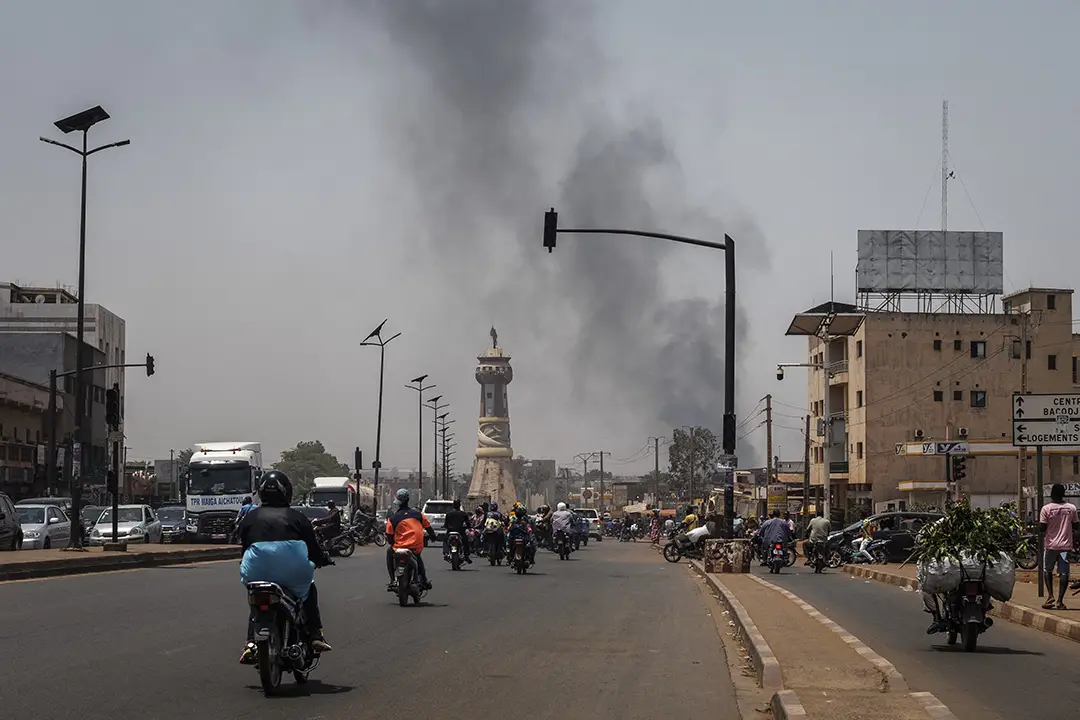
Reporting through 25 August 2026 identifies Mali as the main centre of jihadist pressure. JNIM is reported to have around 6,000 active fighters, imposed an economic blockade that largely crippled Bamako, operated with the Azawad Liberation Front, and begun spreading into Benin and north-western Nigeria. The 25 April 2026 violence involved competing reports of FLA-JNIM coordination and Islamic State Sahel Province activity, while a smaller offensive was reported on 4 July. Evidence for a new region-wide surge during the current reporting window is weak: NASA recorded 71 West African fire or thermal anomalies from 21 to 25 August, with zero high-confidence detections, and states that such signatures do not identify cause.
Key judgments
- JNIM is likely to sustain coercive pressure on Mali and continue its reported expansion towards Benin and north-western Nigeria over the next 1-3 months. JNIM is reported to have around 6,000 active fighters, to have imposed an economic blockade that largely crippled Bamako, and to have operated with the Azawad Liberation Front in northern Mali. The failure of Mali's fellow Alliance of Sahelian States members to deploy forces under their regional defence agreement increases the opportunity for continued JNIM pressure. This is a low-confidence assessment based mainly on medium-confidence major-media reporting, with no independent corroboration of the projected trajectory. (Confidence: low · ASSESSED)
- I&W: Confirm: Within 0-14 days, two independent reports document new JNIM-attributed attacks, religious restrictions, or blockade activity in Mali, Benin, or north-western Nigeria. (0-14 days)
- I&W: Break: Within 1-3 months, Mali's fellow Alliance of Sahelian States members deploy forces under the regional defence agreement and no new JNIM activity is reported outside Mali. (1-3 months)
- The 25 April 2026 violence in Mali is best treated as a multi-actor episode with unresolved attribution. Reporting assigns coordinated attacks across multiple locations to the Azawad Liberation Front and JNIM, places Kidal under FLA control by the end of that day, records the death of Defence Minister Sadio Camara in Kati, and separately attributes attacks under the same cover to Islamic State's Sahel Province. A smaller FLA-JNIM offensive was also reported on 4 July. The overlap supports a multi-actor assessment, but the supplied reporting does not establish command relationships. Confidence is low because the claims are drawn mainly from medium-confidence major-media reporting and contain competing actor attributions. (Confidence: low · ASSESSED)
- I&W: Confirm: Within 0-14 days, independent reporting identifies separate FLA-JNIM and Islamic State Sahel Province operations linked to the 25 April attacks or to a new attack in Mali. (0-14 days)
- I&W: Break: Within 0-14 days, a credible revised account attributes the 25 April attacks to one actor and rejects the reported involvement of the other groups. (0-14 days)
- Islamic State's African threat is likely to remain broad but concentrated in operationally mature theatres, rather than evenly distributed across West Africa. July 2026 reporting placed Islamic State activity in a limited number of mature theatres while retaining a peripheral footprint across Africa. Separate reporting assessed continuous Islamic State operations in at least eight African countries and sustained violence by affiliates in the Democratic Republic of the Congo and Mozambique. Confidence is low because these assessments rely on think-tank reporting and do not provide a corroborated West Africa-specific attack count for the current reporting window. (Confidence: low · ASSESSED)
- I&W: Confirm: Within 1-3 months, independently corroborated Islamic State attacks or claims appear in Mali, the Democratic Republic of the Congo, Mozambique, or additional named African countries. (1-3 months)
- I&W: Break: Within 1-3 months, reporting shows Islamic State activity confined to one established theatre, with no corroborated attacks beyond currently identified locations. (1-3 months)
- The supplied evidence is unlikely to demonstrate a region-wide surge in jihadist attacks during 18-25 August 2026. NASA recorded 71 VIIRS fire or thermal anomalies in West Africa between 21 and 25 August, with zero high-confidence detections; NASA states that thermal signatures record heat but do not identify cause. The detailed Nigeria incidents are dated 6 October 2023 or November 2025, while the Mali operations are dated 25 April and 4 July 2026. This is a low-confidence assessment because it rests partly on the absence of current corroborating reporting and on a mixed, internally inconsistent dataset. (Confidence: low · ASSESSED)
- I&W: Confirm: Within 0-14 days, at least two independent reliable sources verify attacks in Mali, Benin, or north-western Nigeria dated 18-25 August 2026, with casualties and actor attribution. (0-14 days)
- I&W: Break: Within 0-14 days, no independent source corroborates an attack after 18 August and NASA data remains at zero high-confidence thermal detections for the relevant locations. (0-14 days)
Outlook & scenarios
Persistent JNIM pressure, limited regional spread (45%)
There is a roughly even chance that JNIM maintains economic pressure on Bamako, retains operating space in Mali, and makes further attempts to spread into Benin and north-western Nigeria. The Alliance of Sahelian States partners do not deploy forces under their regional defence agreement, leaving the reported gaps in Mali's response unresolved.
Multi-actor escalation in Mali (30%)
It is unlikely that the 25 April pattern repeats at a higher tempo, but a recurrence involving JNIM, the Azawad Liberation Front and Islamic State's Sahel Province would increase pressure on Kidal, Kati and other Malian locations. Conflicting attribution would complicate assessment of whether the groups are coordinating or exploiting one another's operations.
Evidence correction and bounded threat (40%)
There is a roughly even chance that further verification weakens the current surge narrative. NASA's 71 anomalies could remain unattributed to attacks, the detailed Niger State cases could remain limited to incidents dated 6 October 2023 and November 2025, and the reported distinction between bandit activity and jihadist activity could remain unresolved.
JNIM strategic breakthrough in Mali (8%)
It is very unlikely that JNIM takes control of Mali in the next 1-3 months. If the group acquired the manpower, money and weapons of a national military, however, the resulting shift would upend security dynamics across the region.
Recommendations
- Maintain the headline assessment at low confidence and label a region-wide August 2026 surge as unconfirmed until two independent reliable sources verify attacks dated 18-25 August in Mali, Benin, or north-western Nigeria.
- Build a 0-14 day watchlist for JNIM, the Azawad Liberation Front and Islamic State's Sahel Province. Record attack location, date, claimed actor, casualty figures and the source's confidence separately.
- Track whether Mali's fellow Alliance of Sahelian States members deploy forces under the regional defence agreement. Treat a deployment as a break indicator for the assessment that JNIM retains broad operating space in Mali.
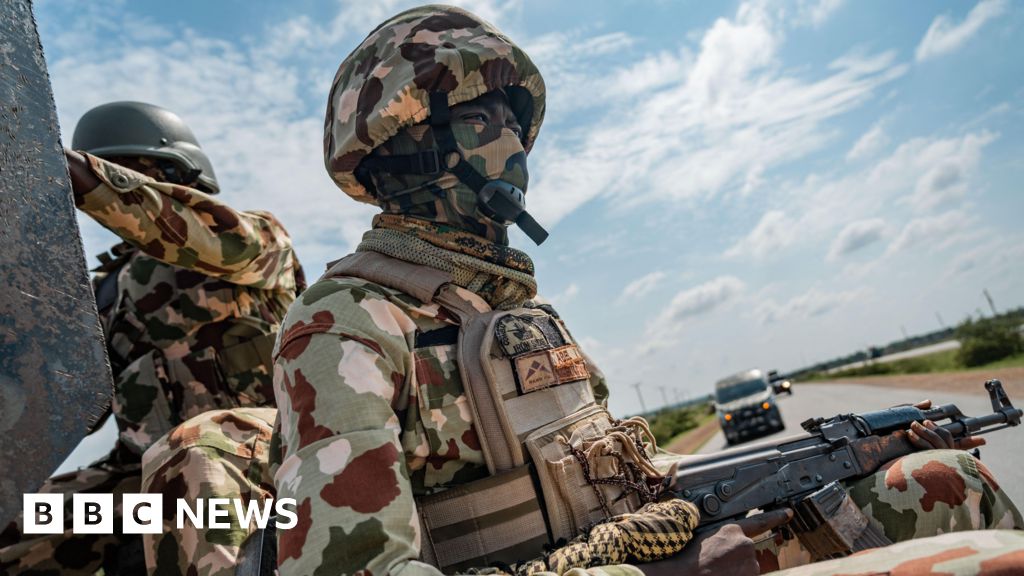
- Separate criminal kidnapping from jihadist activity in Niger State. Record the competing reporting that authorities suspected bandits while local officials reported jihadist fighters imposing religious restrictions.
- Use NASA VIIRS anomalies only as collection cues. Require local reporting, imagery with identifiable damage, or official incident confirmation before counting a thermal anomaly as evidence of a jihadist attack.
- Maintain a dated actor-attribution matrix for the 25 April and 4 July Mali operations. Do not merge FLA-JNIM activity with Islamic State Sahel Province activity until command links or separate operations are independently established.
Confidence & uncertainty
Overall confidence is low. The dataset includes high-reliability multilateral and official-government reporting, but the relevant JNIM and Islamic State assessments rely mainly on medium- or low-confidence major-media and think-tank claims. The Mali reporting contains competing actor attributions, Nigerian casualty and abduction figures are inconsistent, and much of the Nigeria reporting predates the current window. NASA's official thermal data is reliable for detecting heat but does not establish that the anomalies resulted from attacks.
Cited sources
[1] adf-magazine.com · Terrorist Rule in Mali Would Upend Region (B) · sha256:f14da53baf47 [2] Wikipedia · 2026 Mali offensives (B) · sha256:f0fef959417d [3] danielegarofalomonitoring.com · Strategic Threat Outlook | Islamic State in Africa — July 2026. (C) · sha256:9aa376fec132 [4] NASA · NASA FIRMS thermal detections — West Africa (5d) (A) · sha256:bbf826decfc4 [5] bbc.com · Nigeria kidnappings: President Bola Tinubu orders manhunt after victim video uploaded (A) · sha256:4aadb7af3cf5 [6] BBC · Dozens of people abducted in attacks on villages in Nigeria, police say (A) · sha256:68c572cd00f4
Source content hashes were computed at collection time; the cited text is preserved unmodified for the life of this product.
TLP:CLEAR