TLP:CLEAR · Disclosure is not limited.
West Africa: JNIM’s Mali offensive and Niamey strike widen jihadist threat; Côte d’Ivoire hardens the north
Time window: Last 7 days · Audience: General analyst · Type: Situation report · DTG: 2026-07-05 12:10Z · Overall confidence: MEDIUM
BLUF
JNIM-led activity surged this week: a coordinated wave of attacks hit five Malian localities on 2 July and the group claimed an early-morning strike on Niamey’s airport and airbase the same day. Côte d’Ivoire is tightening northern defences as cross-border risk from JNIM persists, while displacement linked to armed groups in the Lake Chad Basin is likely to rise.
Executive summary
Insurgents mounted multi-front attacks across Mali on 2 July, striking Aguelhok, Anefis, Gao, Sevare and Kenieroba from around 0500. JNIM claimed responsibility and said it seized at least three military positions, while the Malian armed forces reported repelling the assaults and restoring control. JNIM also claimed an attack on Niamey’s airport and military airbase that witnesses said began about 0600 and lasted over two hours, with the government reporting 11 security personnel killed. In Côte d’Ivoire, authorities have set up a counterterrorism intelligence centre and a Northern Operational Zone as the United States warns against travel to the northern border region and identifies JNIM as the main threat. UNHCR reports expanding displacement and acute protection needs across the Lake Chad Basin, including Nigerian refugees arriving in Benin. Background data indicate sustained JNIM, IS Sahel rivalry since 2019, and geolocated evidence points to possible cluster munition use in northern Mali, compounding civilian risk.
Key judgments
- It is very likely that Mali experienced a coordinated, multi-front insurgent push on 2 July, with attacks against Aguelhok, Anefis, Gao, Sevare and Kenieroba beginning around 0500 local time; JNIM claimed responsibility and said it seized at least three military positions, while the Malian armed forces said they repelled the assaults and restored control. (Confidence: high · ASSESSED)
- I&W: Official FAMa communiqués or imagery acknowledging temporary loss and recapture of positions in Aguelhok or Anefis, with unit-level details. (0-14 days)
- I&W: Independent geolocated media showing sustained government control at the five named locales without further multi-location attacks. (0-14 days)
- It is likely that JNIM has expanded its operational reach to strategic targets in Niger’s capital, Niamey, as shown by its claim of an early‑morning attack on the airport and military airbase on 2 July that witnesses said began around 0600 and lasted over two hours, with the government reporting 11 security personnel killed. (Confidence: medium · ASSESSED)
- I&W: Niger government damage assessments or operational logs from Niamey’s airport and airbase confirming casualties and disruption during 0600-0800 on 2 July. (0-14 days)
- I&W: Publicly released CCTV or satellite imagery showing no damage or disruption at the airport and airbase during the reported window. (0-14 days)
- Côte d’Ivoire very likely faces a persistent cross‑border jihadist threat in the north, primarily from JNIM and with past AQIM activity, which has prompted Abidjan to establish the Counterterrorism Operational Intelligence Center and a Northern Operational Zone; US advisories warn against travel to the border region and identify JNIM as the main threat. (Confidence: high · ASSESSED)
- I&W: Publicised CROAT- or ZON-led operations disrupting JNIM cells in Poro, Tchologo or Bounkani or along the Burkina Faso frontier. (1-3 months)
- I&W: US travel advisory downgrades for northern Côte d’Ivoire or a quarter without reported cross‑border raids. (3-6 months)
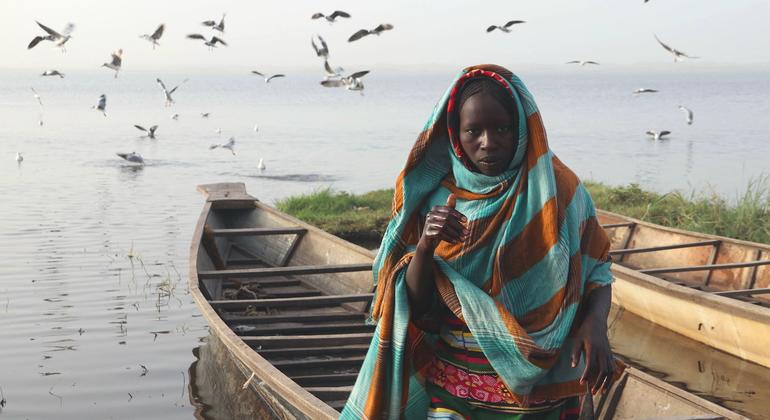
- The security deterioration linked to armed groups in the Lake Chad Basin is likely to intensify displacement and humanitarian need in the near term, including refugees arriving in Benin from Nigeria; UNHCR reports 8.2 million people in need, 77,000 additional cross‑border movements this year, widespread feelings of insecurity, and severe school disruption in Chad’s Lake province. (Confidence: high · ASSESSED)
- I&W: Benin’s asylum registration or UNHCR situational reports show monthly arrivals from Nigeria at or above current levels. (1-3 months)
- I&W: Reported reduction in armed group incidents in north‑west Nigeria correlates with lower new refugee arrivals in Benin. (1-3 months)
- Intra‑jihadist rivalry between JNIM and Islamic State Sahel Province has likely shaped violence patterns since 2019, with hundreds of clashes and more than 2,100 deaths, sustaining operational tempo as groups compete for territory and influence. (Confidence: medium · ASSESSED)
- I&W: Claimed attacks or clashes between JNIM and ISSP in Mali, Burkina Faso or Niger reported by conflict monitors. (1-3 months)
- I&W: Emerging reports of localised non‑aggression arrangements between JNIM and ISSP in shared areas of operation. (1-3 months)
- There is a roughly even chance that cluster munitions have been used in northern Mali since May, with geolocated unexploded Russian‑made submunitions documented at Tadjmart and public condemnation by the Azawad Liberation Front; Mali’s status as a signatory to the Convention on Cluster Munitions elevates legal and reputational risk. (Confidence: medium · ASSESSED)
- I&W: Additional independent, geolocated imagery of submunition remnants consistent with ShOAB‑0.5 around Tadjmart, Anefis or Aguelhok. (0-3 months)
- I&W: On‑site verification by credible investigators ruling out cluster munition use in the reported areas. (1-3 months)
Outlook & scenarios
Sustained JNIM pressure across Mali with opportunistic capital‑area strikes (60%)
JNIM maintains a high operational tempo after 2 July, probing army positions around Gao and Sevare and attempting further symbolic or disruptive strikes on urban targets, while testing capital‑area defences in Niger. The Malian army continues to contest control but absorbs attrition amid contested information space.
Côte d’Ivoire contains northern incursions through CROAT and ZON (50%)
Enhanced intelligence‑led policing and the Northern Operational Zone limit cross‑border raids to small‑scale incidents. The US maintains elevated advisories, but no mass‑casualty attack occurs in the north during the period, reinforcing Abidjan’s prevention posture.
Lake Chad displacement accelerates into Benin (40%)
Armed group activity in north‑west Nigeria persists, driving continued refugee inflows into Benin and deepening protection gaps. Humanitarian needs grow from already high baselines, with pressure on host communities and education systems.
Cluster munition allegations gain traction in Mali (30%)
Further geolocated finds of unexploded submunitions in northern Mali prompt legal and diplomatic scrutiny. All sides leverage the issue in information campaigns, complicating military operations and civilian access.
Recommendations
- Map the 2 July Mali incidents at Aguelhok, Anefis, Gao, Sevare and Kenieroba, linking reported timings to road networks and unit locations; catalogue official and jihadist communiqués to adjudicate contested claims of control.
- Task targeted collection on Niamey’s airport and airbase: review NOTAMs, satellite imagery and verifiable eyewitness media time‑stamped 0600-0800 on 2 July to validate attack scale and effects.
- Establish a Côte d’Ivoire north watch: track CROAT and Northern Operational Zone outputs, JNIM and AQIM footprints along the Burkina Faso border, and incorporate any US advisory changes into risk products for travellers and partners.
- Build a Lake Chad Basin humanitarian‑security dashboard that links incident data in north‑west Nigeria with displacement flows into Benin and protection indicators such as school attendance in Chad’s Lake province.
- Create an evidence repository on alleged cluster munition use in northern Mali, preserving media hashes and geolocation packages to support later verification or accountability processes.
- Prepare an alternatives brief that lays out competing narratives of the 2 July Mali events, including FLA involvement and Malian armed forces’ claims of restored control, to avoid single‑source bias in downstream reporting.
Confidence & uncertainty
Multiple independent and generally reliable sources corroborate the Mali attack wave, including locations, timings and multi‑actor involvement, and JNIM’s claim is counterbalanced by Malian army statements asserting control. The Niamey attack rests on a group claim and witness reporting, with limited independent official detail, which tempers confidence. Côte d’Ivoire risk and mitigation measures are well supported by official advisories and government actions. Lake Chad Basin humanitarian reporting is from UNHCR and is consistent across several indicators. Alleged cluster munition use relies on credible open‑source geolocation but remains limited in scope and unverified by on‑site neutral monitors. On balance, the mix of strong reporting with some contested or single‑source elements supports a medium overall confidence rating.
Alternative analysis (red cell)
While violence on 2 July appears to have occurred in multiple Malian locations, the competing attributions (JNIM claims versus Azawad Liberation Front statements and Malian military denials of territorial loss) and reliance on some lower‑grade sources make the scale and responsibility of the operation uncertain. Likewise, the Niamey airport/base claim currently rests mainly on the group's own claim and witness timing without independent governmental or forensic confirmation. Several judgments aggregate medium/low‑grade reporting into high‑confidence assessments; incident‑level verification (imagery, hospital/operational logs, EOD forensic reports, and independent field reporting) is needed to confirm or refute the key operational and casualty assertions.
Cited sources
[1] NBC News · Insurgents stage attacks across Mali, army says situation ‘under control’ (A) · sha256:257c108027c7 [2] Al Jazeera · Mali’s army says rebels launch new attacks on towns and cities (A) · sha256:b36b8d602831 [3] Jerusalem Post · Al-Qaeda affiliate claims responsibility for attacks on military sites in Mali (B) · sha256:bbb339e166e2 [4] U.S. Department of State · Cote d'Ivoire Travel Advisory (A) · sha256:d92eb303ef23 [5] Haut-Commissariat des Nations Unies pour les réfugiés (HCR) · Bassin du lac Tchad: l'insécurité gagne du terrain (A) · sha256:dbb090f2c1a5 [6] Bellingcat · Banned Russian Submunitions Found After Mali's Military Announces Airstrikes - bellingcat (A) · sha256:6788d3465fd7
Source content hashes were computed at collection time; the cited text is preserved unmodified for the life of this product.
Red cell review: PARTIAL DISSENT
TLP:CLEAR