TLP:CLEAR · Disclosure is not limited.
West Africa: Mali Counter-Insurgency Pressure and Uncertain Spillover
Time window: Last 1 day · Audience: General analyst · Type: Situation report · DTG: 2026-08-20 16:07Z · Overall confidence: MEDIUM
BLUF
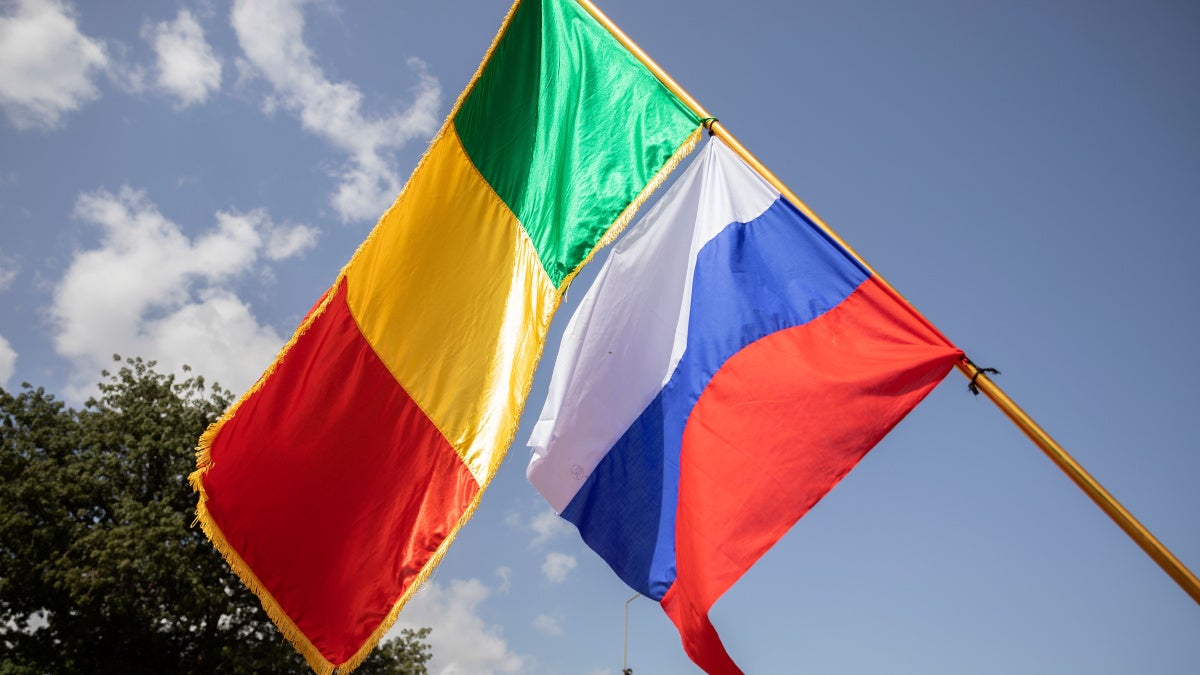
Mali is the clearest operational flashpoint in the current reporting. The 10 July 2026 Africa Corps and Malian military operation in Bombori, Mopti, indicates continued counter-insurgency pressure, but the available evidence does not establish a region-wide increase in jihadist attacks. Mali-Russia security coordination is likely to continue while the operation's command and alleged civilian toll remain contested.
Executive summary
Reporting identifies Bombori in Mali's Mopti region as the main recent operational focus. More than 100 Africa Corps fighters, accompanied by Malian soldiers, reportedly attacked the village on 10 July 2026, which an NGO account says GSIM has controlled since 2017. Other reporting attributes operational leadership to Russian forces and alleges civilian killings, detention, beatings and property destruction, but the accounts differ on command and scale. Mali and Russia have stated that they will continue coordinating on security. A local-media assessment describes a possible threat continuum from northern Mali to the Lake Chad basin, but the current reporting does not independently corroborate attacks across that wider area.
Change from previous assessment
Compared with the 19 August 2026 brief, this assessment lowers confidence in a region-wide jihadist expansion because the current run provides detailed evidence for Bombori but no new independently corroborated attack series outside Mali. It adds a more specific judgment on Mali-Russia operational continuity and civilian-protection risks. Uncertainty over command attribution and casualty reporting remains.
Key judgments
- It is unlikely that the approved reporting currently establishes a region-wide increase in jihadist attacks across West Africa. The strongest operational evidence concerns one 10 July 2026 operation in Bombori, Mopti, while the reported threat continuum from northern Mali to the Lake Chad basin rests on a single local-media assessment rather than independently corroborated incidents. (Confidence: insufficient · ASSESSED)
- I&W: Confirm: two independent, credible reports attribute separate GSIM or JNIM attacks beyond Bombori along the reported northern Mali to Lake Chad basin corridor. (0-14 days)
- I&W: Break: no independently corroborated incident outside Bombori is reported along that corridor. (0-14 days)
- It is likely that Mali and Russia will sustain security coordination and that Africa Corps and Malian soldiers will conduct further local operations in central Mali over the next 1-3 months. This assessment relies on Kremlin-reported commitments to continued coordination and NGO reporting of the Bombori operation, whose operational attribution conflicts between Africa Corps and Russian forces. (Confidence: medium · ASSESSED)
- I&W: Confirm: Mali and Russia issue a further public commitment to security coordination, or Africa Corps and Malian soldiers conduct another named operation in Mopti. (0-14 days)
- I&W: Break: Mali or Russia publicly suspends the security coordination described in the Kremlin account, or no further joint activity is reported. (1-3 months)
- It is likely that the reported 10 July 2026 operation in Bombori will increase civilian-protection and legitimacy risks for Mali and Russia over the next 1-3 months. Reports allege that Africa Corps personnel killed civilians, detained and beat at least 80 men and boys, and burned at least eight homes belonging to Peul families. These details remain low-confidence, rely mainly on NGO reporting, and differ over the number and nature of the alleged abuses. (Confidence: low · ASSESSED)
- I&W: Confirm: an independent multilateral or major-media investigation corroborates civilian deaths, detention or destruction of Peul homes in Bombori. (0-30 days)
- I&W: Break: a documented investigation finds that the reported 10 July allegations did not occur or were materially misattributed. (1-3 months)
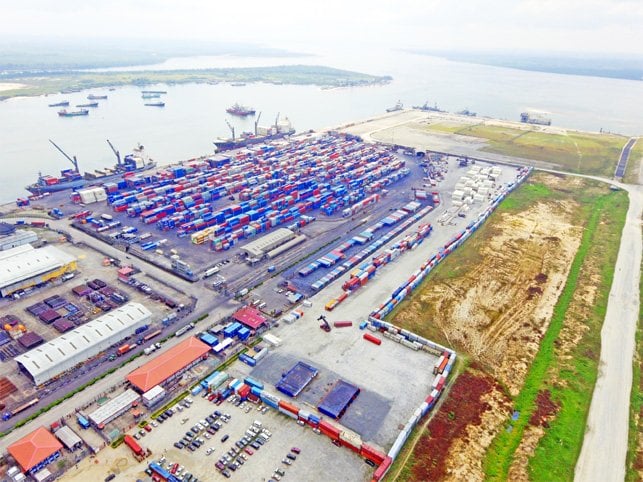
- It is likely that the current West African response pattern will remain fragmented over the next 1-3 months. Mali and Russia are pursuing bilateral security coordination, Nigeria is using the lifting of US Conditions of Entry restrictions to attract shipping lines and strengthen its maritime sector, and political discussion remains separate from operational activity in forums addressing Mali, Niger and Burkina Faso. The evidence does not show an emerging common regional military mechanism. (Confidence: low · ASSESSED)
- I&W: Confirm: Mali-Russia security activity, Nigerian maritime measures and political or diaspora forums continue separately without a joint regional mechanism. (0-14 days)
- I&W: Break: Mali, Niger and Burkina Faso announce a joint command, force deployment or common operation. (1-3 months)
Outlook & scenarios
Localised Mali-Russia counter-insurgency pressure (55%)
This is the likely near-term outcome. Mali and Russia sustain security coordination, and Africa Corps with Malian soldiers conduct additional local operations in central Mali. GSIM's reported control of Bombori remains the main operational reference point, while no independently corroborated attack series beyond Mali emerges over 1-3 months.
Civilian backlash complicates military operations (25%)
Reported civilian killings, detention and destruction in Bombori gain wider attention. Political and diaspora discussions increasingly link security policy to unresolved political grievances. Mali and Russia continue operations, but legitimacy costs and scrutiny of Africa Corps behaviour rise.
Threat-continuum narrative expands without verified spillover (15%)
Security discussions increasingly treat the threat as extending from northern Mali to the Lake Chad basin, drawing on the assessment presented by Seddick Abba and discussions involving Mali, Niger and Burkina Faso. The narrative gains traction without independently verified attacks outside Mali.
Cross-border jihadist expansion and regional alignment (5%)
A very unlikely but high-impact outcome is independently corroborated GSIM or JNIM attacks beyond Mali along the northern Mali to Lake Chad basin corridor. Mali, Niger and Burkina Faso then establish a joint military mechanism, marking a sharp break from the fragmented response pattern.
Recommendations
- Maintain a 0-14 day watch on Bombori and the wider Mopti region. Seek independent confirmation of Africa Corps and Malian unit movements, the operation's command structure and any further security activity.
- Do not upgrade the assessment of a region-wide jihadist surge unless at least two independent, credible reports link separate GSIM or JNIM attacks beyond Bombori to the reported northern Mali to Lake Chad basin corridor.
- Separate the reported civilian-harm allegations from the broader assessment of Mali-Russia security cooperation. Track independent investigations, local testimony and any official Mali or Russian response to the Bombori allegations.
- Monitor public statements and observable activity by Mali and Russia for evidence that their security coordination is becoming more operational, or is being suspended. Record named units, locations and dates rather than relying on general statements about counter-terrorism.
- Track whether Nigeria's lifted Conditions of Entry restrictions produce measurable changes in shipping-line activity and maritime-sector performance. Do not treat improved maritime access as evidence that jihadist activity has declined.
- Retain a separate political-risk line of effort for Mali, Niger and Burkina Faso. Monitor whether diaspora and political discussions produce a named regional mechanism, joint command or force deployment.
Confidence & uncertainty
Overall confidence is medium because the Bombori operation is supported by multiple claims from a high-prior-reliability NGO source, while major-media reporting separately records Mali-Russia commitments to continued security coordination. Confidence is lower on the operation's command, the scale of alleged civilian abuses and the wider regional threat picture. The assessment of a threat continuum beyond Mali rests on a single local-media account, and the approved reporting does not independently corroborate a region-wide attack surge.
Intelligence gaps
- [EEI 1.1 · UNCOVERED] Recent jihadist attack incidents in the last 72 hours: exact locations (GPS or nearest town), date/time, target type (market, military base, convoy, village, border post), weapon systems used, and reported casualty counts. Recommended collection: open source/social_media
- [EEI 1.2 · UNCOVERED] Observed jihadist force movements and posture within 100 km of major towns or critical infrastructure: convoy sightings, checkpoints established/removed, concentrations of fighters, and annotated route preparations. Recommended collection: aerial ISR/imagery
- [EEI 1.3 · UNCOVERED] Host-nation and partner military defensive measures near population centers and key infrastructure: troop redeployments, new checkpoints/curfews, roadblocks, air sortie launches, and activation of rapid reaction units (locations and unit IDs if available). Recommended collection: military liaison/satellite
- [EEI 1.4 · PARTIAL] Humanitarian indicators of imminent threat to civilians: sudden internal displacement flows or mass movements within 72 hours, shelter/IDP site openings, and major road closures affecting civilian evacuation routes. Recommended collection: humanitarian/NGO
- [EEI 2.1 · UNCOVERED] Reports or imagery confirming weapons and materiel holdings: number and types of heavy weapons observed or seized (mortars, artillery, technicals, IED caches, MANPADS), locations of caches, and recent rearmament deliveries. Recommended collection: imagery/HUMINT
- [EEI 2.2 · UNCOVERED] Active recruitment and propaganda indicators: new recruitment messages/accounts, numbers of claimed/new recruits by region, youth/ethnic group targeting, and physical recruitment events or forced conscriptions. Recommended collection: social_media/HUMINT
- [EEI 2.3 · UNCOVERED] Cross-border operational indicators: seizures or sightings of convoys crossing borders, capture/abandonment of border posts, patterns of fighters moving between neighboring countries, and use of transnational smuggling routes. Recommended collection: border_patrol/satellite
- [EEI 2.4 · UNCOVERED] Financing and logistics flows that sustain operations: recent seizures of cash/drugs/minerals, transactions or remittances linked to identified networks, and commercial transport companies or ports repeatedly used for shipments to insurgent-held areas. Recommended collection: financial/customs
- [EEI 3.1 · PARTIAL] Force posture and sustainment: foreign and host-nation troop deployments (unit types, strength estimates, bases used), changes in airbase activity (sortie rates, aircraft types, times), and frequency of logistics convoys or resupply flights. Recommended collection: diplomatic/military_reporting/satellite
- [EEI 3.2 · UNCOVERED] Combat effectiveness indicators from recent engagements: verified casualty and equipment loss counts for state forces and jihadist units, territory regained or lost after operations, and number of operations meeting objectives versus failures. Recommended collection: open source/military_reports
- [EEI 3.3 · UNCOVERED] Critical sustainment vulnerabilities: reported ammunition/fuel shortages, road/bridge interdictions affecting supply lines, strikes on logistics hubs, and closure rates of key supply routes. Recommended collection: logistics/imagery
- [EEI 3.4 · PARTIAL] Political and legal decisions influencing operations: government decrees (states of emergency, mobilization orders), approved cross-border operations or foreign troop agreements, and public statements altering rules of engagement. Recommended collection: diplomatic/government
Cited sources
[1] Human Rights Watch · Mali: L’« Africa Corps », contrôlé par la Russie, a massacré des villageois (B) · sha256:03946ae965cb [2] lemeridional.com · Sahel: le dialogue à l’épreuve des crises (D) · sha256:8eb8fc5ed09d [3] africa.businessinsider.com · Mali initiates high-stakes Putin phone call as Russia reaffirms security partnership amid Sahel militant pressure (B) · sha256:2b0db23fd691 [4] maritime-executive.com · Nigeria Upbeat Over Maritime Competitiveness After US Lifts 12-Year Ban (B) · sha256:57ea5412d295
Source content hashes were computed at collection time; the cited text is preserved unmodified for the life of this product.
TLP:CLEAR