TLP:CLEAR · Disclosure is not limited.
West Africa: Mali fighting intensifies amid enduring Sahel-wide insurgency; border tensions with Mauritania persist
Time window: Last 1 day · Audience: General analyst · Type: Situation report · DTG: 2026-07-17 15:39Z · Overall confidence: MEDIUM
BLUF
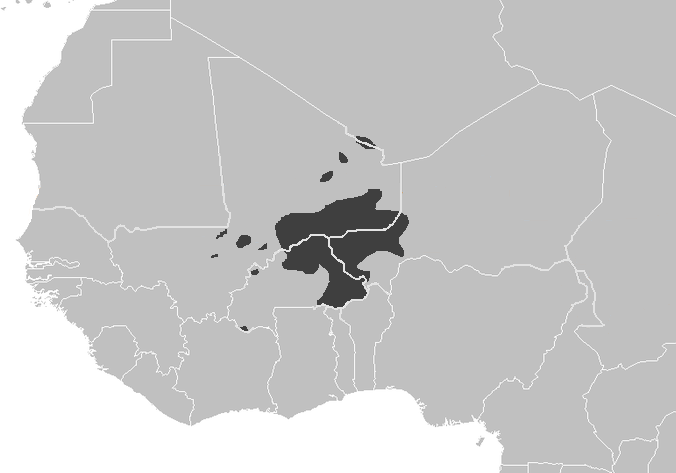
Open sources point to intensified fighting between the Malian army and Islamist insurgents since late 2025, while the Sahel conflict remains regionalised across Mali, Burkina Faso and Nigeria. Evidence of a new region‑wide surge beyond Mali remains limited this cycle, and Mali, Mauritania border conditions appear fragile.
Executive summary
Reporting indicates the Malian army’s campaign against Islamist insurgents has intensified since late 2025. The broader Sahel conflict has been active since 2011, beginning with the 2012 war in Mali and spreading into Burkina Faso by 2015, with Nigeria’s insurgency peaking before a 2015 coalition offensive. Relations on the Mali, Mauritania frontier remain sensitive, with disputed accounts of civilian killings in 2022 and local reporting that cross‑border relations have deteriorated due to the war. Regionally, a series of coups from 2019 in Mali, Niger, Burkina Faso and Guinea underpins governance fragility that likely complicates coordinated counterinsurgency. In Nigeria, experts warn a worsening health workforce crisis threatens national resilience, a concern in a state with a history of jihadist violence.
Change from previous assessment
Initial assessment of this topic.
Key judgments
- It is likely that the conflict in Mali intensified from late 2025, with the Malian army and allied forces increasing operations against Islamist insurgents. (Confidence: medium · REPORTED)
- I&W: A rise in Malian army communiqués and allied messaging detailing expanded operations around Kidal, Gao and Timbuktu. (0-14 days)
- I&W: Independent local reporting of elevated clashes or road closures on main northern corridors. (1-3 months)
- It is very likely that jihadist violence in the Sahel has been regionalised since 2011, originating with the 2012 war in Mali and spilling into Burkina Faso by 2015, while Nigeria’s insurgency peaked before a 2015 coalition offensive. (Confidence: high · REPORTED)
- I&W: Open‑source reporting explicitly linking operational activity between Mali and Burkina Faso border zones. (1-3 months)
- I&W: Official military reporting in Burkina Faso indicating no cross‑border infiltrations from Mali across a full reporting cycle. (1-3 months)
- It is likely that security conditions along the Mali, Mauritania frontier remain fragile, with disputed accounts of cross‑border civilian killings in 2022 and local reporting of strained relations, although attribution and timelines are contested. (Confidence: low · ASSESSED)
- I&W: Fresh public complaints or protests in Hodh El Chargui or adjacent Malian regions alleging detentions or killings of cross‑border herders or traders. (0-14 days)
- I&W: Announcement of a bilateral border security and compensation mechanism, followed by an incident‑free period. (1-3 months)
- Coups since 2019 in Mali, Niger, Burkina Faso and Guinea have likely constrained regional coordination against Islamist militants by weakening governance continuity. (Confidence: medium · ASSESSED)
- I&W: Limited or no new joint announcements on coordinated cross‑border security operations by the military governments. (1-3 months)
- I&W: Public disputes between these governments over force posture or cross‑border rules of engagement. (1-3 months)
- Nigeria’s worsening health workforce attrition very likely poses a serious national risk and will, if unaddressed, compound governance strain in a country with a past peak of jihadist violence before 2015. (Confidence: medium · ASSESSED)
- I&W: Official data or professional associations reporting sustained increases in out‑migration or retirement of Nigerian clinicians. (1-3 months)
- I&W: Introduction of retention incentives or bilateral recruitment curbs and a subsequent stabilisation in vacancy rates. (1-3 months)
Outlook & scenarios
Mali fighting escalates through late Q3 2026 (60%)
The Malian army maintains a higher operational tempo against Islamist insurgents in northern theatres, sustaining frequent clashes and mobility disruptions. Civilian movement along key northern roads is intermittently restricted by combat activity and ad hoc checkpoints.
Border flashpoint on the Mali, Mauritania frontier (35%)
Tensions on cross‑border grazing and trading routes trigger a new incident involving civilian harm or detentions, reviving disputes over responsibility and prompting formal diplomatic complaints. Limited confidence‑building follows, but mistrust persists among border communities.
No broad West Africa surge beyond Mali this cycle (50%)
Outside Mali, Burkina Faso and Nigeria see continued insurgent threat at established levels, without clear open‑source evidence of a fresh region‑wide escalation. Military governments prioritise internal security and political consolidation, limiting regional coordination.
Recommendations
- Prioritise collection on Mali’s northern theatres: task OSINT to track Malian army communiqués, local incident reporting and road status changes on corridors linking Kidal, Gao and Timbuktu.
- Establish a standing watch on Mali, Mauritania border dynamics: compile a geocoded log of alleged cross‑border detentions, killings and protest activity, and track official statements for signals of de‑escalation or grievance redress.
- Baseline Sahel regionalisation: maintain a structured dataset of incidents connecting Mali and Burkina Faso since 2015 and use it to flag any step‑change in cross‑border operations.
- Integrate Nigeria’s health workforce indicators into stability assessments: monitor attrition, retirements and policy responses as proxies for state resilience in conflict‑affected regions.
- Map governance disruptions post‑2019 coups: track whether and when the military governments in Mali, Niger, Burkina Faso and Guinea announce joint or coordinated security actions, and assess gaps in cross‑border command and control.
Confidence & uncertainty
Overall confidence is medium because several core claims about the Sahel’s conflict timeline and regionalisation are high confidence and mutually reinforcing, while key current‑cycle signals for an intensification focus on Mali come from single‑source local reporting. The Mali, Mauritania frontier assessment rests on contested and partly low‑confidence reports from 2022, which lowers confidence. There is also a lack of fresh, corroborated reporting indicating a region‑wide surge beyond Mali in this cycle.
Alternative analysis (red cell)
Several judgments depend on single or low‑admiralty sources and contain internal contradictions, so alternative readings are reasonable. The evidence set better supports cautious, country‑by‑country assessments (phased regionalisation, contested frontier incidents, variable post‑coup coordination impacts) rather than strong, region‑wide probabilistic claims. Targeted collection—operational logs, independent incident datasets, and quantitative attrition metrics—is required to substantiate or overturn the current judgments.
Intelligence gaps
- [EEI 1.1 · UNCOVERED] Intercepted or captured operational messages, orders, or timelines indicating planned attacks, named targets, or attack windows (dates/times) for specific towns, facilities, or convoys. Recommended collection: SIGINT
- [EEI 1.2 · UNCOVERED] Observed movement of armed groups, armed convoys, or weapons caches toward or within 20–100 km of named population centers, military bases, border crossing points, or major road/rail routes. Recommended collection: IMINT
- [EEI 1.3 · UNCOVERED] Recent local reporting, social‑media posts, or detainee/source statements claiming operational readiness, recruitment of attack teams, or calls for immediate attacks against specific targets. Recommended collection: OSINT
- [EEI 2.1 · UNCOVERED] Estimated numbers of fighters (by group) present in defined districts/regions and recent trends (increasing, stable, decreasing) based on ground reports, detainee statements, or biometric registration. Recommended collection: HUMINT
- [EEI 2.2 · UNCOVERED] Identification and geolocation of training camps, safe havens, or arms depots, including imagery of training activity, firing ranges, or stockpiled weapons and explosives. Recommended collection: IMINT
- [EEI 2.3 · UNCOVERED] Seizures, battlefield recoveries, or credible reports describing types and quantities of weapons and munitions in use (e.g., RPGs, mortars, MANPADS, vehicle‑borne IED components) and recent changes in lethality. Recommended collection: LAW_ENFORCEMENT
- [EEI 2.4 · UNCOVERED] Reports of foreign fighter arrivals/departures, external trainers or advisors present, or documented external technical assistance (IED construction, communications encryption) to named groups. Recommended collection: SIGINT
- [EEI 3.1 · UNCOVERED] Documented instances and amounts of extortion/taxation on towns, markets, transporters, or humanitarian agencies, including receipts, lists of taxed goods, and affected road segments. Recommended collection: HUMINT
- [EEI 3.2 · PARTIAL] Seizures or interdictions showing volumes and origins/destinations of trafficked commodities used for revenue (gold, drugs, charcoal, timber), and intercepted communications detailing smuggling routes or buyers. Recommended collection: LAW_ENFORCEMENT
- [EEI 3.3 · PARTIAL] Financial intelligence on suspicious cross‑border transfers, known money‑courier movements, or identified donor networks linked to named groups, including remittance patterns and intermediary accounts. Recommended collection: FININT
- [EEI 4.1 · PARTIAL] Changes in government/security force posture: troop deployments/withdrawals by unit and location, declared states of emergency, curfews, checkpoints established or removed, and equipment transfers/arrivals. Recommended collection: OSINT
- [EEI 4.2 · PARTIAL] Evidence of improved or degraded cross‑border security cooperation: joint patrols, information‑sharing agreements, troop movements across borders, or closing/opening of border crossings. Recommended collection: HUMINT
- [EEI 4.3 · PARTIAL] Humanitarian indicators: numbers of newly displaced persons by location, reported access denials to aid organizations, closures of clinics/schools, and routes experiencing mass civilian flight. Recommended collection: UN/HUMANITARIAN
- [EEI 4.4 · UNCOVERED] Documented incidents of security‑force abuses or communal reprisals (dates, locations, victims), and reports of local grievances exploited by jihadist recruiters. Recommended collection: LAW_ENFORCEMENT
Cited sources
[1] مجلة الفراتس · مالي وموريتانيا. الحدود لا تُفهَم كما ترسمها الخرائط السياسية | مجلة الفراتس (D) · sha256:4211879270f9 [2] Wikipedia · War in the Sahel (B) · sha256:f0c996e0e086 [3] thisdaylive.com · Don Advocates Reforms to Reverse Nigeria’s Healthcare Workforce Crisis – THISDAYLIVE (B) · sha256:efb6d322133b
Source content hashes were computed at collection time; the cited text is preserved unmodified for the life of this product.
Red cell review: PARTIAL DISSENT
TLP:CLEAR