TLP:CLEAR · Disclosure is not limited.
West Africa: Niamey airport assault signals escalating jihadist threat and regional spillover
Time window: Last 7 days · Audience: General analyst · Type: Situation report · DTG: 2026-06-20 18:11Z · Overall confidence: MEDIUM
BLUF
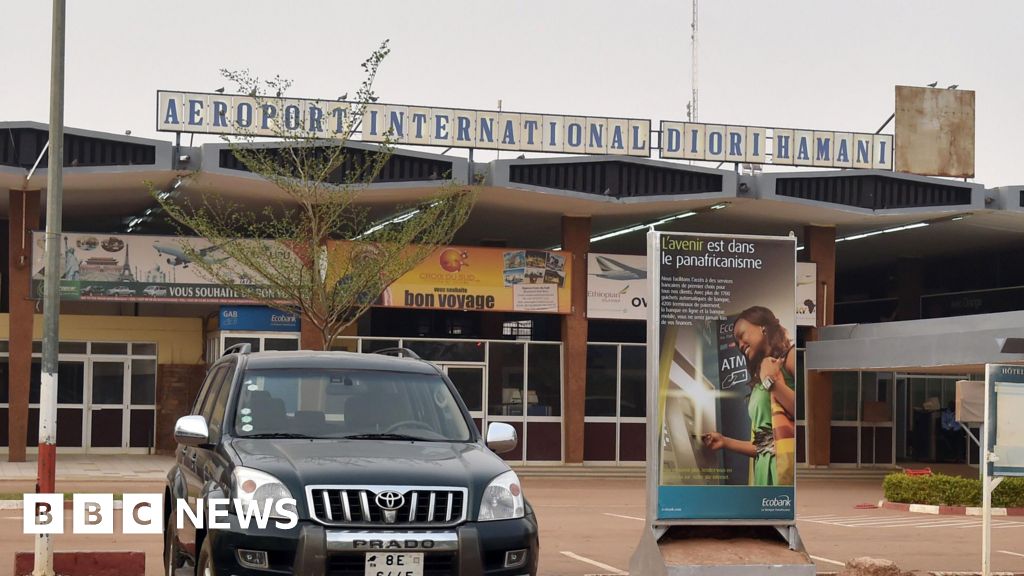
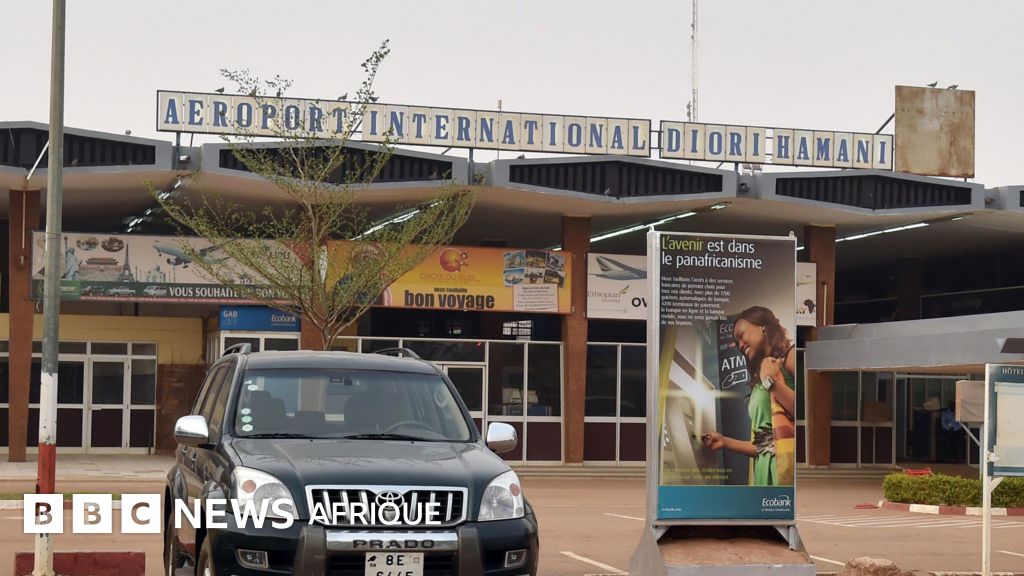
A lethal 18 June assault on Niamey’s Diori Hamani International Airport killed 11 soldiers and two civilians, with 22 attackers killed, indicating a very likely uptick in jihadist capability against strategic sites in Niger’s capital. Attribution is contested between al-Qaida-linked GSIM/JNIM claims and Niamey’s allegations of mercenary and French involvement, keeping the risk of follow-on attacks and regional spillover high in the near term.
Executive summary
Gunmen attacked Diori Hamani International Airport in Niamey on 18 June, killing at least 11 soldiers and two civilians, with security forces killing 22 assailants amid exchanges of fire at a checkpoint on the airport access road. The airport hosts a Nigerien air force base and the headquarters of the Niger-Burkina Faso-Mali joint force, making it a high-value target. Responsibility is disputed: jihadists linked to al-Qaida’s Sahel branch claimed the operation, while Niger’s government publicly accused France and the defence ministry blamed armed mercenaries; the African Union Chair, the United States and Belgium condemned the assault. Security forces launched a manhunt; open reporting on arrests and weapons seizures exists from earlier airport incidents and may be conflated with this week’s attack. Regionally, a 14 June raid in Kebbi, Nigeria, left 20 dead, and US advisories flag continuing terrorist risk in Côte d’Ivoire’s north, where JNIM-linked networks operate and Ivoirian authorities have stood up dedicated counterterrorism structures. The near-term outlook points to elevated threat levels to strategic nodes in Niger and persistent cross-border pressure across the Sahel belt.
Key judgments
- The 18 June assault on Diori Hamani International Airport very likely marks an escalation in jihadist capability and intent against high-value targets in Niamey, resulting in 13 defenders and civilians killed and 22 attackers killed during firefights on the airport access road. (Confidence: high · REPORTED)
- I&W: Another complex, armed assault attempt against an airport, air base, or security headquarters in Niamey using similar tactics within the capital. (1-3 months)
- I&W: No urban attack attempts in Niamey and official reporting of disrupted cells without violence inside the capital. (1-3 months)
- Responsibility for the Niamey attack is contested; it is likely that al-Qaida‑affiliated GSIM/JNIM conducted or enabled the operation, despite the Nigerien government alleging French involvement and the defence ministry blaming armed mercenaries. (Confidence: medium · ASSESSED)
- I&W: GSIM/JNIM release of a detailed claim with unique operational specifics or imagery from the scene that matches observed evidence. (0-14 days)
- I&W: Publication of forensic or detainee evidence by Niger or credible partners tying the operation to non‑JNIM mercenary elements or state-backed actors. (1-3 months)
- The choice of target very likely aimed to disrupt air and joint operations or signal reach into Niger’s core security infrastructure, given the airport hosts a Nigerien air force base and the headquarters of the Niger‑Burkina Faso‑Mali joint force. (Confidence: medium · ASSESSED)
- I&W: Follow‑on plots or attacks targeting aircraft, runways, command facilities, or the joint force headquarters’ perimeter in Niamey. (0-14 days)
- I&W: A reversion to attacks exclusively on rural outposts and patrols, with no attempts on strategic complexes in or around Niamey. (1-3 months)
- Niger’s security forces very likely initiated intensive sweeps after the attack, including a citywide manhunt, though public claims of 20 arrests and large weapons seizures are partly drawn from earlier airport incidents and should be treated cautiously until tied to 18 June. (Confidence: medium · ASSESSED)
- I&W: Official communiqués naming detainees and presenting seized materiel explicitly linked to the 18 June attack. (0-14 days)
- I&W: Absence of follow‑up arrests tied to 18 June or formal clarifications that earlier seizure reports relate to previous incidents. (0-14 days)
- Regional militant activity is elevated and likely to persist in the near term, with spillover risk towards Nigeria and northern Côte d’Ivoire where authorities have issued do‑not‑travel warnings and stood up dedicated counterterrorism structures against JNIM‑linked networks. (Confidence: medium · ASSESSED)
- I&W: Claimed cross‑border raids or IED incidents in northern Côte d’Ivoire accompanied by GSIM/JNIM messaging. (1-3 months)
- I&W: A sustained downgrade in US travel advisories for Côte d’Ivoire’s northern border and absence of reported attacks. (1-3 months)
Outlook & scenarios
Urban pressure persists around Niamey’s strategic nodes (55%)
GSIM/JNIM attempt additional complex attacks on security infrastructure in the capital, probing airport approaches and military command sites. Security forces intensify checkpoints and sweeps, with intermittent firefights and arrests. International partners continue public condemnations while advising heightened vigilance for assets in and around Niamey.
Attribution dispute deepens rupture with France (35%)
Niamey’s public accusation against France becomes a central political narrative. Already frosty ties worsen, reducing information‑sharing and Western support while authorities emphasise alternative partnerships. Counterterrorism effectiveness risks degradation amid diplomatic friction and redirected security resources.
Cross‑border militant activity spreads south‑west (40%)
Cells linked to GSIM/JNIM step up operations in border areas of Nigeria and northern Côte d’Ivoire, testing local force posture. Côte d’Ivoire’s ZON and CROAT structures expand deployments near the frontier, and travel advisories remain stringent. Attacks remain mostly rural but create pressure on secondary towns and logistics corridors.
Recommendations
- Maintain a time‑sequenced incident log for Niamey airport attacks, tagging sources to 2023 versus 2026 events to avoid conflation in arrests and weapons‑seizure reporting.
- Task continuous monitoring of GSIM/JNIM communication channels in Arabic and French for a detailed Niamey claim, and cross‑match any released imagery with known scene features.
- Exploit commercial satellite and open imagery of Diori Hamani Airport access routes to confirm damage patterns and firing points; correlate with NASA FIRMS thermal detections where available to validate timelines.
- Engage liaison channels with Côte d’Ivoire’s Northern Operational Zone and the CROAT to share watchlists and movement indicators for suspected Sahelian networks along the border.
- Prioritise collection on Nigerien official briefings identifying detainees and recovered materiel explicitly tied to 18 June, and flag any walk‑backs that indicate earlier incidents were misattributed.
Confidence & uncertainty
Multiple high‑reliability reports corroborate the core facts of the 18 June Niamey attack, including fatalities, the number of assailants killed, and fighting on the airport access road. The airport’s strategic role is also well sourced. Attribution is less clear, with contemporaneous GSIM/JNIM claims set against official Nigerien statements blaming mercenaries and alleging French involvement. Reporting on arrests and weapons seizures spans earlier airport incidents as well as this week, creating timeline ambiguity. These factors support a medium overall confidence: solid event confirmation, with material uncertainties on perpetrators and some conflated details.
Alternative analysis (red cell)
The reporting is internally inconsistent and concentrated in a limited set of origins, so casualty counts, organizational attribution, and strategic intent are unsettled. A defensible alternative is that the incident was a localized assault with contested responsibility and provisional casualty figures; definitive conclusions about escalation, GSIM/JNIM culpability, or intent to degrade core airport/military assets require independent medical, forensic, imagery, or signals corroboration.
Cited sources
[1] BBC News Afrique · Attaque de l’aéroport de Niamey: le Niger accuse la France - BBC News Afrique (A) · sha256:7813b930f566 [2] Le Monde · Le Monde - Toute l’actualité en continu (A) · sha256:2720344fae29 [3] bbc.com · Niger airport attack: Thirty-five die in attack on Niamey airport (A) · sha256:8d0032921923 [4] U.S. Department of State · Cote d'Ivoire Travel Advisory (A) · sha256:d92eb303ef23 [5] newser.com · 35 Dead in Attack on African Country's Main Airport (B) · sha256:f1b566a46648 [6] Los Angeles Times · Gunmen kill 11 soldiers, 2 civilians at Niger airport, officials say - Los Angeles Times (A) · sha256:5aec6620ae3f [7] Le Monde · Le Monde - Toute l’actualité en continu (A) · sha256:19d3f52efdc0
Source content hashes were computed at collection time; the cited text is preserved unmodified for the life of this product.
Red cell review: PARTIAL DISSENT
TLP:CLEAR