TLP:CLEAR · Disclosure is not limited.
West Africa: Nigeria Abductions Deepen Security Crisis
Time window: Last 1 day · Audience: General analyst · Type: Situation report · DTG: 2026-08-26 16:08Z · Overall confidence: HIGH
BLUF
Nigeria is likely to remain the immediate centre of reported jihadist-linked and mass-abduction risk over the next 0-14 days, with Niger State facing the clearest humanitarian pressure. At least 30 people were reported killed in Borgu district and at least 2,000 fled to Benin, but the reported abduction of about 600 people and the identity of the perpetrators remain unresolved.
Executive summary
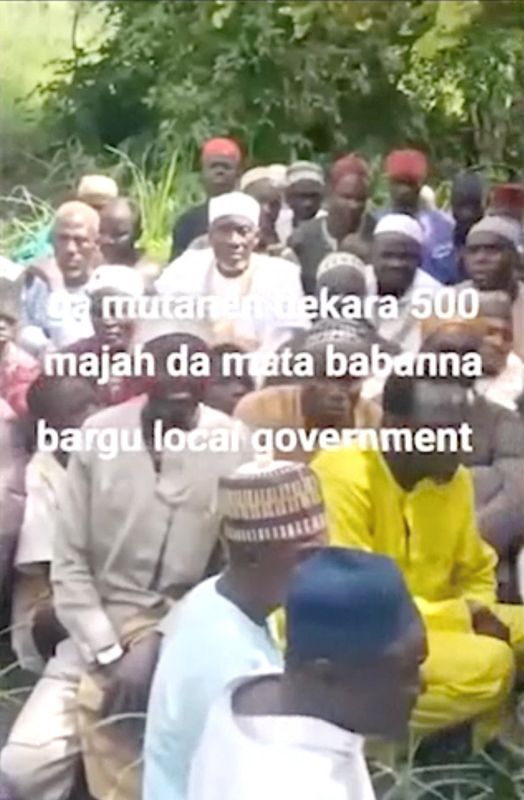
Reporting on 25 and 26 August indicates a serious security and humanitarian crisis in Niger State, Nigeria. An official from Borgu district reported at least 30 deaths, while a community leader reported that at least 2,000 people fled to Benin. A social-media video showed about 600 women, children and older people who residents said had been abducted, but survivor accounts variously attributed the attack to Ansaru, Lakurawa or another armed group. Nigerian President Bola Tinubu ordered the Armed Forces and other security agencies to launch a rescue operation. The collection supports a likely continuation of violence in north-western and north-central Nigeria, but does not establish a coordinated West Africa-wide offensive.
Change from previous assessment
Since the 25 August brief, confidence has increased from low to high for the immediate humanitarian and cross-border effects of the Niger State violence, following the reported flight of at least 2,000 people into Benin and the presidential rescue order. The assessment now gives greater weight to persistent displacement and the possibility of tactical diffusion through weapons and drone networks. Confidence remains low on the precise abduction total and attribution, and the judgement on a coordinated West Africa-wide offensive remains unconfirmed.
Key judgments
- Nigeria is likely to remain the immediate centre of reported jihadist-linked and mass-abduction risk over the next 0-14 days, especially in Niger State and the north-western and north-central belt, while the Borgu area continues to generate displacement towards Benin. The collection reports at least 30 people killed in Borgu district, at least 2,000 people fleeing to Benin, common mass abductions for ransom in north-western and north-central Nigeria, and local officials' concern about jihadist groups in north-western Nigeria. This is an assessed continuation judgement, not confirmation of a West Africa-wide campaign. Confidence is medium because multiple major-media reports corroborate the crisis, while the perpetrators and scale of the abduction remain disputed. (Confidence: medium · ASSESSED)
- I&W: Confirm: By 9 September, Nigerian or Beninese authorities report another abduction, attack or new arrival of displaced people in Niger State, Borgu or communities near the Benin border. (0-14 days)
- I&W: Break: By 9 September, reporting records no new incident in Niger State, Borgu or adjacent border communities and Nigerian authorities report the rescue or dispersal of the affected group. (0-14 days)
- The Niger State incident is likely to have produced a larger humanitarian impact than the confirmed fatality count indicates, but the reported abduction of about 600 women, children and older people is unlikely to be a reliable final count. At least 2,000 people reportedly fled to Benin, while a video released by an armed group showed about 600 abductees and residents identified people from Gidan Zana. Survivor accounts attributed the attack variously to Ansaru and Lakurawa, and the broader pattern of mass abductions also involves criminal gangs. Confidence is low because the abduction figure rests on social-media footage and single-source survivor accounts with unresolved attribution. (Confidence: low · ASSESSED)
- I&W: Confirm: Within 14 days, independent victim lists, geolocated footage or Beninese registration records corroborate the reported abduction of about 600 people in Niger State. (0-14 days)
- I&W: Break: Within 14 days, Nigerian authorities or independent reporting attribute the incident to criminal gangs conducting ransom abductions and reject the video as evidence of a mass kidnapping. (0-14 days)
- The Nigerian government's ordered rescue operation is likely to disrupt individual attacks in the next 1-3 months, but is unlikely to produce a verified nationwide reduction in jihadist-linked violence. President Bola Tinubu ordered the Armed Forces, Nigeria Police Force, Department of State Services and other relevant agencies to conduct a coordinated rescue operation. Nigeria has also been battling a jihadist insurgency for 17 years, while mass abductions remain common in north-western and north-central areas. Confidence is medium because major-media reporting confirms the orders and the longstanding security problem, but provides no verified operational outcome. (Confidence: medium · ASSESSED)
- I&W: Confirm: Within 14 days, the Nigerian Armed Forces, Nigeria Police Force or Department of State Services announce a named operation in Niger State that frees abductees, arrests suspects or clears improvised explosive devices. (0-14 days)
- I&W: Break: Within 1-3 months, Nigerian authorities report no new mass abductions in Niger State, north-western or north-central Nigeria and publish evidence of a sustained reduction in incidents. (1-3 months)
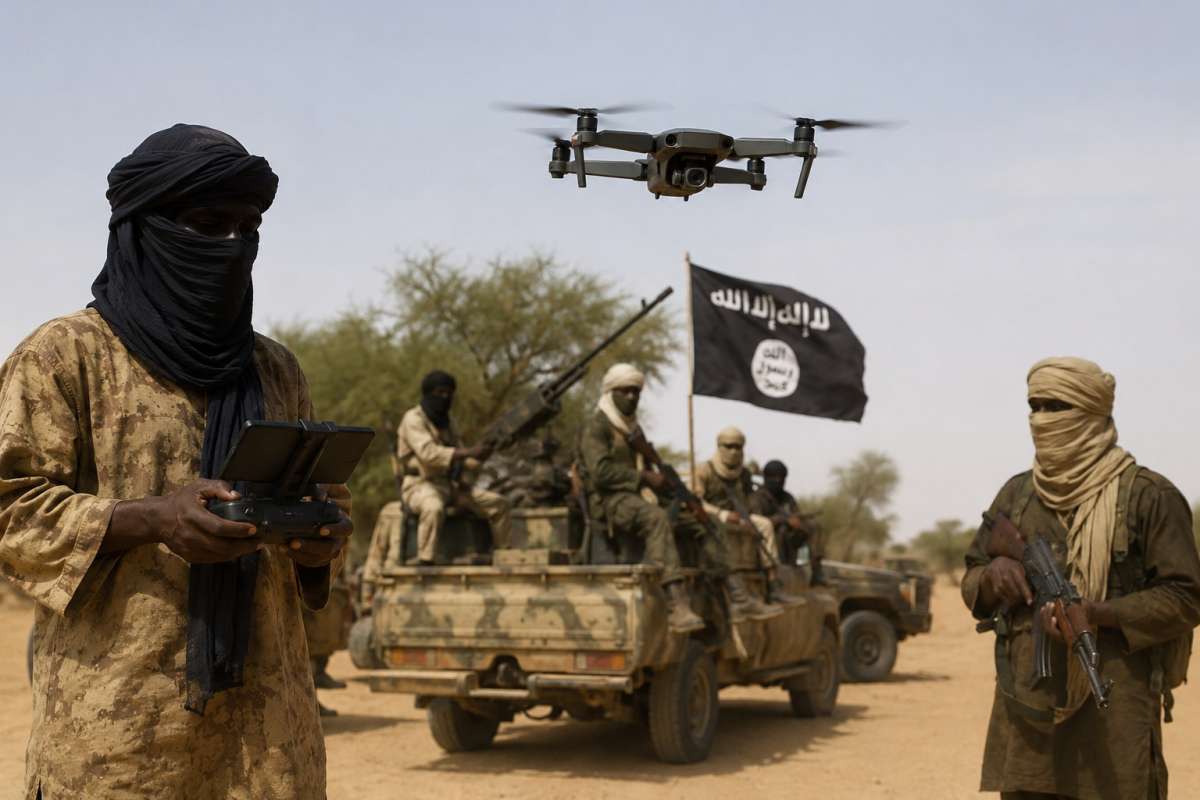
- A coordinated West Africa-wide jihadist offensive is unlikely in the next 1-3 months, while continued access to smuggled weapons and commercial drones by jihadist groups is likely to sustain the potential for more sophisticated attacks. Reporting identifies weapons moving through Libya and Chad to armed and jihadist groups in Niger and Mali, a smuggling network using a landing strip near Kufra to move weapons, ammunition and fighters, and drones resold to jihadist groups in the Sahel and Lake Chad Basin. JNIM is assessed to have the most advanced drone capability among Al Qaeda affiliates in the Sahel, while ISWAP and Islamic State Sahel have been linked to commercial drone acquisition or use. This is a low-confidence absence-of-evidence judgement because much of the logistics and drone reporting is think-tank based and some of the supporting activity dates from 2023 or earlier. (Confidence: low · ASSESSED)
- I&W: Confirm: Within 14 days, a named jihadist group in Niger, Mali or Nigeria claims an attack involving commercial drones, or imagery links such equipment to a new incident. (0-14 days)
- I&W: Break: Within 1-3 months, credible reporting identifies a common command and operational plan linking attacks in Nigeria, Niger and Mali. (1-3 months)
Outlook & scenarios
Localised but persistent Nigerian security crisis (55%)
Over the next 1-3 months, Tinubu's rescue order produces isolated recoveries or arrests, but abductions and attacks continue in Niger State and adjoining north-western and north-central areas. Displacement into Benin remains the main regional humanitarian effect.
Humanitarian spillover into Benin (35%)
Further attacks around Borgu and communities near the Benin border generate additional arrivals in Benin. Nigerian security operations contain individual incidents without preventing repeated population movement.
Attribution shifts towards ransom-driven criminality (30%)
Subsequent investigations identify criminal gangs rather than Ansaru, Lakurawa or another jihadist organisation as the principal perpetrators of the Niger State abduction. The humanitarian effects remain severe, but the incident is assessed as part of Nigeria's established ransom-abduction pattern rather than evidence of a jihadist campaign.
Low-probability, high-impact wildcard: jihadist tactical diffusion (15%)
JNIM, ISWAP or Islamic State Sahel-linked networks exploit weapons and drone routes through Libya, Chad, Niger and Mali to support attacks beyond their established areas. A coordinated offensive would become more credible if a named group claimed linked attacks in Nigeria, Niger and Mali.
Recommendations
- Prioritise a 0-14 day collection effort on Niger State and Borgu to reconcile the reported 30 deaths, about 600 abductees and at least 2,000 arrivals in Benin. Compare Nigerian security statements, local burial records, survivor accounts, geolocated footage and Beninese registration data.
- Track the Tinubu-directed rescue operation through statements from the Nigerian Armed Forces, Nigeria Police Force and Department of State Services. Record named units, locations, arrests, rescues and improvised explosive device clearance rather than treating the order itself as evidence of operational success.
- Maintain separate attribution tracks for Ansaru, Lakurawa, criminal gangs and the unnamed group that posted the video. Do not merge the Niger State incident with other Nigerian attacks until perpetrators, locations and victim totals are independently corroborated.
- Monitor the movement of weapons, ammunition, fighters and commercial drones through Kufra and routes from Libya and Chad towards Niger and Mali. Flag evidence linking JNIM, ISWAP or Islamic State Sahel to new attacks in Nigeria or neighbouring states.
- Prepare a humanitarian warning line for additional movement from Borgu and Niger State into Benin. Update the estimate whenever Nigerian or Beninese authorities publish new arrival figures, shelter requirements or border security measures.
Confidence & uncertainty
Overall confidence is high for the existence of a serious security and humanitarian crisis in Niger State and for its immediate cross-border displacement effect. Multiple major-media reports, local official reporting and community testimony corroborate the deaths, the flight of residents to Benin and the Nigerian presidential response. Confidence is lower for the reported abduction of about 600 people, the identity of the perpetrators and any conclusion that the incidents form a coordinated West Africa-wide campaign.
Intelligence gaps
- [EEI 1.1 · UNCOVERED] Intercepted or captured operational messages, orders, or timelines indicating planned attacks, named targets, or attack windows (dates/times) for specific towns, facilities, or convoys. Recommended collection: SIGINT
- [EEI 1.2 · PARTIAL] Observed movement of armed groups, armed convoys, or weapons caches toward or within 20-100 km of named population centers, military bases, border crossing points, or major road/rail routes. Recommended collection: IMINT
- [EEI 1.3 · UNCOVERED] Recent local reporting, social‑media posts, or detainee/source statements claiming operational readiness, recruitment of attack teams, or calls for immediate attacks against specific targets. Recommended collection: OSINT
- [EEI 2.1 · UNCOVERED] Estimated numbers of fighters (by group) present in defined districts/regions and recent trends (increasing, stable, decreasing) based on ground reports, detainee statements, or biometric registration. Recommended collection: HUMINT
- [EEI 2.2 · PARTIAL] Identification and geolocation of training camps, safe havens, or arms depots, including imagery of training activity, firing ranges, or stockpiled weapons and explosives. Recommended collection: IMINT
- [EEI 2.3 · PARTIAL] Seizures, battlefield recoveries, or credible reports describing types and quantities of weapons and munitions in use (e.g., RPGs, mortars, MANPADS, vehicle‑borne IED components) and recent changes in lethality. Recommended collection: LAW_ENFORCEMENT
- [EEI 2.4 · PARTIAL] Reports of foreign fighter arrivals/departures, external trainers or advisors present, or documented external technical assistance (IED construction, communications encryption) to named groups. Recommended collection: SIGINT
- [EEI 3.1 · UNCOVERED] Documented instances and amounts of extortion/taxation on towns, markets, transporters, or humanitarian agencies, including receipts, lists of taxed goods, and affected road segments. Recommended collection: HUMINT
- [EEI 3.3 · UNCOVERED] Financial intelligence on suspicious cross‑border transfers, known money‑courier movements, or identified donor networks linked to named groups, including remittance patterns and intermediary accounts. Recommended collection: FININT
- [EEI 4.1 · PARTIAL] Changes in government/security force posture: troop deployments/withdrawals by unit and location, declared states of emergency, curfews, checkpoints established or removed, and equipment transfers/arrivals. Recommended collection: OSINT
- [EEI 4.2 · UNCOVERED] Evidence of improved or degraded cross‑border security cooperation: joint patrols, information‑sharing agreements, troop movements across borders, or closing/opening of border crossings. Recommended collection: HUMINT
- [EEI 4.4 · PARTIAL] Documented incidents of security‑force abuses or communal reprisals (dates, locations, victims), and reports of local grievances exploited by jihadist recruiters. Recommended collection: LAW_ENFORCEMENT
Cited sources
[1] aol.com · Nigeria's president orders rescue after mass kidnapping exposes security failings (B) · sha256:651a27776bdb [2] bbc.co.uk · Nigeria kidnappings: President Bola Tinubu orders manhunt after victim video uploaded (A) · sha256:39e6df474188 [3] africaninsider.com · Nigeria president orders rescue of abductees in west (B) · sha256:dbdc9d2dfa53 [4] مركز فكرة للدراسات والتنمية · تقرير إيطالي: الكفرة مركز لوجستي لتدفقات الأسلحة إلى السودان - سودان تمورو | Sudan Tomorrow (C) · sha256:1f93edb90c0d [5] African Center for Strategic Studies (ACSS) · The new weaponry of jihadism in Africa: Drones and multi-million dollar ransoms (B) · sha256:a9558532d383
Source content hashes were computed at collection time; the cited text is preserved unmodified for the life of this product.
TLP:CLEAR