TLP:CLEAR · Disclosure is not limited.
West Africa: Nigeria Repels ISWAP Attack as Boko Haram Truce Remains Disputed
Time window: Last 1 day · Audience: General analyst · Type: Situation report · DTG: 2026-09-08 22:05Z · Overall confidence: HIGH
BLUF
Nigeria has retained control of a military position in Pulka after repelling a suspected ISWAP attack, but the engagement shows that the reported Boko Haram truce has not reduced the wider threat because ISWAP is excluded. Nigeria is likely to continue expanding its army while pursuing or denying negotiations with Boko Haram, creating a dual-track policy that remains difficult to verify.
Executive summary
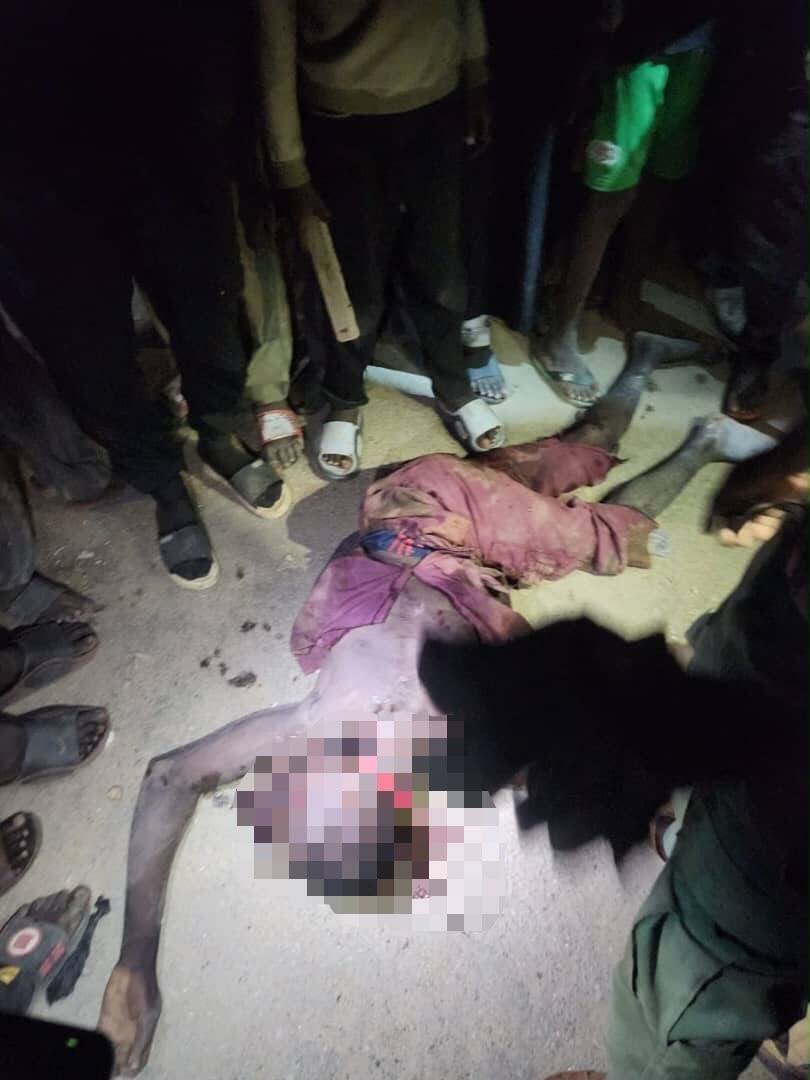
Nigeria is the main area of immediate concern. On 7 September, Operation HADIN KAI, supported by the Nigerian Air Force and the Civilian Joint Task Force, repelled a suspected ISWAP attack on a military position in Pulka, Borno State. Troops remained on heightened alert and conducted exploitation operations after the attackers withdrew. Separate reporting says a Nigerian government and Boko Haram truce has operated since June and is likely to receive a further 40-day extension. The arrangement is disputed by the Nigerian government's public rejection of negotiations, excludes ISWAP, and has not stopped fighting between ISWAP and Boko Haram. Reporting also links negotiations to the release of 360 civilians from Ngoshe, while an alleged ransom payment remains denied by Abuja. In the wider Sahel, IS-Sahel claimed mass casualties among JNIM fighters near Timbuktu, but the claim is unverified. Niger's accusation that France incited the failed Niamey mutiny remains contested.
Change from previous assessment
Since the 7 September brief, new reporting adds detailed operational evidence of the 7 September ISWAP attack on Pulka, including Nigerian Air Force support, one wounded soldier, heightened alert status, and follow-up exploitation operations. The assessment of a likely Boko Haram ceasefire extension is unchanged in direction, but the current reporting adds a direct contradiction between the reported truce and the Nigerian government's public rejection of negotiations. The brief also adds the reported ransom allegation and its denial, and lowers confidence in the wider Sahel deterioration assessment because the current Timbuktu battlefield claim remains unverified. The Niger-France attribution assessment is unchanged.
Key judgments
- Nigerian Army troops under Operation HADIN KAI retained control of the Pulka military position in Gwoza Local Government Area, Borno State, on 7 September after repelling suspected ISWAP attackers. The Nigerian Air Force Air Component provided ISR support and precision strikes against withdrawing attackers, one soldier was wounded, troops remained on heightened alert, and follow-up exploitation operations began. (Confidence: high · REPORTED)
- I&W: A Nigerian military statement or independent reporting confirming that security forces still hold the Pulka position and that troops remain deployed there would confirm the assessment. (0-14 days)
- I&W: ISWAP reoccupying, overrunning, or forcing the withdrawal of Nigerian forces from the Pulka position would break the assessment. (0-30 days)
- ISWAP is likely to sustain operational pressure on Nigerian forces in Borno State over the next 1-3 months. The 7 September attack in Pulka demonstrates continued willingness to strike a military position, while ISWAP remains outside the reported Boko Haram ceasefire and clashes between the two groups continue in Lake Chad and rural northeastern Borno. The assessment rests on one current engagement, although that engagement is also reflected in separate major-media reporting. (Confidence: medium · ASSESSED)
- I&W: A second ISWAP attack on a Nigerian military position in Pulka, Gwoza Local Government Area, or elsewhere in Borno, followed by Nigerian Air Force ISR or strikes, would confirm the assessment. (0-14 days)
- I&W: Thirty days without a reported ISWAP attack in Borno or an ISWAP-Boko Haram clash, alongside the end of heightened alert in Pulka, would break the assessment. (0-30 days)
- The Nigerian government and Boko Haram are likely to extend the reported truce by a further 40 days, but there is a roughly even chance that it will reduce overall jihadist violence in northeastern Nigeria. Three people with contacts among Boko Haram members reported the extension, and separate reporting links the arrangement to the release of 360 civilians from Ngoshe. The truce excludes ISWAP, while the Nigerian government publicly rejects negotiations and government-led talks have repeatedly failed. The extension reporting is not publicly confirmed in the supplied material, so confidence is medium. (Confidence: medium · ASSESSED)
- I&W: A Nigerian government or Boko Haram statement confirming a 40-day extension, or a further negotiation-linked release of detainees from Borno State, would confirm the extension. (0-14 days)
- I&W: An ISWAP attack in Borno or continued ISWAP-Boko Haram fighting during the reported extension would confirm that the arrangement is not reducing overall jihadist violence. (0-40 days)
- Nigeria is likely to maintain a dual-track response of military expansion and engagement with Boko Haram over the next 1-3 months. President Bola Tinubu announced 30,000 new army recruits and four additional divisions in July, while the Office of the National Security Advisor and the Department of State Services have led talks that repeatedly failed. The public rejection of negotiations conflicts with reporting of a secret ceasefire, so the scale and durability of the engagement track remain uncertain. (Confidence: medium · ASSESSED)
- I&W: Evidence that Nigeria has begun recruiting the 30,000 soldiers or activating one of the four announced divisions would confirm continued military expansion. (1-3 months)
- I&W: A formal cancellation of talks by the Office of the National Security Advisor and the Department of State Services, combined with no further ceasefire reporting, would break the dual-track assessment. (1-3 months)
- Jihadist violence is likely to remain persistent across the Sahel over the next 1-3 months, but the supplied evidence does not support a confident assessment of a region-wide surge. Al-Qaeda affiliates have established relationships with local armed groups, weak institutions and security vacuums continue to provide exploitable conditions, and IS-Sahel claimed mass casualties among JNIM fighters near Timbuktu on 6 September. The Timbuktu claim is single-source and unverified, which lowers confidence. (Confidence: low · ASSESSED)
- I&W: Independent reporting of casualties or a second IS-Sahel-JNIM engagement near Timbuktu would confirm a wider deterioration around central Mali. (0-14 days)
- I&W: Thirty days without a new reported IS-Sahel or JNIM clash near Timbuktu, followed by credible reporting of a formal cessation between the two groups, would break the assessment. (0-3 months)
- French responsibility for the failed military mutiny in Niamey is unlikely to be established by the supplied reporting over the next 1-3 months, and attribution will remain disputed. Niger's government has accused France of inciting the mutiny, while France has denied involvement and called the allegation pure fiction. The claim rests on opposing official statements without independently presented evidence, so confidence is low. (Confidence: low · ASSESSED)
- I&W: Independently corroborated evidence linking French actors to the Niamey mutiny would break the assessment. (1-3 months)
- I&W: Niger withdrawing the accusation or abandoning plans to pursue it through legal or diplomatic channels would confirm that the attribution is losing official traction. (0-3 months)
Outlook & scenarios
Contained ISWAP pressure and a disputed Boko Haram pause (45%)
Over the next 1-3 months, Nigerian forces retain the Pulka position while ISWAP conducts intermittent attacks in Borno. Boko Haram and the Nigerian government extend the reported truce, but ISWAP remains outside it and fighting between the two groups continues. Nigeria proceeds with army expansion while keeping the public status of negotiations ambiguous.
ISWAP intensifies attacks in Borno (25%)
ISWAP renews attacks on military positions around Pulka, Gwoza, or other parts of Borno within weeks. Nigerian forces respond with heightened deployments, ISR, and air strikes. The Boko Haram truce remains in place but has little effect on the wider security picture.
Boko Haram truce unravels (20%)
The reported 40-day extension fails to materialise or breaks down. Boko Haram resumes attacks or hostage-taking around Borno while Nigeria accelerates the military expansion announced by President Bola Tinubu. ISWAP continues separate operations, leaving Nigerian forces facing pressure from both groups.
Sahel-wide security shock (10%)
Fresh fighting between IS-Sahel and JNIM near Timbuktu coincides with deeper Algerian military involvement in the Sahel and renewed political confrontation over Niger's accusation against France. The combined developments place additional strain on already weak regional security institutions and complicate Nigeria-focused counter-terrorism assessments.
Recommendations
- Prioritise collection over the next 14 days on the status of the Pulka military position, Nigerian troop deployments around Gwoza, follow-up Operation HADIN KAI activity, and any renewed Nigerian Air Force ISR or strike activity.
- Treat the reported 40-day Boko Haram extension as unconfirmed. Separate Nigeria's public rejection of negotiations from reported covert conduct, and seek direct confirmation of any extension, detainee release, or change in Boko Haram attack activity.
- Track ISWAP separately from Boko Haram. Do not use the reported Boko Haram truce as an indicator of reduced jihadist activity in Borno or the Lake Chad area.
- Monitor implementation of President Bola Tinubu's announced 30,000-recruit expansion and four additional army divisions. Distinguish formal announcements from evidence of recruitment, deployment, or operational activation.
- Keep the Niger-France attribution explicitly disputed in future reporting. Do not treat Niger's accusation or France's denial as proof of responsibility without independent corroboration.
- Prioritise verification of the reported 360-person rescue and the alleged 5 billion naira ransom payment, which Abuja denies, because the competing accounts affect assessments of negotiation incentives and Nigerian policy.
Confidence & uncertainty
Overall confidence is high for the core reported developments, especially the 7 September Pulka engagement, the continued Nigerian military presence, and the reported release of 360 civilians. The Pulka incident is supported by local reporting and separate major-media reporting, while the ceasefire account is repeated across multiple reporting streams and attributed to three people with contacts among Boko Haram members. The main uncertainties concern whether the ceasefire will be extended, the alleged ransom payment denied by Abuja, the reliability of cumulative casualty figures, and the disputed French attribution for the Niamey mutiny.
Intelligence gaps
- [EEI 1.1 · PARTIAL] Recent jihadist attack incidents in the last 72 hours: exact locations (GPS or nearest town), date/time, target type (market, military base, convoy, village, border post), weapon systems used, and reported casualty counts. Recommended collection: open source/social_media
- [EEI 1.2 · PARTIAL] Observed jihadist force movements and posture within 100 km of major towns or critical infrastructure: convoy sightings, checkpoints established/removed, concentrations of fighters, and annotated route preparations. Recommended collection: aerial ISR/imagery
- [EEI 1.3 · PARTIAL] Host-nation and partner military defensive measures near population centers and key infrastructure: troop redeployments, new checkpoints/curfews, roadblocks, air sortie launches, and activation of rapid reaction units (locations and unit IDs if available). Recommended collection: military liaison/satellite
- [EEI 1.4 · PARTIAL] Humanitarian indicators of imminent threat to civilians: sudden internal displacement flows or mass movements within 72 hours, shelter/IDP site openings, and major road closures affecting civilian evacuation routes. Recommended collection: humanitarian/NGO
- [EEI 2.1 · PARTIAL] Reports or imagery confirming weapons and materiel holdings: number and types of heavy weapons observed or seized (mortars, artillery, technicals, IED caches, MANPADS), locations of caches, and recent rearmament deliveries. Recommended collection: imagery/HUMINT
- [EEI 2.2 · UNCOVERED] Active recruitment and propaganda indicators: new recruitment messages/accounts, numbers of claimed/new recruits by region, youth/ethnic group targeting, and physical recruitment events or forced conscriptions. Recommended collection: social_media/HUMINT
- [EEI 2.3 · UNCOVERED] Cross-border operational indicators: seizures or sightings of convoys crossing borders, capture/abandonment of border posts, patterns of fighters moving between neighboring countries, and use of transnational smuggling routes. Recommended collection: border_patrol/satellite
- [EEI 2.4 · PARTIAL] Financing and logistics flows that sustain operations: recent seizures of cash/drugs/minerals, transactions or remittances linked to identified networks, and commercial transport companies or ports repeatedly used for shipments to insurgent-held areas. Recommended collection: financial/customs
- [EEI 3.1 · PARTIAL] Force posture and sustainment: foreign and host-nation troop deployments (unit types, strength estimates, bases used), changes in airbase activity (sortie rates, aircraft types, times), and frequency of logistics convoys or resupply flights. Recommended collection: diplomatic/military_reporting/satellite
- [EEI 3.2 · PARTIAL] Combat effectiveness indicators from recent engagements: verified casualty and equipment loss counts for state forces and jihadist units, territory regained or lost after operations, and number of operations meeting objectives versus failures. Recommended collection: open source/military_reports
- [EEI 3.3 · UNCOVERED] Critical sustainment vulnerabilities: reported ammunition/fuel shortages, road/bridge interdictions affecting supply lines, strikes on logistics hubs, and closure rates of key supply routes. Recommended collection: logistics/imagery
TLP:CLEAR