TLP:CLEAR · Disclosure is not limited.
West Africa: Nigeria’s North-East Crisis Deepens; Region-wide Attack Surge Not Substantiated This Cycle
Time window: Last 1 day · Audience: General analyst · Type: Situation report · DTG: 2026-07-03 09:39Z · Overall confidence: MEDIUM
BLUF
Violence-linked hunger and access constraints in northern Nigeria are very likely worsening, with over 17 million people in crisis to catastrophe and fifteen localities now partially inaccessible to aid teams. Available open sources this cycle do not substantiate a region-wide surge in jihadist attacks beyond Nigeria or detail new government offensives.
Executive summary
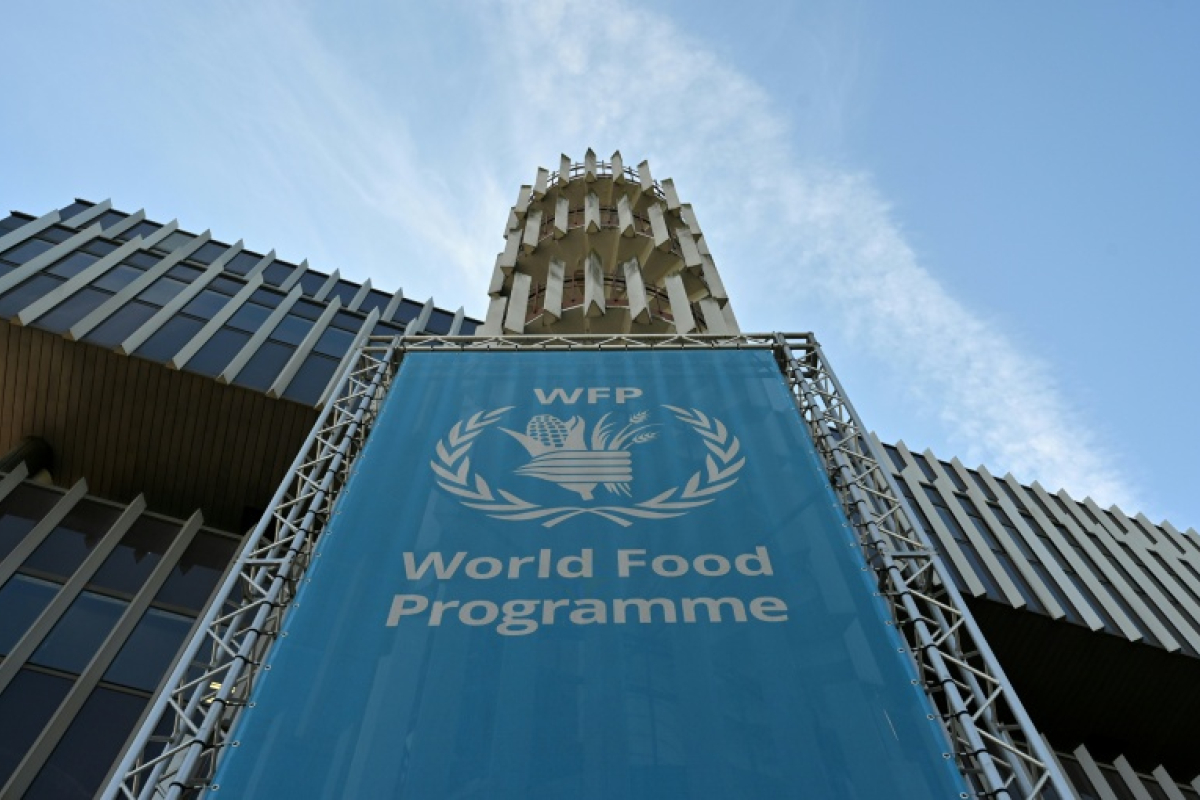
Current reporting concentrates on northern Nigeria, where humanitarian needs tied to violence are acute and growing. Over 17 million people face crisis to catastrophe hunger, 6.2 million are in the north-east, and more than 3 million in Borno alone face acute food insecurity, while World Food Programme distributions reach just 740,000 and fifteen areas are now partially inaccessible to its teams. While the topic frames a West Africa-wide surge in jihadist attacks with military responses, this cycle’s sources do not corroborate increased attack tempo across the wider region or describe new government operations. Near-term risk is that unmet need and shrinking access will drive further deterioration in north-east Nigeria absent security improvements or a material aid scale-up.
Change from previous assessment
Initial assessment of this topic for this series. Compared with the prior brief that focused on Mali’s 33rd Parachute Commando Regiment and possible deployments, this cycle’s available reporting centres on humanitarian impacts and access constraints in northern Nigeria. There is still insufficient corroborated OSINT here to validate a West Africa-wide surge in jihadist attacks or to describe new government operations beyond Nigeria.
Key judgments
- Violence-linked food insecurity in northern Nigeria is very likely at record levels and access is shrinking, with over 17 million people in crisis to catastrophe, 6.2 million in the north-east, more than 3 million in Borno acutely food insecure, World Food Programme reach at 740,000 leaving roughly 5.5 million without assistance, and fifteen localities now partially inaccessible to WFP teams. (Confidence: high · REPORTED)
- I&W: WFP Nigeria updates show inaccessibility rising above fifteen localities or sustained for two consecutive reporting cycles. (0-2 months)
- I&W: Operational reporting confirms WFP monthly reach remains near 740,000 while needs in the north-east hold at or above 6.2 million. (0-2 months)
- A region-wide surge in jihadist attack tempo across West Africa is unlikely to be substantiated in this cycle, given the absence of corroborated incident reporting beyond Nigeria and only nine West Africa thermal detections in the past day which, by themselves, do not prove attack activity. (Confidence: medium · ASSESSED)
- I&W: Multiple independent reports of coordinated attacks in Sahel states beyond Nigeria, with named locations and dates. (0-14 days)
- I&W: Thermal anomaly counts across the central Sahel remain low without corroborated incident reporting. (2-4 weeks)
- Absent a near-term security improvement or a material scale-up of assistance, hunger and morbidity are likely to worsen in north-east Nigeria over the next one to three months, given the current assistance gap of roughly 5.5 million people and growing access constraints. (Confidence: medium · ASSESSED)
- I&W: No increase in WFP pipeline and delivery figures in the north-east and continued reports of fifteen or more partially inaccessible areas. (1-3 months)
- I&W: Announcements of new funding and logistics enabling a sharp rise in monthly assisted caseloads and reduced inaccessibility below ten localities. (1-3 months)
Outlook & scenarios
Baseline: Humanitarian deterioration in north-east Nigeria without clear region-wide attack surge (60%)
Needs remain high in Borno and adjacent areas, access constraints persist at or above fifteen localities, and distributions lag well behind requirements. Outside Nigeria, open sources continue to emphasise humanitarian impacts over verifiable attack counts, leaving the region-wide surge narrative uncorroborated in this period.
Security operations expand to reopen access corridors in Borno (40%)
Nigerian authorities prioritise security moves intended to improve humanitarian access and supply routes. Short-term effects include intermittent route openings alongside sporadic clashes, with uncertain durability of access and a risk that rural areas remain hard to reach.
Negotiated access and aid scale-up stabilise needs (20%)
Improved coordination yields temporary access in some of the fifteen partially inaccessible localities, enabling WFP to raise monthly reach and reduce the unassisted caseload. This eases immediate pressures even as underlying security issues persist.
Recommendations
- Prioritise collection on WFP Nigeria reporting for the north-east, tracking monthly caseloads, pipeline updates and the count and location of partially inaccessible localities.
- Create an indicator dashboard combining humanitarian reach versus need in Borno and the wider north-east with daily thermal anomaly trends, noting that heat signatures alone do not confirm attacks.
- Task open-source monitoring of official Nigerian government and state-level security communications for announcements that would signal new operations or movement controls in affected areas.
- Flag any multi-source, on-the-record incident reporting from Sahel states beyond Nigeria as potential confirmation of a broader surge, and treat single-source claims cautiously until corroborated.
- Coordinate with humanitarian analysts to model near-term impacts of the current assistance gap on displacement and mortality, with triggers to update if access improves or deteriorates.
Confidence & uncertainty
Multiple, mutually reinforcing reports from the World Food Programme specify needs, coverage gaps and access restrictions in northern Nigeria, and an additional item links hunger increases to rising violence. These provide reliable grounding for Nigeria-focused judgments. However, there is scant incident-level reporting elsewhere in West Africa this cycle and only minimal thermal detections that cannot validate attack activity on their own, leaving region-wide surge assessments under-sourced. Forward-looking estimates about deterioration and potential security responses therefore carry analytic uncertainty, supporting a medium overall confidence rating.
Alternative analysis (red cell)
Reporting indicates severe food insecurity and constrained assistance in northern Nigeria, but the claim set lacks independent, time‑stamped provenance for headline figures and does not reconcile potentially overlapping subregional counts. Thermal detections alone are too ambiguous to confirm a region‑wide attack surge absent corroborated incident reports. Therefore, a sober estimate is that needs and access problems are acute in parts of northern Nigeria and monitoring should be intensified, but the precise magnitude, trend (historic high), and a West Africa‑wide jihadist surge remain unconfirmed by current evidence.
Intelligence gaps
- [EEI 1.1 · UNCOVERED] Recent jihadist attack incidents in the last 72 hours: exact locations (GPS or nearest town), date/time, target type (market, military base, convoy, village, border post), weapon systems used, and reported casualty counts. Recommended collection: open source/social_media
- [EEI 1.2 · UNCOVERED] Observed jihadist force movements and posture within 100 km of major towns or critical infrastructure: convoy sightings, checkpoints established/removed, concentrations of fighters, and annotated route preparations. Recommended collection: aerial ISR/imagery
- [EEI 1.3 · UNCOVERED] Host-nation and partner military defensive measures near population centers and key infrastructure: troop redeployments, new checkpoints/curfews, roadblocks, air sortie launches, and activation of rapid reaction units (locations and unit IDs if available). Recommended collection: military liaison/satellite
- [EEI 1.4 · UNCOVERED] Humanitarian indicators of imminent threat to civilians: sudden internal displacement flows or mass movements within 72 hours, shelter/IDP site openings, and major road closures affecting civilian evacuation routes. Recommended collection: humanitarian/NGO
- [EEI 2.1 · UNCOVERED] Reports or imagery confirming weapons and materiel holdings: number and types of heavy weapons observed or seized (mortars, artillery, technicals, IED caches, MANPADS), locations of caches, and recent rearmament deliveries. Recommended collection: imagery/HUMINT
- [EEI 2.2 · UNCOVERED] Active recruitment and propaganda indicators: new recruitment messages/accounts, numbers of claimed/new recruits by region, youth/ethnic group targeting, and physical recruitment events or forced conscriptions. Recommended collection: social_media/HUMINT
- [EEI 2.3 · UNCOVERED] Cross-border operational indicators: seizures or sightings of convoys crossing borders, capture/abandonment of border posts, patterns of fighters moving between neighboring countries, and use of transnational smuggling routes. Recommended collection: border_patrol/satellite
- [EEI 2.4 · UNCOVERED] Financing and logistics flows that sustain operations: recent seizures of cash/drugs/minerals, transactions or remittances linked to identified networks, and commercial transport companies or ports repeatedly used for shipments to insurgent-held areas. Recommended collection: financial/customs
- [EEI 3.1 · UNCOVERED] Force posture and sustainment: foreign and host-nation troop deployments (unit types, strength estimates, bases used), changes in airbase activity (sortie rates, aircraft types, times), and frequency of logistics convoys or resupply flights. Recommended collection: diplomatic/military_reporting/satellite
- [EEI 3.2 · UNCOVERED] Combat effectiveness indicators from recent engagements: verified casualty and equipment loss counts for state forces and jihadist units, territory regained or lost after operations, and number of operations meeting objectives versus failures. Recommended collection: open source/military_reports
- [EEI 3.3 · UNCOVERED] Critical sustainment vulnerabilities: reported ammunition/fuel shortages, road/bridge interdictions affecting supply lines, strikes on logistics hubs, and closure rates of key supply routes. Recommended collection: logistics/imagery
- [EEI 3.4 · UNCOVERED] Political and legal decisions influencing operations: government decrees (states of emergency, mobilization orders), approved cross-border operations or foreign troop agreements, and public statements altering rules of engagement. Recommended collection: diplomatic/government
Cited sources
[1] Programme alimentaire mondial (PAM) · Nord du Nigeria: le regain de violences fait bondir la faim à un niveau record, alerte le PAM (B) · sha256:f2d77133b3e4 [2] mediapart.fr · Nord du Nigeria: le regain de violences fait bondir la faim à un niveau record, alerte le PAM (A) · sha256:374280ca8721 [3] firms.modaps.eosdis.nasa.gov · NASA FIRMS thermal detections — West Africa (1d) (F) · sha256:984b37cf4ab9
Source content hashes were computed at collection time; the cited text is preserved unmodified for the life of this product.
Red cell review: PARTIAL DISSENT
TLP:CLEAR