TLP:CLEAR · Disclosure is not limited.
West Africa: Persistent Jihadist Threat, Uneven Military Response
Time window: Last 7 days · Audience: General analyst · Type: Situation report · DTG: 2026-08-23 06:06Z · Overall confidence: HIGH
BLUF
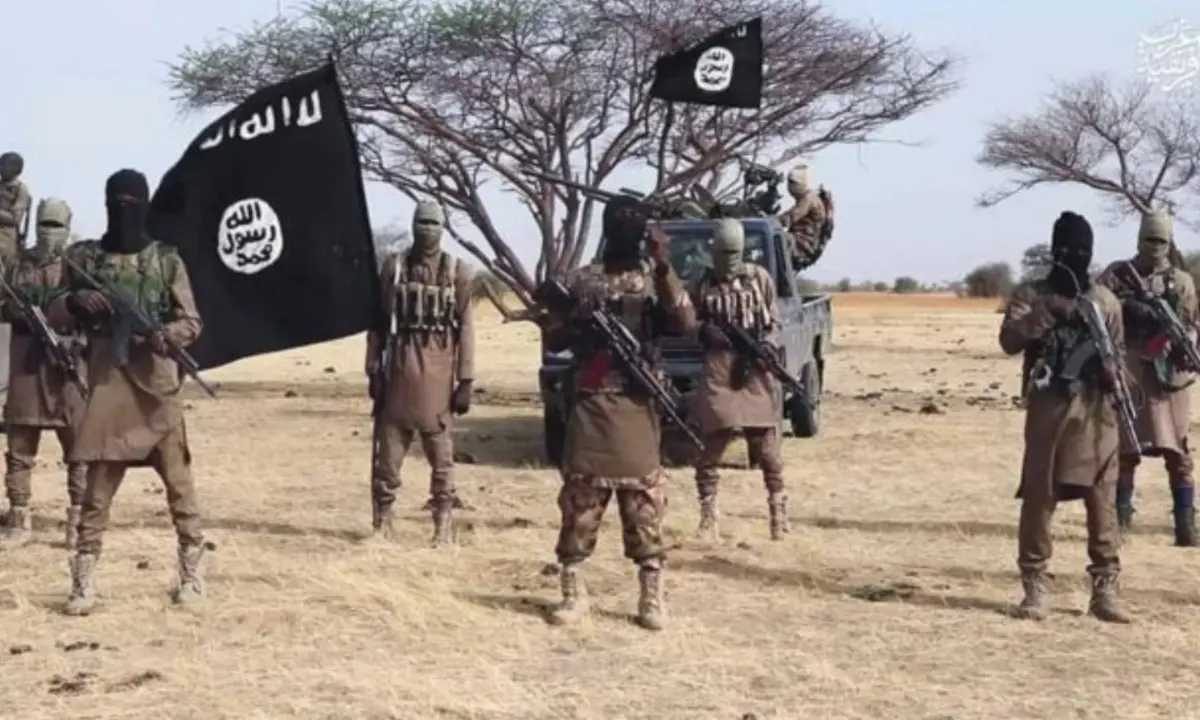
The reporting supports a persistent jihadist threat centred on Nigeria, with the Nigerian Army repelling an ISWAP assault at Mandaragirau on 15 August 2026. It does not establish a quantified region-wide surge. Casualty reporting from the separate Niger state attack remains contradictory, while Mali retains a credible risk of coordinated JNIM and FLA attacks.
Executive summary
Jihadists killed scores of people and kidnapped others during Friday prayers in Niger state, Nigeria, although a medical source reported around 40 deaths and Niger state police said they had no reports of anyone killed. On 15 August, the Nigerian Army reported detecting and repelling an ISWAP attack on a Forward Operating Base at Mandaragirau, Borno State, with no Army personnel killed and weapons recovered. Nigeria's wider security burden remains substantial: more than 3,000 people were kidnapped in 2025, and kidnapping is described as a multimillion-dollar industry involving criminal gangs and transnational jihadist groups. In Mali, reporting attributed coordinated attacks on 25 April to JNIM and FLA across Bamako, Kati, Sévaré and Mopti, while separate reporting blamed JNIM for the attack on Defence Minister Sadio Camara's house in Kati. The United States has supported Nigeria through training, intelligence sharing and earlier strikes, but the available claims do not show a measurable longer-term reduction in violence.
Key judgments
- Jihadist and associated kidnapping violence in Nigeria is likely to remain a material stability threat over the next 1-3 months, despite jihadist violence having declined from its peak around a decade ago. In the reported Dikera attack in Niger state, jihadists killed scores and kidnapped others during Friday prayers. A resident blamed Ansaru for the initial attack, while a medical source put deaths at around 40 and Niger state police said they had no reports of anyone killed. The conflicting casualty reporting lowers confidence in the incident's scale, not in the existence of the attack. Nigeria also recorded more than 3,000 kidnappings in 2025, and kidnapping is described as a multimillion-dollar industry involving small gangs and transnational jihadist groups. (Confidence: medium · ASSESSED)
- I&W: Confirm: within 0-14 days, Niger state authorities, medical personnel or a separate major-media account publish a casualty figure that confirms both deaths and kidnappings in the Dikera incident. (0-14 days)
- I&W: Break: a 1-3 month period without a reported jihadist attack or mass kidnapping in Niger state or Borno State would materially weaken the assessment of continuing near-term pressure. (1-3 months)
- The Nigerian Army's response at Mandaragirau on 15 August 2026 was a reported tactical success, and the 162 Amphibious Battalion was identified as the unit involved. The Army said its early-warning and surveillance systems detected ISWAP's movement, a combat team was dispatched, the attack on the Forward Operating Base was repelled, no Army personnel were killed, and weapons were recovered. This judgement rests primarily on Nigerian military reporting, so confidence in the claimed enemy losses and absence of Army casualties is lower than confidence that the engagement occurred. (Confidence: medium · REPORTED)
- I&W: Confirm: within 0-14 days, Nigerian authorities report another ISWAP approach to the Mandaragirau Forward Operating Base and again document early-warning detection followed by an interception. (0-14 days)
- I&W: Break: within 0-14 days, a separate reliable account documents Nigerian Army fatalities or the loss of the Mandaragirau Forward Operating Base during the 15 August engagement. (0-14 days)
- JNIM and FLA are likely to retain the ability to conduct coordinated, high-profile attacks in Mali over the next 1-3 months. Reporting attributed coordinated attacks on 25 April 2026 to JNIM and FLA across Bamako, Kati, Sévaré and Mopti. Separate reporting blamed JNIM fighters for attacking Defence Minister Sadio Camara's house in Kati and reported further clashes in Kidal between FLA rebels and government troops backed by Russian mercenaries. Attribution of the Kati operation is contested, so this is a medium-confidence assessment rather than a settled finding. (Confidence: medium · ASSESSED)
- I&W: Confirm: within 1-3 months, a new attack involving JNIM and FLA is reported in or near Bamako, Kati, Sévaré, Mopti or Kidal, or against a senior Malian official or military site. (1-3 months)
- I&W: Break: within 1-3 months, reliable reporting establishes that the 25 April attacks were isolated actions by unrelated actors and records no further coordinated JNIM or FLA activity. (1-3 months)
- US support is likely to improve Nigerian warning and response capacity locally, but is unlikely to reverse the wider threat on its own. The United States sent 100 military personnel to northern Nigeria in February 2026 to train and share intelligence, and US forces launched strikes against jihadist targets in northwest Nigeria late in 2025. President Trump praised President Tinubu's counterterrorism efforts in July 2026. The claims do not document current US operations or measure outcomes, so this is a low-confidence assessment. (Confidence: low · ASSESSED)
- I&W: Confirm: within 1-3 months, US and Nigerian authorities report additional training, intelligence-sharing activity or strikes linked to Nigerian counterterrorism operations, followed by a documented Nigerian detection or interdiction. (1-3 months)
- I&W: Break: repeated attacks penetrate Nigerian security positions during documented ongoing US support, with no reported early warning or effective interdiction. (1-3 months)
Outlook & scenarios
Persistent but locally contained violence (55%)
The most likely path is continued ISWAP and other jihadist attacks in Niger state and Borno State, alongside kidnapping activity, while Nigerian forces repel some assaults. The threat remains serious without a confirmed region-wide surge.
Renewed high-casualty pressure in Nigeria (25%)
ISWAP or Ansaru conduct another attack on civilians or a Nigerian military position, producing substantial casualties or kidnappings and exposing limits in local early-warning and interdiction. A successful assault on a Forward Operating Base would raise the risk of wider displacement and further strain Nigerian security forces.
Low-probability, high-impact wildcard: coordinated escalation in Mali (10%)
JNIM and FLA conduct a coordinated operation reaching Bamako or Kati while government troops backed by Russian mercenaries are engaged elsewhere. Such an operation would challenge Malian control of key sites and widen the political effect of the insurgency.
Temporary operational suppression (20%)
Nigerian early-warning systems and military responses prevent follow-on attacks around Mandaragirau, while no new coordinated JNIM or FLA operation is reported in Mali. This would produce a temporary lull rather than demonstrate a durable reversal of the underlying threat.
Recommendations
- Treat a region-wide surge as an unconfirmed hypothesis. Build 7-day and 30-day incident series that separate ISWAP, Ansaru, JNIM, FLA and criminal groups, recording location, target, casualties, kidnappings and military outcome.
- Resolve the Dikera casualty discrepancy within 0-14 days by seeking updates from Niger state police, medical personnel, survivors and Nigerian military authorities. Report a range with source attribution until the figures are reconciled.
- Maintain a 0-14 day watch on the Mandaragirau Forward Operating Base and the 162 Amphibious Battalion. Flag any repeat ISWAP approach, early-warning detection, Nigerian casualties, weapons recovery or loss of the base.
- For Mali, map incidents around Bamako, Kati, Sévaré, Mopti and Kidal while keeping separate attribution tracks for JNIM, FLA and government troops backed by Russian mercenaries. Do not merge the disputed Kati attribution into a confirmed joint operation.
- Assess US-Nigeria cooperation through outputs rather than political statements. Record additional training, intelligence-sharing activity, strikes and evidence that Nigerian forces detect and interdict attacks. Revisit the assessment in 1-3 months.
Confidence & uncertainty
Overall confidence is high for the core assessment that jihadist violence remains active in Nigeria and Mali and that military responses have produced at least one reported tactical success. The evidence combines high-confidence Nigerian military reporting on Mandaragirau with major-media reporting from survivors, Niger state police, a medical source in Dikera and reporting on the April Mali attacks. The main uncertainties concern the Niger state death toll, attribution of the Kati operation and whether US support has produced measurable longer-term effects.
Cited sources
[1] breitbart.com · Dozens of civilians killed, kidnapped as jihadists clash in Nigeria (B) · sha256:f1c203e1c9e9 [2] Christianity Today · Nigeria Rescues More Mass Kidnapping Victims but Struggles to Stop Violence (B) · sha256:9f13881870a5 [3] politicsnigeria.com · Nigerian Army Repels ISWAP Attack on Borno Base, Recovers Weapons (A) · sha256:c2275361bb8a [4] Wikipedia · 2026 Mali offensives (B) · sha256:9be552056d6b
Source content hashes were computed at collection time; the cited text is preserved unmodified for the life of this product.
Red cell review: CONCUR WITH COMMENT
TLP:CLEAR