TLP:CLEAR · Disclosure is not limited.
West Africa: Sahel Violence Intensifies as Nigeria Accounts Diverge
Time window: Last 1 day · Audience: General analyst · Type: Situation report · DTG: 2026-09-16 22:34Z · Overall confidence: HIGH
BLUF
It is very likely that jihadist violence in Mali, Burkina Faso and Niger remains at a high level, with 2,145 incidents recorded in 2026 against 2,845 in all of 2025. Nigeria faces a separate but connected security problem: the return of 360 captives is confirmed in reporting, but the competing rescue and ceasefire accounts leave the role of Boko Haram factions unresolved. Cross-border militant cooperation is a credible risk, but a single coordinated campaign across West Africa is not established.
Executive summary
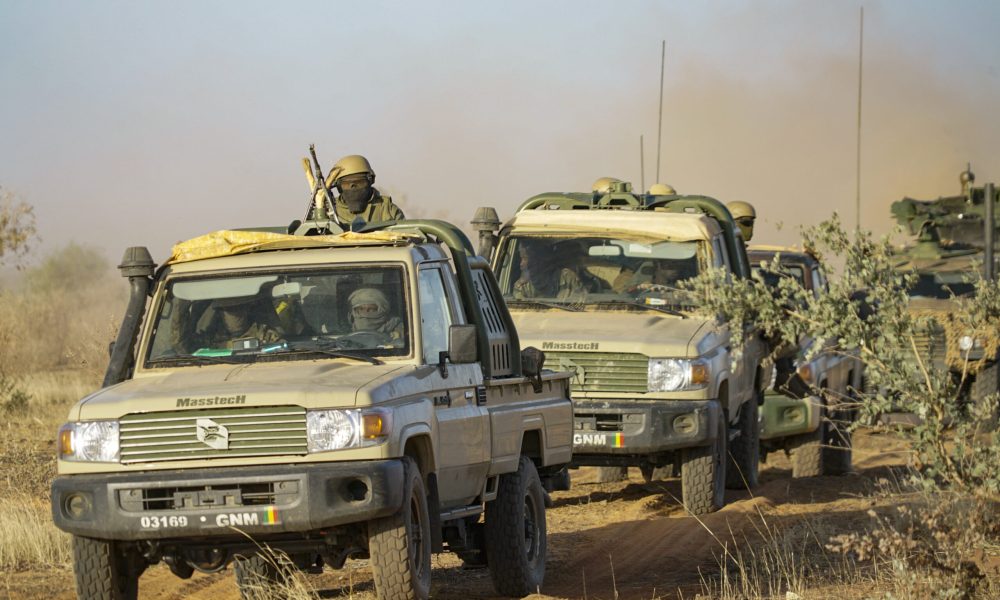
Reporting on 16 September indicates sustained jihadist pressure across the central Sahel, particularly from JNIM in Mali and neighbouring areas. Burkina Faso also faces reported threats to highways outside Ouagadougou and to named districts within the capital, although that location-specific reporting comes from a low-reliability travel source. In Nigeria, the Nigerian Army says troops rescued 360 captives from a Boko Haram enclave in Borno State, while investigative reporting links their return to an alleged secret ceasefire with Ibrahim Bakura Doro's faction. The faction and the Federal Government deny the reported arrangement, leaving causation and policy status unresolved. Nigeria is expanding its army, while ISWAP remains outside the reported arrangement.
Change from previous assessment
Compared with the 15 September brief, this assessment broadens the focus from a Nigeria-centred warning to a sustained central Sahel violence picture. It adds the disputed return of 360 captives in Borno State, the reported Niger mutiny and evidence of possible cross-border militant cooperation. The assessment now judges cross-border linkages more likely as a risk, while retaining the conclusion that a single coordinated jihadist campaign across West Africa is unproven. The prior emphasis on imminent threats to Nigerian schools, NYSC orientation camps and worship centres is not updated here because the current reporting set does not provide new evidence on those specific sites.
Key judgments
- It is very likely that jihadist violence in Mali, Burkina Faso and Niger has reached a sustained high level in 2026, with 2,145 incidents recorded during 2026 against 2,845 in all of 2025, while JNIM has expanded particularly in Mali and neighbouring areas. This is a reported judgement based on ACLED-referenced figures and separate reporting on JNIM. Confidence is medium because the incident figures and JNIM reporting are concentrated in local media rather than independently detailed operational reporting. (Confidence: medium · REPORTED)
- I&W: Confirm: a new ACLED-based count records more than 2,145 incidents in Mali, Burkina Faso and Niger during 2026, or places the full-year total above 2,845. (0-14 days)
- I&W: Break: an independent revision places the 2026 count below 2,145 and finds no corroboration of JNIM expansion in Mali or neighbouring areas. (1-3 months)
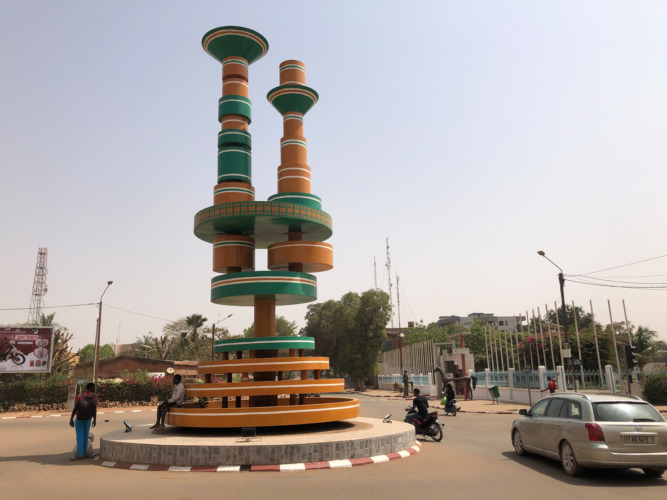
- It is likely that Burkina Faso will continue to present a high security risk around highways outside Ouagadougou and in the Balkiui and Rayongo areas of Arrondissement 11. Armed groups are reported to have attacked civilian, commercial and government vehicles on highways, while previous attacks in Ouagadougou and additional concern over nighttime travel in the two named areas indicate an urban and transport threat. Confidence is low because the location-specific reporting comes principally from a low-reliability travel blog and lacks independent incident confirmation. (Confidence: low · ASSESSED)
- I&W: Confirm: independent reporting identifies an armed-group attack on a highway outside Ouagadougou or a security incident in Balkiui or Rayongo. (0-14 days)
- I&W: Break: official or independent incident reporting records no armed-group attacks on the named highways or in the two Ouagadougou areas during the period. (1-3 months)
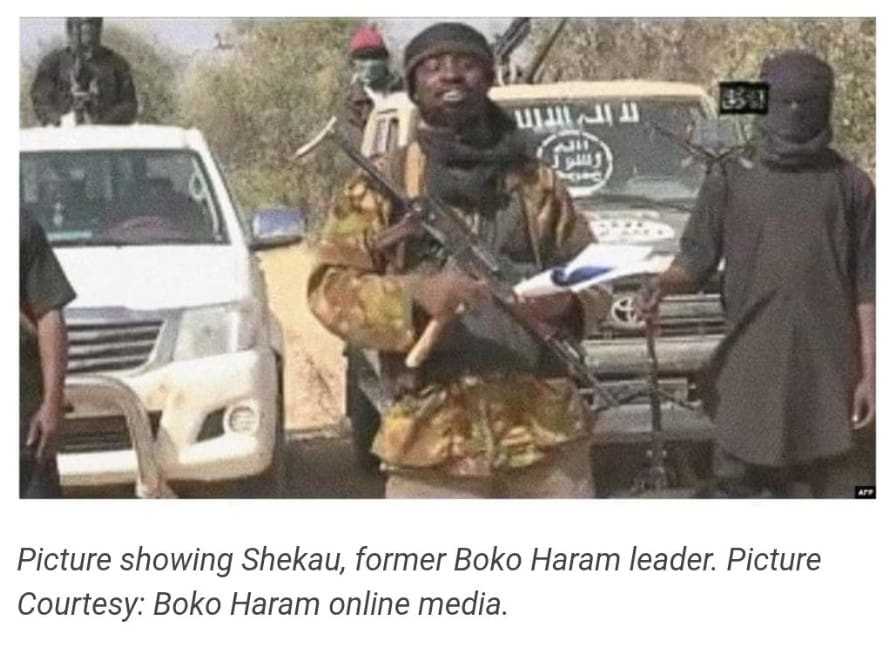
- It is very likely that the circumstances surrounding the return of 360 captives from Ngoshe in Borno State remain unresolved. The Nigerian Army attributes the return to a troop rescue from a Boko Haram enclave, while The New Humanitarian links it to an alleged secret three-month ceasefire with Ibrahim Bakura Doro's faction. The faction spokesman and the Nigerian Federal Government deny the ceasefire, and the alleged ₦5 billion payment remains disputed. Confidence is high for the unresolved status, but not for either causal account, because official, investigative, factional and governmental reporting directly conflict. (Confidence: high · ASSESSED)
- I&W: Confirm: the Nigerian Army, Ibrahim Bakura Doro's faction and the Federal Government continue to issue incompatible accounts of the captives' return or ceasefire status. (0-14 days)
- I&W: Break: a Nigerian government record and an independent humanitarian account jointly document whether the captives were rescued, released under a ceasefire, or transferred after payment. (1-3 months)
- It is likely that Nigeria will pursue greater military capacity while facing a fragmented jihadist threat in northeastern Nigeria. President Bola Tinubu approved an expansion of the Nigerian Army from eight to 12 divisions and recruitment of 28,000 personnel in July, while the reported arrangement involving the Bakura Doro faction excludes ISWAP. The Federal Government has not confirmed the arrangement and maintains that it does not negotiate with terrorist organisations. Confidence is medium because the army expansion is directly reported, but implementation and the status of the reported arrangement remain unverified. (Confidence: medium · ASSESSED)
- I&W: Confirm: the Nigerian Army publishes a force-generation timetable, assigns four additional divisions, or begins recruitment under the approved 28,000-person expansion. (1-3 months)
- I&W: Break: the Federal Government or Nigerian Army rescinds the July expansion decision or reports that recruitment and divisional expansion will not proceed. (1-3 months)
- It is likely that cross-border cooperation among militant networks will increase the risk of linkages between Sahel and Lake Chad violence, but it is unlikely that the supplied reporting proves a single command or coordinated campaign spanning JNIM, Boko Haram and ISWAP. Reporting describes cooperation across geographic boundaries and United Nations-identified links between JNIM and other al-Qaeda affiliates, but provides no operational evidence tying a specific attack in Nigeria to JNIM planning. Confidence is medium because the cooperation claims are risk assessments rather than independently documented operational cases. (Confidence: medium · ASSESSED)
- I&W: Confirm: a named JNIM, ISWAP or Boko Haram operation produces evidence of cross-border planning, personnel movement, weapons transfer or a joint claim of responsibility. (1-3 months)
- I&W: Break: independent reporting attributes incidents to separate local cells and finds no contact between JNIM, Boko Haram and ISWAP. (1-3 months)
Outlook & scenarios
Persistent Sahel violence without a unified campaign (55%)
Most likely, JNIM maintains pressure on roads, supply chains and state authority in Mali and neighbouring areas, while violence remains high in Burkina Faso and Niger. Nigeria continues to face Boko Haram and ISWAP activity, but available reporting does not establish shared command or coordinated planning across the four countries.
Mixed Nigerian containment (40%)
Nigeria expands its army and reports further operations against Boko Haram, while the status of the reported Bakura Doro arrangement remains disputed. The return of the 360 captives provides temporary relief in Borno State, but ISWAP remains outside the reported arrangement and sustains a separate security risk.
Cross-border militant linkage becomes operational (25%)
A named operation, weapons transfer or joint claim demonstrates practical cooperation between Sahel and Lake Chad networks. This would raise the likelihood that pressure on Mali, Burkina Faso and Niger connects to attacks or support activity affecting northeastern Nigeria.
Low-probability, high-impact political and security shock (10%)
A verified ceasefire with Ibrahim Bakura Doro's faction temporarily reduces Boko Haram activity, while ISWAP exploits the gap. Alternatively, the reported mutiny near Niamey produces a wider disruption to Nigerien military control, with Russian Africa Corps personnel remaining involved in the government's response.
Recommendations
- Maintain separate incident baselines for Mali, Burkina Faso, Niger and Nigeria. Attribute each event to JNIM, Boko Haram, ISWAP or an unidentified armed group before assessing regional trends.
- Prioritise collection on the 360-captive case in Ngoshe. Seek Nigerian Army operational records, humanitarian accounts, statements from Ibrahim Bakura Doro's faction and evidence concerning the alleged ₦5 billion payment. Treat the release mechanism and payment as unresolved until two independent lines of reporting converge.
- Track named transport and urban indicators in Burkina Faso, especially attacks on highways outside Ouagadougou and incidents in Balkiui and Rayongo. Do not elevate the travel-blog reporting to a regional warning without independent confirmation.
- Monitor implementation of Nigeria's approved expansion from eight to 12 army divisions and the recruitment of 28,000 personnel. Record whether the expansion produces deployable units in northeastern Nigeria before treating it as an operational change.
- Use the scheduled 16 January 2027 Nigerian presidential and National Assembly elections as a planning marker. Track security incidents, military deployments and disruptions affecting election preparations in Borno State and other areas exposed to Boko Haram or ISWAP activity.
- Keep West African collection distinct from the US homeland threat priority identified as East Africa. At the same time, monitor whether the US defence discussions with Ghana and Angola produce new regional security activity relevant to the Sahel or Lake Chad Basin.
Confidence & uncertainty
Overall confidence is high for the broad direction of the assessment because the main picture draws on ACLED-referenced incident figures, reporting on JNIM expansion, Nigerian Army statements, investigative reporting, factional denials and Federal Government positions. The principal uncertainties concern the cause of the 360-captive release, the alleged ransom payment, the implementation of Nigeria's army expansion and whether reported cross-border cooperation has produced operational coordination. Confidence is lower for the location-specific Burkina Faso warnings because those claims rely on a low-reliability travel source.
Intelligence gaps
- [EEI 1.1 · UNCOVERED] Intercepted or captured operational messages, orders, or timelines indicating planned attacks, named targets, or attack windows (dates/times) for specific towns, facilities, or convoys. Recommended collection: SIGINT
- [EEI 1.2 · UNCOVERED] Observed movement of armed groups, armed convoys, or weapons caches toward or within 20-100 km of named population centers, military bases, border crossing points, or major road/rail routes. Recommended collection: IMINT
- [EEI 1.3 · UNCOVERED] Recent local reporting, social‑media posts, or detainee/source statements claiming operational readiness, recruitment of attack teams, or calls for immediate attacks against specific targets. Recommended collection: OSINT
- [EEI 2.1 · UNCOVERED] Estimated numbers of fighters (by group) present in defined districts/regions and recent trends (increasing, stable, decreasing) based on ground reports, detainee statements, or biometric registration. Recommended collection: HUMINT
- [EEI 2.2 · UNCOVERED] Identification and geolocation of training camps, safe havens, or arms depots, including imagery of training activity, firing ranges, or stockpiled weapons and explosives. Recommended collection: IMINT
- [EEI 2.3 · PARTIAL] Seizures, battlefield recoveries, or credible reports describing types and quantities of weapons and munitions in use (e.g., RPGs, mortars, MANPADS, vehicle‑borne IED components) and recent changes in lethality. Recommended collection: LAW_ENFORCEMENT
- [EEI 2.4 · PARTIAL] Reports of foreign fighter arrivals/departures, external trainers or advisors present, or documented external technical assistance (IED construction, communications encryption) to named groups. Recommended collection: SIGINT
- [EEI 3.1 · UNCOVERED] Documented instances and amounts of extortion/taxation on towns, markets, transporters, or humanitarian agencies, including receipts, lists of taxed goods, and affected road segments. Recommended collection: HUMINT
- [EEI 3.2 · PARTIAL] Seizures or interdictions showing volumes and origins/destinations of trafficked commodities used for revenue (gold, drugs, charcoal, timber), and intercepted communications detailing smuggling routes or buyers. Recommended collection: LAW_ENFORCEMENT
- [EEI 3.3 · PARTIAL] Financial intelligence on suspicious cross‑border transfers, known money‑courier movements, or identified donor networks linked to named groups, including remittance patterns and intermediary accounts. Recommended collection: FININT
- [EEI 4.1 · PARTIAL] Changes in government/security force posture: troop deployments/withdrawals by unit and location, declared states of emergency, curfews, checkpoints established or removed, and equipment transfers/arrivals. Recommended collection: OSINT
- [EEI 4.2 · PARTIAL] Evidence of improved or degraded cross‑border security cooperation: joint patrols, information‑sharing agreements, troop movements across borders, or closing/opening of border crossings. Recommended collection: HUMINT
- [EEI 4.3 · PARTIAL] Humanitarian indicators: numbers of newly displaced persons by location, reported access denials to aid organizations, closures of clinics/schools, and routes experiencing mass civilian flight. Recommended collection: UN/HUMANITARIAN
- [EEI 4.4 · UNCOVERED] Documented incidents of security‑force abuses or communal reprisals (dates, locations, victims), and reports of local grievances exploited by jihadist recruiters. Recommended collection: LAW_ENFORCEMENT
Cited sources
[1] National Daily Nigeria · Sahel Under Siege: Jihadist Violence Surges Across Mali, Burkina Faso and Niger (D) · Wed Sep 16 2026 12:59:51 GMT+0000 (Coordinated Universal Time) · sha256:1009880b53f4 [2] Premium Times · Terror groups across Africa are expanding, leveraging technology - US AFRICOM chief (D) · Wed Sep 16 2026 10:15:38 GMT+0000 (Coordinated Universal Time) · sha256:2e7d212a2bcc [3] TravelSafe-Abroad.com · is Ouagadougou safe (E) · Wed Sep 16 2026 08:56:15 GMT+0000 (Coordinated Universal Time) · sha256:424f35096192 [4] Truth Nigeria · Boko Haram Truce Claims Raise New Questions Over Nigeria’s Counterterrorism Strategy - Truth Nigeria (D) · Wed Sep 16 2026 15:39:14 GMT+0000 (Coordinated Universal Time) · sha256:29052880ae5b [5] Horn Review · Ethiopia and the U.S. After the War on Terror: Within a New Arc of Terrorism (C) · sha256:5c3b3154c9aa
Source content hashes were computed at collection time; the cited text is preserved unmodified for the life of this product.
TLP:CLEAR