TLP:CLEAR · Disclosure is not limited.
West Africa Security Crisis: Jihadist Pressure and Fragmented Response
Time window: Last 1 day · Audience: General analyst · Type: Situation report · DTG: 2026-09-23 03:38Z · Overall confidence: LOW
BLUF
West African insecurity is very likely severe, but current reporting does not support a high-confidence claim of a new, uniform jihadist surge or restored security from military responses. Nigeria's reported fatalities and mass abduction, JNIM activity along routes in Mali and Senegal, and Islamic State presence in Burkina Faso and Niger indicate persistent pressure, while fragmented regional co-operation raises containment risks.
Executive summary
Current reporting indicates severe insecurity in Nigeria and sustained pressure from JNIM and Islamic State networks across several Sahelian theatres. Nigeria recorded 750 terrorism-related deaths in 2025, more than 17,000 insecurity-related fatalities under the current administration, and a reported abduction of about 600 people from three villages in Niger State. JNIM has targeted trade routes in Mali and Senegal, while Islamic State activity is reported in Burkina Faso and Niger. Regional co-operation remains weak following Niger's withdrawal from the Multinational Joint Task Force, the formation of the Alliance of Sahel States, and strained bilateral relations. The African Union Peace and Security Council's 23 September session provides a diplomatic forum, but current reporting does not demonstrate an operational response capable of restoring security.
Change from previous assessment
This brief broadens the assessment from a Mali-centred picture to a wider West Africa security assessment, adding new reporting on Nigeria's fatality and abduction figures, JNIM activity in Mali and Senegal, Islamic State presence in Burkina Faso and Niger, and Russia's Africa Corps role. The earlier judgment that a uniform region-wide surge was not established remains, but headline confidence is lowered from medium to low because the current evidence is more dependent on single-source local reporting, historical think-tank claims and contested statistical framings. No new judgment of durable military containment has been added because the current reporting still lacks comparable outcome measures.
Key judgments
- Nigeria is very likely facing severe and persistent insecurity, but the available reporting does not show that all of the more than 17,000 insecurity-related fatalities or the 750 terrorism-related deaths in 2025 were caused by jihadist groups. The reported abduction of about 600 people from Dekera, Gidan-Zana and Sabon Gida in Niger State indicates a continuing protection crisis, although that account is single-source local reporting. Confidence is low because the figures are carried principally by one low-reliability outlet, despite the fatality data being attributed to SBM Intelligence, Beacon Security and Intelligence, and Amnesty International. (Confidence: low · ASSESSED)
- I&W: Confirm if Nigerian authorities or an independent outlet verify the abduction from Dekera, Gidan-Zana and Sabon Gida, including the number of people still held. (0-14 days)
- I&W: Break if independent casualty reporting substantially revises the 750 terrorism-related deaths or the more than 17,000 insecurity-related fatalities, or attributes most of the totals to non-jihadist criminal or communal violence. (1-3 months)
- JNIM and Islamic State networks are likely to sustain pressure across several West African theatres over the next 1-3 months, but a uniform region-wide jihadist surge is unlikely to be established by the current evidence. JNIM has targeted overland trade routes in Mali and Senegal and foreign-owned businesses, while Islamic State presence is reported in Burkina Faso and Niger and Islamic State Sahel Province held de facto control of north-eastern Mali in 2022. The wider statistical picture is contested: one source places 70 percent of global terror deaths in five countries, while another assigns 70-75 percent of terrorism-related fatalities to Africa and identifies six African countries among the ten most affected. Confidence is low because the near-term assessment relies mainly on think-tank reporting, historical claims and incompatible statistical methods. (Confidence: low · ASSESSED)
- I&W: Confirm if independent reporting records a new JNIM attack, kidnapping or petroleum-route disruption in Mali or Senegal, or new Islamic State activity in Burkina Faso or Niger. (0-14 days)
- I&W: Break if a comparable incident series shows no new activity by either named network across all four theatres and no verified extension into additional West African states. (1-3 months)
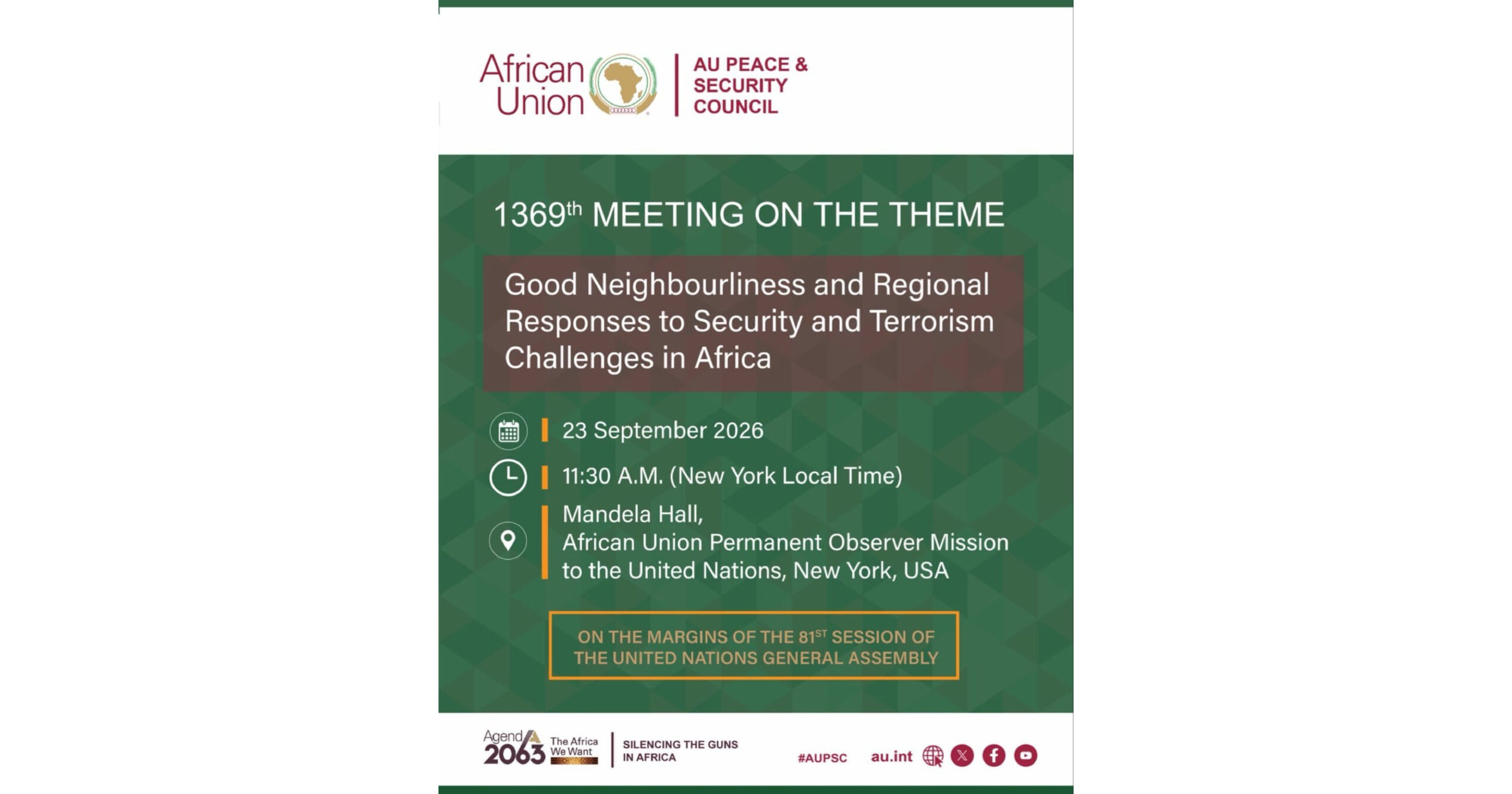
- Regional security co-operation is very likely to remain fragmented over the next 1-3 months, constraining collective responses to JNIM and Islamic State activity. Burkina Faso, Mali and Niger have withdrawn from ECOWAS and formed the Alliance of Sahel States; Niger also withdrew from the Multinational Joint Task Force, while relations between Niger and Nigeria, Niger and Benin, Mali and Algeria, and Burkina Faso and Côte d'Ivoire have deteriorated or remain strained. The African Union Peace and Security Council session on 23 September is a diplomatic response, not evidence of restored operational co-ordination. Confidence is low because the underlying reporting is largely from one think tank and describes institutional decisions rather than current field co-operation. (Confidence: low · ASSESSED)
- I&W: Confirm if Niger remains outside the Multinational Joint Task Force and no formal mechanism restores security co-operation between the Alliance of Sahel States and ECOWAS. (1-3 months)
- I&W: Break if Niger announces a return to the Multinational Joint Task Force, or the Alliance of Sahel States and ECOWAS agree a timed, operational cross-border security mechanism. (1-3 months)
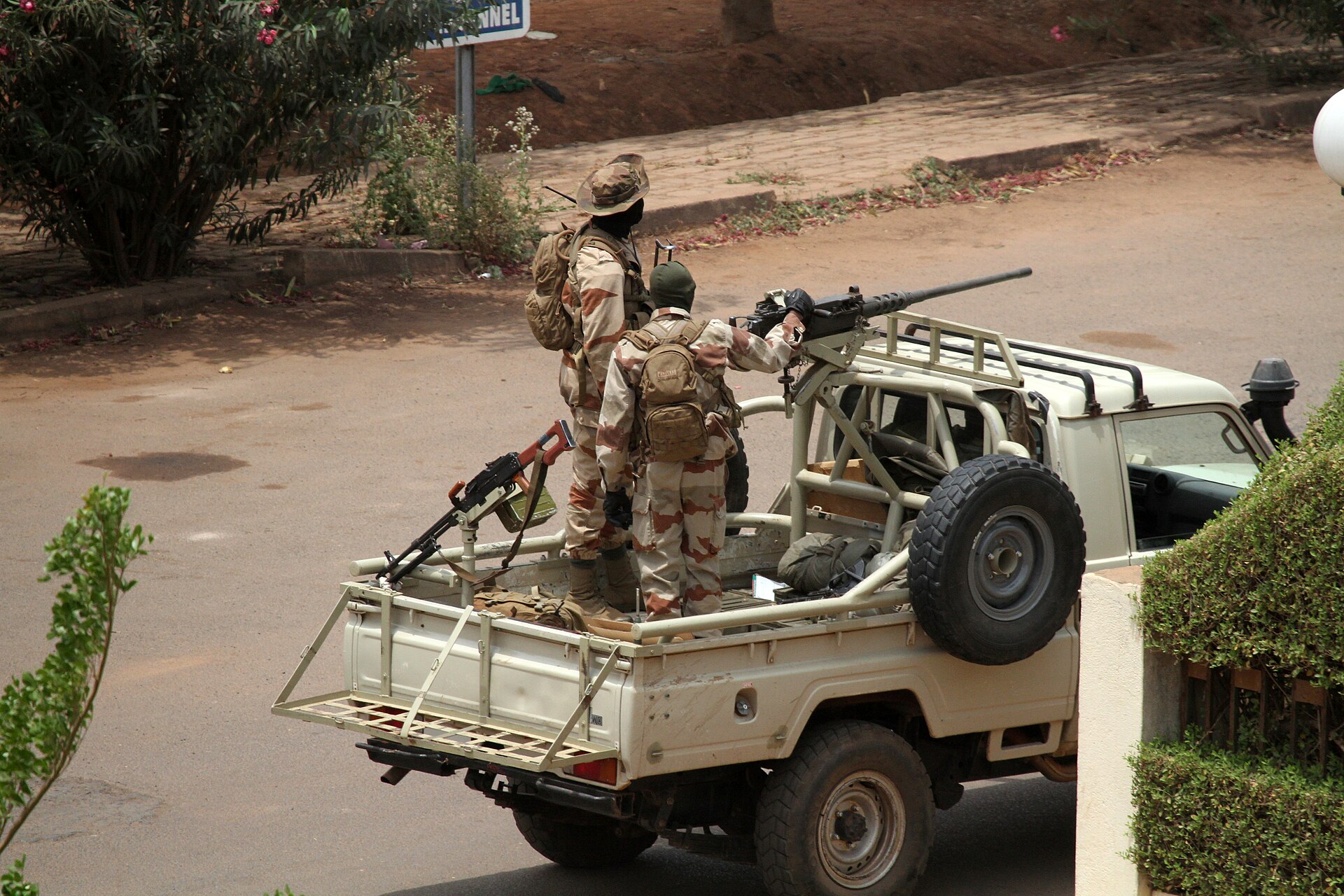
- It is unlikely that current military and external security responses will demonstrate durable containment within the next 1-3 months. Reporting describes Russia's Africa Corps providing security guarantees to Sahel states and weapons delivered to Conakry for Africa Corps operations in Mali, but Niger's withdrawal from the Multinational Joint Task Force and Nigeria's reported fatality and abduction figures indicate unresolved security outcomes. These claims show security activity and exposure, not operational effectiveness. Confidence is low because current reporting provides no comparable measure of incident reduction and includes single-source reporting on the Nigerian abduction. (Confidence: low · ASSESSED)
- I&W: Confirm if a new mass-casualty or mass-abduction incident is reported in Nigeria, or if JNIM disrupts another named trade route, despite reported Africa Corps security guarantees. (0-14 days)
- I&W: Break if independent reporting records a sustained fall in comparable insecurity incidents alongside verified restoration of cross-border operational co-ordination. (1-3 months)
Outlook & scenarios
Persistent, uneven jihadist pressure (65%)
JNIM sustains attacks and kidnappings affecting overland routes in Mali and Senegal, while Islamic State networks retain positions in Burkina Faso and Niger. Nigeria continues to experience severe insecurity, but available reporting remains too inconsistent to establish a single region-wide trend.
Fragmented containment efforts (55%)
The Alliance of Sahel States remains separate from ECOWAS, Niger stays outside the Multinational Joint Task Force, and strained bilateral relations limit co-ordination. The African Union Peace and Security Council session produces diplomatic attention without a verified operational mechanism. Russia's Africa Corps remains part of the external security response in the Sahel.
Co-ordinated regional response (25%)
The African Union session leads to a defined security mechanism, Niger restores co-operation with the Multinational Joint Task Force, and the Alliance of Sahel States establishes practical links with neighbouring governments. The scenario would require visible operational commitments rather than further political statements.
Niger State abduction shock (15%)
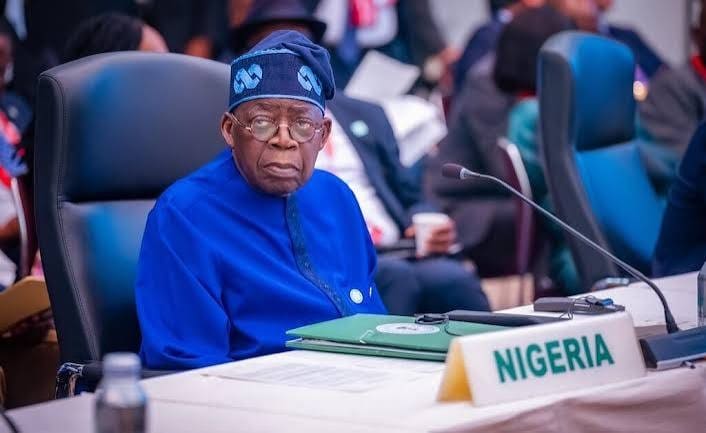
A further mass abduction in Niger State, or verification that about 600 people remain captive, intensifies domestic and external scrutiny of President Bola Ahmed Tinubu's handling of violence ahead of the 2027 general elections. Political pressure increases faster than the regional security response.
Recommendations
- Establish a 24-hour Nigeria incident watch covering Niger State, Dekera, Gidan-Zana and Sabon Gida. Record official confirmation, recovery or release activity, casualty figures and the provenance of each report before using the abduction total in analysis.
- Track the African Union Peace and Security Council session on 23 September for specific commitments on the Alliance of Sahel States, Niger's withdrawal from the Multinational Joint Task Force and cross-border security co-operation. Classify each commitment as political, funded or operational.
- Maintain separate incident series for JNIM activity in Mali and Senegal, Islamic State activity in Burkina Faso and Niger, and broader insecurity in Nigeria. Do not combine terrorism-related deaths with insecurity-related fatalities without an attribution assessment.
- Reconcile the competing Africa-wide terrorism statistics before making comparative trend claims. Preserve the differing denominators, country sets and methodologies rather than presenting the 70 percent and 70-75 percent figures as directly equivalent.
- Verify the Patria's AIS and satellite history, with particular attention to the discrepancy between four reported Douala to Owendo shuttle trips and five reported Douala port calls. Treat inferred loading, unloading and weapons transport as unconfirmed until corroborated.
- Assess Russia's Africa Corps as a reported security provider, not as evidence of improved security outcomes. Prioritise collection on verified deployments, weapons movements and comparable incident trends in Mali, Burkina Faso and Niger.
Confidence & uncertainty
Overall confidence is low because the key current Nigeria figures are reported principally through one low-reliability local-media source, while the Sahel assessments rely mainly on think-tank reporting and include historical claims. The two Africa-wide terrorism metrics use different denominators and country sets. Reporting on the Patria also contains a discrepancy over the number of Douala port calls, and the available material provides no consistent measure of whether military or external security activity has reduced violence.
Intelligence gaps
- [EEI 1.1 · UNCOVERED] Recent jihadist attack incidents in the last 72 hours: exact locations (GPS or nearest town), date/time, target type (market, military base, convoy, village, border post), weapon systems used, and reported casualty counts. Recommended collection: open source/social_media
- [EEI 1.2 · UNCOVERED] Observed jihadist force movements and posture within 100 km of major towns or critical infrastructure: convoy sightings, checkpoints established/removed, concentrations of fighters, and annotated route preparations. Recommended collection: aerial ISR/imagery
- [EEI 1.3 · UNCOVERED] Host-nation and partner military defensive measures near population centers and key infrastructure: troop redeployments, new checkpoints/curfews, roadblocks, air sortie launches, and activation of rapid reaction units (locations and unit IDs if available). Recommended collection: military liaison/satellite
- [EEI 1.4 · UNCOVERED] Humanitarian indicators of imminent threat to civilians: sudden internal displacement flows or mass movements within 72 hours, shelter/IDP site openings, and major road closures affecting civilian evacuation routes. Recommended collection: humanitarian/NGO
- [EEI 2.1 · PARTIAL] Reports or imagery confirming weapons and materiel holdings: number and types of heavy weapons observed or seized (mortars, artillery, technicals, IED caches, MANPADS), locations of caches, and recent rearmament deliveries. Recommended collection: imagery/HUMINT
- [EEI 2.2 · UNCOVERED] Active recruitment and propaganda indicators: new recruitment messages/accounts, numbers of claimed/new recruits by region, youth/ethnic group targeting, and physical recruitment events or forced conscriptions. Recommended collection: social_media/HUMINT
- [EEI 2.3 · UNCOVERED] Cross-border operational indicators: seizures or sightings of convoys crossing borders, capture/abandonment of border posts, patterns of fighters moving between neighboring countries, and use of transnational smuggling routes. Recommended collection: border_patrol/satellite
- [EEI 3.1 · UNCOVERED] Force posture and sustainment: foreign and host-nation troop deployments (unit types, strength estimates, bases used), changes in airbase activity (sortie rates, aircraft types, times), and frequency of logistics convoys or resupply flights. Recommended collection: diplomatic/military_reporting/satellite
- [EEI 3.2 · UNCOVERED] Combat effectiveness indicators from recent engagements: verified casualty and equipment loss counts for state forces and jihadist units, territory regained or lost after operations, and number of operations meeting objectives versus failures. Recommended collection: open source/military_reports
- [EEI 3.3 · PARTIAL] Critical sustainment vulnerabilities: reported ammunition/fuel shortages, road/bridge interdictions affecting supply lines, strikes on logistics hubs, and closure rates of key supply routes. Recommended collection: logistics/imagery
Cited sources
[1] TruthNigeria · Tinubu Hands Key Agencies to Northern Power Families While Spending Millions to Shape U.S. Perceptions of Christian Killings - Truth Nigeria (E) · Tue Sep 22 2026 04:12:00 GMT+0000 (Coordinated Universal Time) · sha256:44684a545ecd [2] NATO Association of Canada · The Sahel’s Security Imperative: How Resurgent Jihadist Violence Challenges Africa’s and the West’s Economic Potential (C) · Tue Sep 22 2026 17:58:55 GMT+0000 (Coordinated Universal Time) · sha256:a0f0b6e1a3d8 [3] Amani Africa · Good Neighbourliness and Regional Responses to Security and Terrorism Challenges in Africa (C) · Tue Sep 22 2026 05:53:37 GMT+0000 (Coordinated Universal Time) · sha256:cb8a219ccb67 [4] Bellingcat · Tracking a Sanctioned Russian Vessel’s West African Odyssey - bellingcat (B) · Tue Aug 25 2026 08:52:50 GMT+0000 (Coordinated Universal Time) · sha256:cb5fed118272
Source content hashes were computed at collection time; the cited text is preserved unmodified for the life of this product.
Red cell review: CONCUR WITH COMMENT
TLP:CLEAR