TLP:CLEAR · Disclosure is not limited.
West Africa Security Crisis: Persistent Violence, Unproven Regional Surge
Time window: Last 1 day · Audience: General analyst · Type: Situation report · DTG: 2026-08-24 15:38Z · Overall confidence: LOW
BLUF
A region-wide jihadist surge is unlikely to be established from the available evidence. Persistent violence is likely to continue in northeastern Nigeria, the Lake Chad basin and the Sahel, but the current reporting does not independently link these incidents to one coordinated escalation.
Executive summary
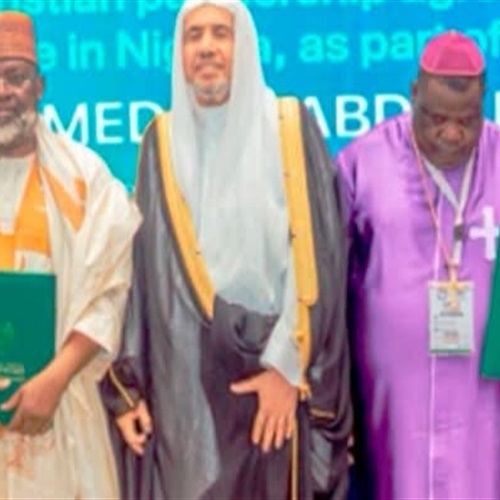
The collection shows ongoing armed activity by Boko Haram and ISIS in northeastern Nigeria, a humanitarian crisis in the Lake Chad basin, Boko Haram taxation of fish and cattle, JNIM activity across the Sahel and West Africa, and continuing difficulty for the Malian army in containing jihadist elements. Reporting also describes an attack on worshippers during Friday prayers in Dekara and a video showing kidnapped people in Niger State, but the dates, casualty figures and attribution of Nigerian incidents are uneven. More than 50 Christian and Muslim religious leaders have signed an Abuja peace agreement ahead of Nigeria's January 2027 elections, providing a limited mitigating development.
Change from previous assessment
Since the 22 August 2026 prior brief, no independently corroborated attack data in this cycle materially changes the localised-incident judgement. That judgement is retained, while confidence in any region-wide surge assessment remains low. The analytic emphasis has broadened from the Dikera incident and its disputed attribution to financing activity, response fragmentation and the limited mitigating potential of Nigeria's Abuja agreement.
Key judgments
- A region-wide jihadist surge is unlikely on the available evidence; persistent jihadist activity is likely to remain concentrated in northeastern Nigeria, the Lake Chad basin and the wider Sahel. Boko Haram and ISIS are reported to continue armed operations in northeastern Nigeria, Boko Haram is reported to tax fish and cattle around Lake Chad, JNIM operates in the Sahel and West Africa, and the Malian army has struggled to contain jihadist elements. The collection does not provide independent, contemporaneous confirmation that these reports represent one coordinated regional escalation. Confidence is low because several relevant reports are undated, drawn from local media or historical, and do not corroborate one another on the same incidents. (Confidence: low · ASSESSED)
- I&W: Within 0-14 days, two independent dated reports identify Boko Haram, ISIS or JNIM attacks in at least two of northeastern Nigeria, the Lake Chad basin or Mali, with consistent locations and casualty figures. (0-14 days)
- I&W: Within 0-14 days, official Nigerian, Chadian and Malian reporting, supported by independent reporting, shows no new jihadist incidents in these areas and attributes the cited Nigerian violence to non-jihadist actors. (0-14 days)
- Kidnapping and livelihood extraction are likely to remain important financing mechanisms for armed groups in Nigeria and the Sahel. The collection records an armed group releasing a video of kidnapped people in Niger State, the reported abduction of approximately 600 women, children and elderly people during a mosque attack in Niger State on 24 August 2023, Boko Haram taxation of fish and cattle around Lake Chad, armed-group efforts to profit from lithium trade in the Sahel, and Al-Qaeda in the Sahel expanding operations to strengthen funding sources. Confidence is low because the 600-person kidnapping report is historical, other kidnapping reporting is undated, and the responsible actors are not consistently identified. (Confidence: low · ASSESSED)
- I&W: Within 0-14 days, a dated video or official incident report links a new kidnapping in Niger State to an armed group and provides a verifiable victim count. (0-14 days)
- I&W: Within 1-3 months, authorities report dismantling taxation networks affecting fishers and herders around Lake Chad, while independent reporting records no new armed-group exploitation of lithium sites in the Sahel. (1-3 months)
- A coherent region-wide counter-terrorism response is unlikely within the next 1-3 months. The reporting instead shows anti-terrorist forces based at Baga Sola, Chad, facing Boko Haram incursions from Nigeria, the Malian army struggling to contain jihadists, and ECOWAS threatening military intervention against Niger's junta, without evidence of an integrated operational response. Confidence is low because the Baga Sola, Mali and ECOWAS reporting is undated or historical, and the collection does not establish current force deployments or a shared command structure. (Confidence: low · ASSESSED)
- I&W: Within 1-3 months, ECOWAS and national authorities announce a named joint operation involving Nigerian, Chadian or Malian forces and confirm deployment to a specified location. (1-3 months)
- I&W: Within 1-3 months, authorities at Baga Sola or in Nigeria and Mali report separate national responses without a common command, shared force deployment or cross-border operation. (1-3 months)
- Nigeria's Abuja interfaith peace agreement is unlikely to produce a verified near-term reduction in jihadist violence before the January 2027 elections. More than 50 Christian and Muslim religious leaders signed the agreement, which includes a coordination and dialogue body, executive programmes and periodic evaluation, but the collection provides no evidence that these mechanisms are operating or affecting attacks. Confidence is low because the agreement is reported mainly by local media and its implementation remains unverified. (Confidence: low · ASSESSED)
- I&W: Within 0-14 days, the Abuja coordination and dialogue body is formally established and publishes an implementation programme or evaluation schedule. (0-14 days)
- I&W: Within 1-3 months, a dated attack attributed to Boko Haram or ISIS occurs in northeastern Nigeria after the agreement without a public response from the new body. (1-3 months)
Outlook & scenarios
Localised persistence without a proven regional surge (50%)
This is the most likely outcome. Boko Haram and ISIS continue operations in northeastern Nigeria, while violence and kidnapping reports in Niger State remain unevenly attributed. JNIM and Al-Qaeda-linked financing activity persists elsewhere in the Sahel without clear evidence of coordinated expansion.
Sahelian financing expands and pressure spreads (25%)
Armed groups increase revenue collection from fish, cattle and lithium-linked activity. Al-Qaeda in the Sahel expands its operations beyond existing concentrations, placing additional pressure on Mali and communities around the Lake Chad basin.
Limited containment through dialogue and national responses (20%)
Nigeria's Abuja agreement establishes its coordination body and reduces some communal tension before the January 2027 elections, while national security forces contain attacks in specific localities. This outcome does not require a region-wide counter-terrorism force.
High-impact mass-kidnapping or mass-casualty shock (5%)
A large kidnapping or mass-casualty attack in Niger State or the Lake Chad basin sharply increases public pressure on Nigerian and Chadian authorities. The incident would test anti-terrorist forces at Baga Sola and could prompt demands for a more integrated regional response.
Recommendations
- Prioritise a 0-14 day validation effort on the reported mosque attack in Dekara and the kidnapping video from Niger State. Seek dated official Nigerian reporting, victim counts, location confirmation and actor attribution before revising the regional assessment.
- Maintain a named-actor incident ledger for Boko Haram, ISIS, JNIM and Al-Qaeda in the Sahel. Record the date, location, target type, casualty count, kidnapping activity, taxation claims and any evidence of movement between northeastern Nigeria, the Lake Chad basin, Mali and the wider Sahel.
- Track implementation of the Abuja agreement as a measurable mitigation line. Confirm whether the coordination and dialogue body is established, whether executive programmes receive resources, and whether periodic evaluations occur before the January 2027 elections.
- Keep analytic language at persistent and localised rather than region-wide until two independent sources corroborate dated attacks involving the same named actor or a clear cross-border pattern.
- Monitor whether ECOWAS or national authorities announce a named joint operation with specified units, locations and command arrangements. Treat statements of intent without confirmed deployments as political signalling rather than evidence of an operational regional response.
Confidence & uncertainty
Overall confidence is low. The strongest support concerns enduring structural conditions, including Boko Haram and ISIS operations in northeastern Nigeria, the Lake Chad humanitarian crisis, JNIM activity across the Sahel and the Malian army's difficulty containing jihadists. The most decision-relevant Nigerian attack and kidnapping reporting is partly undated, single-source or historical, with inconsistent attribution and limited independent corroboration. The collection therefore does not establish the scale, timing or coordination of a region-wide surge.
Intelligence gaps
- [EEI 1.1 · UNCOVERED] Intercepted or captured operational messages, orders, or timelines indicating planned attacks, named targets, or attack windows (dates/times) for specific towns, facilities, or convoys. Recommended collection: SIGINT
- [EEI 1.2 · UNCOVERED] Observed movement of armed groups, armed convoys, or weapons caches toward or within 20-100 km of named population centers, military bases, border crossing points, or major road/rail routes. Recommended collection: IMINT
- [EEI 1.3 · UNCOVERED] Recent local reporting, social‑media posts, or detainee/source statements claiming operational readiness, recruitment of attack teams, or calls for immediate attacks against specific targets. Recommended collection: OSINT
- [EEI 2.1 · UNCOVERED] Estimated numbers of fighters (by group) present in defined districts/regions and recent trends (increasing, stable, decreasing) based on ground reports, detainee statements, or biometric registration. Recommended collection: HUMINT
- [EEI 2.2 · UNCOVERED] Identification and geolocation of training camps, safe havens, or arms depots, including imagery of training activity, firing ranges, or stockpiled weapons and explosives. Recommended collection: IMINT
- [EEI 2.3 · UNCOVERED] Seizures, battlefield recoveries, or credible reports describing types and quantities of weapons and munitions in use (e.g., RPGs, mortars, MANPADS, vehicle‑borne IED components) and recent changes in lethality. Recommended collection: LAW_ENFORCEMENT
- [EEI 2.4 · UNCOVERED] Reports of foreign fighter arrivals/departures, external trainers or advisors present, or documented external technical assistance (IED construction, communications encryption) to named groups. Recommended collection: SIGINT
- [EEI 3.1 · UNCOVERED] Documented instances and amounts of extortion/taxation on towns, markets, transporters, or humanitarian agencies, including receipts, lists of taxed goods, and affected road segments. Recommended collection: HUMINT
- [EEI 3.2 · UNCOVERED] Seizures or interdictions showing volumes and origins/destinations of trafficked commodities used for revenue (gold, drugs, charcoal, timber), and intercepted communications detailing smuggling routes or buyers. Recommended collection: LAW_ENFORCEMENT
- [EEI 3.3 · UNCOVERED] Financial intelligence on suspicious cross‑border transfers, known money‑courier movements, or identified donor networks linked to named groups, including remittance patterns and intermediary accounts. Recommended collection: FININT
- [EEI 4.1 · PARTIAL] Changes in government/security force posture: troop deployments/withdrawals by unit and location, declared states of emergency, curfews, checkpoints established or removed, and equipment transfers/arrivals. Recommended collection: OSINT
- [EEI 4.2 · UNCOVERED] Evidence of improved or degraded cross‑border security cooperation: joint patrols, information‑sharing agreements, troop movements across borders, or closing/opening of border crossings. Recommended collection: HUMINT
- [EEI 4.3 · PARTIAL] Humanitarian indicators: numbers of newly displaced persons by location, reported access denials to aid organizations, closures of clinics/schools, and routes experiencing mass civilian flight. Recommended collection: UN/HUMANITARIAN
Cited sources
[1] afrinz.ru · Médias: environ 600 personnes enlevées lors d'une attaque contre une mosquée au Nigeria (B) · sha256:86496c9aa8ff [2] islamist-movements.com · اتفاق سلام بين قادة مسيحيين ومسلمين في نيجيريا. هل يوقف العنف ؟ (D) · sha256:e96c7b0d592b [3] The Conversation · Boko Haram News, Research and Analysis - The Conversation (B) · sha256:fe5c4e665ce1 [4] dinpresse.net · تنظيم القاعدة… الفروع المباشرة والحليفة - دين بريس (D) · sha256:11cc59476ac8 [5] Wikipedia · 2023 Nigerien coup d'état (B) · sha256:82ba98a03eb0
Source content hashes were computed at collection time; the cited text is preserved unmodified for the life of this product.
TLP:CLEAR