TLP:CLEAR · Disclosure is not limited.
West Africa SITREP: Jihadist Threat Watch, 12-13 July 2026
Time window: Last 1 day · Audience: General analyst · Type: Situation report · DTG: 2026-07-13 14:40Z · Overall confidence: MEDIUM
BLUF
Open sources in the last 24 hours do not report fresh, attributable jihadist attacks in West Africa. Nigeria advanced high‑profile agribusiness engagement with France, while escalating Gulf maritime risk is likely to push up costs that spill into West African import routes in the weeks ahead.
Executive summary
The current open‑source stream is dominated by Gulf military escalation and shipping disruption, alongside Nigeria, France agribusiness diplomacy in Lagos. There were no attack claims from West African theatres in this window. Given the absence of directly relevant security reporting, this update focuses on peripheral indicators: Nigeria’s economic engagement that may proceed despite insecurity, and external maritime shocks around the Strait of Hormuz that are likely to transmit price and logistics pressure into West African markets.
Change from previous assessment
Since the 12 July brief, the intake contained no new, attributable claims of jihadist activity in West Africa, so incident counts and attributions are not updated. This update adds an assessment on external maritime‑shock transmission to West African markets and tracks Nigeria, France agribusiness engagement. Confidence on near‑term attack‑trend judgments is lowered due to thin, non‑corroborating reporting in the window.
Key judgments
- Insufficient evidence this cycle to assess any fresh uptick in jihadist attacks across West Africa; open‑source reporting concentrated on Gulf military escalation and on Nigeria, France agribusiness engagement, with no attack claims from West African theatres in the window reviewed. (Confidence: insufficient · ASSESSED)
- I&W: Credible multi‑source reports or communiqués claiming responsibility for armed attacks in Burkina Faso, Mali, Niger or northern Nigeria carried by reputable outlets. (0-14 days)
- I&W: Another reporting cycle with no attributable attack claims in West Africa from major wires and established local security monitors. (1-3 months)
- Nigeria and France are very likely deepening agribusiness ties, with formal commitments and a new France, Nigeria Agri‑Business Club announced in Lagos, suggesting programmes will proceed despite a challenging security environment. (Confidence: high · REPORTED)
- I&W: Signed MoUs or financing packages announced by Lagos‑based officials or the French Embassy covering technical assistance or market access. (1-3 months)
- I&W: Public postponement or cancellation of the Agri‑Business Club’s near‑term activities by organisers. (0-14 days)
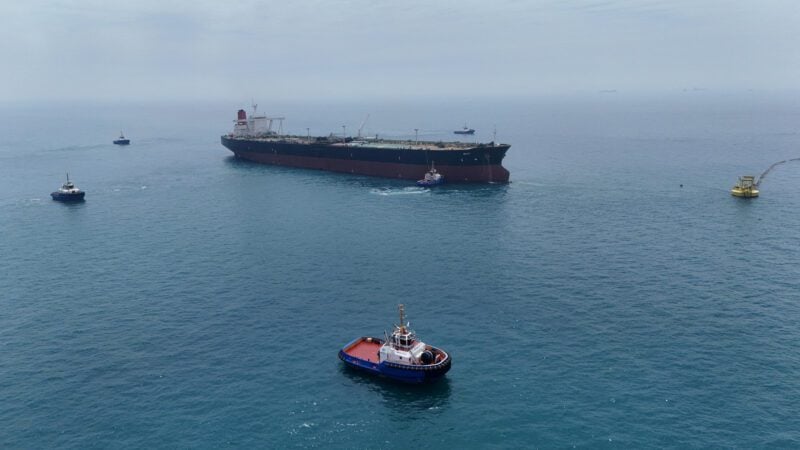
- Escalation around the Strait of Hormuz is likely to lift shipping costs and risk premia that spill into West African import routes, tightening fuel and consumer‑goods supply over the next quarter. (Confidence: medium · ASSESSED)
- I&W: Carriers apply risk surcharges or capacity reductions on West Africa services and quote higher all‑in rates to Lagos or Tema. (1-3 months)
- I&W: Observable Hormuz transits return to typical volumes and maritime bodies report fewer attacks and harassment incidents. (1-3 months)
Outlook & scenarios
Muted reporting, elevated latent risk (60%)
Over the next 2-4 weeks, open sources continue to lack clear, attributable attack claims from West Africa while background insecurity persists; Nigeria’s economic diplomacy advances and external maritime shocks contribute to gradual price pressure.
Supply‑shock strain from Hormuz (30%)
If Gulf disruption endures, higher freight and insurance costs transmit into West African import markets, risking intermittent fuel shortages and localised unrest that complicate security force posture even without a documented rise in claimed attacks.
Programme pause in agribusiness engagement (20%)
Security and logistics headwinds force postponement of the Nigeria, France agribusiness initiatives, delaying prospective benefits and leaving producers exposed to market uncertainty.
Recommendations
- Maintain daily collection on reputable local outlets and official channels in Nigeria and neighbouring West African states for any attributable attack claims or communiqués, and log negative reporting to track gaps.
- Task the economic watch to monitor carrier advisories, insurance circulars and all‑in freight quotes to West African ports such as Lagos and Tema for early signs of risk surcharges or capacity cuts linked to Hormuz.
- Engage French and Nigerian counterparts to obtain schedules and deliverables for the France, Nigeria Agri‑Business Club and related technical assistance, and flag any slippage as a potential indicator of deteriorating operating conditions.
- Prepare a short‑fuse alerting framework to rapidly brief on any credible West Africa attack claim, including templated distribution lists and pre‑cleared language for leadership updates.
- Coordinate with NGO and commercial security liaisons in Lagos and Abuja to refresh site‑hardening and travel‑risk assumptions should supply shocks elevate protest risk.
Confidence & uncertainty
Overall confidence is medium. The Nigeria, France agribusiness items and Gulf maritime developments are well sourced and mutually consistent, but they are peripheral to the focal question of jihadist attack tempo in West Africa. The absence of directly relevant attack reporting in this window limits fidelity on threat trends, so judgments about violent activity are bounded and flagged as insufficient or assessed with reduced confidence.
Alternative analysis (red cell)
The available reporting is dominated by high‑visibility Gulf events and public statements about a France–Nigeria agribusiness initiative, with no on‑the‑ground West Africa incident reporting in the run. Therefore, the absence of West African attack claims should be treated as a surveillance gap rather than evidence of no change, and Gulf shipping disruption reporting supports heightened risk but does not by itself prove inevitable spillover into West African import supply chains without corroborating logistics or market data.
Intelligence gaps
- [EEI 1.1 · UNCOVERED] Intercepted or captured operational messages, orders, or timelines indicating planned attacks, named targets, or attack windows (dates/times) for specific towns, facilities, or convoys. Recommended collection: SIGINT
- [EEI 1.2 · UNCOVERED] Observed movement of armed groups, armed convoys, or weapons caches toward or within 20–100 km of named population centers, military bases, border crossing points, or major road/rail routes. Recommended collection: IMINT
- [EEI 1.3 · UNCOVERED] Recent local reporting, social‑media posts, or detainee/source statements claiming operational readiness, recruitment of attack teams, or calls for immediate attacks against specific targets. Recommended collection: OSINT
- [EEI 2.1 · UNCOVERED] Estimated numbers of fighters (by group) present in defined districts/regions and recent trends (increasing, stable, decreasing) based on ground reports, detainee statements, or biometric registration. Recommended collection: HUMINT
- [EEI 2.2 · UNCOVERED] Identification and geolocation of training camps, safe havens, or arms depots, including imagery of training activity, firing ranges, or stockpiled weapons and explosives. Recommended collection: IMINT
- [EEI 2.3 · PARTIAL] Seizures, battlefield recoveries, or credible reports describing types and quantities of weapons and munitions in use (e.g., RPGs, mortars, MANPADS, vehicle‑borne IED components) and recent changes in lethality. Recommended collection: LAW_ENFORCEMENT
- [EEI 2.4 · UNCOVERED] Reports of foreign fighter arrivals/departures, external trainers or advisors present, or documented external technical assistance (IED construction, communications encryption) to named groups. Recommended collection: SIGINT
- [EEI 3.1 · UNCOVERED] Documented instances and amounts of extortion/taxation on towns, markets, transporters, or humanitarian agencies, including receipts, lists of taxed goods, and affected road segments. Recommended collection: HUMINT
- [EEI 3.2 · UNCOVERED] Seizures or interdictions showing volumes and origins/destinations of trafficked commodities used for revenue (gold, drugs, charcoal, timber), and intercepted communications detailing smuggling routes or buyers. Recommended collection: LAW_ENFORCEMENT
- [EEI 3.3 · UNCOVERED] Financial intelligence on suspicious cross‑border transfers, known money‑courier movements, or identified donor networks linked to named groups, including remittance patterns and intermediary accounts. Recommended collection: FININT
- [EEI 4.1 · PARTIAL] Changes in government/security force posture: troop deployments/withdrawals by unit and location, declared states of emergency, curfews, checkpoints established or removed, and equipment transfers/arrivals. Recommended collection: OSINT
- [EEI 4.2 · UNCOVERED] Evidence of improved or degraded cross‑border security cooperation: joint patrols, information‑sharing agreements, troop movements across borders, or closing/opening of border crossings. Recommended collection: HUMINT
- [EEI 4.3 · PARTIAL] Humanitarian indicators: numbers of newly displaced persons by location, reported access denials to aid organizations, closures of clinics/schools, and routes experiencing mass civilian flight. Recommended collection: UN/HUMANITARIAN
- [EEI 4.4 · UNCOVERED] Documented incidents of security‑force abuses or communal reprisals (dates, locations, victims), and reports of local grievances exploited by jihadist recruiters. Recommended collection: LAW_ENFORCEMENT
Cited sources
[1] aljazeera.com · New Iran strikes on Gulf as US attacks escalate: What we know (A) · sha256:f9719fb4407c [2] gcaptain.com · Oil Jumps As Conflict Over Hormuz Escalates With Fresh Strikes (A) · sha256:684e45dde109 [3] THISDAYLIVE · France, Nigeria Strengthen Agri-Business Partnership to Boost Agriculture’s GDP Contribution – THISDAYLIVE (B) · sha256:64480b2ecbf7 [4] gcaptain.com · Ships Transit Hormuz in Secret as US and Iran Trade Strikes (A) · sha256:fd2602fdd5fa [5] gcaptain.com · IMO Council Reaffirms Freedom of Navigation, Condemns Attacks on Commercial Shipping (A) · sha256:db719dbf2041
Source content hashes were computed at collection time; the cited text is preserved unmodified for the life of this product.
Red cell review: PARTIAL DISSENT
TLP:CLEAR