TLP:CLEAR · Disclosure is not limited.
Yemen-Saudi Arabia: aerial threats, Taiz access and blockade risk
Time window: Last 1 day · Audience: General analyst · Type: Situation report · DTG: 2026-10-31 21:41Z · Overall confidence: HIGH
BLUF
Saudi Arabia is facing recurring aerial threats while Houthi advances around Taiz are sharply restricting humanitarian access. Further aerial attempts are likely in the next 14 days, but the supplied reporting does not establish an effective maritime blockade or independently verify Houthi claims of attacks on Saudi energy sites.
Executive summary
Coalition reports describe drone and missile threats around Riyadh and Medina on 30 and 31 October, although accounts differ on dates and numbers. The Saudi Civil Aviation Authority reported that an attack on King Khalid International Airport on 10 October killed 12 people and injured 309. The Houthis claim to have targeted Saudi airports, oil facilities and a military headquarters, but those claims are not independently confirmed. Around Taiz, reports say Houthi forces cut primary routes, while the World Food Program said more than 600,000 people in Taiz and 800,000 people overall were beyond its reach; 12 Taiz hospitals were reported close to running out of fuel. The UN reported that Mohammed al-Shami died in Houthi detention and called for an investigation. Qatar's reported role in the supplied material is mediation with Pakistan in discussions with Iran; the material does not substantiate a Qatari warning of imminent war or establish that these talks concern Yemen.
Change from previous assessment
Since the 30 October brief, coalition reporting adds a Riyadh drone interception on 31 October and a Medina interception report, while disagreement over dates and counts remains. New reporting gives more specific detail on Taiz route losses, says 12 hospitals are close to fuel exhaustion and reports that UN staff member Mohammed al-Shami died in Houthi detention. The prior brief's Houthi-side figure of 93 Saudi strikes in 24 hours is no longer a sound basis for estimating tempo: current reporting gives a different figure of 66 and a separate claim of 100 fighter aircraft, neither independently reconciled. Confidence in the strike-tempo assessment is therefore low. Initial assessments of effective maritime blockade risk and the al-Shami detention case have been added.
Key judgments
- Saudi Arabia very likely faced aerial threats on 30 and 31 October, and further attempted attacks are likely within the next 14 days. Coalition spokesman Turki al-Malki reported that a drone was intercepted in the Riyadh region on 31 October, with no injuries from falling debris. Coalition accounts also describe a drone near Riyadh and a ballistic missile towards Saudi Arabia's southern region on 30 October, as well as a drone interception over Medina. The Houthis denied targeting Medina. The Saudi Civil Aviation Authority reported that an attack on King Khalid International Airport on 10 October killed 12 people and injured 309. Yahya Saree separately claimed Houthi attacks on Ras Tanura refinery, an Aramco facility in Abqaiq, King Khalid and King Fahd international airports, Rabigh refinery and a military headquarters in Najran. Those target claims are not independently confirmed, and conflicting dates and counts leave some interception reports unresolved. (Confidence: medium · ASSESSED)
- I&W: A dated Saudi coalition notice reports another interception over Riyadh, Medina or the southern region, confirming continued aerial threats. (0-14 days)
- I&W: King Khalid International Airport operates on its normal schedule for 14 consecutive days with no new coalition aerial-threat notices, breaking the assessment of persistent near-term threats. (0-14 days)
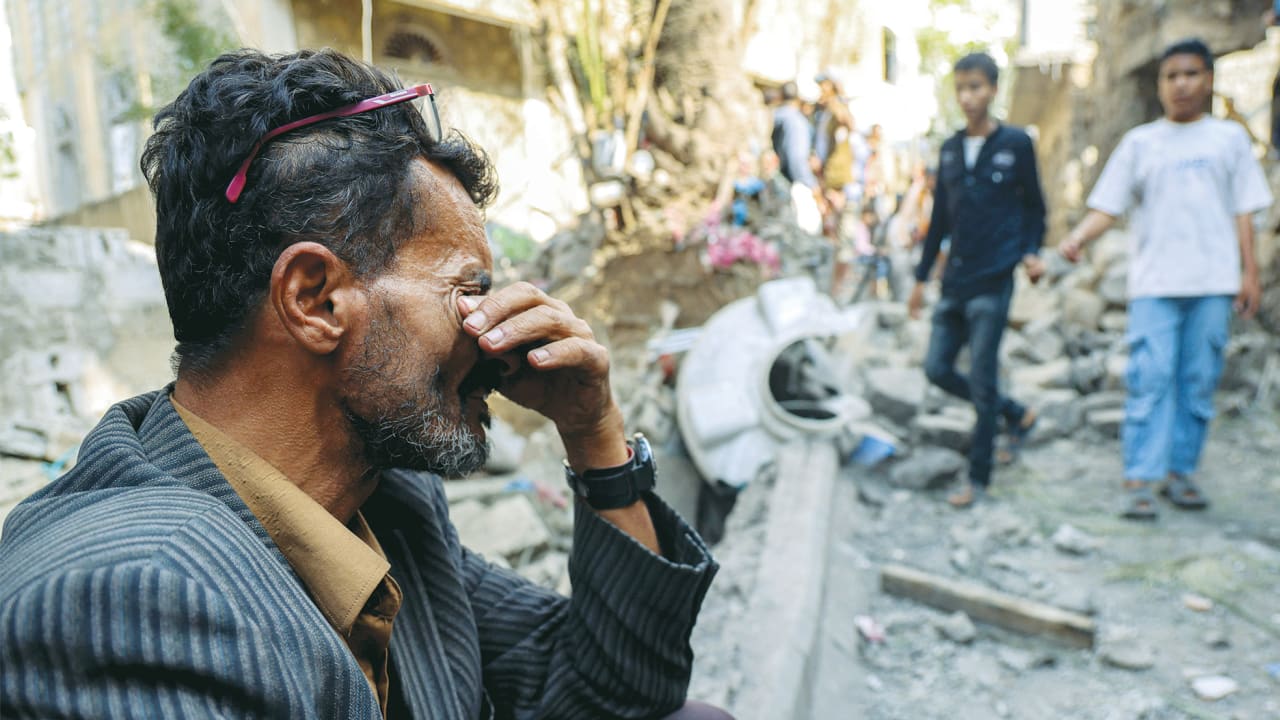
- Houthi control of Taiz's primary exits is likely to keep humanitarian access and essential services under acute pressure over the next 14 days. Reporting says Houthi forces captured al-Safiya, severed the main Taiz-Aden road and damaged the Hejat al-Abd road. The World Food Program said it could not reach more than 600,000 people in Taiz, including over 200,000 women and children, and that 800,000 people in total, including communities on Yemen's west coast, were beyond its reach. On 31 October, 12 hospitals in Taiz were reported to be hours from running out of fuel. (Confidence: medium · ASSESSED)
- I&W: The World Food Program reports restored access to more than 600,000 people in Taiz and reporting confirms that the Taiz-Aden route has reopened, breaking the assessment of continuing access constraints. (0-14 days)
- I&W: Two or more of the 12 reported Taiz hospitals announce fuel exhaustion or service suspensions, confirming worsening pressure on essential services. (0-14 days)
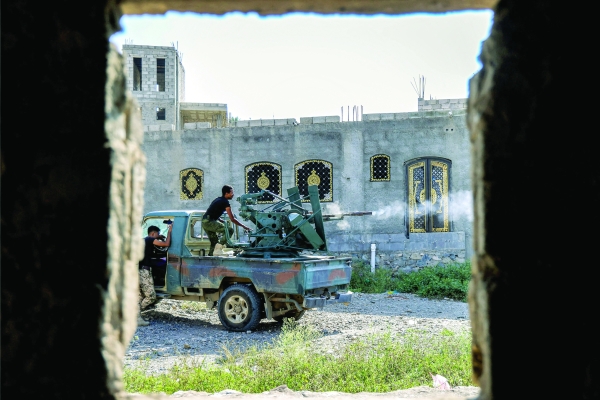
- The scale of Saudi-led air operations in Yemen remains unverified, so the supplied reporting does not support a reliable strike-tempo estimate. The Yemeni Armed Forces claim Saudi forces carried out 66 airstrikes and missile attacks in 24 hours and 3,755 since the escalation began; the same side names F-15 and Typhoon aircraft operating from Khamis Mushait and Taif, with missile attacks launched from Najran. A separate major-media report says Saudi Arabia and allies deployed 100 fighter jets under Operation Yemeni Dawn. These accounts provide no independently reconciled tally. Yemeni Armed Forces allegations of civilian deaths and damage in Sana'a, al-Jawf, Taiz, Sa'ada, Hajjah and Lahij also lack independent verification in the supplied reporting. (Confidence: low · ASSESSED)
- I&W: An independent, dated and geolocated tally corroborates 66 or more Saudi strikes in a single 24-hour period, confirming the reported scale. (0-14 days)
- I&W: Independent reporting reconciles the 66-strike and 100-aircraft accounts as misdated, overlapping or unsupported, breaking the current assessment that strike tempo cannot be established. (0-14 days)
- It is unlikely that the supplied reporting establishes an effective Houthi maritime blockade of Saudi Arabia. A major-media report says Ansar Allah declared a blockade and began striking Saudi ships; other reporting describes Houthi control of Yemen's Red Sea coast and positions around Mocha and Mayyun island. The material gives no identified vessel, dated and independently verified ship attack, or measured Red Sea transit disruption. Control of coastal territory alone does not establish that shipping is being interdicted. (Confidence: low · ASSESSED)
- I&W: Independent reporting verifies repeated attacks on identified commercial vessels or documents shipping services suspending or rerouting Red Sea transits specifically because of Houthi threats, confirming operational maritime disruption. (0-30 days)
- I&W: Shipping data show routine Red Sea transits without verified Houthi interference for 30 consecutive days, breaking the assessment that an effective blockade is in place. (0-30 days)
- The UN's report that Mohammed al-Shami died in Houthi custody is likely to intensify scrutiny of detention conditions, but the cause of death remains unestablished. The UN said al-Shami, a UN Human Rights Office employee held since 6 June 2024, died in detention and called for an urgent independent investigation. The UN High Commissioner for Human Rights said Houthi authorities had provided no explanation. A Yemeni government minister's allegation that al-Shami died from torture is explicitly unverified and should not be treated as an established cause. Yemen's prime minister said more than 70 UN staff and dozens of humanitarian workers remained detained. (Confidence: medium · ASSESSED)
- I&W: The UN or its High Commissioner issues new demands for access to al-Shami's medical or detention records, confirming continued diplomatic scrutiny. (0-30 days)
- I&W: Houthi authorities provide records and permit an independent investigation into al-Shami's death, breaking the assessment of continuing obstruction and scrutiny. (0-30 days)
Outlook & scenarios
Persistent but geographically bounded exchanges (60%)
The most likely path is continued Houthi aerial threats to Saudi targets and further Saudi coalition interceptions or strikes, without a verified maritime blockade. Taiz access remains constrained and hospital fuel shortages persist. The reported Saudi and coalition strike figures remain disputed.
Tactical de-escalation and partial aid access (25%)
Saudi efforts to prevent another military escalation are followed by a limited reduction in aerial threats. Local arrangements reopen a route into Taiz and allow the World Food Program to reach some previously inaccessible communities. This would ease immediate pressure but would not resolve the wider conflict.
Maritime and infrastructure spillover (15%)
Low probability, high impact. The Houthis act on their reported blockade declaration and strike a verified commercial vessel or Saudi energy site. Shipping services reroute or suspend Red Sea transits, while Saudi coalition operations widen. The reported Iran-related escalation increases the consequences of misattribution or retaliation, but the supplied reporting does not establish a direct operational link between the Yemen and Iran fronts.
Recommendations
- Reconcile the 30 and 31 October interception reports against dated Saudi coalition notices and Houthi statements. Record the location, weapon type, interception outcome and any denial separately; do not merge reports until timing is resolved.
- Prioritise daily checks on the Taiz-Aden and Hejat al-Abd routes, World Food Program access figures and fuel status at the 12 hospitals reported close to exhaustion. Flag any new route closure or hospital service suspension for humanitarian planning.
- Describe the maritime blockade as a reported declaration, not an established operational condition. Seek an identified vessel, verified attack date and measurable transit disruption before assessing that shipping is being interdicted.
- Keep the cause of Mohammed al-Shami's death unresolved in reporting. Track whether Houthi authorities provide medical and detention records or permit the independent investigation requested by the UN.
- Keep the Doha mediation track distinct from Yemen reporting. The supplied material describes Qatari and Pakistani mediation with Iran, but does not substantiate a Qatari warning of imminent war or a Yemen ceasefire.
Confidence & uncertainty
Overall confidence is high for the headline picture because official Saudi coalition and civil aviation reporting, UN statements, World Food Program figures and major-media coverage converge on several discrete developments. This does not extend to every operational claim. Interception dates and counts remain unresolved; Houthi claims of attacks on Saudi energy and aviation targets and Yemeni Armed Forces strike totals lack independent reconciliation; and the supplied reporting does not establish an effective maritime blockade. The asserted torture cause of al-Shami's death remains unverified.
Intelligence gaps
- [EEI 1.1 · PARTIAL] Verified launches, flight paths, impact locations, and warhead types for Houthi missiles and drones directed at Riyadh, airports, military sites, and energy infrastructure. Recommended collection: imagery/OSINT
- [EEI 1.2 · PARTIAL] Operational damage, production interruptions, fires, casualties, and repair timelines at Saudi Aramco facilities, airports, power plants, and desalination sites. Recommended collection: commercial imagery/company reporting
- [EEI 1.3 · PARTIAL] Changes in Saudi air-defense deployments, airspace closures, civil-defense alerts, and restrictions on aviation or critical-facility access. Recommended collection: official statements/aviation notices
- [EEI 1.4 · PARTIAL] Increase in the geographic range, salvo size, launch frequency, or payload sophistication of Houthi missile and drone attacks. Recommended collection: military reporting/imagery
- [EEI 2.2 · PARTIAL] Changes in front lines, artillery positions, troop concentrations, and attacks against Taiz's western, northern, and southern access routes. Recommended collection: OSINT/satellite imagery
- [EEI 2.4 · PARTIAL] Civilian displacement, casualty trends, hospital capacity, and reported shortages in Taiz and surrounding districts. Recommended collection: humanitarian reporting/local media
- [EEI 3.1 · UNCOVERED] Houthi announcements, preparations, or attacks involving anti-ship missiles, naval drones, mines, or attempts to obstruct ports and shipping lanes. Recommended collection: maritime/OSINT
- [EEI 3.2 · UNCOVERED] Naval vessel posture changes, convoy activity, port-security measures, and new exclusion or warning zones in the Red Sea, Gulf of Aden, and approaches to the Gulf. Recommended collection: maritime/AIS
- [EEI 3.3 · UNCOVERED] Commercial vessel diversions, port disruptions, shipping delays, freight-rate changes, and war-risk insurance premium movement. Recommended collection: shipping/insurance reporting
- [EEI 4.1 · PARTIAL] Public or private ceasefire proposals, mediation efforts, negotiation contacts, and stated conditions from the Houthis, Saudi Arabia, Yemen's government, Qatar, and the UN. Recommended collection: diplomatic reporting
- [EEI 4.2 · PARTIAL] Changes in Saudi-led coalition membership, rules of engagement, sortie rates, targeting policy, or announced military objectives. Recommended collection: official statements/military reporting
- [EEI 4.3 · PARTIAL] New arms transfers, foreign military personnel, intelligence support, or air-defense deployments to parties in the conflict. Recommended collection: customs/imagery/official reporting
- [EEI 4.4 · PARTIAL] Concrete changes in humanitarian funding, aid access agreements, border-crossing policy, or UN warnings concerning food insecurity and civilian protection. Recommended collection: UN/NGO reporting
Red cell review: CONCUR WITH COMMENT
TLP:CLEAR