TLP:CLEAR · Disclosure is not limited.
Yemen-Saudi Arabia: escalation and contested reporting
Time window: Last 1 day · Audience: General analyst · Type: Situation report · DTG: 2026-11-03 06:26Z · Overall confidence: HIGH
BLUF
Fighting is intensifying on Saudi-facing and southern Yemen fronts, but reported Houthi hits on Saudi airports and energy infrastructure remain unverified in the supplied reporting. The Houthi advance to within 80 km of Aden and the worsening access and health crisis in Taiz are the clearest immediate risks. Reporting does not establish an active Houthi maritime blockade.
Executive summary
Houthi spokesperson Yahya Saree claimed attacks on Dammam Airport and military sites in Jizan. Saudi coalition reporting separately describes missile and drone interceptions, while local reporting repeats claims of strikes on airports and an Aramco facility; independent confirmation of the claimed impacts is absent. Reuters reporting places Houthi forces within 80 km of Aden, but local accounts on 3 November describe government forces repelling attacks on several Lahj fronts. OCHA reports acute health and access problems in Taiz, although responsibility for blocked routes is disputed. Saudi and US defence ministers discussed Houthi attacks, defence cooperation and de-escalation.
Change from previous assessment
Since the 2 November brief, reporting adds specific Houthi claims of attacks on King Fahd International Airport in Dammam and military sites in Jizan, alongside local claims of strikes on airports and an Aramco facility. Saudi and US defence ministers have discussed Houthi attacks and de-escalation. New local reporting describes government forces repelling Houthi attacks on Lahj fronts, while Reuters reporting places Houthi forces within 80 km of Aden and describes the capture of Al-Maqatirah, leaving control contested. OCHA reporting adds new detail on Taiz health-service disruption and disease cases. The prior assessment that an active Houthi maritime blockade is not established remains unchanged. Initial confidence in the broad escalation picture remains high, but the assessment now flags lower confidence in specific Saudi-site impact claims and current Lahj control.
Key judgments
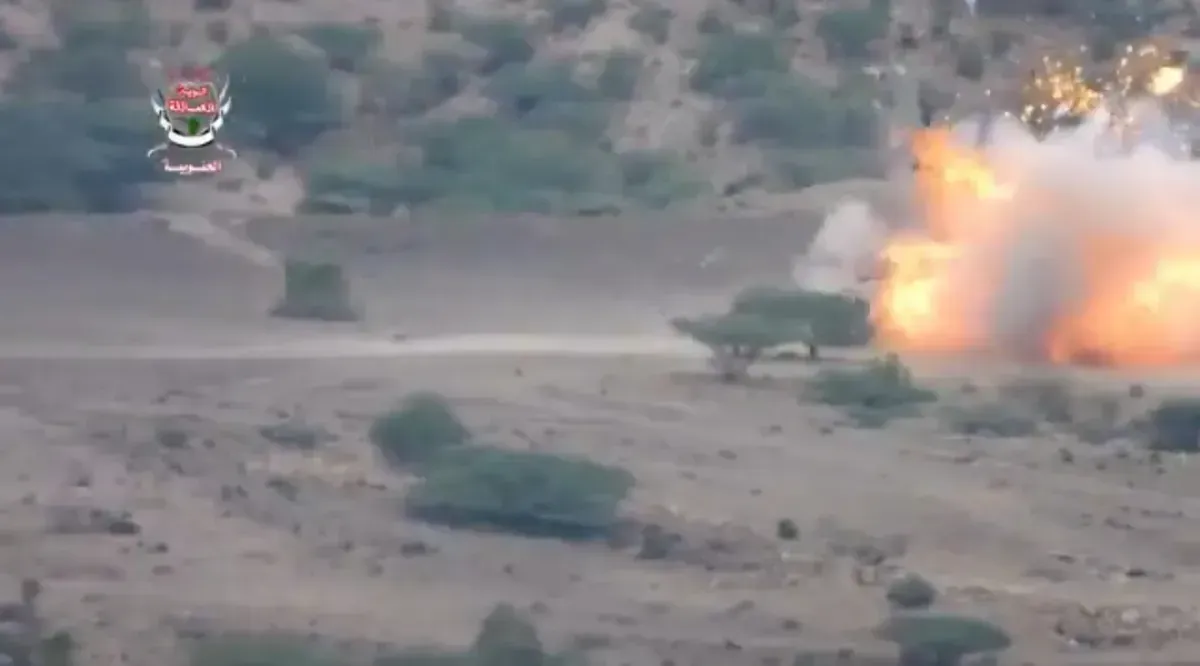
- The Houthis are likely to continue attacks on Saudi military and aviation targets over the next 14 days. Yahya Saree claimed attacks on King Fahd International Airport in Dammam, an early-warning radar installation and a military transport aircraft in Jizan. The Saudi-led coalition separately reported intercepting a ballistic missile on 2 November, and Saudi authorities reported a drone interception on 1 November. Local reporting also repeats claims of strikes on airports in Riyadh, Dammam, Abha and Yanbu, and an attack on an Aramco facility in Jizan. The supplied reporting does not independently verify successful Houthi impacts or the reported damage. (Confidence: medium · ASSESSED)
- I&W: Confirm if Saudi authorities report a new interception or impact involving Riyadh, Dammam or Jizan, with an airport or energy operator reporting operational disruption. (0-14 days)
- I&W: Break if Saudi authorities and the named airport operators report normal operations and no new attack alerts in Riyadh, Dammam and Jizan throughout the period. (0-14 days)
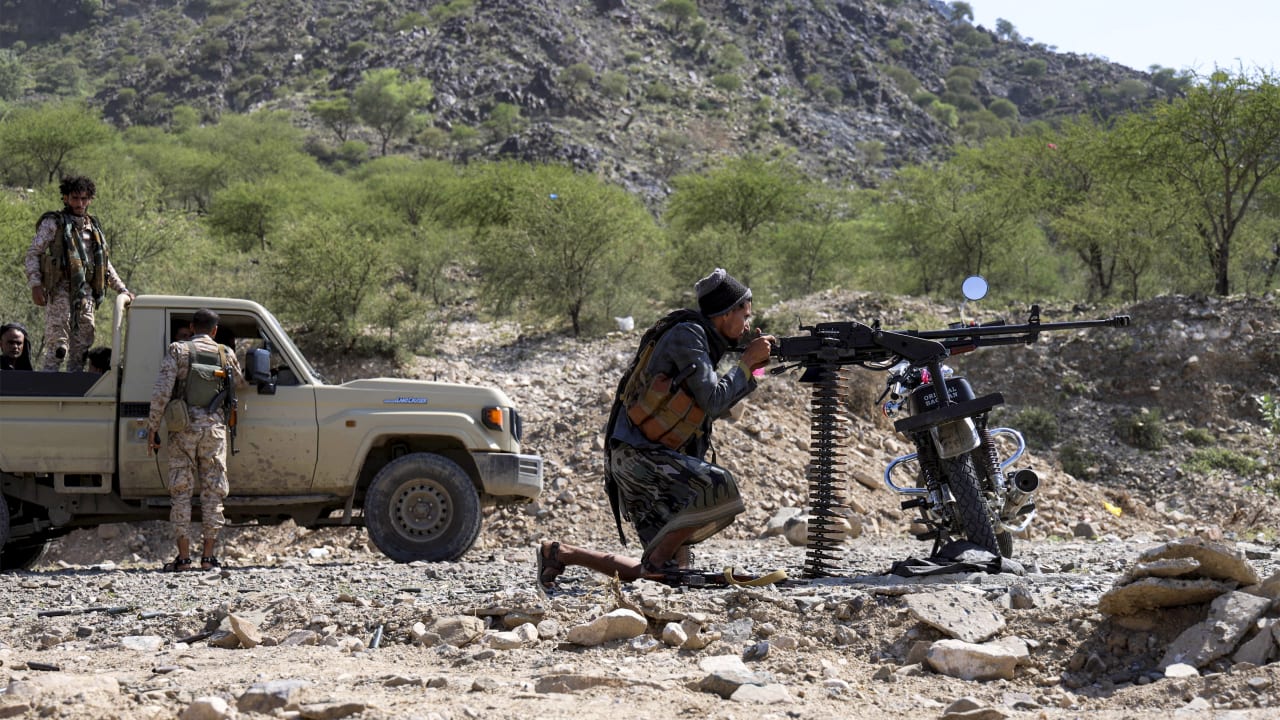
- The Houthis are likely to maintain pressure on Aden's approaches over the next 14 days, but the supplied reporting does not establish uninterrupted Houthi momentum or control of all Al-Maqatirah. Reuters, citing four Yemeni government military sources, placed Houthi forces within 80 km of Aden and reported their capture of Al-Maqatirah. Later local reporting says government forces repelled attacks at Al-Aboos and the Al-Korba and Hejat Al-Abed supply routes, and retook positions in Lahj. These tactical claims come from local reporting and do not resolve the control picture. (Confidence: medium · ASSESSED)
- I&W: Confirm if corroborated reporting places Houthi forces closer than 80 km to Aden or documents their capture of named positions on the Tur al-Bahah or Lahj approaches. (0-14 days)
- I&W: Break if corroborated reporting documents Houthi withdrawal from Al-Maqatirah or continued government control of the Al-Aboos and Al-Korba supply-route positions. (0-14 days)
- Taiz's humanitarian conditions are likely to worsen over the next 30 days if access remains cut, although responsibility for the restrictions is contested. OCHA reported more than 1,400 acute diarrhoea and suspected cholera cases in one week, nearly 250,000 people without essential health care, and 12 hospitals at risk of closure or operating with reduced services. Governor Nabil Shamsan separately reported 120 health centres closed and 66 close to shutting; those figures concern different facility categories and are not directly comparable. Houthi authorities deny imposing a siege, and Houthi-aligned reporting says some trucks move through crossings controlled by Yemeni Armed Forces. (Confidence: medium · ASSESSED)
- I&W: Confirm if OCHA reports that access to Taiz remains cut and reports further hospital service reductions or rising acute diarrhoea and suspected cholera cases. (0-30 days)
- I&W: Break if OCHA verifies repeated aid convoys entering Taiz through a named route and reports restored fuel supplies or health services at affected hospitals. (0-30 days)
- A Houthi maritime blockade of Saudi ports or Red Sea shipping is unlikely over the next 30 days, but the supplied reporting identifies a risk that warrants monitoring. A Houthi-aligned military expert described a blockade-for-blockade policy and named Jeddah, Yanbu, Rabigh, NEOM and Jizan as possible targets. Separate major-media reporting describes Houthi territorial gains along the Bab al-Mandab Strait. The blockade policy and target warnings rest on partisan reporting, and the supplied claims do not establish an active blockade or a confirmed attack on a Saudi vessel. (Confidence: low · ASSESSED)
- I&W: Confirm if Houthi authorities announce restrictions on named Red Sea routes or a verified attack or seizure involving a named Saudi-bound commercial vessel. (0-30 days)
- I&W: Break if commercial transits through Bab al-Mandab continue without Houthi interference and no Houthi maritime restrictions are announced during the period. (0-30 days)
- The Saudi-US defence call confirms senior-level discussion of Houthi attacks, strategic defence cooperation and de-escalation, but it does not establish US operational participation in Yemen. The reporting describes the ministers' discussion and does not announce a US combat role. (Confidence: medium · REPORTED)
- I&W: Confirm if follow-on official readouts describe defence cooperation and de-escalation without announcing a US operational role in Yemen. (0-14 days)
- I&W: Break if the US or Saudi government announces that US forces are conducting or directing operations in Yemen. (0-14 days)
Outlook & scenarios
Continued reciprocal pressure (55%)
Houthi attacks on Saudi targets and Saudi-led coalition strikes in Yemen continue without a decisive change in control around Aden. Taiz remains difficult to access, and humanitarian needs rise.
Further Houthi gains on the Aden approaches (25%)
Houthi forces consolidate positions in Al-Maqatirah and press towards Tur al-Bahah. The Saudi-led coalition intensifies strikes, while the government forces defending the Lahj approaches face further pressure.
Limited de-escalation and improved aid access (15%)
Saudi-US consultations remain focused on defence cooperation and de-escalation. Yemeni conflict parties allow aid convoys into Taiz, easing immediate pressure on hospitals and civilians without resolving control of the surrounding fronts.
Wildcard: maritime attack widens the confrontation (5%)
A Houthi attack on a Saudi Red Sea port, energy facility or commercial vessel prompts Saudi retaliation against Houthi-held coastal positions. Shipping disruption and US-Saudi defence coordination then expand beyond the current pattern of reported attacks.
Recommendations
- Separate Houthi attack claims from confirmed impacts in reporting. Seek Saudi official statements and operational information from Riyadh, Dammam and Jizan airport authorities before describing damage or disruption as established.
- Track Taiz access through OCHA updates on named routes, convoy movements, hospital fuel and health-service status. Report the humanitarian effects separately from disputed claims about which side is responsible for route closures.
- Update a daily control map for Al-Maqatirah, Tur al-Bahah, Al-Aboos and the Al-Korba and Hejat Al-Abed routes. Treat reported captures or government recaptures as provisional until corroborated.
- Treat Houthi statements about Red Sea restrictions and Saudi port targets as warnings, not evidence of an active blockade. Escalate the assessment if a named maritime restriction or a verified attack on a commercial vessel is reported.
- Monitor Saudi and US official readouts for any change from discussion of defence cooperation and de-escalation to an announced US operational role.
Confidence & uncertainty
Overall confidence is high in the broad assessment of escalating fighting, Houthi pressure on the Aden approaches and acute humanitarian problems in Taiz. This rests on convergent major-media reporting, OCHA reporting and official or party statements. Confidence is lower on specific Houthi attack impacts, local control in Lahj and responsibility for Taiz access restrictions; several of those claims are uncorroborated or contested.
Intelligence gaps
- [EEI 1.1 · PARTIAL] Verified launches, flight paths, impact locations, and warhead types for Houthi missiles and drones directed at Riyadh, airports, military sites, and energy infrastructure. Recommended collection: imagery/OSINT
- [EEI 1.2 · PARTIAL] Operational damage, production interruptions, fires, casualties, and repair timelines at Saudi Aramco facilities, airports, power plants, and desalination sites. Recommended collection: commercial imagery/company reporting
- [EEI 1.3 · PARTIAL] Changes in Saudi air-defense deployments, airspace closures, civil-defense alerts, and restrictions on aviation or critical-facility access. Recommended collection: official statements/aviation notices
- [EEI 1.4 · PARTIAL] Increase in the geographic range, salvo size, launch frequency, or payload sophistication of Houthi missile and drone attacks. Recommended collection: military reporting/imagery
- [EEI 3.2 · PARTIAL] Naval vessel posture changes, convoy activity, port-security measures, and new exclusion or warning zones in the Red Sea, Gulf of Aden, and approaches to the Gulf. Recommended collection: maritime/AIS
- [EEI 3.3 · UNCOVERED] Commercial vessel diversions, port disruptions, shipping delays, freight-rate changes, and war-risk insurance premium movement. Recommended collection: shipping/insurance reporting
- [EEI 3.4 · PARTIAL] Evidence of attacks, support, or retaliatory actions involving Iran, Qatar, the United Arab Emirates, Bahrain, Kuwait, or other Gulf states. Recommended collection: official statements/OSINT
- [EEI 4.1 · PARTIAL] Public or private ceasefire proposals, mediation efforts, negotiation contacts, and stated conditions from the Houthis, Saudi Arabia, Yemen's government, Qatar, and the UN. Recommended collection: diplomatic reporting
- [EEI 4.2 · PARTIAL] Changes in Saudi-led coalition membership, rules of engagement, sortie rates, targeting policy, or announced military objectives. Recommended collection: official statements/military reporting
- [EEI 4.3 · PARTIAL] New arms transfers, foreign military personnel, intelligence support, or air-defense deployments to parties in the conflict. Recommended collection: customs/imagery/official reporting
- [EEI 4.4 · PARTIAL] Concrete changes in humanitarian funding, aid access agreements, border-crossing policy, or UN warnings concerning food insecurity and civilian protection. Recommended collection: UN/NGO reporting
Red cell review: CONCUR
TLP:CLEAR