TLP:CLEAR · Disclosure is not limited.
Yemen-Saudi Arabia: Escalation, Taiz Access and Maritime Risk
Time window: Last 1 day · Audience: General analyst · Type: Situation report · DTG: 2026-10-19 08:42Z · Overall confidence: HIGH
BLUF
Houthi-Saudi exchanges are likely to continue through early November, with Saudi Arabia announcing a large-scale operation as Houthi warnings extend to Saudi oil facilities and airspace. Taiz remains exposed to serious aid-access constraints; Houthi claims of a maritime blockade raise concern but do not establish a closure of commercial shipping.
Executive summary
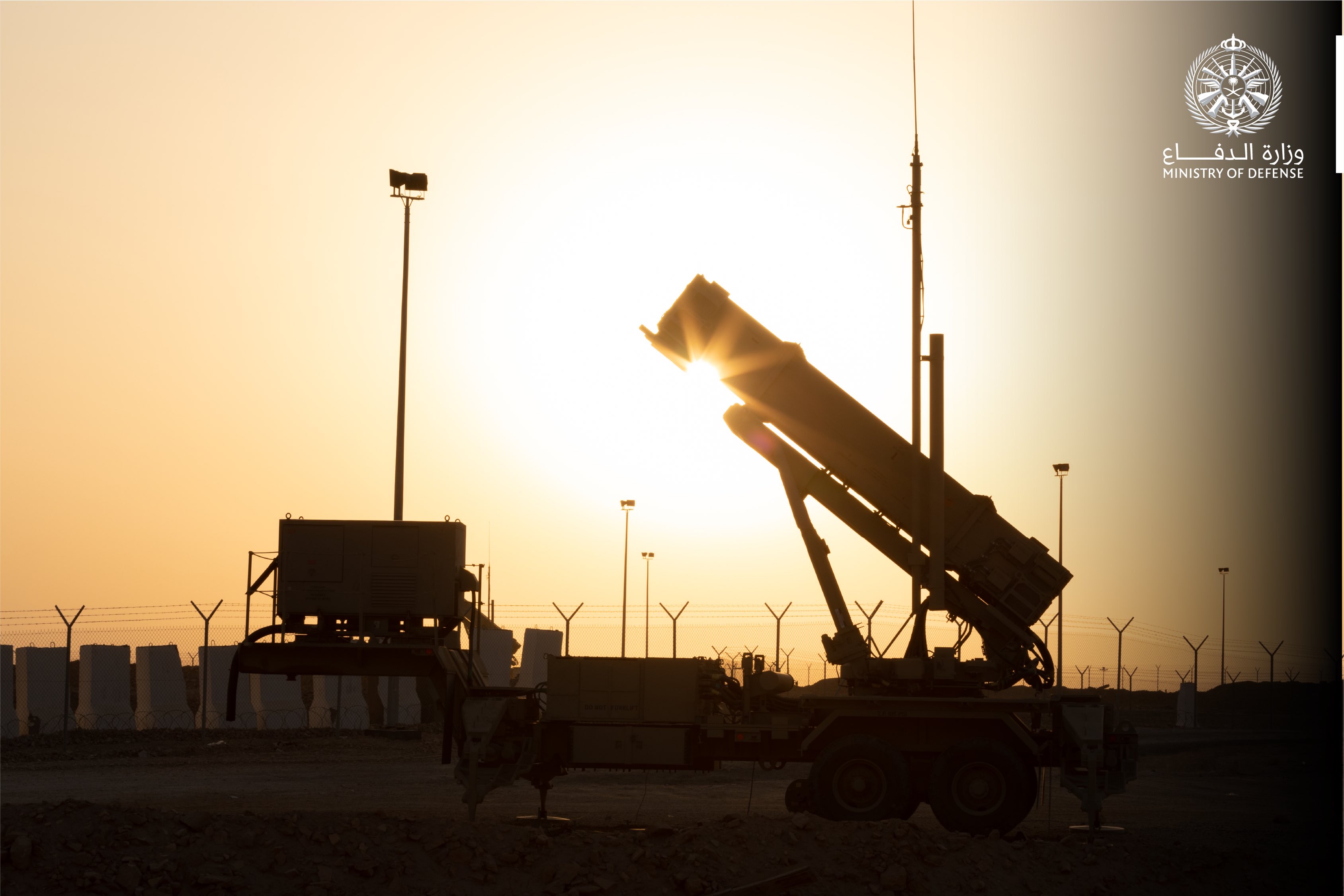
The Saudi-led coalition announced a large-scale operation and said it intercepted two ballistic missiles directed towards Khamis Mushait. Saudi Civil Defence reported six people injured by a projectile in Najran. Coalition accounts of intercepted drones differ in number and geographic scope. Houthi statements warn airlines away from Saudi airports and airspace and tell people to stay clear of oil facilities. In Yemen, WFP reports that renewed fighting prevents aid reaching 600,000 people in Taiz, while IOM reports more than 233,000 displaced across Yemen, including about 121,000 in Taiz. A Houthi maritime-blockade declaration and reported positions along the Red Sea coast increase concern, but the supplied reporting does not establish an effective blockade of general commercial traffic. Egypt's support remains conditional and unspecified. Qatar is preparing to announce a regional defence partnership; the available reporting does not establish that Qatar warned of imminent war or committed forces to Yemen.
Change from previous assessment
Since the 18 October brief, reporting adds the coalition's announcement of a large-scale operation and interception of two ballistic missiles towards Khamis Mushait, as well as a Saudi Civil Defence report of six people injured in Najran. The drone count remains unresolved, with reports of one interception in the Riyadh region and four across several areas. Houthi warnings now explicitly name Saudi oil facilities and airspace. A report of a declared maritime blockade and Houthi positions along the Red Sea coast raises concern, but does not establish an effective closure of general commercial traffic. The diplomatic picture now includes the Houthi negotiator's account of conditional acceptance of an Omani five-day pause, directly opposed to the Saudi account of refusal. Egypt's latest support pledge remains unspecified and conditional; the assessment that Egyptian combat entry is unlikely is unchanged.
Key judgments
- Houthi-Saudi exchanges are likely to continue through 2 November. The Saudi-led coalition announced a large-scale operation and said it intercepted two ballistic missiles aimed at Khamis Mushait; Saudi Civil Defence reported six people injured by a projectile in Najran. Coalition reporting on drones is inconsistent: one account says a drone was intercepted in the Riyadh region, while another reports four across Riyadh, the Eastern Province and southern Saudi Arabia. Houthi warnings naming Saudi airspace and oil facilities add to the risk of further attacks. (Confidence: medium · ASSESSED)
- I&W: Confirm: Saudi authorities report another Houthi missile or drone launch towards Riyadh, the Eastern Province, Najran or Khamis Mushait, or the coalition announces another interception. (0-14 days)
- I&W: Break: Saudi Civil Defence and the coalition report no hostile aerial alerts or interceptions for 14 consecutive days, and Houthi statements withdraw the warnings against Saudi airports and oil facilities. (0-14 days)
- Houthi fighters are likely to keep Taiz's main road to Aden blocked over the next 14 days, leaving aid access under pressure. Reporting says the road has been blocked since early October, and WFP says it cannot reach 600,000 aid-dependent people in Taiz. IOM reports more than 233,000 people displaced across Yemen, including about 121,000 in Taiz. The road status rests on limited reporting, while the humanitarian access and displacement figures are attributed to humanitarian organisations. (Confidence: medium · ASSESSED)
- I&W: Confirm: WFP continues to report that aid cannot reach the 600,000 people in Taiz, or reports that convoys remain unable to use the main road to Aden. (0-14 days)
- I&W: Break: WFP confirms aid deliveries to affected Taiz communities and reporting verifies that the main road to Aden has reopened. (0-14 days)
- An effective Houthi closure of Bab el-Mandeb to general commercial shipping is unlikely over the next 30 days. Reporting says the Houthis declared a maritime blockade and seized or controlled positions along the Red Sea coast, including Mokhaa and islands in the strait. UKMTO separately reported an attack by armed men in a skiff on an LNG tanker off al-Mukalla, but the attackers were not identified. These reports raise risk to individual vessels without establishing a general shipping closure. (Confidence: low · ASSESSED)
- I&W: Confirm: UKMTO or another named reporting body records attacks on, seizures of, or route diversions by at least two commercial vessels transiting Bab el-Mandeb. (0-30 days)
- I&W: Break: Reporting confirms commercial vessels continue transiting Bab el-Mandeb without Houthi attacks, seizures or blockade-related diversions. (0-30 days)
- An Oman-mediated five-day pause is unlikely within the next 30 days, although the parties' competing accounts leave a negotiated halt as a credible alternative. Houthi negotiator Mohamed Abdulsalam says the Houthis accepted the proposal conditionally and that Saudi Arabia delayed its response; Saudi official Raid Qirmli says the Houthis refused a meeting. Qirmli also says communication channels remain open with Omani facilitation. Neither side's account of responsibility for the stalled talks is independently resolved in the supplied reporting. (Confidence: low · ASSESSED)
- I&W: Confirm: Oman or both parties announce an agreed five-day halt and a date for negotiations. (0-30 days)
- I&W: Break: Saudi Arabia or the Houthis formally reject the five-day proposal, with no talks scheduled through Omani channels. (0-14 days)
- An Egyptian combat deployment to Saudi Arabia is unlikely over the next 30 days. President Abdel Fattah el-Sisi made support conditional on a Saudi request, and Egypt's National Defense Council pledged unspecified support without identifying a deployment. One low-reliability report alleges that Cairo is preparing to send troops, but the supplied reporting does not independently corroborate it. Qatar's planned regional defence partnership is not evidence of Qatari combat participation in Yemen. (Confidence: low · ASSESSED)
- I&W: Confirm: Egypt reiterates that any support is conditional and does not announce a deployment or name units or platforms assigned to Saudi Arabia. (0-30 days)
- I&W: Break: Egypt announces a deployment and identifies troops, aircraft or air-defence systems assigned to Saudi Arabia. (0-30 days)
Outlook & scenarios
Sustained exchanges with limited geographic spread (60%)
Likely: Houthi launches and Saudi interceptions continue, while the coalition pursues its announced operation in Yemen. Taiz remains difficult to access. Houthi maritime threats persist, but commercial traffic through Bab el-Mandeb is not generally halted.
Oman-mediated temporary pause (25%)
Unlikely but credible: Oman secures agreement to a short halt linked to humanitarian demands and talks. The opposing Saudi and Houthi accounts of earlier contacts remain unresolved, so any pause is likely to be conditional and vulnerable to renewed fighting.
Attacks disrupt commercial shipping (10%)
Unlikely, high-impact wildcard: Houthi forces act on their maritime declaration and attacks or seizures prompt commercial vessels to divert from Bab el-Mandeb. The reported skiff attack off al-Mukalla is not attributed to the Houthis and does not itself establish this scenario.
Additional regional forces enter the conflict (5%)
Very unlikely: Egypt moves beyond conditional support and deploys combat forces, or Qatar's planned defence partnership becomes direct military participation. Current reporting describes no such deployment or commitment.
Recommendations
- Maintain a dated incident log for coalition announcements, Saudi Civil Defence alerts and Houthi statements. Record each reported interception by location and count so analysts can distinguish separate waves from conflicting accounts.
- Track WFP access updates for Taiz alongside reporting on the main road to Aden. Report aid delivery status separately from claims about who controls or blocked the route.
- Treat the Houthi maritime declaration as a threat indicator, not proof of an effective blockade. Compare UKMTO incident reports with verified commercial vessel transits and report attacks, seizures and diversions separately.
- Keep Saudi and Houthi accounts of the Oman proposal distinct in briefings. Seek confirmation of any agreed ceasefire terms or meeting date through Omani statements before describing a pause as settled.
- Do not describe Egypt as entering the war or Qatar as committing forces without an official deployment announcement or other corroborated evidence.
Confidence & uncertainty
Overall confidence is high for the core pattern of continuing Houthi-Saudi attacks, coalition operations and worsening humanitarian access. Major-media reporting includes statements from the Saudi-led coalition and Saudi Civil Defence, while WFP and IOM provide identifiable reporting on Taiz access and displacement. Confidence is lower on the exact number and reach of intercepted drones, competing casualty counts, the cause of the Najran helicopter loss, responsibility for the tanker attack and which side blocked Oman-mediated talks. The headline confidence applies to the overall situation pattern, not to every contested detail.
Alternative analysis (red cell)
Egyptian combat participation should be treated as a live but unresolved possibility, not simply an unlikely outcome. The National Defense Council's support pledge and the reported request for parliamentary authorization to deploy troops and equipment abroad (727b74ba-f6e6-44eb-9999-759dcfa30d31) indicate preparatory political movement, while Sisi's conditional and defensive language (17c867bb-af61-4c1c-ae67-b10ede403d96) leaves the decision contingent on a Saudi request. The available evidence does not establish deployment, but it supports an indeterminate low-confidence assessment rather than a directional likelihood judgment.
Intelligence gaps
- [EEI 1.4 · PARTIAL] Increase in the geographic range, salvo size, launch frequency, or payload sophistication of Houthi missile and drone attacks. Recommended collection: military reporting/imagery
- [EEI 2.1 · UNCOVERED] Houthi control of roads, checkpoints, mountain passes, and supply routes connecting Taiz to government-held areas. Recommended collection: ground reporting/imagery
- [EEI 2.2 · PARTIAL] Changes in front lines, artillery positions, troop concentrations, and attacks against Taiz's western, northern, and southern access routes. Recommended collection: OSINT/satellite imagery
- [EEI 2.3 · UNCOVERED] Verified reductions in food, fuel, medicine, and humanitarian access reaching Taiz, including the number of people unable to receive aid. Recommended collection: UN/NGO reporting
- [EEI 2.4 · PARTIAL] Civilian displacement, casualty trends, hospital capacity, and reported shortages in Taiz and surrounding districts. Recommended collection: humanitarian reporting/local media
- [EEI 3.1 · UNCOVERED] Houthi announcements, preparations, or attacks involving anti-ship missiles, naval drones, mines, or attempts to obstruct ports and shipping lanes. Recommended collection: maritime/OSINT
- [EEI 3.2 · UNCOVERED] Naval vessel posture changes, convoy activity, port-security measures, and new exclusion or warning zones in the Red Sea, Gulf of Aden, and approaches to the Gulf. Recommended collection: maritime/AIS
- [EEI 3.3 · UNCOVERED] Commercial vessel diversions, port disruptions, shipping delays, freight-rate changes, and war-risk insurance premium movement. Recommended collection: shipping/insurance reporting
- [EEI 3.4 · PARTIAL] Evidence of attacks, support, or retaliatory actions involving Iran, Qatar, the United Arab Emirates, Bahrain, Kuwait, or other Gulf states. Recommended collection: official statements/OSINT
- [EEI 4.4 · PARTIAL] Concrete changes in humanitarian funding, aid access agreements, border-crossing policy, or UN warnings concerning food insecurity and civilian protection. Recommended collection: UN/NGO reporting
Red cell review: PARTIAL DISSENT
TLP:CLEAR