TLP:CLEAR · Disclosure is not limited.
Yemen-Saudi Arabia: Houthi pressure expands across fronts
Time window: Last 1 day · Audience: General analyst · Type: Situation report · DTG: 2026-11-17 07:52Z · Overall confidence: HIGH
BLUF
Houthi-reported missile and drone attacks on Saudi Arabia coincide with government-aligned withdrawals from Bab al-Mandab approaches, Houthi pressure towards Aden and continued encirclement of Taiz. The reporting supports an escalating confrontation, but does not establish a Houthi capture of Aden, a complete Bab al-Mandab closure or an 800,000-person aid cutoff.
Executive summary
Reporting for 16 and 17 November describes Houthi claims of attacks on Riyadh and other Saudi targets, Saudi-led coalition claims of missile and drone interceptions, and Houthi advances in Lahj as Yemeni government-aligned forces reposition towards Aden. The Riyadh attack totals and dates differ across accounts. Taiz is reported encircled, with authorities seeking humanitarian corridors and medical officials warning of near-term hospital disruption from fuel and oxygen shortages. A reported coalition strike damaged a shoes and textiles factory in Sanaa, but the civilian casualty details lack independent corroboration in the supplied reporting. Saudi Arabia replaced the commander of its Yemen coalition; reports differ on whether the successor's role is permanent or interim. The supplied claims do not substantiate the reported 800,000-person aid cutoff or a Qatar warning that war is imminent.
Change from previous assessment
Since the 16 November brief, reporting adds a 16 November Saudi-led coalition account of two ballistic missiles and seven drones intercepted, alongside Houthi claims naming King Khalid International Airport and a Riyadh financial centre. This raises confidence that attacks on Saudi targets are continuing, but not that the claimed targets were hit; attack totals and dates remain inconsistent. The assessment of Houthi pressure towards Aden is retained, with more reporting on positions near the city and withdrawals from Dhubab airport and Bab al-Mandab. The Taiz assessment now includes a reported near-term hospital fuel and oxygen risk, but still does not support a claim that 800,000 people are cut off. The reporting also adds a Sanaa factory strike and details of Saudi Arabia's coalition command change, whose permanent or interim status remains unresolved.
Key judgments
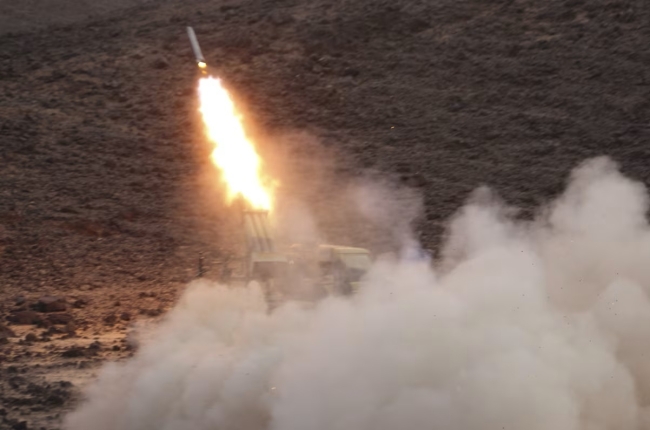
- Houthi missile and drone attacks on Saudi Arabia are very likely continuing, with Riyadh again named as a target in reports published on 16 November. The Saudi-led coalition said it intercepted two ballistic missiles and seven drones, while other accounts describe two drones or give different dates; Houthi claims that missiles targeted King Khalid International Airport and a Riyadh financial centre do not establish that either site was hit. (Confidence: medium · ASSESSED)
- I&W: A further dated Saudi-led coalition notice reports interception of a Houthi missile or drone aimed at Riyadh, confirming continuing attacks. (0-14 days)
- I&W: No further Houthi launch claims or Saudi interception notices are reported for 14 consecutive days, breaking the assessment of a continuing campaign. (0-14 days)
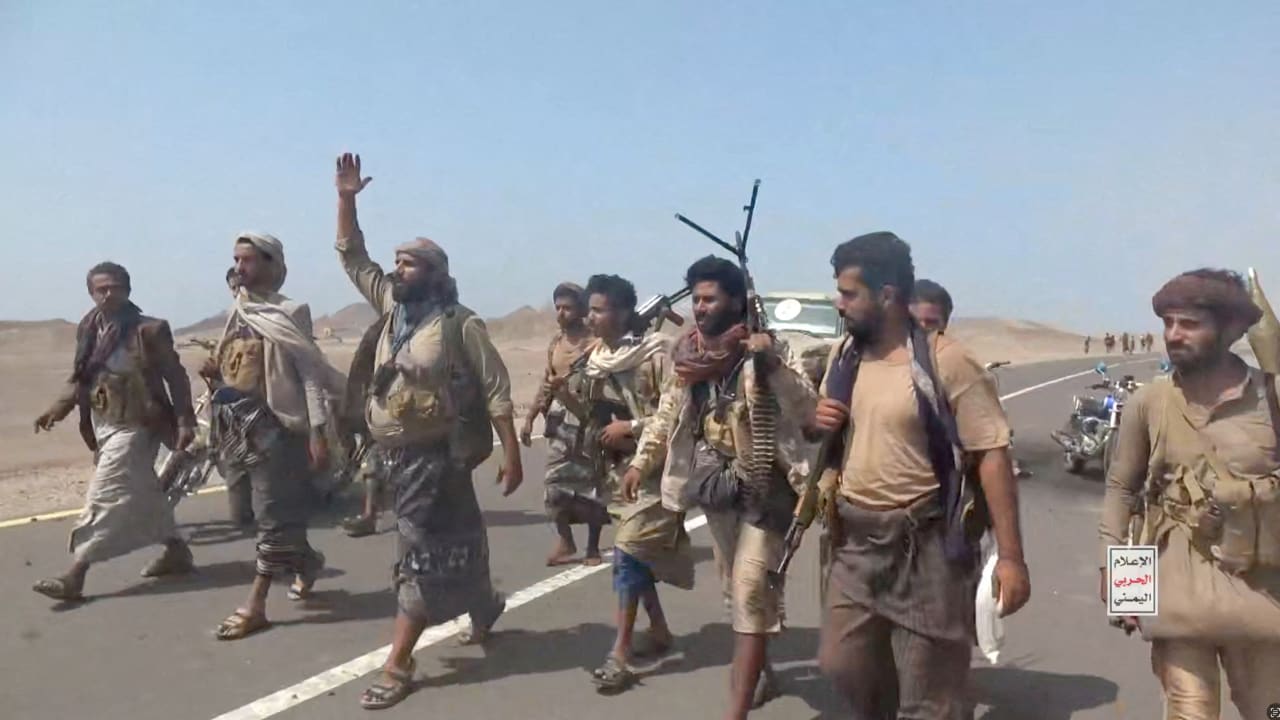
- The Houthis are likely to retain pressure on the Lahj-Aden approaches over the next 1-3 months, but the reported positions and control of the Bab al-Mandab area remain contested. Reports place Houthi forces about 60 kilometres north of Aden and at Tor al-Baha, about 80 kilometres away, while Yemeni government-aligned forces say they withdrew from Dhubab airport and nearby Bab al-Mandab positions to defend Aden. Claims that government forces regained more than 3,000 square kilometres in Lahj and consolidated control of the western coast conflict with reports of Houthi advances and claims of Houthi control near the strait. (Confidence: medium · ASSESSED)
- I&W: Independent reporting places Houthi forces at or closer than 60 kilometres north of Aden, confirming continued pressure on the approaches. (0-14 days)
- I&W: Yemeni government-aligned forces verifiably reoccupy Dhubab airport and positions near Bab al-Mandab while Houthi units are pushed back, breaking the assessment of sustained Houthi initiative there. (0-14 days)
- Taiz is very likely under severe access constraints, and its hospitals face an acute risk of disruption from reported shortages of fuel and oxygen. Multiple reports describe a Houthi siege or encirclement, but the warning that hospitals could cease operations within two days comes from a single report; the supplied reporting does not establish complete isolation or an 800,000-person aid cutoff. (Confidence: medium · ASSESSED)
- I&W: Taiz medical officials report that fuel or oxygen stocks are exhausted, or that hospitals have suspended services, confirming acute medical disruption. (0-14 days)
- I&W: Authorities report a humanitarian corridor reopening and verified aid convoys entering Taiz, breaking the assessment of severe access constraints. (0-14 days)
- A general Houthi closure of Bab al-Mandab is unlikely over the next 14 days, while selective exclusion of Saudi-linked commercial vessels is likely. Reporting describes a Houthi coordination centre that vets ships and bars vessels linked to Saudi Arabia, the US, Israel or Britain, alongside Houthi claims of control over the strait; the extent of that control is disputed, and the supplied claims do not document a current general closure. (Confidence: medium · ASSESSED)
- I&W: A named commercial vessel is reported denied passage or attacked near Bab al-Mandab, or a carrier announces a route suspension linked to Houthi restrictions, confirming selective disruption. (0-14 days)
- I&W: Carriers report unrestricted Bab al-Mandab transits and the Houthi coordination centre is reported to clear Saudi-linked vessels, breaking the assessment of selective exclusion. (0-14 days)
- A reported Saudi-led coalition airstrike hit the Orphans Development Foundation shoes and textiles factory in Al-Nahda, Al-Thawra district, Sanaa. Yemeni reporting says the factory was destroyed and seven civilians were injured, but those details and the facility's reported civilian status are not independently corroborated in the supplied claims. (Confidence: low · REPORTED)
- I&W: Independent site imagery or reporting confirms major damage to the factory and at least seven civilian injuries, corroborating the reported harm. (0-14 days)
- I&W: Independent reporting identifies a military use for the site or contradicts the reported civilian injuries, weakening the account of a civilian factory strike. (0-14 days)
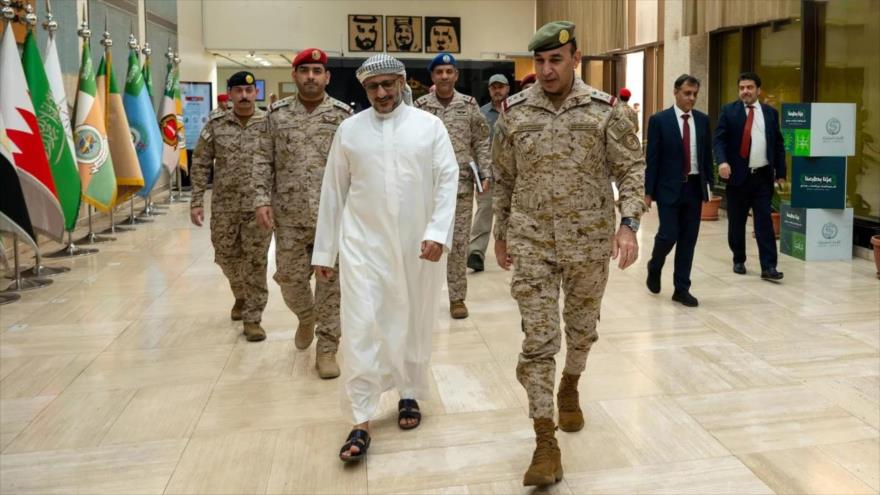
- Saudi Arabia's removal of Lt Gen Fahd bin Hamad al-Salman on 16 November and appointment of Gen Fayyad bin Hamed bin Ruqad al-Ruwaili indicate a likely command reset after coalition setbacks, but the operational effect is not established. Reports differ on whether al-Ruwaili's role is permanent or interim, with one account placing his assumption of leadership on 17 November. (Confidence: medium · ASSESSED)
- I&W: Saudi state reporting identifies al-Ruwaili as the permanent coalition commander with operational authority, confirming the formal transition. (0-14 days)
- I&W: Saudi reporting continues to describe al-Ruwaili as interim commander or names another successor, breaking the assessment of a settled command transition. (0-14 days)
Outlook & scenarios
Continued multi-front attrition (55%)
This is the most likely outlook over the next 1-3 months. Houthi forces sustain pressure in Lahj and on the approaches to Aden, Taiz remains encircled, and Houthi attacks on Saudi targets draw further coalition strikes. The front lines remain contested, with no verified capture of Aden or general closure of Bab al-Mandab.
Government forces stabilise the southern fronts (25%)
Yemeni government-aligned forces use their redeployment towards Aden to consolidate defences, contest Houthi positions in Lahj and restore access near Bab al-Mandab. A verified reversal of Houthi positions and reopening of Taiz routes would indicate this scenario is taking hold.
Selective maritime restrictions widen (15%)
Houthi forces enforce restrictions on Saudi-linked vessels near Bab al-Mandab, prompting carrier suspensions or diversions. A general closure is unlikely, but verified attacks or denials of passage would increase the risk of wider shipping disruption.
Aden falls after a sudden government collapse (5%)
This is an unlikely, high-impact wildcard. Houthi forces exploit further withdrawals and divisions among southern factions to reach Aden or force a government retreat. The reported Houthi proximity to the city and warnings about government disunity support monitoring this outcome, but the supplied reporting also describes Aden as heavily fortified.
Recommendations
- Keep separate event records for the reported 15 and 16 November Riyadh incidents. Reconcile missile and drone totals, interception locations and reported targets before treating them as one event or reporting impacts at King Khalid International Airport or the Riyadh financial centre.
- Track force positions and withdrawals at Tor al-Baha, Lahj, Dhubab airport, Bab al-Mandab and Aden. Record source, date and stated distance for each position report, and distinguish claims of control from independently corroborated control.
- Seek independent confirmation of Taiz route access, hospital fuel and oxygen supplies, and civilian aid deliveries. Do not repeat the 800,000-person cutoff figure as established without supporting evidence.
- Monitor Bab al-Mandab vessel denials, named ship incidents and carrier route notices separately from the tanker incidents reported in the Strait of Hormuz. Do not attribute Hormuz incidents to the Houthis without supporting evidence.
- Confirm through Saudi reporting whether Gen Fayyad bin Hamed bin Ruqad al-Ruwaili holds permanent or interim command, and whether the reported 17 November handover changed coalition deployments.
Confidence & uncertainty
Overall confidence is high for the situation-level assessment because multiple major media reports and official statements corroborate the government-aligned withdrawal from Bab al-Mandab positions, Houthi pressure towards Aden and the Saudi coalition command change. Confidence is lower on the exact Riyadh attack totals and dates, control of Bab al-Mandab, and the details of the Sanaa factory strike. The Taiz hospital warning is single-source in the supplied claims, and the reported 800,000-person aid cutoff and Qatar warning of imminent war are not substantiated here.
Intelligence gaps
- [EEI 1.1 · PARTIAL] Verified launches, flight paths, impact locations, and warhead types for Houthi missiles and drones directed at Riyadh, airports, military sites, and energy infrastructure. Recommended collection: imagery/OSINT
- [EEI 1.2 · PARTIAL] Operational damage, production interruptions, fires, casualties, and repair timelines at Saudi Aramco facilities, airports, power plants, and desalination sites. Recommended collection: commercial imagery/company reporting
- [EEI 1.3 · PARTIAL] Changes in Saudi air-defense deployments, airspace closures, civil-defense alerts, and restrictions on aviation or critical-facility access. Recommended collection: official statements/aviation notices
- [EEI 1.4 · PARTIAL] Increase in the geographic range, salvo size, launch frequency, or payload sophistication of Houthi missile and drone attacks. Recommended collection: military reporting/imagery
- [EEI 2.1 · PARTIAL] Houthi control of roads, checkpoints, mountain passes, and supply routes connecting Taiz to government-held areas. Recommended collection: ground reporting/imagery
- [EEI 2.3 · PARTIAL] Verified reductions in food, fuel, medicine, and humanitarian access reaching Taiz, including the number of people unable to receive aid. Recommended collection: UN/NGO reporting
- [EEI 2.4 · PARTIAL] Civilian displacement, casualty trends, hospital capacity, and reported shortages in Taiz and surrounding districts. Recommended collection: humanitarian reporting/local media
- [EEI 3.2 · PARTIAL] Naval vessel posture changes, convoy activity, port-security measures, and new exclusion or warning zones in the Red Sea, Gulf of Aden, and approaches to the Gulf. Recommended collection: maritime/AIS
- [EEI 3.3 · PARTIAL] Commercial vessel diversions, port disruptions, shipping delays, freight-rate changes, and war-risk insurance premium movement. Recommended collection: shipping/insurance reporting
- [EEI 4.1 · PARTIAL] Public or private ceasefire proposals, mediation efforts, negotiation contacts, and stated conditions from the Houthis, Saudi Arabia, Yemen's government, Qatar, and the UN. Recommended collection: diplomatic reporting
- [EEI 4.3 · PARTIAL] New arms transfers, foreign military personnel, intelligence support, or air-defense deployments to parties in the conflict. Recommended collection: customs/imagery/official reporting
- [EEI 4.4 · PARTIAL] Concrete changes in humanitarian funding, aid access agreements, border-crossing policy, or UN warnings concerning food insecurity and civilian protection. Recommended collection: UN/NGO reporting
Red cell review: CONCUR WITH COMMENT
TLP:CLEAR