TLP:CLEAR · Disclosure is not limited.
Yemen-Saudi Arabia: Reciprocal Strikes Intensify, Taiz Access Deteriorates
Time window: Last 1 day · Audience: General analyst · Type: Situation report · DTG: 2026-11-26 18:43Z · Overall confidence: HIGH
BLUF
Houthi attacks attributed against Riyadh and Jazan, followed by Saudi-led coalition strikes in Yemen, point to a sharper reciprocal phase. Taiz’s humanitarian access crisis is better substantiated than in the prior brief, but the Ras Tanura damage remains disputed and the supplied reporting does not establish a Saudi Red Sea port closure or a wider Gulf war.
Executive summary
A drone attack on a tower in Riyadh’s King Abdullah Financial District injured 11 people on 24 November; Saudi Civil Defence blamed the Houthis, and reporting also records a Houthi claim of responsibility. On 26 November, the Saudi-led coalition attributed an attack on the Jazan refinery to the Houthis and said it destroyed a missile launch platform in Hodeidah. At Ras Tanura, satellite imagery showed smoke, but accounts differ on whether the facility was hit and damaged. UN reporting says Taiz city has been effectively cut off since October, while Yemen’s Ministry of Information says around 600,000 people have lost food assistance. The supplied reporting does not substantiate a new attack on Riyadh airport, a cutoff affecting 800,000 people, or a Qatari warning of imminent war. Kuwait and Strait of Hormuz incidents are separate regional risks, with key attributions contested or unconfirmed.
Change from previous assessment
Since the 25 November brief, reporting has added the coalition-attributed attack on the Jazan refinery and a coalition claim that it destroyed a missile launch platform in Hodeidah. Ras Tanura reporting now includes satellite-observed smoke and a shipping-source report of suspended loadings, but the competing accounts of interception and direct impact leave operational damage unresolved. The Taiz access crisis is better supported: OCHA says the city has been effectively cut off since early October, and the Yemen Ministry of Information reports around 600,000 people cut off from food assistance. This does not substantiate the previously unsupported figure of 800,000. The supplied reporting still does not establish a Riyadh airport attack, a Qatari warning of imminent war, or a Saudi Red Sea port closure.
Key judgments
- Houthi attacks on Saudi targets are likely to continue over the next 14 days. The 24 November attack on a tower in Riyadh injured 11 people, and Saudi Civil Defence attributed it to the Houthis. The Saudi-led coalition also attributed an attack on the Jazan refinery to the Houthis on 26 November. These reports establish a pattern of attacks attributed to the Houthis, but do not independently verify every claimed strike or its effects. (Confidence: medium · ASSESSED)
- I&W: A Saudi authority or independently sourced report records another Houthi missile or drone attack, or interception, at a named Saudi site such as Riyadh, Jazan or Ras Tanura. (0-14 days)
- I&W: No further Houthi attack or claim is reported for 14 days and the parties announce a halt to cross-border strikes. (0-14 days)
- Whether the Houthis caused operational damage at Ras Tanura remains unresolved. Satellite imagery showed a large smoke plume, and a shipping source reported suspended oil loadings; the Saudi-led coalition said four drones were intercepted, while Houthi spokesman Yahya Saree claimed direct hits and a fire. The available reporting does not establish the plume’s cause or the extent of any disruption. (Confidence: medium · REPORTED)
- I&W: Saudi Aramco or the Ras Tanura terminal reports continued suspension of loadings, or independent imagery identifies fire damage at refinery or export infrastructure. (0-7 days)
- I&W: Terminal loadings resume and new imagery shows no damage to the refinery or export infrastructure. (0-7 days)
- Saudi-led coalition strikes in Yemen are likely to continue over the next 14 days. The coalition reported strikes on Hodeidah, Saada and Amran on 25 November, and said on 26 November that it destroyed a missile launch platform in Hodeidah after the Jazan refinery attack. The precise number and timing of strikes remain uncertain. (Confidence: medium · ASSESSED)
- I&W: The coalition announces, or independent reporting verifies, another strike on Houthi military targets in Hodeidah, Saada or Amran. (0-14 days)
- I&W: The coalition announces a stand-down or a ceasefire takes effect, with no further reported strikes for 14 days. (0-14 days)
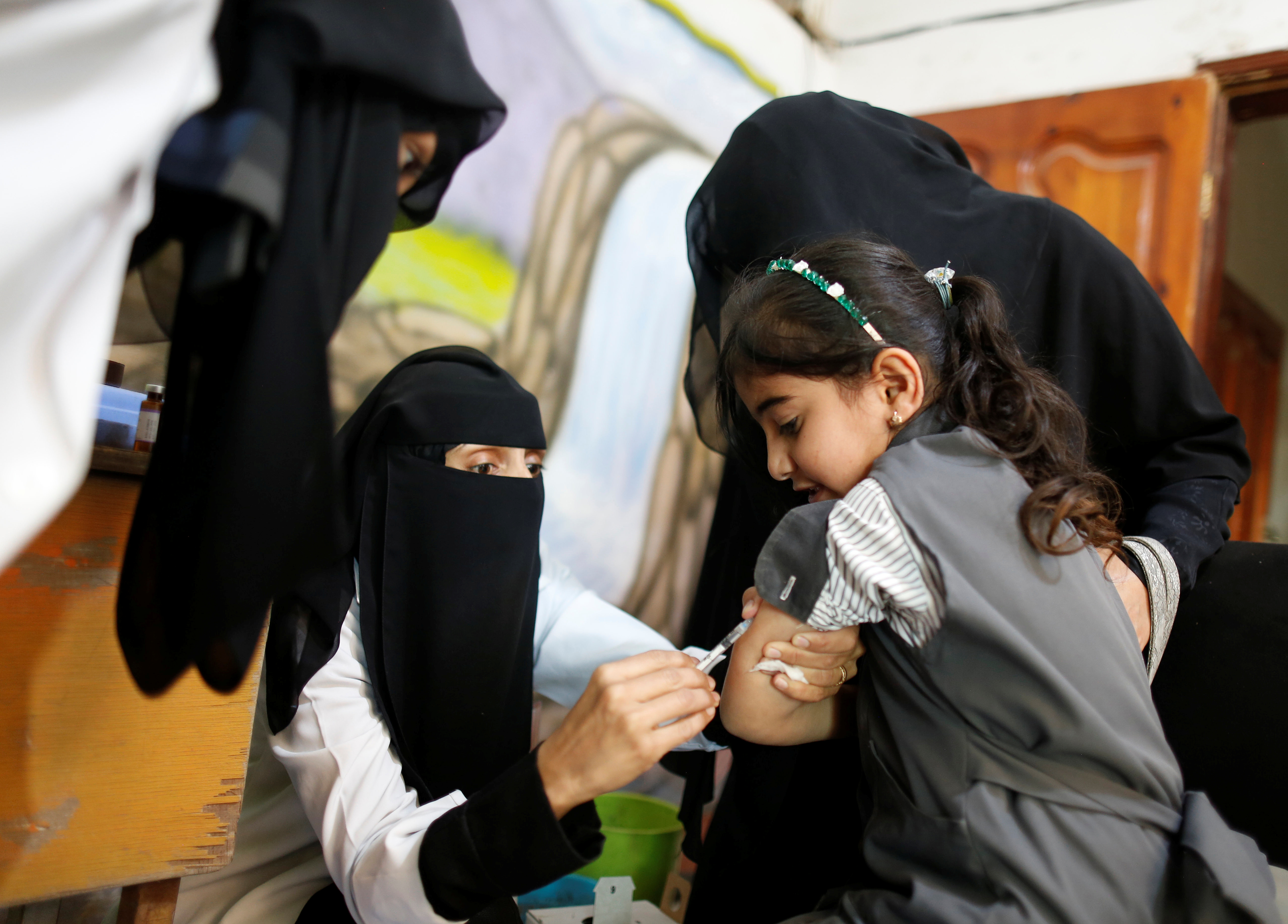
- Humanitarian access in Taiz is likely to worsen if the fighting and route restrictions persist over the next month. OCHA reported that Taiz city has been effectively cut off since early October, and the UN humanitarian chief said fighting is blocking access to food and medicine. Yemen’s Ministry of Information put the number cut off from food assistance at around 600,000; that figure is a government claim and is not independently corroborated in the supplied reporting. UN reporting that about 350,000 children in Taiz missed measles and rubella vaccinations adds evidence of disrupted essential services. (Confidence: medium · ASSESSED)
- I&W: OCHA or another UN agency reports that access roads remain closed and food, fuel or medical deliveries into Taiz city have not resumed. (0-30 days)
- I&W: OCHA confirms that named access roads have reopened and aid deliveries or routine medical services have resumed in Taiz city. (0-30 days)
- A Houthi naval blockade of Saudi Red Sea ports is unlikely over the next 14 days, and no port closure is established by the supplied reporting. Houthi-affiliated reporting describes a conditional threat against Jeddah and other Saudi Red Sea ports if Hodeidah is attacked, and a separate report says the Houthis claimed to have targeted Jeddah and Jazan ports. Neither report confirms a blockade or closure. (Confidence: low · ASSESSED)
- I&W: Saudi port authorities announce a suspension at Jeddah or Jazan, or shipping advisories document vessel diversions linked to a Houthi threat or attack. (0-14 days)
- I&W: Port authorities report continued operations at Jeddah and Jazan and no shipping advisories attribute disruption to Houthi action. (0-14 days)
- A direct expansion of the Yemen-Saudi conflict into a multi-state Gulf war is unlikely over the next 30 days, but confidence in this assessment is low. Reporting on the 26 November attack in Kuwait says two Italian technicians died at an air-defence surveillance station; Kuwait and Italian officials attributed the incident to Iranian drones, while Iran denied responsibility. UKMTO reporting on two tanker incidents describes unknown projectiles, not confirmed Iranian mines. These events raise regional risk but do not establish that the Yemen-Saudi conflict has widened. (Confidence: low · ASSESSED)
- I&W: A verified Houthi attack strikes a Gulf state other than Saudi Arabia, or Saudi Arabia announces a cross-border military operation involving another state. (0-30 days)
- I&W: Kuwait and Iran take no further reported military action against one another and no additional tanker strike is reported in the Strait of Hormuz region. (0-30 days)
Outlook & scenarios
Reciprocal strikes remain centred on Yemen and Saudi Arabia (50%)
This is the most likely near-term course. Houthi attacks on Saudi targets and Saudi-led coalition strikes in Yemen continue, while neither side establishes a sustained port closure. The extent of damage at Ras Tanura remains disputed.
Strikes deepen the Taiz and infrastructure crises (25%)
Coalition attacks on Houthi military targets continue alongside Houthi pressure around Taiz and attacks on Saudi infrastructure. Access restrictions in Taiz persist, worsening shortages and disrupting health services. Additional damage at a Saudi energy site would increase pressure for further coalition retaliation.
Regional spillover through the separate Iran-US confrontation (15%)
This is a lower-probability, high-impact course. Another strike on a Gulf facility or a confirmed attack on shipping brings further state responses and airspace disruption. The reported Kuwait attack remains contested by Iran, and UKMTO has not confirmed the cause of the tanker incidents.
A pause in strikes allows limited humanitarian access (10%)
Saudi Arabia and the Houthis halt attacks long enough for access routes into Taiz to reopen and aid deliveries to resume. This scenario requires observable reductions in strikes and confirmed improvements in access; the supplied reporting does not yet show either.
Recommendations
- Maintain separate reporting tracks for Houthi-Saudi exchanges and the Iran-related incidents in Kuwait and the Strait of Hormuz. Do not treat the latter as evidence that the Yemen conflict has widened without a verified operational link.
- Seek independent confirmation of Ras Tanura’s operating status through Saudi Aramco or terminal statements, shipping data and new imagery. Keep the reported suspension of loadings separate from claims of refinery damage.
- Request a current OCHA access update for Taiz city. Compare road status and aid deliveries with Yemen Ministry of Information claims, and report the 600,000 figure as attributed rather than independently confirmed.
- Check Saudi port notices and shipping advisories for Jeddah and Jazan. Distinguish a Houthi threat or claim of targeting from a verified attack, suspension or blockade.
- Track official Saudi and Houthi statements alongside independent reporting on any further attacks. Record the event date, target, weapon type, casualties and operational impact separately from attribution claims.
Confidence & uncertainty
Overall confidence is high for the core pattern of a Riyadh attack, a coalition-attributed attack on Jazan, coalition activity in Yemen and severe humanitarian access problems in Taiz. Major-media and wire reporting, official statements, UN reporting and NGO reporting corroborate key parts of that picture. Confidence is lower on the success and effects of the Ras Tanura attack, the exact scale of the Taiz food-assistance cutoff, and attribution for the Kuwait incident and tanker strikes.
Intelligence gaps
- [EEI 1.1 · PARTIAL] Verified launches, flight paths, impact locations, and warhead types for Houthi missiles and drones directed at Riyadh, airports, military sites, and energy infrastructure. Recommended collection: imagery/OSINT
- [EEI 1.3 · PARTIAL] Changes in Saudi air-defense deployments, airspace closures, civil-defense alerts, and restrictions on aviation or critical-facility access. Recommended collection: official statements/aviation notices
- [EEI 1.4 · PARTIAL] Increase in the geographic range, salvo size, launch frequency, or payload sophistication of Houthi missile and drone attacks. Recommended collection: military reporting/imagery
- [EEI 2.1 · PARTIAL] Houthi control of roads, checkpoints, mountain passes, and supply routes connecting Taiz to government-held areas. Recommended collection: ground reporting/imagery
- [EEI 2.2 · PARTIAL] Changes in front lines, artillery positions, troop concentrations, and attacks against Taiz's western, northern, and southern access routes. Recommended collection: OSINT/satellite imagery
- [EEI 2.3 · PARTIAL] Verified reductions in food, fuel, medicine, and humanitarian access reaching Taiz, including the number of people unable to receive aid. Recommended collection: UN/NGO reporting
- [EEI 3.1 · PARTIAL] Houthi announcements, preparations, or attacks involving anti-ship missiles, naval drones, mines, or attempts to obstruct ports and shipping lanes. Recommended collection: maritime/OSINT
- [EEI 3.2 · PARTIAL] Naval vessel posture changes, convoy activity, port-security measures, and new exclusion or warning zones in the Red Sea, Gulf of Aden, and approaches to the Gulf. Recommended collection: maritime/AIS
- [EEI 3.3 · PARTIAL] Commercial vessel diversions, port disruptions, shipping delays, freight-rate changes, and war-risk insurance premium movement. Recommended collection: shipping/insurance reporting
- [EEI 3.4 · PARTIAL] Evidence of attacks, support, or retaliatory actions involving Iran, Qatar, the United Arab Emirates, Bahrain, Kuwait, or other Gulf states. Recommended collection: official statements/OSINT
- [EEI 4.1 · PARTIAL] Public or private ceasefire proposals, mediation efforts, negotiation contacts, and stated conditions from the Houthis, Saudi Arabia, Yemen's government, Qatar, and the UN. Recommended collection: diplomatic reporting
- [EEI 4.3 · PARTIAL] New arms transfers, foreign military personnel, intelligence support, or air-defense deployments to parties in the conflict. Recommended collection: customs/imagery/official reporting
- [EEI 4.4 · PARTIAL] Concrete changes in humanitarian funding, aid access agreements, border-crossing policy, or UN warnings concerning food insecurity and civilian protection. Recommended collection: UN/NGO reporting
Narrative divergence
**** (EMPHASIS): The accounts describe the same Saudi-led action against Houthi-held areas but differ mainly in emphasis, with the official account foregrounding a specific military target and stated justification and independent reports foregrounding the broader strikes and affected locations.
- State-aligned framing: Xinhua frames the Saudi-led coalition's action as a targeted destruction of a Houthi ballistic-missile launch platform allegedly used in the Jazan refinery attack.
- Independent framing: Independent reports emphasize renewed Saudi-led strikes and explosions at Hodeidah's Houthi-controlled port, city, and airport, while also noting attacks on targets in other governorates.
Red cell review: CONCUR WITH COMMENT
TLP:CLEAR