TLP:CLEAR · Disclosure is not limited.
Yemen-Saudi Arabia: Riyadh airport partially reopens as attacks and Taiz access crisis persist
Time window: Last 1 day · Audience: General analyst · Type: Situation report · DTG: 2026-10-25 12:11Z · Overall confidence: HIGH
BLUF
Houthi missile and drone pressure continues as King Khalid International Airport resumes limited operations, not normal service. The UN warning that 800,000 people are trapped in Taiz makes aid access the most immediate civilian concern; a general Bab al-Mandab closure and a Qatar warning of imminent war are not established by the supplied claims.
Executive summary
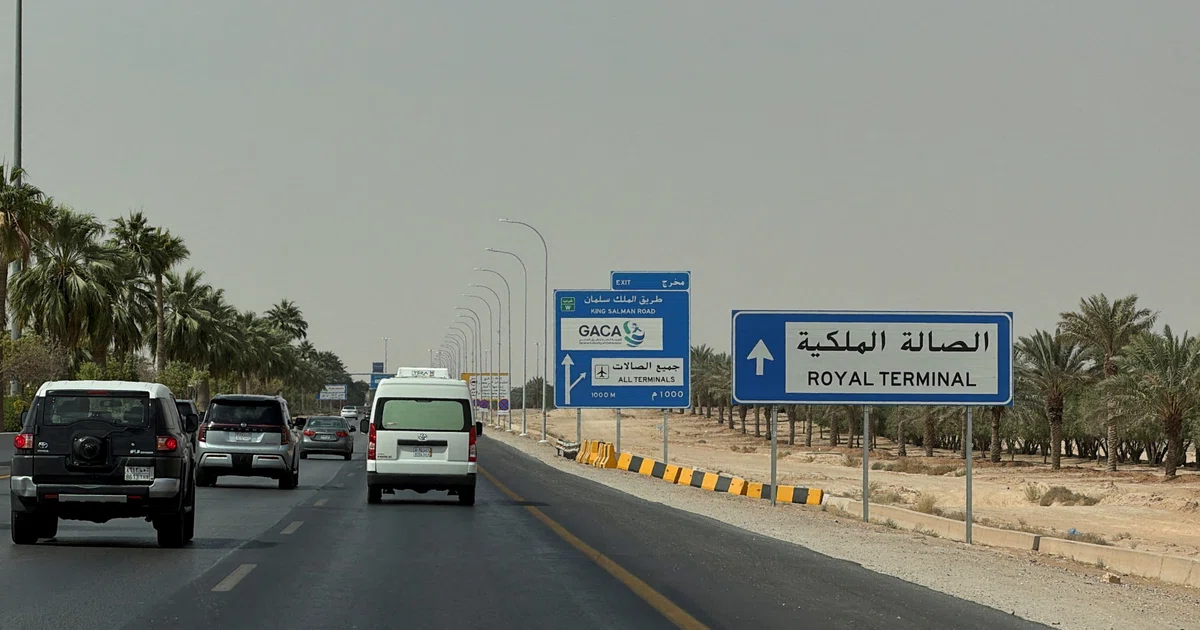
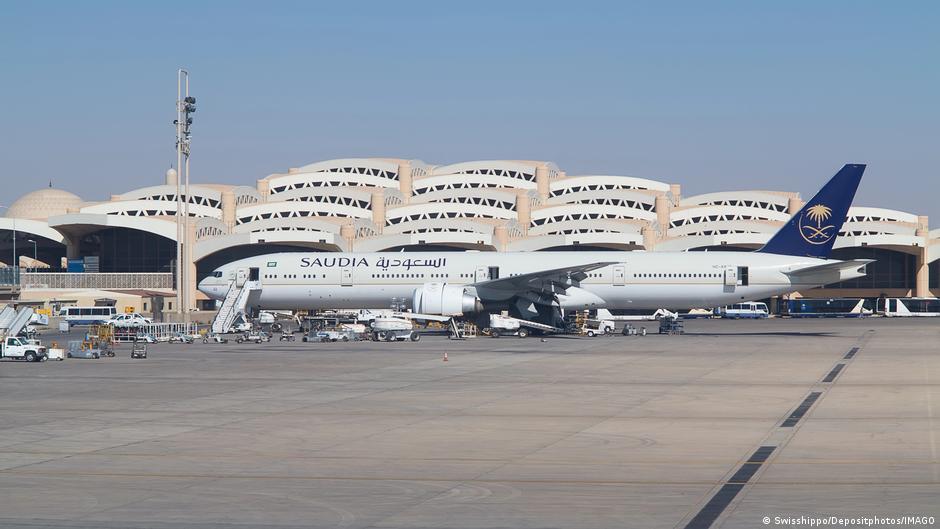
On 25 October, King Khalid International Airport reopened Terminals 1 and 2 after a two-week shutdown; Terminal 3 remains non-operational following strike damage. Houthi military spokesman Yahya Saree again called the airport unsafe and a military target, while the Saudi-led coalition reported intercepting a missile and a drone in the Riyadh region. Reports differ on interception totals and target locations. Riyadh Air moved departures to Al Qassim, while Air India suspended Riyadh and Dammam services through 7 November and Jeddah services through 31 October. In Taiz, the Houthis advanced on Jabal Sabr as the UN warned that 800,000 people were trapped and time to deliver aid was running out. Local accounts assign responsibility for medical-aid obstruction to opposing sides. US reporting says diplomatic staff were ordered to leave Saudi Arabia. The supplied claims do not establish a general commercial closure of Bab al-Mandab or substantiate a Qatar warning of imminent war.
Change from previous assessment
Since the 24 October brief, Riyadh airport's status has changed from an anticipated reopening under threat to a confirmed partial reopening: Terminals 1 and 2 are operating, while Terminal 3 remains closed. New reporting adds a Houthi advance on Jabal Sabr and renews the UN warning about 800,000 people trapped in Taiz; the aid-access assessment is maintained, with responsibility for specific medical-aid obstruction still contested. The US posture is now reported as an ordered departure of diplomatic staff, rather than only adjusted or reduced staffing. Missile totals remain disputed. No new reporting substantiates a Qatar warning of imminent war, and a general commercial closure of Bab al-Mandab remains unestablished.
Key judgments
- King Khalid International Airport has resumed limited operations, but aviation disruption persists: Terminals 1 and 2 reopened on 25 October, Terminal 3 remains non-operational after strike damage, and Yahya Saree renewed the warning that the airport is unsafe and a military target. Riyadh Air shifted departures to Al Qassim; Air India suspensions cover Riyadh and Dammam through 7 November and Jeddah through 31 October. (Confidence: high · REPORTED)
- I&W: King Khalid airport status notices continue to list Terminals 1 and 2 as operating and Terminal 3 as closed; a notice reopening Terminal 3 would break the assessment of limited operations. (0-14 days)
- I&W: Riyadh Air continues to list Al Qassim for departures, or publishes a return to King Khalid; either change is checkable against its flight schedule. (0-14 days)
- The Houthis are likely to continue missile and drone attacks against Saudi territory over the next 14 days, with aviation and energy sites among their declared targets. On 25 October, the Saudi-led coalition reported a missile and a drone intercepted in the Riyadh region; Yahya Saree maintained that King Khalid was a military target, and the Houthis claimed targets at Yanbu, the Rabigh refinery and the East-West oil pipeline. Coalition accounts differ on interception numbers and locations, so exact totals remain unsettled. (Confidence: medium · ASSESSED)
- I&W: The Saudi-led coalition reports another interception or Saudi authorities issue a new air-raid alert for Riyadh, Yanbu, Taif or southern Saudi Arabia, confirming continued attack pressure. (0-14 days)
- I&W: No Saudi air-raid alerts or interception reports appear for 14 consecutive days and Ansar Allah publicly withdraws its warning against King Khalid airport, breaking the continuation assessment. (0-14 days)
- Taiz is likely to face continued severe aid-access constraints over the next 14 days. The UN said 800,000 people were trapped, and its spokesman Jens Laerke reported that the city had been isolated for 20 days; the Houthis advanced on Jabal Sabr and cut the main road to Aden. UNICEF reported more than 52,000 cases of acute malnutrition among children screened in Taiz since the start of the year, including more than 11,500 severe cases. Responsibility for specific medical-aid obstruction remains disputed: local authorities blamed Saudi-backed forces, while the Rassed Organization attributed the blockade to the Houthis. (Confidence: medium · ASSESSED)
- I&W: UN OCHA reports that an aid convoy has reached Taiz via the road linking the city to Aden and that regular deliveries have resumed, breaking the continued-access-constraint assessment. (0-14 days)
- I&W: UN OCHA reports that the Aden road remains closed and no aid convoy has entered Taiz, confirming continued access constraints. (0-14 days)
- A general commercial closure of Bab al-Mandab is unlikely over the next 30 days. Current reporting describes energy-transit exposure and Houthi claims against Saudi oil facilities, but does not report a general halt to commercial transits. This assessment rests mainly on the absence of closure reporting and a single risk commentary. (Confidence: low · ASSESSED)
- I&W: A Houthi statement formally extends restrictions to non-Saudi commercial vessels, or a named shipping operator suspends Bab al-Mandab transits for security reasons, breaking the assessment that a general closure is unlikely. (0-30 days)
- I&W: Shipping operators continue to report Bab al-Mandab transits without a general restriction on non-Saudi vessels, confirming the assessment. (0-30 days)
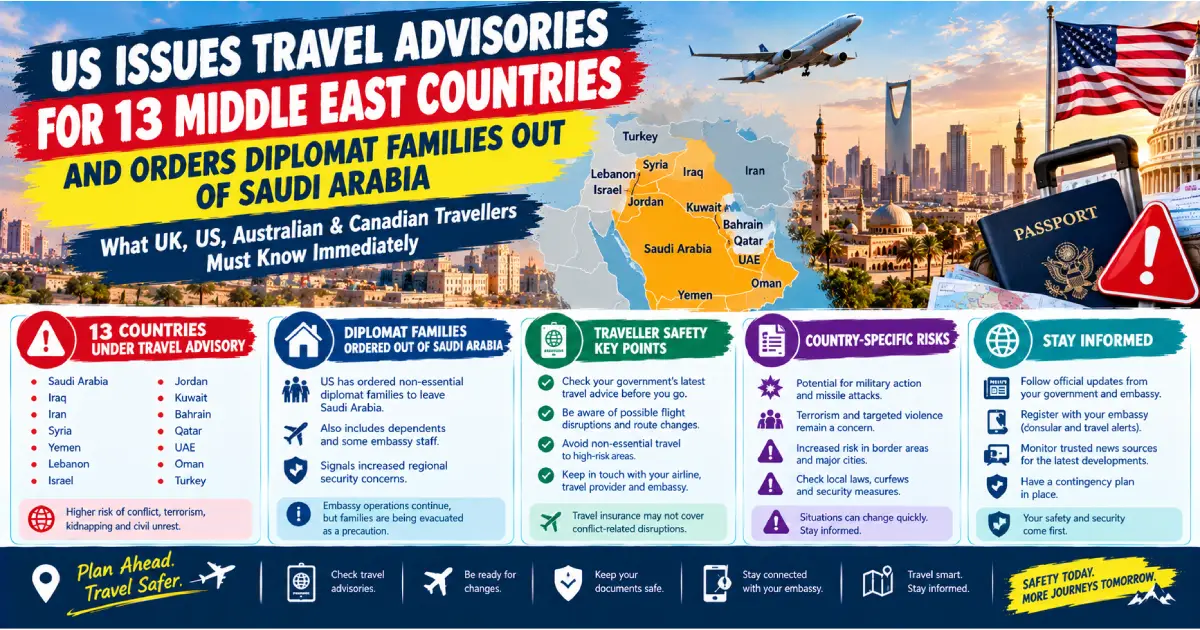
- The US is likely to maintain a reduced diplomatic presence in Saudi Arabia over the next 30 days. Reporting says the US ordered diplomatic staff to depart and updated travel guidance for Saudi Arabia and the UAE. That protective posture does not establish a US decision to enter the Yemen conflict. (Confidence: medium · ASSESSED)
- I&W: The US State Department confirms that the departure order remains in force or issues a further Saudi mission staffing notice, confirming a reduced posture. (0-30 days)
- I&W: The US State Department rescinds the departure order and announces a return to normal embassy staffing in Saudi Arabia, breaking the assessment. (0-30 days)
Outlook & scenarios
Continued attacks with constrained aviation recovery (60%)
The Houthis sustain missile and drone pressure on Saudi territory, while the Saudi-led coalition continues interception reports. King Khalid remains partly operational, with Terminal 3 closed and airlines maintaining route changes or suspensions. Disagreement over interception counts and targets persists.
Taiz access deteriorates further (45%)
The Houthi advance on Jabal Sabr and the reported closure of the road to Aden keep aid access constrained. UN agencies report further delays in delivering food and medical supplies to the 800,000 people reported trapped. Competing claims over responsibility for blocked medical deliveries remain unresolved.
Energy or shipping incident widens the conflict (10%)
A verified strike damages the Aramco facility at Yanbu, the Rabigh refinery or the East-West oil pipeline, or a Houthi restriction extends to non-Saudi commercial shipping at Bab al-Mandab. A Saudi response would raise the risk of wider state involvement. Egypt's scheduled parliamentary vote on overseas deployment is a decision point; Abdel Fattah el-Sisi has said any deployment would focus on defending Saudi Arabia and would not directly target the Houthis.
Recommendations
- For the next 14 days, maintain a separate event log of Saudi-led coalition interception reports by date, location and wave. Do not combine the conflicting one, two, three and ten-missile accounts into a single total without a consolidated official tally.
- Treat King Khalid as partly open, not fully restored. Base travel and operational updates on airport terminal notices and airline advisories, including Riyadh Air's Al Qassim routing and Air India's stated suspension dates.
- Prioritise verification of Taiz aid access. Track UN OCHA reporting on the Aden road and actual convoy deliveries, and record allegations about obstruction by each named party separately. Use the UN figure of 800,000 for the reported trapped population rather than treating the conflicting local total as established.
- Monitor official Houthi notices, port information and named shipping-operator advisories before assessing whether Bab al-Mandab restrictions have expanded to general commercial traffic.
- Track implementation or rescission of the US departure order and the Egyptian parliamentary vote on overseas deployment. Do not infer US entry into the conflict or an Egyptian deployment without an official decision.
Confidence & uncertainty
Overall confidence is high for the broad operational picture because airport reopening and terminal status are reported across established media, with flight changes and Houthi warnings also reported by multiple outlets. The main uncertainties are the number and destinations of interceptions, whether Houthi claims of strikes on Saudi energy sites produced damage, and responsibility for obstruction of aid in Taiz. High confidence applies to the broad pattern of escalation and disruption, not to every count or attribution.
Alternative analysis (red cell)
The evidence supports a reduced US diplomatic presence at present, but not necessarily its continuation throughout the next 30 days. The ordered-departure reporting in 02155c91-a588-44b5-a25d-7dbc5937a99d and 8f6e1b55-512d-480f-ab6a-a929112d713c is temporally limited, while fed17471-1528-4efb-8735-a984ff2bb09c documents guidance rather than a staffing decision. A temporary or rapidly revised posture remains a defensible alternative absent follow-on official notices.
Intelligence gaps
- [EEI 1.1 · PARTIAL] Verified launches, flight paths, impact locations, and warhead types for Houthi missiles and drones directed at Riyadh, airports, military sites, and energy infrastructure. Recommended collection: imagery/OSINT
- [EEI 1.2 · PARTIAL] Operational damage, production interruptions, fires, casualties, and repair timelines at Saudi Aramco facilities, airports, power plants, and desalination sites. Recommended collection: commercial imagery/company reporting
- [EEI 1.3 · PARTIAL] Changes in Saudi air-defense deployments, airspace closures, civil-defense alerts, and restrictions on aviation or critical-facility access. Recommended collection: official statements/aviation notices
- [EEI 1.4 · PARTIAL] Increase in the geographic range, salvo size, launch frequency, or payload sophistication of Houthi missile and drone attacks. Recommended collection: military reporting/imagery
- [EEI 2.2 · PARTIAL] Changes in front lines, artillery positions, troop concentrations, and attacks against Taiz's western, northern, and southern access routes. Recommended collection: OSINT/satellite imagery
- [EEI 2.4 · PARTIAL] Civilian displacement, casualty trends, hospital capacity, and reported shortages in Taiz and surrounding districts. Recommended collection: humanitarian reporting/local media
- [EEI 3.1 · PARTIAL] Houthi announcements, preparations, or attacks involving anti-ship missiles, naval drones, mines, or attempts to obstruct ports and shipping lanes. Recommended collection: maritime/OSINT
- [EEI 3.2 · UNCOVERED] Naval vessel posture changes, convoy activity, port-security measures, and new exclusion or warning zones in the Red Sea, Gulf of Aden, and approaches to the Gulf. Recommended collection: maritime/AIS
- [EEI 3.3 · PARTIAL] Commercial vessel diversions, port disruptions, shipping delays, freight-rate changes, and war-risk insurance premium movement. Recommended collection: shipping/insurance reporting
- [EEI 4.1 · PARTIAL] Public or private ceasefire proposals, mediation efforts, negotiation contacts, and stated conditions from the Houthis, Saudi Arabia, Yemen's government, Qatar, and the UN. Recommended collection: diplomatic reporting
- [EEI 4.2 · PARTIAL] Changes in Saudi-led coalition membership, rules of engagement, sortie rates, targeting policy, or announced military objectives. Recommended collection: official statements/military reporting
- [EEI 4.4 · PARTIAL] Concrete changes in humanitarian funding, aid access agreements, border-crossing policy, or UN warnings concerning food insecurity and civilian protection. Recommended collection: UN/NGO reporting
Red cell review: PARTIAL DISSENT
TLP:CLEAR