TLP:CLEAR · Disclosure is not limited.
Yemen-Saudi Arabia: Riyadh strike and Taiz access crisis
Time window: Last 1 day · Audience: General analyst · Type: Situation report · DTG: 2026-11-19 16:28Z · Overall confidence: HIGH
BLUF
The PIF Tower in Riyadh sustained damage on 19 November, and Ansar Allah responsibility is likely but not officially claimed. The Saudi-led coalition reports missile threats and expanded strikes in Yemen; in Taiz City, UNICEF reports more than 800,000 people cut off from humanitarian assistance. Claims of complete Houthi control around Bab al-Mandab and a naval blockade remain unsubstantiated or contested.
Executive summary
Reporting on 19 November corroborates damage to Riyadh’s PIF Tower after a missile threat, although accounts differ on the number of missiles and whether the tower was struck directly or damaged by debris. Ansar Allah claimed attacks on King Khalid International Airport and Riyadh’s financial centre, while the coalition reported intercepting missiles and striking 60 Houthi military sites in Yemen on 17 November. UNICEF reports severe humanitarian pressure in Taiz City, including closure of the main Aden road and interrupted assistance to more than 800,000 people. Reports of Houthi advances and government troop withdrawals around the Red Sea coast conflict over the extent of territorial control. The Strait of Hormuz tanker incidents are reported separately, with the attacker unidentified; the US blockade described in the reporting concerns Iran-related shipping, not a Houthi naval blockade.
Change from previous assessment
Since the prior brief, reporting has strengthened the assessment that the PIF Tower sustained damage, including accounts of damage across seven to eight floors. Ansar Allah responsibility remains likely rather than confirmed because the group had not claimed the attack in one report. UNICEF’s reporting now specifies that more than 800,000 people in Taiz City are cut off from assistance because the main Aden road is closed, updating the prior brief’s view that the cutoff was not substantiated. Missile counts and control around Bab al-Mandab remain unresolved.
Key judgments
- The PIF Tower in Riyadh was damaged on 19 November, and Ansar Allah responsibility is likely but not established. Multiple reports describe damage across several floors, while the Saudi-led coalition reported a missile threat and debris damage; Ansar Allah had not claimed the tower attack in one report. The available accounts do not resolve whether the building was hit directly or by debris. (Confidence: medium · ASSESSED)
- I&W: A Saudi government or coalition damage assessment identifies the PIF Tower impact and links the debris or projectile to an Ansar Allah launch, confirming attribution. (0-14 days)
- I&W: Saudi authorities identify a different cause for the PIF Tower damage, breaking the current assessment of likely Ansar Allah responsibility. (0-14 days)
- Further reciprocal Saudi-led coalition airstrikes and Ansar Allah missile or drone launches are likely over the next 1-3 months. Ansar Allah claimed attacks on King Khalid International Airport and Riyadh’s financial centre, and the coalition reported strikes on 60 Houthi military sites. The coalition’s reported missile counts differ across accounts, and Saudi officials’ reported forecast of a campaign lasting up to six months comes from Western officials briefed by the Saudis rather than independently confirmed operational plans. (Confidence: medium · ASSESSED)
- I&W: The coalition reports another air operation against named Houthi missile or drone sites, or Ansar Allah claims another launch towards Riyadh or southern Saudi Arabia, confirming continued reciprocal attacks. (0-14 days)
- I&W: Saudi Arabia and Ansar Allah announce a cessation of attacks, followed by no reported launches or coalition air operations. (0-30 days)
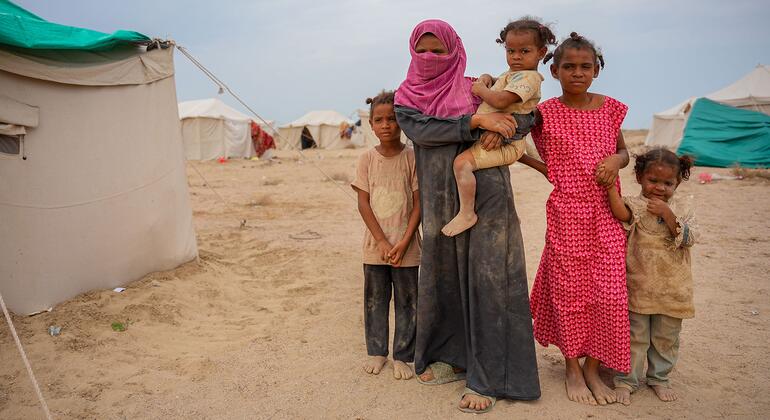
- Humanitarian access in Taiz City is already severely constrained. UNICEF reports that closure of the main road from Aden has cut off assistance to more than 800,000 people; water production in the city has fallen by nearly half, and food and fuel prices have more than doubled. These are reported conditions, not proof that Taiz is fully encircled. (Confidence: medium · REPORTED)
- I&W: UNICEF or aid organisations report that the Aden road remains closed and that assistance deliveries to Taiz City remain suspended. (0-14 days)
- I&W: Aid organisations document the road reopening and verified aid convoys reaching Taiz City, breaking the assessment of continued access constraints. (0-14 days)
- Complete Ansar Allah control of Yemen’s Red Sea coast, Bab al-Mandab and Taiz is not established; current reporting supports contested positions and withdrawals, not a verified full encirclement of Taiz. One report describes government troop withdrawal around Bab al-Mandab after an unsuccessful operation, while Yemeni Armed Forces claim to have liberated more than 7,100 square kilometres on the southwestern coast. Claims of Houthi control of the entire coast and a Taiz encirclement conflict with these accounts and with reporting that Houthi forces are 60 kilometres from Aden. (Confidence: low · ASSESSED)
- I&W: Independent reporting confirms sustained Ansar Allah positions at Bab al-Mandab and identifies the territory and routes under their control, strengthening the assessment of Houthi coastal gains. (0-30 days)
- I&W: Yemeni government forces retake Mokha or establish and document sustained positions around Bab al-Mandab, breaking the assessment that control remains contested. (0-30 days)
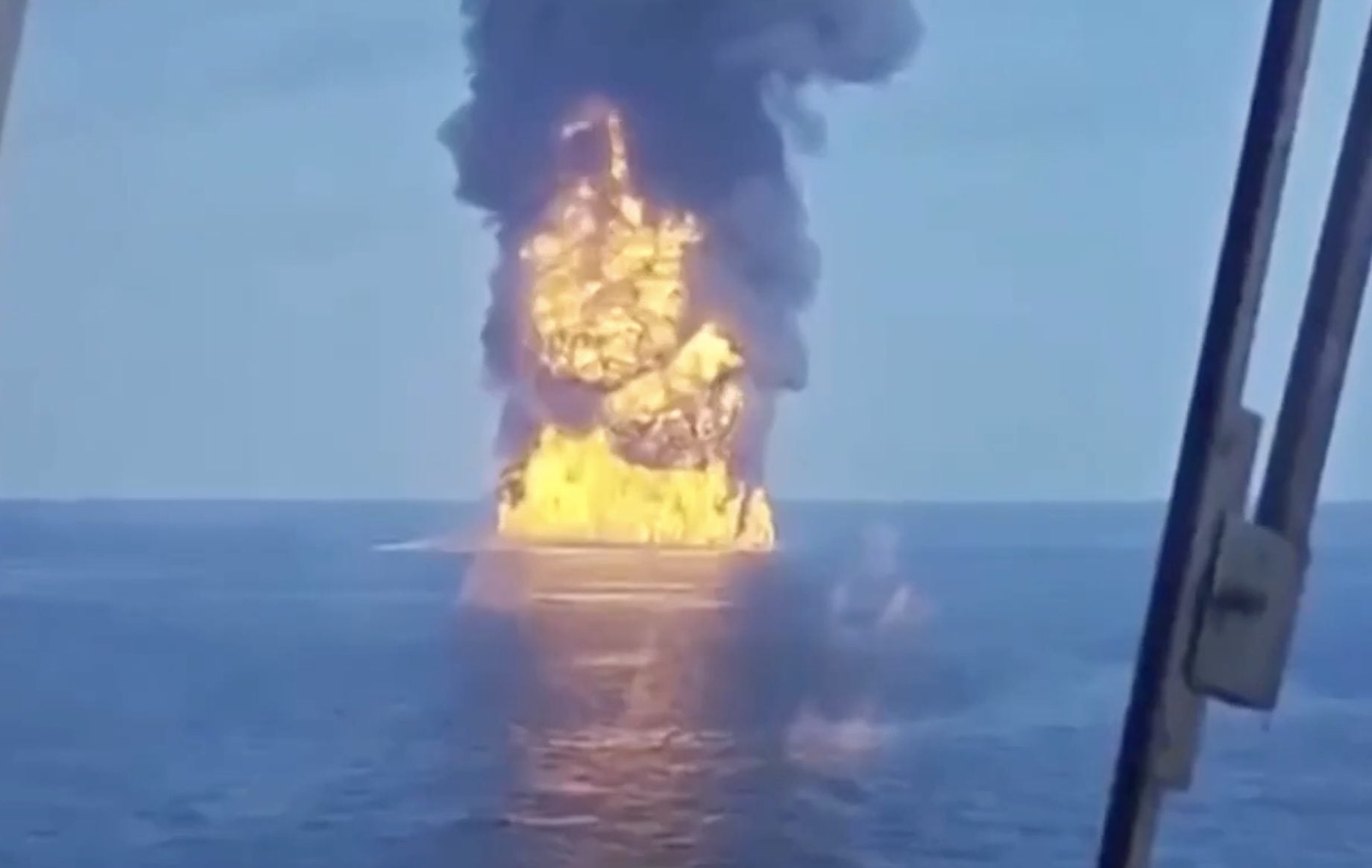
- The supplied reporting does not establish a Houthi naval blockade or connect the Strait of Hormuz tanker attacks to Ansar Allah. UKMTO described an unknown projectile striking a tanker north of Khasab, and the vessel’s identity is disputed across accounts. Separately, CENTCOM’s stated blockade applies to Iranian ports and cargo, while neutral transit to or from non-Iranian destinations is permitted. (Confidence: medium · ASSESSED)
- I&W: UKMTO or a vessel operator attributes an attack on commercial shipping near Bab al-Mandab to Ansar Allah, or reports a Houthi attempt to stop or divert a vessel. (0-30 days)
- I&W: UKMTO confirms a Houthi declaration or enforcement action to deny commercial passage through Bab al-Mandab, establishing evidence of a blockade rather than a threat alone. (0-30 days)
Outlook & scenarios
Continued reciprocal strikes (60%)
The Saudi-led coalition continues air operations in Yemen while Ansar Allah maintains missile or drone pressure on Riyadh and southern Saudi Arabia. The reported damage in Riyadh and coalition campaign planning support this as the central outlook. Missile counts and the extent of damage remain disputed.
Constrained pause in attacks (25%)
Saudi Arabia and Ansar Allah reduce attacks or announce a temporary cessation, while the Taiz access problem and disputes over coastal positions remain unresolved. This scenario would require observable restraint by both sides, not simply a reduction in public claims.
Wider maritime disruption (10%)
Attacks or interdictions affecting commercial shipping expand near Bab al-Mandab or the Strait of Hormuz. This would raise regional risk, but the current reporting does not establish a Houthi blockade or link the Hormuz tanker incidents to Ansar Allah.
Low-probability, high-impact: Bab al-Mandab closure (5%)
Ansar Allah establishes and enforces control over Bab al-Mandab, interrupting commercial passage while Saudi-led coalition strikes continue. The current reporting does not verify Houthi control of the strait or a blockade; this scenario depends on a marked change in both the reported territorial position and maritime behaviour.
Recommendations
- Separate damage confirmation from attacker attribution in reporting on the PIF Tower. Track Saudi authority assessments, coalition statements and any explicit Ansar Allah claim or denial.
- Maintain separate tallies for launches towards Riyadh and southern Saudi Arabia. Reconcile coalition missile counts against the date, launch location and target before presenting a single total.
- Prioritise daily monitoring of the Aden-Taiz road, aid convoy access and UNICEF reporting on Taiz City. Treat the reported aid cutoff as an access emergency without describing it as proof of a complete military encirclement.
- Track verified positions around Bab al-Mandab and Mokha using reporting that identifies specific locations and forces. Do not treat claims of full coastal control as established while accounts conflict.
- Keep the Strait of Hormuz tanker incidents distinct from the Yemen conflict unless UKMTO, vessel operators or another named source identifies the attacker. Distinguish CENTCOM enforcement of the Iran-related blockade from Houthi maritime activity.
Confidence & uncertainty
Overall confidence is high in the core incident picture: reporting from major media and witnesses supports damage to the PIF Tower, the Saudi-led coalition reported a missile threat and debris damage, and UNICEF provides specific figures on humanitarian access and conditions in Taiz. Confidence is lower on Ansar Allah’s responsibility for the PIF Tower damage, the number and type of missiles involved, and control of the Bab al-Mandab approaches. Those uncertainties limit individual judgments without overturning the corroborated reporting on the main events.
Intelligence gaps
- [EEI 1.1 · PARTIAL] Verified launches, flight paths, impact locations, and warhead types for Houthi missiles and drones directed at Riyadh, airports, military sites, and energy infrastructure. Recommended collection: imagery/OSINT
- [EEI 1.2 · PARTIAL] Operational damage, production interruptions, fires, casualties, and repair timelines at Saudi Aramco facilities, airports, power plants, and desalination sites. Recommended collection: commercial imagery/company reporting
- [EEI 1.3 · PARTIAL] Changes in Saudi air-defense deployments, airspace closures, civil-defense alerts, and restrictions on aviation or critical-facility access. Recommended collection: official statements/aviation notices
- [EEI 1.4 · PARTIAL] Increase in the geographic range, salvo size, launch frequency, or payload sophistication of Houthi missile and drone attacks. Recommended collection: military reporting/imagery
- [EEI 2.1 · PARTIAL] Houthi control of roads, checkpoints, mountain passes, and supply routes connecting Taiz to government-held areas. Recommended collection: ground reporting/imagery
- [EEI 2.2 · PARTIAL] Changes in front lines, artillery positions, troop concentrations, and attacks against Taiz's western, northern, and southern access routes. Recommended collection: OSINT/satellite imagery
- [EEI 2.3 · UNCOVERED] Verified reductions in food, fuel, medicine, and humanitarian access reaching Taiz, including the number of people unable to receive aid. Recommended collection: UN/NGO reporting
- [EEI 2.4 · PARTIAL] Civilian displacement, casualty trends, hospital capacity, and reported shortages in Taiz and surrounding districts. Recommended collection: humanitarian reporting/local media
- [EEI 3.1 · PARTIAL] Houthi announcements, preparations, or attacks involving anti-ship missiles, naval drones, mines, or attempts to obstruct ports and shipping lanes. Recommended collection: maritime/OSINT
- [EEI 3.2 · UNCOVERED] Naval vessel posture changes, convoy activity, port-security measures, and new exclusion or warning zones in the Red Sea, Gulf of Aden, and approaches to the Gulf. Recommended collection: maritime/AIS
- [EEI 3.3 · UNCOVERED] Commercial vessel diversions, port disruptions, shipping delays, freight-rate changes, and war-risk insurance premium movement. Recommended collection: shipping/insurance reporting
- [EEI 3.4 · UNCOVERED] Evidence of attacks, support, or retaliatory actions involving Iran, Qatar, the United Arab Emirates, Bahrain, Kuwait, or other Gulf states. Recommended collection: official statements/OSINT
- [EEI 4.1 · PARTIAL] Public or private ceasefire proposals, mediation efforts, negotiation contacts, and stated conditions from the Houthis, Saudi Arabia, Yemen's government, Qatar, and the UN. Recommended collection: diplomatic reporting
- [EEI 4.2 · PARTIAL] Changes in Saudi-led coalition membership, rules of engagement, sortie rates, targeting policy, or announced military objectives. Recommended collection: official statements/military reporting
- [EEI 4.3 · PARTIAL] New arms transfers, foreign military personnel, intelligence support, or air-defense deployments to parties in the conflict. Recommended collection: customs/imagery/official reporting
- [EEI 4.4 · PARTIAL] Concrete changes in humanitarian funding, aid access agreements, border-crossing policy, or UN warnings concerning food insecurity and civilian protection. Recommended collection: UN/NGO reporting
Red cell review: CONCUR WITH COMMENT
TLP:CLEAR