TLP:CLEAR · Disclosure is not limited.
Yemen-Saudi Arabia Situation Report: Reciprocal Strikes and Red Sea Port Risk
Time window: Last 1 day · Audience: General analyst · Type: Situation report · DTG: 2026-11-21 16:40Z · Overall confidence: HIGH
BLUF
Further Houthi attacks on Saudi targets and Saudi-led coalition operations in Yemen are likely over the next 30 days. The reporting confirms threats to Saudi Red Sea ports and a claimed attack on Jazan port, but does not establish a sustained naval blockade, a successful Houthi strike on Riyadh airport, a Qatari warning of imminent war, or the reported cutoff of aid to 800,000 people.
Executive summary
Reporting: The Saudi-led coalition said it intercepted three ballistic missiles aimed at Riyadh on 21 November and had struck Hodeidah port and Houthi missile and drone capabilities in Sanaa. The Houthis announced attacks on Riyadh airport and its financial district, threatened Saudi Red Sea ports and claimed to target Jazan port and the Shuqaiq power station. Saudi authorities did not confirm a successful hit on Riyadh airport, and damage from the claimed attacks on Jazan and Shuqaiq is not independently established. In Taiz, reporting describes severe food, medical and health-service pressures, while the extent of encirclement remains disputed. Assessment: Reciprocal strikes are likely to continue, with a further attack on a Saudi Red Sea port a near-term risk; a sustained Houthi-enforced naval blockade is unlikely. The available claims do not substantiate a Qatari warning of imminent war or a UN notice that aid to 800,000 people has been cut off.
Change from previous assessment
Since the 20 November brief, the coalition has reported intercepting three ballistic missiles aimed at Riyadh on 21 November, further details have emerged on damage to the PIF Tower, and Houthi threats to Saudi ports have been followed by a claimed attack on Jazan port. The coalition's Hodeidah strike and reported operations in Sanaa, Saada and Taiz reinforce the assessment of reciprocal escalation; they do not establish that Houthi forces control the entire Red Sea coast or that a naval blockade is under way. The prior forecasts for a Houthi drone attack on Riyadh, a ballistic missile attack on Saudi Arabia, coalition airstrikes in Yemen and Houthi attacks in Taiz all resolved yes. Those outcomes support retaining a likely near-term continuation forecast, but five outcomes are too small a sample to justify a broad recalibration. Initial confidence in the Red Sea blockade risk remains limited by the absence of verified vessel interdictions and by contested reporting on Houthi territorial gains.
Key judgments
- Further Houthi missile or drone attacks on Saudi targets are likely over the next 30 days. The Saudi-led coalition reported intercepting three ballistic missiles aimed at Riyadh on 21 November. Saudi authorities also confirmed damage to the Public Investment Fund tower in Riyadh on 19 November, which three sources cited by Reuters attributed to a Houthi missile; another account did not identify the attacker. The Houthis announced attacks on Riyadh airport and the financial district on 18 November, but Saudi authorities did not confirm a successful hit on the airport. The interception reports corroborate the coalition's announcement, not an independent assessment of the missiles or their origin. (Confidence: medium · ASSESSED)
- I&W: Confirmation: the Saudi-led coalition issues a further dated interception notice identifying a Houthi ballistic missile or drone aimed at Riyadh or Jazan. (0-14 days)
- I&W: Break: no new Saudi air-defence interception notice or Houthi operational claim names a target in Saudi Arabia for 30 days, and Yahya Saree withdraws the warning about Saudi airspace. (0-30 days)
- Saudi-led coalition air operations against Houthi capabilities and Houthi threats of retaliation are likely to continue over the next 30 days. On 20 November, the coalition said it struck Hodeidah port and targeted missile and drone capabilities in Sanaa; it also said operations in Saada and Taiz were ongoing. The Houthis threatened Shuqaiq power station and Saudi Red Sea ports, and claimed to target Jazan port. Those statements and coalition announcements support an ongoing reciprocal-strike pattern, but do not independently verify the damage or effectiveness of the operations. (Confidence: medium · ASSESSED)
- I&W: Confirmation: the coalition announces new strikes in Hodeidah, Sanaa, Saada or Taiz, or the Houthis issue a further named threat against Saudi energy or port infrastructure. (0-14 days)
- I&W: Break: the coalition announces a halt to operations and reports no new strikes in those locations for 14 consecutive days. (0-30 days)
- Food and medical access in Taiz is likely to remain severely constrained over the next 30 days, although full encirclement is not established. BBC reporting describes minimal food entering, staple prices doubled or trebled, and medicine, water and fuel dwindling; Taiz Governor Nabil Shamsan reported a 70% loss of hospital capacity and the closure of 120 health centres. The UN, aid agencies, residents and the Yemeni government dispute Abdul Malik al-Houthi's claim that routes remain open. A separate assessment says the main routes from Aden are likely severed but that government defences in Taiz city remain robust. The siege's completeness and the status of individual routes therefore remain contested. (Confidence: medium · ASSESSED)
- I&W: Confirmation: the UN or an aid agency reports that food or medical deliveries into Taiz remain minimal, or that the main routes from Aden are impassable. (0-30 days)
- I&W: Break: the UN or aid agencies verify sustained deliveries of food and medicine into Taiz through named routes, alongside a measurable restoration of health services. (0-30 days)
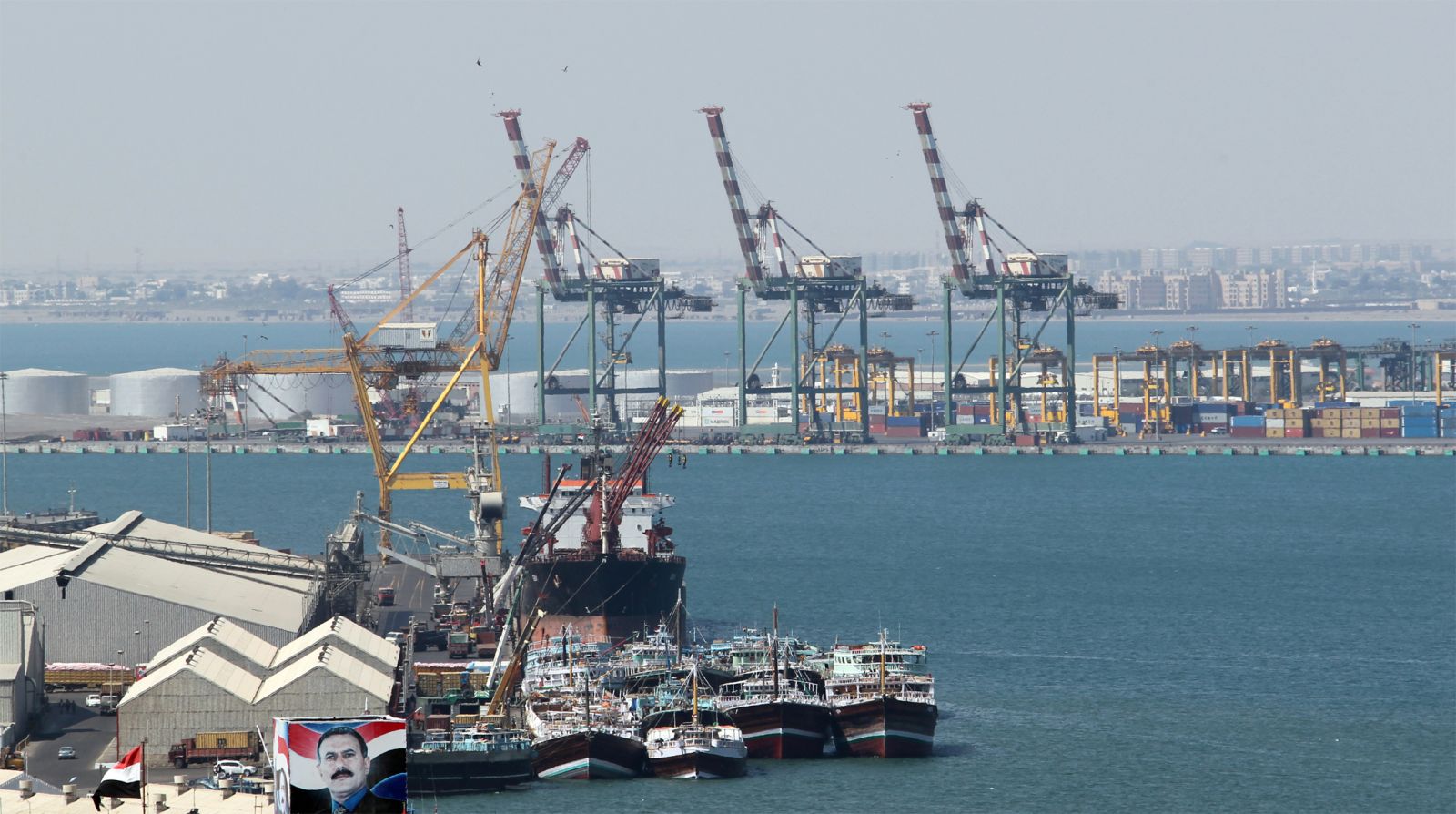
- A further Houthi attack on a Saudi Red Sea port is likely within the next 30 days, but a sustained Houthi-enforced naval blockade is unlikely in that period. Yahya Saree threatened Jeddah and other Saudi Red Sea ports after the coalition strike on Hodeidah, and the Houthis called for shipping and port personnel to evacuate; they also claimed to target Jazan port. These reports establish a threat and a claim of attack, not confirmed port damage or sustained interference with shipping. (Confidence: medium · ASSESSED)
- I&W: Confirmation: UKMTO or Saudi authorities report a strike causing damage or a temporary suspension at Jeddah or Jazan port. (0-30 days)
- I&W: Break: no verified strike or shipping interruption occurs at a Saudi Red Sea port for 30 days, and the Houthis publicly withdraw their port threats. (0-30 days)
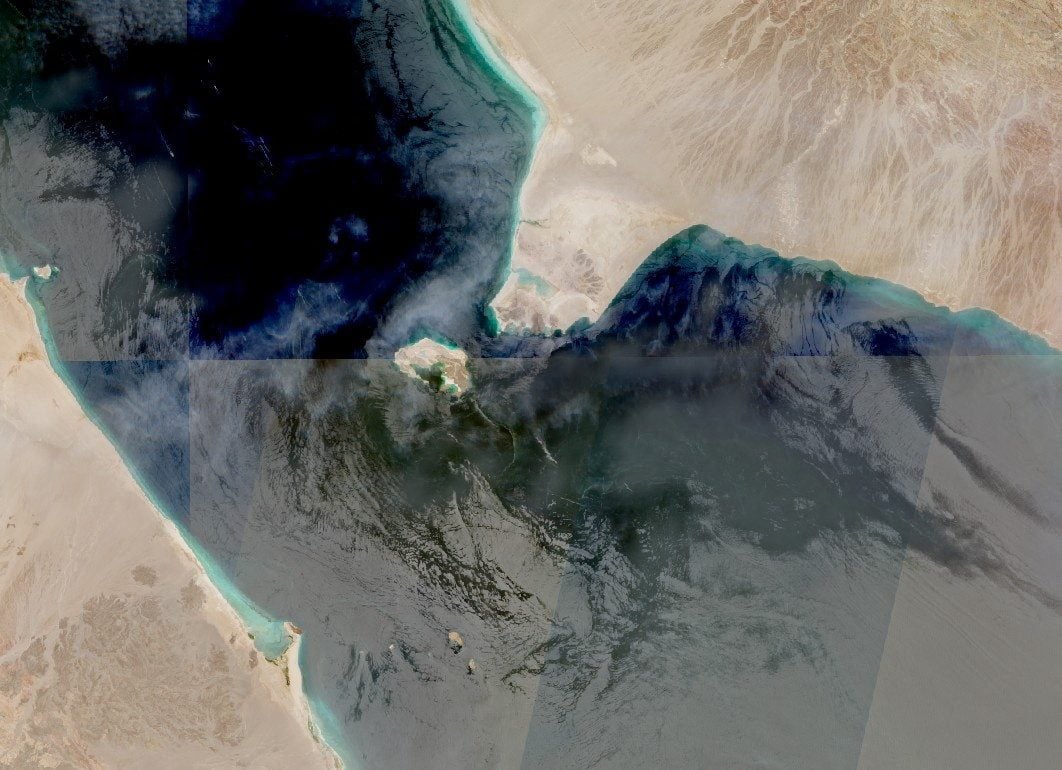
- A sustained Houthi-enforced closure of the Bab al-Mandab Strait is unlikely over the next 30 days, but the high-impact risk would rise if Houthi forces capture Aden and more of the southern coast. Current reporting includes Houthi advances and claims of control near the strait, as well as accounts of heavy Houthi casualties from Saudi and government air attacks. A trade analysis links a future Houthi capture of Aden to a possible closure of Bab al-Mandab in coordination with pressure at Hormuz; that linkage is a single-source assessment, not a reported operational plan or an established outcome. (Confidence: low · ASSESSED)
- I&W: Confirmation: independent reporting verifies Houthi control of Aden or further southern coastline, or UKMTO reports Houthi interference with commercial vessels at Bab al-Mandab. (0-3 months)
- I&W: Break: government forces retain Aden and UKMTO reports no Houthi vessel interference at Bab al-Mandab over the next 30 days. (0-30 days)
Outlook & scenarios
Continued reciprocal strikes, without a wider maritime closure (58%)
The coalition continues strikes against Houthi capabilities in Yemen. The Houthis continue missile or drone attacks and threats against Saudi targets. Air-defence interceptions and disruption to Saudi operations continue, but no sustained blockade of Saudi Red Sea ports or Bab al-Mandab is established.
A Saudi Red Sea port is struck (25%)
The Houthis carry out a further attack on a Saudi Red Sea port, prompting a temporary port suspension, vessel diversions or additional coalition strikes. A port attack would mark a sharper operational escalation, but would not by itself establish a naval blockade.
Houthi advance threatens Aden and Bab al-Mandab (8%)
Houthi forces make further gains towards Aden and the southern coast. If they capture Aden and a substantial stretch of coastline, the trade analysis's high-impact scenario of a Bab al-Mandab closure linked to pressure at Hormuz becomes more relevant. Current reporting does not establish that outcome or coordinated operations.
A temporary reduction in operations (9%)
Cross-border attacks fall for at least 14 days and coalition strikes in Yemen decline. The threat warnings remain in place, but neither side reports a new major attack on Saudi infrastructure or a new coalition strike on Hodeidah or Sanaa during the pause.
Recommendations
- For operational updates on Saudi Arabia, distinguish coalition-reported interceptions and Houthi attack claims from independently confirmed impacts. Track Riyadh, Jazan, Shuqaiq and Jeddah separately.
- Do not describe Riyadh airport as successfully struck in the 18 November incident without independent confirmation. Track Saudi airport notices and aviation advisories for verified closures or flight restrictions.
- Ask reporting teams to verify Hodeidah port's operating status through independent shipping or aid reporting before assessing the strike's effect on goods movement.
- Prioritise checks with the UN and aid agencies on Taiz access routes, food deliveries, medical supplies and health-service capacity. Do not repeat the figure of 800,000 people cut off without a supporting source.
- Monitor UKMTO and port notices for verified vessel attacks, diversions or suspensions at Jeddah and Jazan. Treat Houthi evacuation warnings as indicators of risk, not evidence that a blockade is in force.
Confidence & uncertainty
Overall confidence is high for the core reported pattern: multiple major-media and wire reports carry the coalition's Riyadh interception announcement, reporting confirms damage to the PIF Tower, and BBC reporting and Taiz officials describe severe humanitarian and health-service pressures. This corroborates the announcements and reported conditions, not every attribution or claim of operational effect. Forecast confidence is lower where it depends on statements by parties to the conflict, contested Taiz access, or a single trade analysis of a future Bab al-Mandab closure. No independent evidence in the supplied reporting establishes a successful Riyadh airport hit, a sustained Houthi blockade, the claimed cutoff affecting 800,000 people, or a Qatari warning.
Alternative analysis (red cell)
The evidence supports an elevated Houthi threat to Saudi Red Sea ports, but not a likely attack within the specified period. Claim f3cde574-4651-4eee-94f6-00c0bb4d750e is conditional, claim c94a4441-d33b-410e-b80f-654ac936075a is an evacuation warning, and claim 4d334872-54b6-4e91-b51c-49c5c2cdb0af is an uncorroborated attack claim. A more defensible reading is that further attacks remain possible while the available evidence is insufficient to assess them as likely.
Intelligence gaps
- [EEI 1.1 · PARTIAL] Verified launches, flight paths, impact locations, and warhead types for Houthi missiles and drones directed at Riyadh, airports, military sites, and energy infrastructure. Recommended collection: imagery/OSINT
- [EEI 1.2 · PARTIAL] Operational damage, production interruptions, fires, casualties, and repair timelines at Saudi Aramco facilities, airports, power plants, and desalination sites. Recommended collection: commercial imagery/company reporting
- [EEI 1.3 · PARTIAL] Changes in Saudi air-defense deployments, airspace closures, civil-defense alerts, and restrictions on aviation or critical-facility access. Recommended collection: official statements/aviation notices
- [EEI 2.1 · UNCOVERED] Houthi control of roads, checkpoints, mountain passes, and supply routes connecting Taiz to government-held areas. Recommended collection: ground reporting/imagery
- [EEI 2.2 · PARTIAL] Changes in front lines, artillery positions, troop concentrations, and attacks against Taiz's western, northern, and southern access routes. Recommended collection: OSINT/satellite imagery
- [EEI 2.3 · UNCOVERED] Verified reductions in food, fuel, medicine, and humanitarian access reaching Taiz, including the number of people unable to receive aid. Recommended collection: UN/NGO reporting
- [EEI 2.4 · PARTIAL] Civilian displacement, casualty trends, hospital capacity, and reported shortages in Taiz and surrounding districts. Recommended collection: humanitarian reporting/local media
- [EEI 3.1 · PARTIAL] Houthi announcements, preparations, or attacks involving anti-ship missiles, naval drones, mines, or attempts to obstruct ports and shipping lanes. Recommended collection: maritime/OSINT
- [EEI 3.2 · UNCOVERED] Naval vessel posture changes, convoy activity, port-security measures, and new exclusion or warning zones in the Red Sea, Gulf of Aden, and approaches to the Gulf. Recommended collection: maritime/AIS
- [EEI 3.3 · UNCOVERED] Commercial vessel diversions, port disruptions, shipping delays, freight-rate changes, and war-risk insurance premium movement. Recommended collection: shipping/insurance reporting
- [EEI 3.4 · PARTIAL] Evidence of attacks, support, or retaliatory actions involving Iran, Qatar, the United Arab Emirates, Bahrain, Kuwait, or other Gulf states. Recommended collection: official statements/OSINT
- [EEI 4.1 · UNCOVERED] Public or private ceasefire proposals, mediation efforts, negotiation contacts, and stated conditions from the Houthis, Saudi Arabia, Yemen's government, Qatar, and the UN. Recommended collection: diplomatic reporting
- [EEI 4.2 · PARTIAL] Changes in Saudi-led coalition membership, rules of engagement, sortie rates, targeting policy, or announced military objectives. Recommended collection: official statements/military reporting
- [EEI 4.3 · UNCOVERED] New arms transfers, foreign military personnel, intelligence support, or air-defense deployments to parties in the conflict. Recommended collection: customs/imagery/official reporting
- [EEI 4.4 · PARTIAL] Concrete changes in humanitarian funding, aid access agreements, border-crossing policy, or UN warnings concerning food insecurity and civilian protection. Recommended collection: UN/NGO reporting
Red cell review: PARTIAL DISSENT
TLP:CLEAR