TLP:CLEAR · Disclosure is not limited.
Yemen-Saudi Arabia Situation Report: Riyadh Attack and Disputed Ras Tanura Damage
Time window: Last 1 day · Audience: General analyst · Type: Situation report · DTG: 2026-10-29 21:10Z · Overall confidence: HIGH
BLUF
A Houthi missile attack on Riyadh almost certainly occurred on 29 October, while reports of damage to a Ras Tanura refinery unit conflict with evidence that crude exports continued. Fighting and acute supply constraints in Taiz persist; the reporting supports a serious maritime threat but does not establish an effective blockade or link the tanker incident near Oman to the Yemen conflict.
Executive summary
Reporting for 29 October describes Houthi missile activity targeting Riyadh and a Saudi campaign of attacks across Yemen. Saudi officials reported intercepting two ballistic missiles over Riyadh, but accounts differ on whether falling debris caused injury or damage. Satellite imagery reporting indicates damage to a processing unit at Ras Tanura, although reports of continued crude loading conflict with claims that refinery operations were curtailed. In Taiz, Human Rights Watch reports restrictions on water and essential supplies, while Houthi leader Abdulmalik al-Houthi denies a siege. UN figures put deaths in Yemen since hostilities resumed above 1,600 and displacement above 275,000. A Sana'a government blockade announcement and reports of attacks on Saudi-linked vessels raise Red Sea shipping concerns, but do not demonstrate a functioning blockade. The tanker incident near Khasab remains unattributed to the Yemen conflict.
Change from previous assessment
Since the 28 October brief, reporting has added a Riyadh missile interception and new Saudi danger warnings, increasing confidence that the capital was targeted while leaving damage and casualty claims unresolved. Reports now describe a damaged processing unit at Ras Tanura, but continued crude loading conflicts with claims of curtailed refinery operations. The Taiz assessment has shifted from reported loss of water access to more specific reports of stopped tankers, detained operators and acute shortages, alongside a direct Houthi denial. The current brief also adds reports of a 101-attack Saudi tally and the Khasab tanker incident; neither establishes, by itself, a wider Gulf maritime campaign.
Key judgments
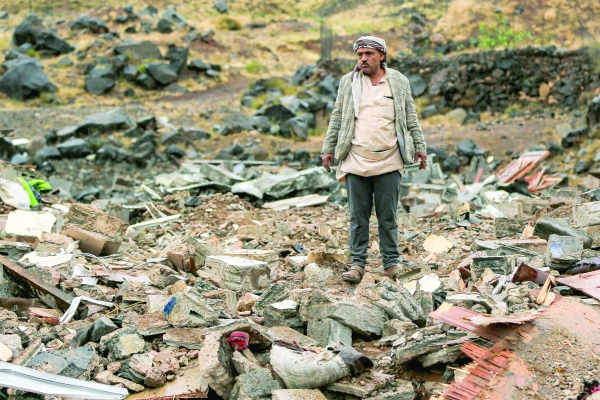
- A Houthi missile attack on Riyadh almost certainly occurred on 29 October, and further attacks are likely within the next 14 days. Coalition spokesman Turki al-Maliki said air defences intercepted two ballistic missiles; Saudi Civil Defense issued danger warnings for Riyadh, Jazan and Najran, and reports described explosions in Riyadh. Damage remains unresolved: one account reported a minor injury and damage to a home and vehicle, while another reported no confirmed casualties or damage. (Confidence: medium · ASSESSED)
- I&W: Confirm recurrence if the Saudi-led coalition reports another Houthi missile or drone interception directed at Riyadh, or Saudi Civil Defense issues a new Riyadh attack warning. (0-14 days)
- I&W: Break the near-term recurrence assessment if 14 days pass without a coalition interception report or a Saudi Civil Defense attack warning for Riyadh. (0-14 days)
- Saudi attacks across Yemen likely continued at high tempo through 29 October, but the reported scale is not independently verified. Press TV reported at least 101 Saudi airstrikes and missile attacks in the preceding 24 hours and a cumulative 3,480 since July 2026; Yemeni Armed Forces spokesperson Yahya Saree named Sana'a, al-Jawf, Hajjah, Sa'ada, 'Amran, al-Mahwit, Ta'izz, Dhale and Lahij among the targets. Reports also attribute a 14-dead, 15-wounded toll to strikes on Al-Hazm Central Market and Al-Taysir fuel station in al-Jawf on 28 October. These figures rely on reporting that is not independent verification of the strike count or casualty toll. (Confidence: low · REPORTED)
- I&W: Confirm the high-tempo assessment if independently geolocated imagery or separately sourced strike records document attacks in several of the named provinces during a further 24-hour period. (0-14 days)
- I&W: Break confidence in the reported Al-Hazm toll if an independent casualty record or imagery-based investigation substantially revises the 14-dead, 15-wounded figures or the reported strike locations. (0-14 days)
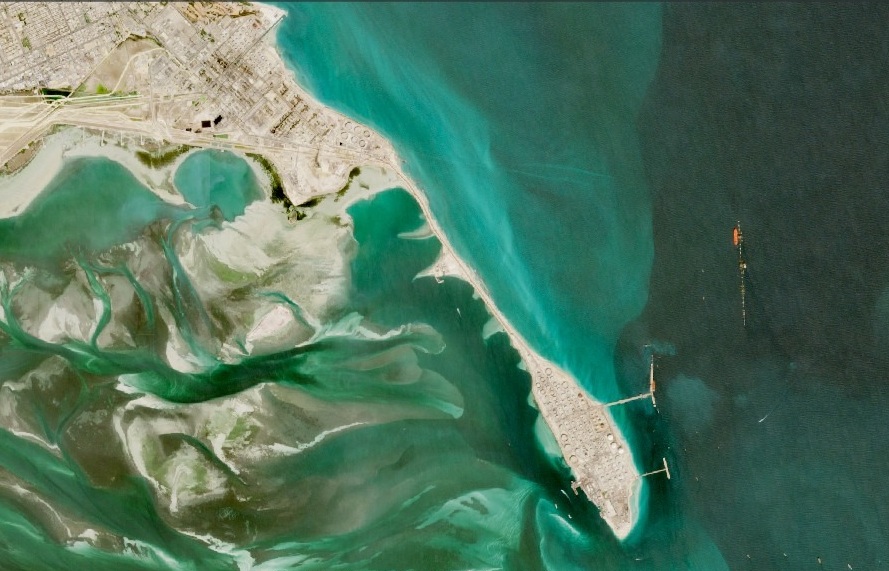
- A Houthi missile strike likely damaged a processing unit at Ras Tanura, but a sustained disruption to Saudi crude exports is unlikely on the current reporting. Satellite imagery accounts describe damage to a refinery component, while other trade reporting says nine very large crude carriers were loading at Ras Tanura and Juaymah and crude exports were not impeded. Claims that the refinery stopped flaring or curtailed operations conflict with those export reports; refinery processing and export activity are distinct measures. (Confidence: medium · ASSESSED)
- I&W: Confirm continuing operational impact if follow-up imagery shows the damaged processing unit remains inactive or flaring remains stopped, alongside a sustained decline in loading at Ras Tanura and Juaymah. (0-30 days)
- I&W: Break the assessment of sustained export disruption if loading at Ras Tanura and Juaymah continues and imagery shows the processing unit has returned to operation. (0-30 days)
- Houthi restrictions on supplies into Taiz are likely contributing to acute shortages, despite Abdulmalik al-Houthi's denial that food, water or humanitarian supplies are blocked. Human Rights Watch reports that water tankers were stopped and operators detained at Houthi checkpoints; it also reports shortages of fuel, food, water and medicine. UN Resident Coordinator Laurent Bukera warned that Taiz's health system was on the verge of collapse. The restrictions and their effects are reported by humanitarian sources, but the Houthi denial remains a material contradiction. (Confidence: medium · ASSESSED)
- I&W: Confirm continued restrictions if independent aid monitors document water tankers being turned back or operators detained at Houthi checkpoints on routes into Taiz. (0-14 days)
- I&W: Break the assessment of continuing access restrictions if aid monitors verify sustained passage of water tankers and essential supplies into Taiz, with no reported checkpoint detentions. (0-14 days)
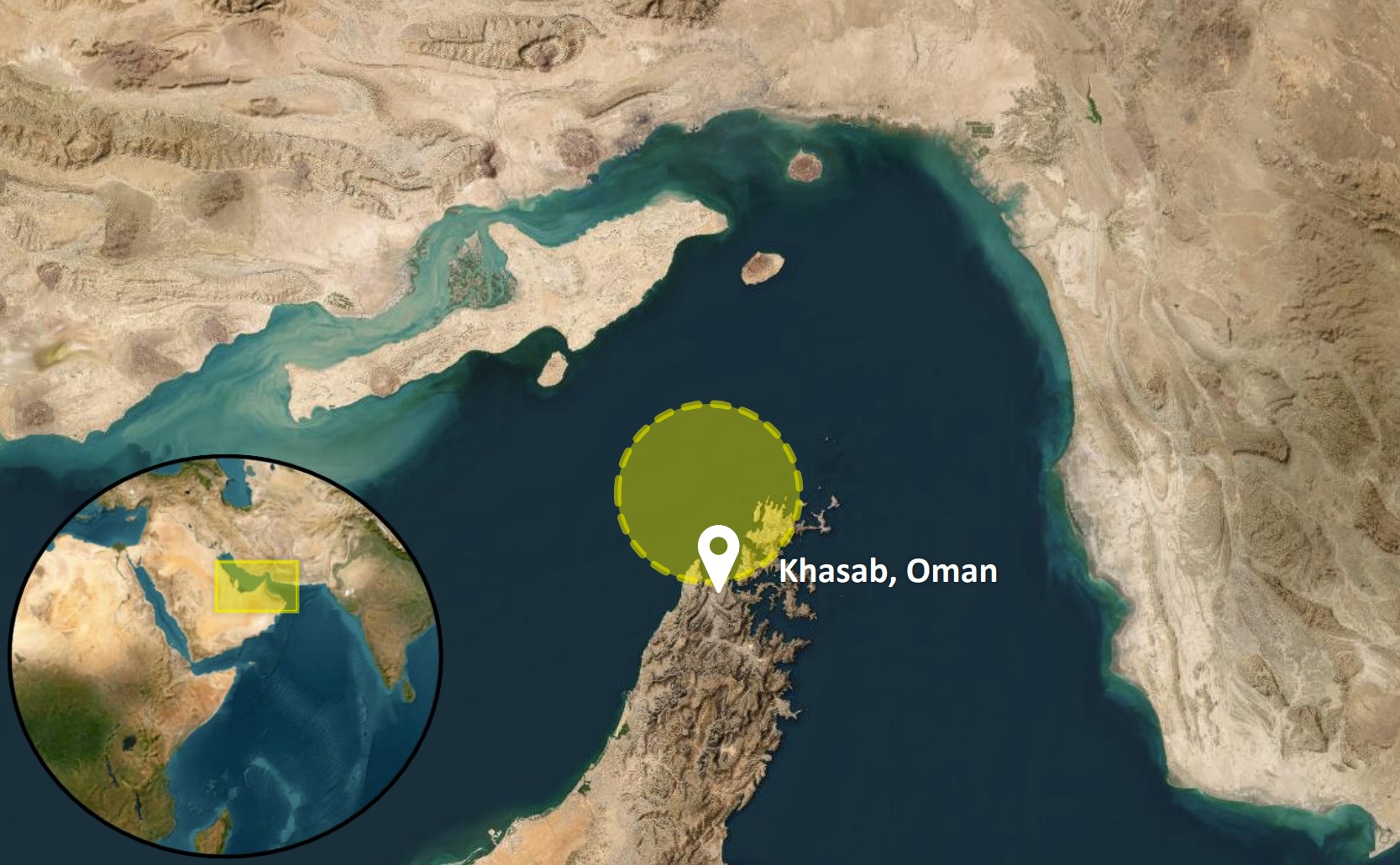
- The Sana'a government's 20 July 2026 blockade announcement and reports of Yemeni armed forces targeting Saudi-linked vessels establish a maritime threat, not an effective blockade. A UKMTO-reported tanker incident near Khasab on 29 October is not attributed in the supplied reporting to the Yemen conflict; accounts differ on the vessel's position and condition. A wider Gulf shipping disruption linked to Yemen is unlikely on the evidence available. (Confidence: low · ASSESSED)
- I&W: Confirm a widening maritime threat if UKMTO reports another incident involving a Saudi-linked vessel in the Red Sea and the vessel's identity or damage is independently verified. (0-30 days)
- I&W: Break the link between the Khasab tanker incident and Yemen if a verified investigation attributes the incident to another actor or establishes a non-hostile cause. (0-30 days)
- Houthi access to Russian satellite-derived targeting data is likely, but direct Russian state direction of Houthi attacks is not established. Saudi and Houthi officials reportedly told the Associated Press that the Houthis receive Russian satellite intelligence, with Iranian military advisers in Yemen providing imagery and analysis. A geospatial consultancy, named in reports as Aurora Geospatial Intelligence and Aurorah Geosignal Intelligence, reported Russian satellite activity coinciding with all 40 attacks it examined. That correlation does not establish who supplied the data or whether Russia directed any attack. (Confidence: low · ASSESSED)
- I&W: Confirm access if an independent source authenticates a specific transfer of Russian-derived imagery or analysis to Houthi target planners through Iranian advisers. (1-3 months)
- I&W: Break confidence in the satellite-correlation claim if a technical review finds that the reported satellite passes did not precede the attacks or that the consultancy's underlying records are unreliable. (1-3 months)
Outlook & scenarios
Continued reciprocal attacks (55%)
This is the most likely course over the next 1-3 months. Houthi missile and drone attacks on Saudi sites recur, and Saudi strikes continue across Yemen. Riyadh experiences further air-defence alerts, while evidence of sustained interruption to crude exports remains absent.
A temporary reduction in strikes (25%)
A pause in attacks is unlikely over the next 1-3 months. If the parties reduce strikes, the first observable change is likely to be fewer Saudi air-defence alerts and fewer reported attacks across Yemen, accompanied by improved access for water tankers and aid into Taiz.
Red Sea shipping pressure increases (15%)
Further reported Houthi targeting of Saudi-linked vessels in the Red Sea is unlikely but remains a credible escalation path. Repeated, independently verified vessel incidents would raise disruption risks; the July blockade announcement alone does not show that shipping is being effectively blocked.
Wider Gulf maritime confrontation (5%)
A wider Gulf confrontation is very unlikely on current reporting. The high-impact path is repeated confirmed attacks on tankers near Oman and Saudi export infrastructure, followed by direct regional military involvement. The 29 October tanker incident remains unattributed to the Yemen conflict.
Recommendations
- Verify the Riyadh incident against Saudi Civil Defense and coalition statements. Keep the two-missile interception report separate from the disputed injury and property-damage accounts.
- Track Ras Tanura refinery activity separately from crude export activity. Compare follow-up imagery of the processing unit and flaring with loading evidence at Ras Tanura and Juaymah before assessing export disruption.
- Prioritise independent checks on water-tanker access, checkpoint detentions and health-facility supplies in Taiz. Do not treat either Houthi denials or single-source accounts as conclusive.
- Monitor UKMTO notices and verified vessel identities in the Red Sea and near Khasab. Keep the tanker incident near Oman analytically separate from the Yemen conflict unless attribution is established.
- Treat claims about Russian satellite-derived targeting data as unconfirmed attribution. Seek independent technical verification before assessing Russian state involvement.
Confidence & uncertainty
Overall confidence is high for the broad assessment of intensified fighting and worsening humanitarian strain. The picture draws on coalition statements and Saudi emergency warnings, humanitarian reporting from Human Rights Watch and a UN official, and trade reporting on satellite imagery and vessel loading. Confidence is lower on specific strike counts, casualties, Ras Tanura's operating status, the tanker incident's attribution and the alleged provision of Russian satellite data. Some reporting is not independent, and several material claims directly conflict.
Alternative analysis (red cell)
The available reporting demonstrates allegations of Russian satellite involvement and a temporal correlation between satellite overpasses and attacks, but it does not establish that the Houthis actually received Russian-derived targeting data. The claims rely heavily on anonymous or interested-source assertions, and the consultancy attribution is ambiguous. A more defensible reading is that Russian-linked intelligence support remains plausible but unresolved, while direct Russian direction is unsubstantiated.
Intelligence gaps
- [EEI 1.1 · PARTIAL] Verified launches, flight paths, impact locations, and warhead types for Houthi missiles and drones directed at Riyadh, airports, military sites, and energy infrastructure. Recommended collection: imagery/OSINT
- [EEI 1.2 · PARTIAL] Operational damage, production interruptions, fires, casualties, and repair timelines at Saudi Aramco facilities, airports, power plants, and desalination sites. Recommended collection: commercial imagery/company reporting
- [EEI 1.3 · PARTIAL] Changes in Saudi air-defense deployments, airspace closures, civil-defense alerts, and restrictions on aviation or critical-facility access. Recommended collection: official statements/aviation notices
- [EEI 1.4 · PARTIAL] Increase in the geographic range, salvo size, launch frequency, or payload sophistication of Houthi missile and drone attacks. Recommended collection: military reporting/imagery
- [EEI 2.2 · PARTIAL] Changes in front lines, artillery positions, troop concentrations, and attacks against Taiz's western, northern, and southern access routes. Recommended collection: OSINT/satellite imagery
- [EEI 2.3 · PARTIAL] Verified reductions in food, fuel, medicine, and humanitarian access reaching Taiz, including the number of people unable to receive aid. Recommended collection: UN/NGO reporting
- [EEI 3.1 · PARTIAL] Houthi announcements, preparations, or attacks involving anti-ship missiles, naval drones, mines, or attempts to obstruct ports and shipping lanes. Recommended collection: maritime/OSINT
- [EEI 3.2 · PARTIAL] Naval vessel posture changes, convoy activity, port-security measures, and new exclusion or warning zones in the Red Sea, Gulf of Aden, and approaches to the Gulf. Recommended collection: maritime/AIS
- [EEI 3.3 · UNCOVERED] Commercial vessel diversions, port disruptions, shipping delays, freight-rate changes, and war-risk insurance premium movement. Recommended collection: shipping/insurance reporting
- [EEI 3.4 · PARTIAL] Evidence of attacks, support, or retaliatory actions involving Iran, Qatar, the United Arab Emirates, Bahrain, Kuwait, or other Gulf states. Recommended collection: official statements/OSINT
- [EEI 4.1 · PARTIAL] Public or private ceasefire proposals, mediation efforts, negotiation contacts, and stated conditions from the Houthis, Saudi Arabia, Yemen's government, Qatar, and the UN. Recommended collection: diplomatic reporting
- [EEI 4.2 · PARTIAL] Changes in Saudi-led coalition membership, rules of engagement, sortie rates, targeting policy, or announced military objectives. Recommended collection: official statements/military reporting
- [EEI 4.4 · PARTIAL] Concrete changes in humanitarian funding, aid access agreements, border-crossing policy, or UN warnings concerning food insecurity and civilian protection. Recommended collection: UN/NGO reporting
Red cell review: PARTIAL DISSENT
TLP:CLEAR