TLP:CLEAR · Disclosure is not limited.
Hormuz Attacks Intensify; Wider Chokepoint and $108 Claims Unverified
Time window: Last 1 day · Audience: General analyst · Type: Situation report · DTG: 2026-11-21 20:42Z · Overall confidence: HIGH
BLUF
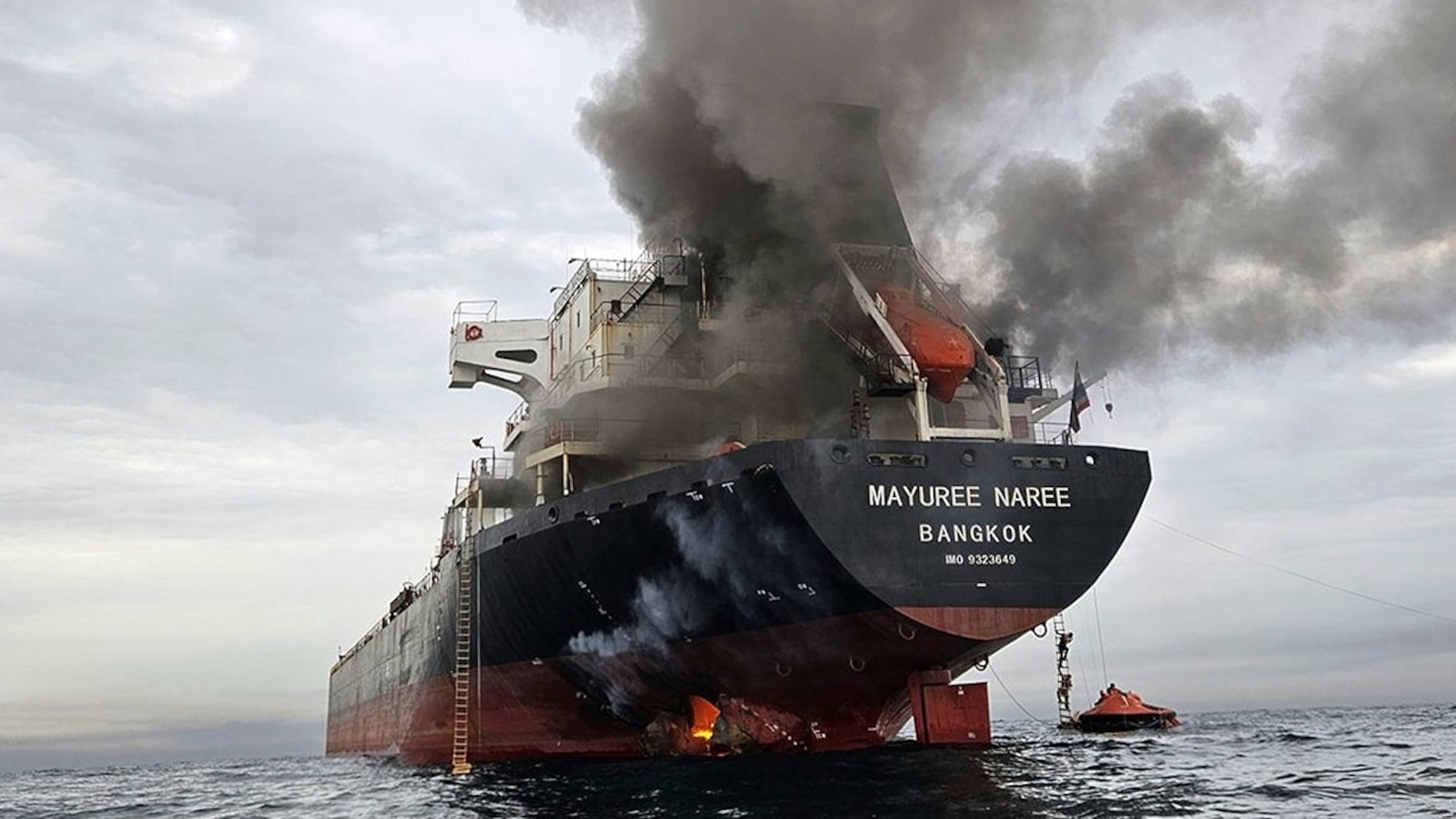
UKMTO reported two tanker projectile incidents near Khasab on 21 November, against an October-November attack count that the IMO puts at 34 in and around the Strait of Hormuz. The evidence supports acute risk to Hormuz shipping, but does not substantiate disruption at four of five key straits or Brent at $108 on 21 November.
Executive summary
Tanker attacks and Iranian restrictions continue to make passage through the Strait of Hormuz dangerous. The attacks' responsibility remains unconfirmed, and reporting does not establish that the strait is fully closed. Iran is reportedly assembling more than 14 tankers near Kharg Island and preparing a convoy through the US blockade, while the US has expanded enforcement against vessels receiving oil through ship-to-ship transfers. The Houthis threatened Saudi Red Sea ports after coalition strikes in Yemen, and the Saudi-led coalition said it intercepted three missiles aimed at Riyadh. These developments do not establish a Bab-el-Mandeb blockade. The market data supplied do not verify a Brent price of $108 on 21 November or uniformly tighter tanker availability.
Change from previous assessment
Since the 20 November brief, UKMTO reported two tanker projectile incidents near Khasab on 21 November, and the IMO reported 34 attacks in and around Hormuz during October and November to date. New reporting also describes a convoy of more than 14 tankers assembling near Kharg Island, expanded US enforcement of ship-to-ship transfers, and Houthi threats against Saudi Red Sea ports after coalition strikes in Yemen. The evidence still does not establish disruption at four of five straits or Brent at $108; the latest official Brent spot observation supplied is $92.94 on 17 November, not a 21 November quote. Prior forecasts for at least nine Hormuz transits in a day, a US strike against Iran and a Houthi ballistic missile launch all resolved yes. The forecast for Brent above $130 resolved no despite a stated probability of 0.65, so this brief remains cautious about extreme price forecasts.
Key judgments
- Very likely, commercial shipping in the Strait of Hormuz will remain exposed to attack over the next 14 days. UKMTO reported two tanker projectile incidents on 21 November, and the IMO counted 34 attacks in and around the strait in October and November to date. UKMTO reporting identifies the projectiles as unidentified, so responsibility for the latest incidents is not established. (Confidence: high · ASSESSED)
- I&W: UKMTO reports another tanker projectile incident in or near the Strait of Hormuz. (0-14 days)
- I&W: UKMTO records no new tanker incidents for 14 consecutive days and reports a return to routine commercial departures. (0-14 days)
- Likely, the Strait of Hormuz is severely degraded but not fully closed. A low-reliability account of IMF PortWatch data reports an average of about seven crossings a day since 17 June and about two a day in the latest week, against about 85 before the war; reporting also describes US naval escorts. The transit series is from a blog and no current daily count is supplied, so the exact level of passage remains uncertain. (Confidence: low · ASSESSED)
- I&W: A daily transit series records non-zero crossings while the seven-day average remains below 10. (0-14 days)
- I&W: A daily transit series records zero crossings for seven consecutive days, or a seven-day average above 40. (0-14 days)
- Unlikely, the supplied evidence substantiates the composite claim of disruption at four of five key straits and Brent at $108 on 21 November. It provides no comparable current transit measure for Bab-el-Mandeb or three other claimed straits, and no Brent price observation for 21 November. The latest official Brent spot observation provided is $92.94 on 17 November; reported supertanker rates had fallen more than 60 per cent from recent record highs, while Mars crude pricing varies by grade, delivery period and benchmark. (Confidence: low · ASSESSED)
- I&W: Dated transit data and two independent maritime notices document sustained disruption in Bab-el-Mandeb and at least two other named straits. (0-14 days)
- I&W: An official ICE Brent settlement is above $108 per barrel. (0-14 days)
- Likely, an attempt to send the reported convoy of more than 14 tankers from Kharg Island through the US blockade will produce an interdiction or direct standoff within seven days. Reports say tankers are gathering near Kharg Island and that Iran is preparing a convoy; they do not confirm that it has departed. US enforcement applies to some vessels receiving cargo through ship-to-ship transfers, and US forces are reported to have disabled tankers attempting to reach Kharg Island. (Confidence: medium · ASSESSED)
- I&W: Satellite or vessel-tracking reports show the convoy departing Kharg Island, followed by a US stop, inspection, diversion or seizure. (0-7 days)
- I&W: The reported convoy disperses or remains at Kharg Island, with no departure or US interception reported. (0-7 days)
- Likely, Houthi-Saudi hostilities will keep the threat to Saudi Red Sea ports elevated over the next 14 days, but the supplied reporting does not establish a Bab-el-Mandeb blockade. The Houthis threatened Jeddah and other Saudi Red Sea ports after Saudi-led coalition strikes on Hodeidah and Sanaa; the coalition said it intercepted three ballistic missiles aimed at Riyadh. No supplied claim confirms an attack on a Saudi Red Sea port or a resulting closure. (Confidence: medium · ASSESSED)
- I&W: UKMTO reports an attack on a vessel bound for Jeddah or another Saudi Red Sea port, or Saudi authorities announce a port closure. (0-14 days)
- I&W: Saudi port authorities report normal operations and UKMTO issues no attack or diversion notice for Saudi Red Sea port traffic. (0-14 days)
Outlook & scenarios
High-risk, partially passable Hormuz (55%)
Tanker attacks continue at an uneven pace, while some commercial traffic continues under escort or on restricted routes. Responsibility for individual attacks remains disputed. The reported convoy remains a source of pressure, but no sustained closure of other named straits is established.
Convoy confrontation (25%)
Iran sends the reported tanker convoy from Kharg Island and US forces attempt to stop or divert vessels. A collision, fire or exchange involving naval forces interrupts commercial passage and raises the risk of wider attacks on Gulf energy infrastructure.
Mediated pause and limited recovery (15%)
Qatari contacts with Tehran lead to a temporary reduction in attacks or an arrangement over passage and the US blockade. Commercial transits rise from their reported low level, though unresolved conditions prevent a full return to routine traffic.
Red Sea spillover wildcard (5%)
The Houthis act on their threats against Jeddah or another Saudi Red Sea port. Port disruption and vessel diversions compound the Hormuz crisis, creating a wider chokepoint shock than the current reporting establishes.
Recommendations
- For the next situation update, obtain a dated daily transit series for Hormuz and Bab-el-Mandeb, plus comparable measures for each strait included in any four-of-five claim. Do not describe a blockade without verified transit or closure evidence.
- Track UKMTO notices, vessel movements near Kharg Island and US enforcement actions against convoy or ship-to-ship transfer vessels. Separate confirmed departures and interceptions from Iranian or media statements about planned movements.
- Do not brief Brent at $108 or a general tanker-capacity squeeze without a dated official price or current freight and availability data. Keep spot prices, futures settlements, grade differentials and freight rates distinct.
- Treat Houthi threats to Saudi ports as warning indicators, not evidence of a port attack or Bab-el-Mandeb blockade. Check for a confirmed strike, port closure or documented vessel diversion before elevating the assessment.
- Keep attribution separate from incident confirmation in reporting on Hormuz. UKMTO confirmed projectile incidents but did not identify the attackers; label responsibility as unresolved unless independent evidence establishes it.
Confidence & uncertainty
High confidence applies to the core reported Hormuz incidents: UKMTO-based reporting confirms tanker projectile strikes, and the IMO provides a separate count of attacks in and around the strait. Confidence is lower in the composite claim of four disrupted straits, current transit volumes and the $108 Brent figure. The latest supplied official Brent observation is dated 17 November, and the reported convoy has not been confirmed to have departed.
Intelligence gaps
- [EEI 1.1 · PARTIAL] Changes in IRGC Navy, Houthi, and affiliated maritime unit deployments, patrol patterns, missile-drone activity, mine-laying indicators, or boarding attempts near the two straits. Recommended collection: maritime/ISR-AIS
- [EEI 1.3 · PARTIAL] Daily vessel-transit volume, AIS dark activity, anchorage buildup, and rerouting rates at Hormuz and Bab-el-Mandeb compared with pre-crisis levels. Recommended collection: maritime/AIS
- [EEI 2.1 · PARTIAL] US, coalition, Iranian, Saudi, Omani, and other naval force posture changes, including escorts, convoy schedules, mine-countermeasure deployments, air patrols, and rules-of-engagement announcements. Recommended collection: maritime/defense-reporting
- [EEI 2.2 · UNCOVERED] Tanker and container-ship rerouting through the Cape of Good Hope or other alternatives, including added sailing days, fuel consumption, and available vessel capacity. Recommended collection: shipping-industry/AIS
- [EEI 2.3 · UNCOVERED] War-risk insurance premium, deductible, coverage-exclusion, and voyage-approval changes for Hormuz, Bab-el-Mandeb, Red Sea, Gulf of Aden, and adjacent waters. Recommended collection: insurance-market
- [EEI 2.4 · PARTIAL] Operational status and export-loading changes at Saudi, UAE, Omani, Iranian, Djiboutian, and Red Sea ports, terminals, pipelines, and storage facilities. Recommended collection: port-operator/energy-infrastructure
- [EEI 3.1 · PARTIAL] Brent and Dubai crude price movements, futures-curve shifts, volatility, and the spread between regional and global crude benchmarks. Recommended collection: commodity-markets
- [EEI 3.2 · PARTIAL] Changes in crude, refined-product, LNG, and LPG volumes transiting the straits and in announced production cuts, strategic-stock releases, or emergency cargo substitutions. Recommended collection: energy-trade/AIS
- [EEI 3.3 · UNCOVERED] Fertilizer shipment delays, canceled or redirected cargoes, regional price increases for urea and ammonia, and reported inventory levels in import-dependent markets. Recommended collection: commodity-trade/port-data
- [EEI 3.4 · UNCOVERED] Container freight rates, vessel charter rates, bunker costs, port congestion, and manufacturing or retail supply disruptions attributable to the chokepoint crisis. Recommended collection: shipping-and-logistics-markets
- [EEI 4.3 · PARTIAL] Shipping-company decisions to resume, suspend, or expand transits and corresponding changes in insurer voyage approvals and war-risk premiums. Recommended collection: shipping-and-insurance-industry
- [EEI 4.4 · UNCOVERED] New incidents, military alerts, vessel diversions, or port restrictions at other critical chokepoints indicating geographic spread beyond Hormuz and Bab-el-Mandeb. Recommended collection: maritime/AIS-official-notices
Red cell review: CONCUR WITH COMMENT
TLP:CLEAR