TLP:CLEAR · Disclosure is not limited.
Israel-Gaza and Lebanon: Escalation Update, 21 November 2026
Time window: Last 7 days · Audience: General analyst · Type: Situation report · DTG: 2026-11-21 13:10Z · Overall confidence: HIGH
BLUF
Israeli attacks in Gaza and Lebanon continued through 21 November, leaving both ceasefires under strain. Further Israeli military activity is likely, but the reporting does not establish an imminent wider Israel-Hezbollah war or a US decision to join strikes on Iran.
Executive summary
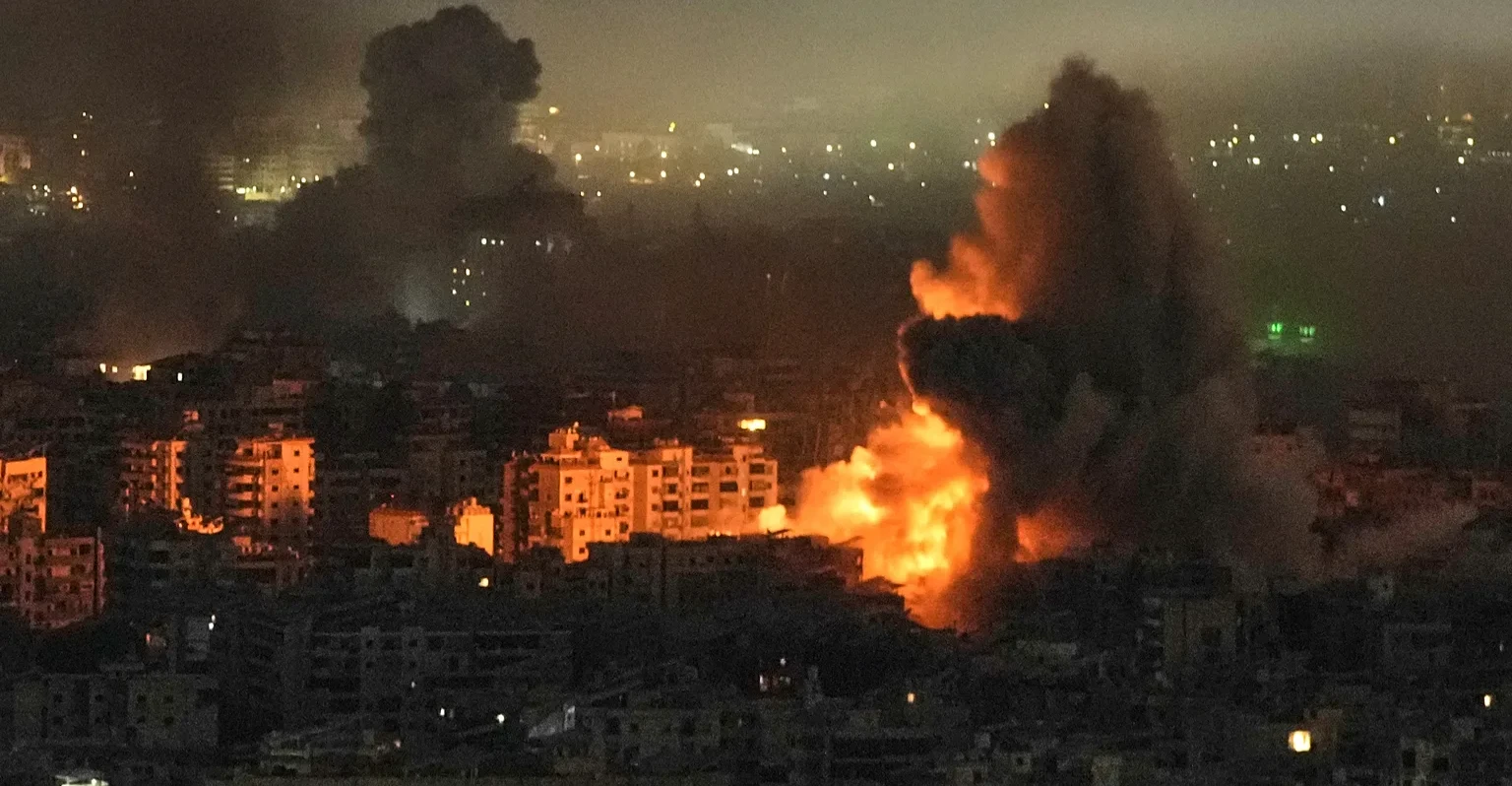
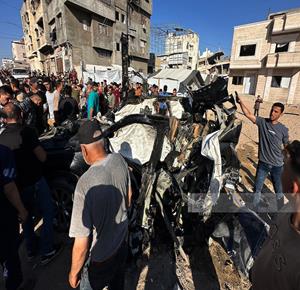
On 21 November, WAFA reported seven Palestinians injured by Israeli gunfire and airstrikes across Gaza. Separate major-media reports described a strike south of Al-Mawasi, tank fire towards displacement tents there, and three Palestinians killed in Tel al-Hawa. The Israeli military operation in central Gaza on 18 November lasted about 24 hours, but accounts differ over its position relative to the Yellow Line. The Board of Peace said Israel and Hamas were failing their ceasefire commitments, while the parties disputed responsibility. In Lebanon, reports from 19 to 21 November described repeated Israeli airstrikes and artillery, demolitions in Wadi al-Khayam, and attacks at Kafr Tibnit and Al-Qantara. Gaza's humanitarian needs remain acute, with reports of widespread displacement, acute hunger and blocked tent deliveries. Washington's posture towards Iran remains unsettled: Donald Trump said he was holding off on strikes, while CBS reported renewed US-Israeli consideration of them.
Change from previous assessment
Since the 20 November brief, reporting through 21 November adds Israeli gunfire and airstrikes in Jabalia, Al-Mawasi and Tel al-Hawa, further Israeli activity at Kafr Tibnit, Al-Qantara and Wadi al-Khayam, and updated Gaza ceasefire casualty figures. This strengthens the assessment that attacks are continuing, but does not establish imminent wider war. Reporting on Iran now includes both Trump's stated hold on strikes and CBS reporting that Israel and the US were considering renewed strikes, leaving the decision status contested. The prior 0.8 forecast of an additional Gaza airstrike and the 0.65 forecast of a southern Lebanon airstrike both resolved yes. Those outcomes are consistent with the calls, but do not by themselves validate the stated probabilities.
Key judgments
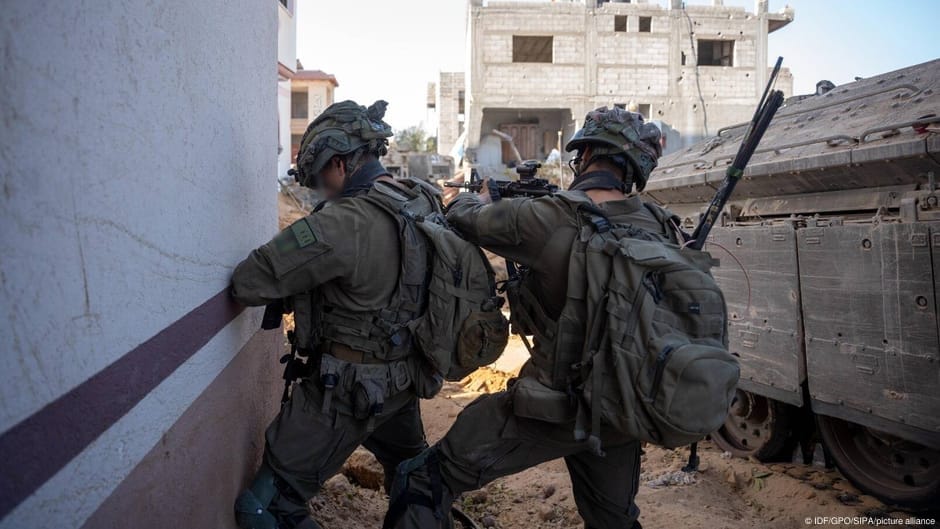
- The Gaza ceasefire is very likely to remain under acute strain over the next 14 days. On 21 November, reports described Israeli gunfire and airstrikes across Gaza, including incidents in Jabalia, Al-Mawasi and Tel al-Hawa. The Israeli operation in central Gaza on 18 November lasted about 24 hours, and the Board of Peace said Israel and Hamas were failing their commitments. Accounts conflict over whether the operation crossed the Yellow Line or took place west of it, so its exact position is unresolved. (Confidence: medium · ASSESSED)
- I&W: WAFA or a major media outlet reports another Israeli airstrike, artillery attack or tank-fire incident in Gaza. (0-14 days)
- I&W: No such incident is reported for 14 consecutive days and COGAT confirms civilian movement on the Salah al-Din road without temporary restrictions. (0-14 days)
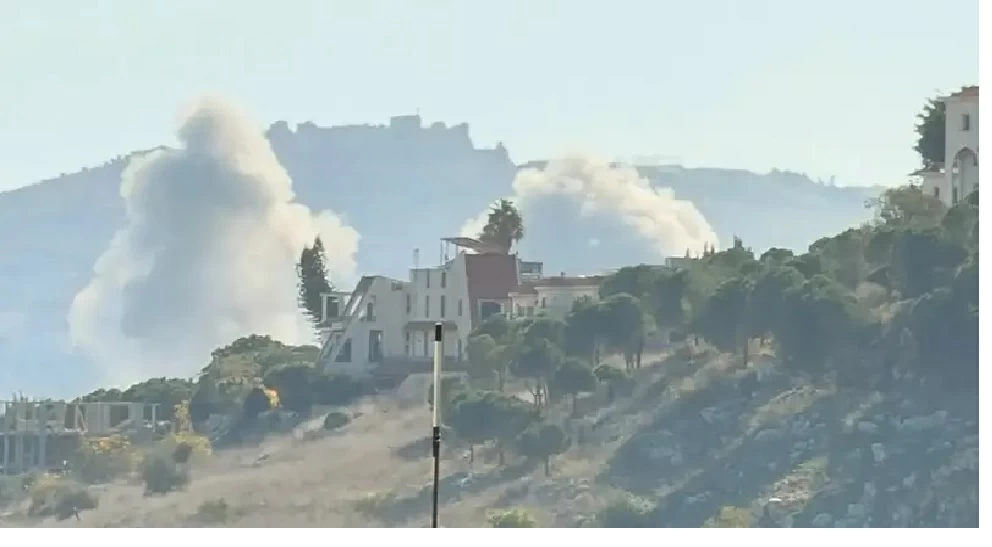
- Israeli military activity in southern Lebanon and the Beqaa Valley is likely to continue through 5 December. Reports describe airstrikes in the Beqaa on 19 November and activity at Kafr Tibnit, Al-Qantara and Wadi al-Khayam on 21 November, alongside attacks in other southern districts. Accounts differ on the number and distribution of the 19 November Beqaa strikes, but the recurrence of reported activity across several locations supports a forecast of continued strikes. (Confidence: medium · ASSESSED)
- I&W: A further Israeli airstrike, artillery attack, drone explosive attack or demolition is reported in Nabatieh, Bint Jbeil, Marjeyoun, Tyre or the Beqaa Valley. (0-14 days)
- I&W: No Israeli air or artillery attack, drone explosive attack or demolition is reported in southern Lebanon or the Beqaa Valley for 14 consecutive days. (0-14 days)
- A renewed sustained Israel-Hezbollah conflict is unlikely over the next 30 days, but confidence in this assessment is low. Israeli defence officials are reported to be divided over whether Hezbollah would join fighting in an Iran-related escalation. The available reporting also describes Hezbollah's weakened position after successive conflicts, but does not establish its current intentions or rule out a change in behaviour. (Confidence: low · ASSESSED)
- I&W: Hezbollah launches or claims a rocket or missile attack towards northern Israel. (0-30 days)
- I&W: No Hezbollah-claimed attack towards Israel and no Israeli announcement of a wider military operation occur during the period. (0-30 days)
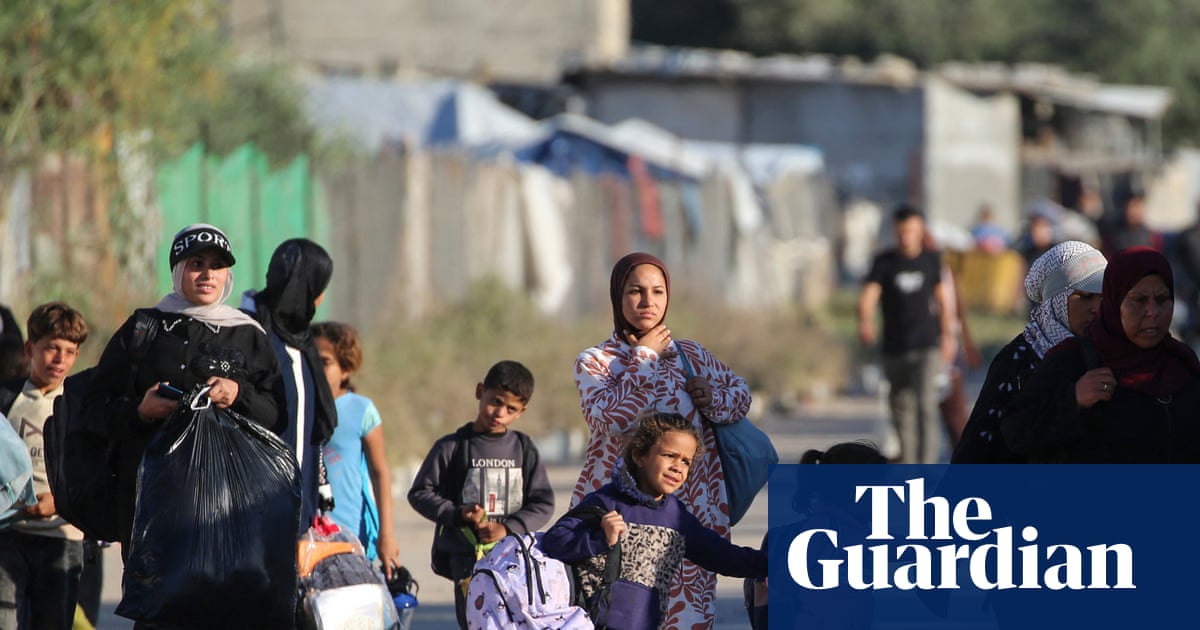
- Gaza's humanitarian conditions are very likely to remain acute over the next one to three months. IOM and WFP reporting describes more than 1.7 million people displaced, 1.4 million facing acute hunger and 1.98 million needing shelter assistance. The IOM also reports that more than 100,000 tents in Egypt cannot be delivered to Gaza under current Israeli conditions. Gaza Health Ministry figures reported on 21 November put deaths since the ceasefire at 1,671 and wounded at 6,062; these figures are attributed to the ministry and are not independently reconciled here. (Confidence: high · ASSESSED)
- I&W: A new IOM or WFP update continues to report more than one million people displaced or acute hunger affecting about 1.4 million people in Gaza. (1-3 months)
- I&W: IOM reports that the tent backlog in Egypt has been substantially delivered, alongside a documented reduction in Gaza's displacement and shelter-assistance caseloads. (1-3 months)
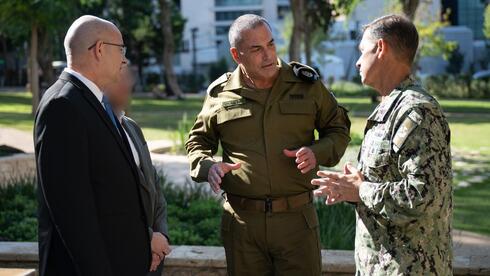
- A US decision to join Israeli strikes on Iran in the next 14 days is unlikely, although renewed strike planning remains under discussion. Trump said he was holding off on strikes, and a White House official said he favoured economic pressure over major combat operations. In contrast, CBS reported that Israel and the US were considering renewed strikes, and the IDF Chief of Staff met the CENTCOM commander for a strategic assessment. This reporting describes deliberation and military coordination, not an authorised strike decision. (Confidence: medium · ASSESSED)
- I&W: Trump or the White House publicly reiterates that strikes are on hold and that no US participation has been authorised. (0-14 days)
- I&W: The White House or Pentagon confirms US participation in a strike on Iran, or US forces conduct one. (0-14 days)
Outlook & scenarios
Continued contained attacks (55%)
Israeli forces continue episodic attacks in Gaza and southern Lebanon. The Gaza ceasefire remains in place, but Israel and Hamas fail to demonstrate sustained compliance. Hezbollah confines its response to statements, and Washington keeps direct participation in strikes on Iran on hold.
Ceasefire restraint and improved access (20%)
The Board of Peace and ceasefire guarantors secure restraint by Israel and Hamas. Israeli activity in Gaza falls, civilian movement on the Salah al-Din road is less restricted, and IOM reports that tent deliveries from Egypt have begun. Israeli strikes in Lebanon also decline.
Escalation on the Israel-Lebanon front (18%)
Hezbollah launches rockets towards northern Israel after further Israeli attacks in Lebanon. Israel widens its campaign beyond the reported strikes and demolitions in southern Lebanon and the Beqaa Valley, putting the Lebanon ceasefire at greater risk.
High-impact regional spillover (7%)
Washington joins Israel in striking Iran, and Hezbollah opens a northern front against Israel. The conflict expands beyond the current Gaza and Lebanon strike pattern, while US military activity and the status of the Lebanon ceasefire become immediate monitoring priorities.
Recommendations
- Maintain a daily incident chronology for Gaza and Lebanon. Record date, location, action, reported casualties and source attribution, and keep daily figures separate from 48-hour totals.
- Resolve the disputed Yellow Line descriptions and the conflicting Beqaa strike counts before using either detail in a public-facing assessment.
- Track direct indicators of a wider Lebanon front: Hezbollah-claimed rocket or missile attacks towards northern Israel, and Israeli announcements of a broader operation. Do not treat condemnatory statements alone as evidence of armed entry.
- Request the next available IOM and WFP updates on displacement, acute hunger, shelter needs and the tent backlog in Egypt. Attribute Gaza casualty totals to the Gaza Health Ministry unless independently reconciled.
- Separate US strike deliberations from an operational decision. Update the Iran assessment only when the White House or Pentagon states a change in policy, or US forces conduct an observable strike.
Confidence & uncertainty
Overall confidence is high because multiple major-media, official and institutional reports corroborate the occurrence of Israeli military activity in Gaza and Lebanon, and IOM, WFP and Gaza Health Ministry reporting provides a consistent picture of acute humanitarian needs. Confidence is lower on exact casualty totals, the precise position of the central Gaza operation relative to the Yellow Line, the number of Beqaa strikes, and the timing of any US decision on Iran.
Alternative analysis (red cell)
A renewed sustained Israel-Hezbollah conflict cannot be assessed as unlikely on the present record; the evidence is better read as indeterminate. Hezbollah's weakened condition (3a03f9f6-e8ab-4872-b5c6-2e9bc102f6a5) may reduce its willingness to escalate, but the reported division among Israeli officials (a69daa70-b7eb-43e7-8c83-dc2838470976) shows that its response remains an active contingency rather than a discounted one. Its condemnation of Israeli action (c88ffa56-32a6-454f-9020-09666eb10866) does not resolve how it would act during an Iran-related escalation.
Intelligence gaps
- [EEI 1.1 · UNCOVERED] Number, type and geolocated coordinates of projectiles (rockets, mortars, anti-tank guided missiles) fired from Lebanon into Israel in the last 24/72 hours, including time-stamped launch and impact locations. Recommended collection: signals/intel
- [EEI 1.2 · UNCOVERED] Satellite or aerial imagery showing movement, concentration, or forward displacement of Hezbollah-associated military assets (armored vehicles, artillery pieces, mobile rocket launchers, logistics convoys) to positions within 0-10 km of the Israel-Lebanon border. Recommended collection: satellite/imagery
- [EEI 1.3 · UNCOVERED] Intercepted or captured Hezbollah command-and-control communications or orders explicitly directing cross-border operations or coordinated strikes with Palestinian groups (time-stamped messages, unit identifiers, orders to fire/move). Recommended collection: signals/intel
- [EEI 1.4 · UNCOVERED] Observable changes in Israeli northern-front posture within Israel (numbers and types of reinforcements deployed to northern brigades, activation of reserves, air defense redeployments, evacuation orders or shelter alerts in northern towns), including timestamps and unit IDs where available. Recommended collection: human/intel
- [EEI 2.1 · UNCOVERED] Official or corroborated reports of IDF reservist mobilization and unit-level deployment orders (number of reservists called, named brigades/units ordered to deploy, deployment timelines). Recommended collection: open-source/media
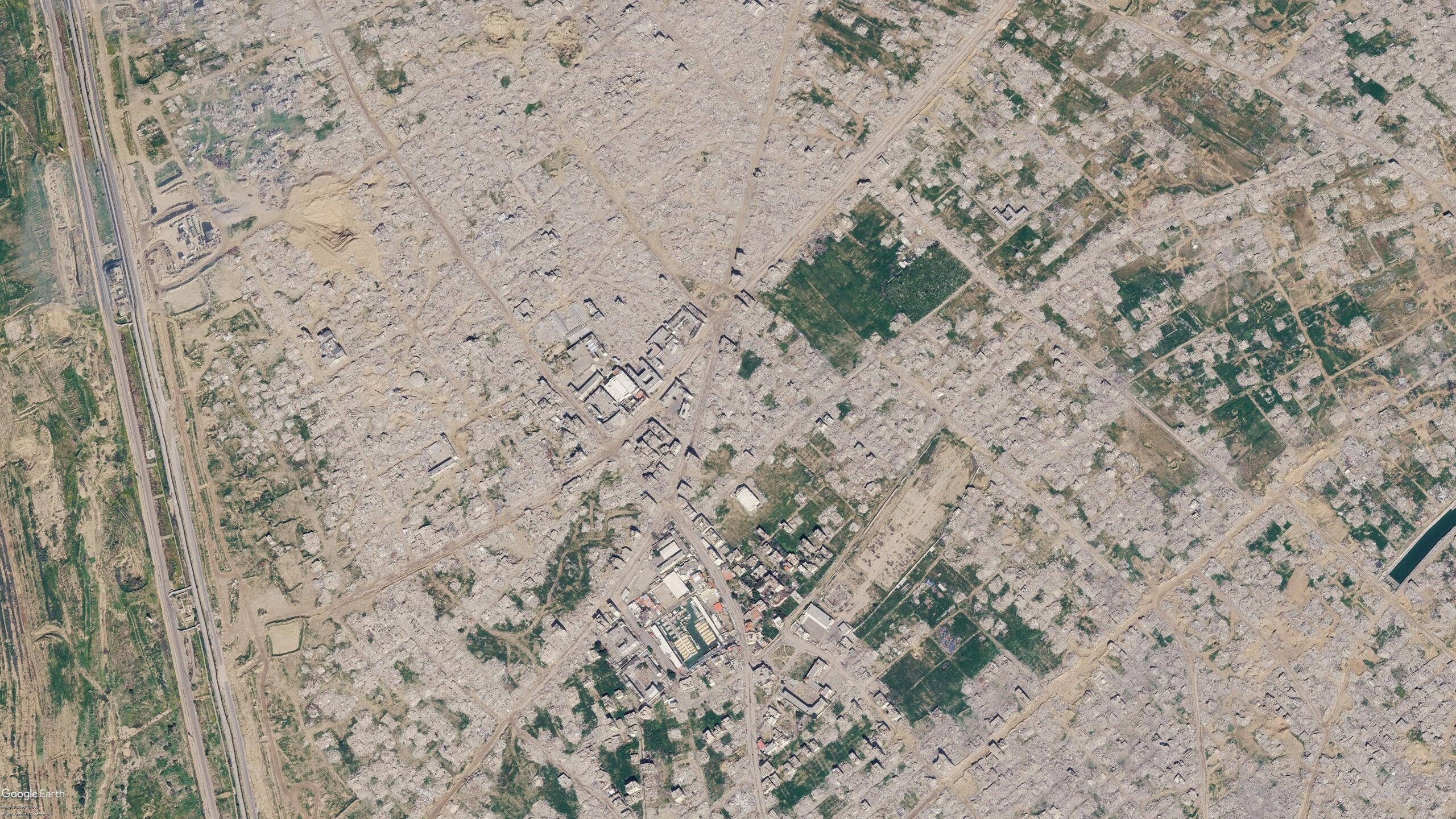
- [EEI 2.2 · PARTIAL] Satellite or ground imagery showing concentrations of IDF heavy equipment (tanks, infantry fighting vehicles, engineering vehicles), staging areas, field hospitals or forward supply dumps within X km of the Gaza border and at known crossing points. Recommended collection: satellite/imagery
- [EEI 2.3 · PARTIAL] Change in strike patterns consistent with pre-ground-attack shaping: sustained high-frequency airstrikes on tunnel networks, command nodes, coastal launch sites, and known insurgent concentrations (strike counts, munition types, locations, times). Recommended collection: open-source/media
- [EEI 2.4 · UNCOVERED] Logistics indicators: verified convoys of fuel/ammunition entering staging areas, establishment of forward logistics or medical bases, or documented requisitioning orders for bulk combat supplies with timestamps and quantities. Recommended collection: human/intel
- [EEI 3.1 · UNCOVERED] Number, participants and content of diplomatic contacts or negotiation sessions in the last 48 hours involving mediators (Egypt, Qatar, US, UN), including any proposed ceasefire text, prisoner/exchange lists, timelines or verification mechanisms. Recommended collection: diplomatic
- [EEI 3.2 · PARTIAL] Public statements, press releases or verified communiqués from Hamas and other Gaza armed groups specifying acceptance, rejection, or conditions for a ceasefire (explicit conditions such as prisoner release lists, withdrawal terms, lifting of blockades), with timestamps and speaker attribution. Recommended collection: open-source/media
- [EEI 3.3 · PARTIAL] Humanitarian indicators relevant to ceasefire: establishment and operation of agreed humanitarian corridors/checkpoints, number of aid deliveries admitted, civilian evacuations completed, and NGO/hospital reports of access denials or safe-passage violations. Recommended collection: humanitarian/NGO reports
- [EEI 3.4 · UNCOVERED] Operational evidence of a de facto pause: verified sustained reduction (e.g., ≥12 hours) in strikes or launches from either side in specific sectors, supported by strike/impact logs, radar tracks and incident reports. Recommended collection: open-source/media
Red cell review: PARTIAL DISSENT
TLP:CLEAR