TLP:CLEAR · Disclosure is not limited.
Maritime chokepoints: Hormuz under strain, Saudi energy sites hit
Time window: Last 1 day · Audience: General analyst · Type: Situation report · DTG: 2026-11-26 21:42Z · Overall confidence: HIGH
BLUF
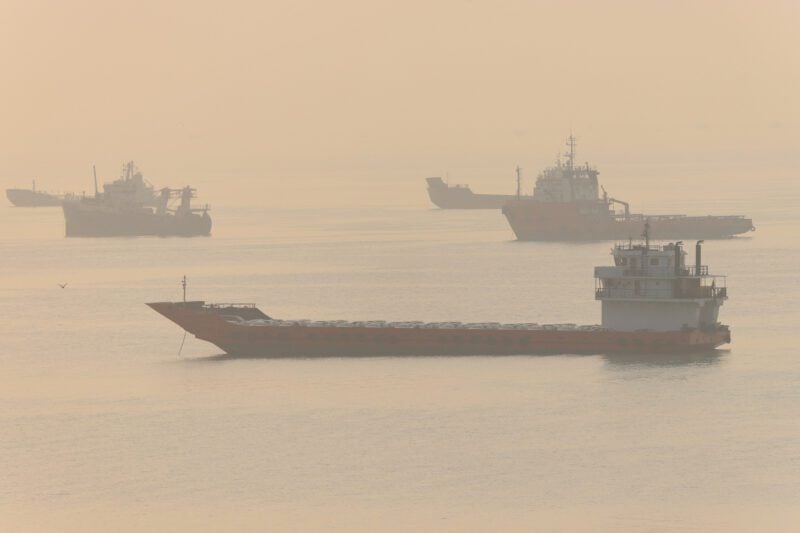
Hormuz traffic is sharply depressed in one dataset, but higher Vortexa counts prevent confidence in a near-closure assessment. Reporting supports an attack on the Jazan refinery that killed one worker and temporarily halted some operations; it does not substantiate either four of five straits being disrupted or Brent at $108.
Executive summary
The Strait of Hormuz remains the main source of maritime risk, but reported traffic levels conflict: one series records one commercial transit on 22 November against about 85 per day before the crisis, while Vortexa reports more than 26 oil, fuel and LNG vessels per day through 19 November and an increase from October. Houthi attacks on ships in Bab-el-Mandeb are reported, but a complete blockade is not established. A projectile struck Saudi Arabia’s Jazan refinery on 26 November, killing one worker and temporarily halting some operations. The deaths of two Italian technicians in Kuwait are confirmed, although responsibility for the drone attack is disputed. Gulf shipping costs and insurance are near wartime highs. The supplied Brent close is $96.12, not $108.
Change from previous assessment
Since the 25 November brief, the assessment has shifted towards more severe and more clearly documented strain. New reporting records one Hormuz transit on 22 November against about 85 per day before the crisis, while Vortexa reports more than 26 relevant vessels per day through 19 November and rising traffic; this widens the uncertainty over the scale of the decline rather than resolving it. Reporting now describes a projectile strike at Jazan that killed one worker and temporarily halted some operations, and confirms the deaths of two Italian technicians in Kuwait. The available Brent close is now reported as $96.12, above the earlier figures cited in the prior brief but still below the unsupported $108 headline. The four-of-five claim remains unsubstantiated. No settled prior forecast outcomes were provided.
Key judgments
- Commercial shipping through the Strait of Hormuz is likely to remain severely constrained over the next 14 days, but a full closure is not established. PortWatch-based reporting gives one commercial transit on 22 November against about 85 per day before the crisis, while Vortexa reports more than 26 oil, fuel and LNG vessels per day through 19 November and rising traffic. The figures may cover different vessel categories and periods; Vortexa also warns that signal interference, spoofing and untracked transits affect its counts. Iranian passage controls and US ship escorts add to the operational risk. (Confidence: medium · ASSESSED)
- I&W: PortWatch records daily commercial transits at or below 10 per cent of its pre-crisis baseline for most of the period. (0-14 days)
- I&W: A reconciled, comparable all-vessel series shows transits recovering towards the pre-crisis level of about 85 per day, breaking the assessment of severe constraint. (0-14 days)
- Bab-el-Mandeb is likely to remain exposed to shipping attacks, but the reporting does not establish a complete blockade. Reports describe attacks on ships in the strait and southern Red Sea, and one account says the Houthis took control of Yemen’s western coast, including Bab-el-Mandeb. The control claim lacks corroboration in the supplied reporting, and no transit counts establish the scale of disruption. (Confidence: medium · ASSESSED)
- I&W: A maritime authority reports a new attack on a commercial vessel in Bab-el-Mandeb or the southern Red Sea, or a named carrier announces rerouting away from the passage. (0-14 days)
- I&W: Comparable transit data show sustained recovery through Bab-el-Mandeb and no verified ship attack in the strait or southern Red Sea. (1-3 months)
- Saudi energy infrastructure is likely to remain exposed to further attacks over the next month. Saudi reporting says a projectile struck the Jazan refinery on 26 November, killing one worker, starting a fire and temporarily halting some operations; the Saudi-led coalition attributed the attack to the Houthis. At Ras Tanura, the Houthis claimed a strike and satellite imagery showed smoke, while the coalition said four drones were intercepted. A shipping source reported suspended loadings at Ras Tanura, but did not confirm whether they resumed. (Confidence: medium · ASSESSED)
- I&W: Saudi authorities report another projectile or drone attack affecting Jazan, Ras Tanura, Jeddah or Jizan, or report a renewed operational halt at either refinery. (0-14 days)
- I&W: Saudi authorities confirm normal Jazan operations and resumed Ras Tanura loadings, with no new reported attack on Saudi energy sites. (1 month)
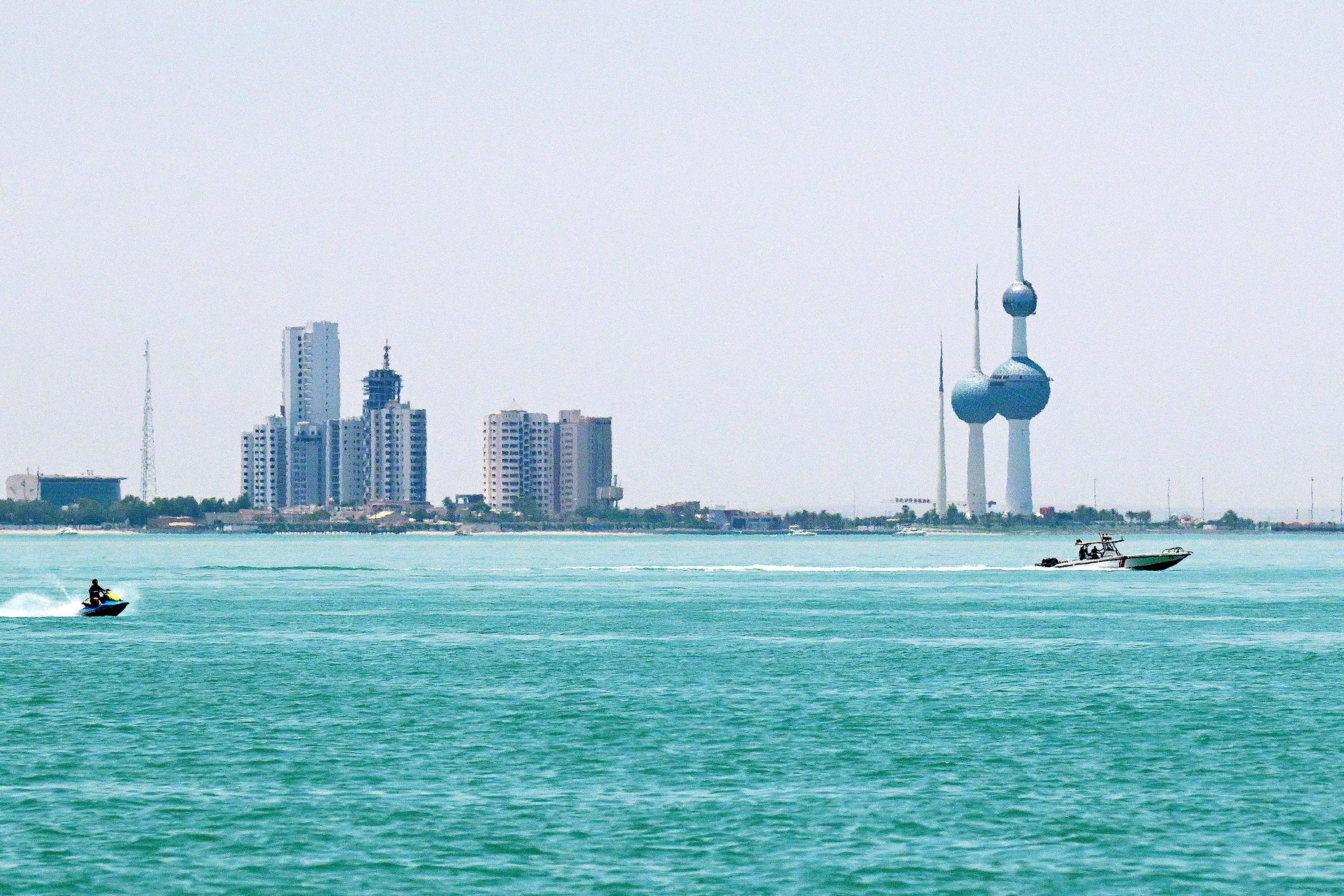
- Two Italian Rheinmetall technicians died in the 26 November drone incident at a Kuwaiti air-defence surveillance station; Iranian responsibility remains contested. Kuwaiti and Italian statements attribute the attack to Iranian drones, while Tehran denies involvement and has offered to join an investigation. The supplied reporting confirms the deaths more firmly than it establishes who launched the drone. (Confidence: high · REPORTED)
- I&W: A Kuwaiti-Italian investigation publishes findings that identify the drone’s launch source or establish a direct link to Iranian state units. (0-14 days)
- I&W: A joint investigation publishes evidence ruling out an Iranian launch or state involvement. (0-14 days)
- The reported $108 Brent price is not substantiated by the supplied market data. The available 26 November closing quote is $96.12; separate reporting says Hormuz voyage and insurance costs are near wartime highs. The price claim rests on a single trade-publication quote, so confidence in the exact benchmark level is limited. (Confidence: medium · REPORTED)
- I&W: An exchange or market-data record for 26 November identifies a Brent benchmark at $108 per barrel and specifies whether it is a spot or futures price. (0-7 days)
- I&W: A comparable 26 November closing record confirms the reported $96.12 figure and no source establishes a $108 benchmark for that date. (0-7 days)
- The claim that four of five key maritime straits are disrupted is not established by the supplied reporting. The evidence describes severe Hormuz constraints and attacks on ships near Bab-el-Mandeb, but does not provide comparable transit data for three additional straits. (Confidence: medium · ASSESSED)
- I&W: A reproducible dataset names all five straits and shows daily transits below 10 per cent of each pre-crisis baseline for at least seven consecutive days in four straits. (0-14 days)
- I&W: Comparable traffic data show that fewer than four of the five named straits meet that disruption threshold. (0-14 days)
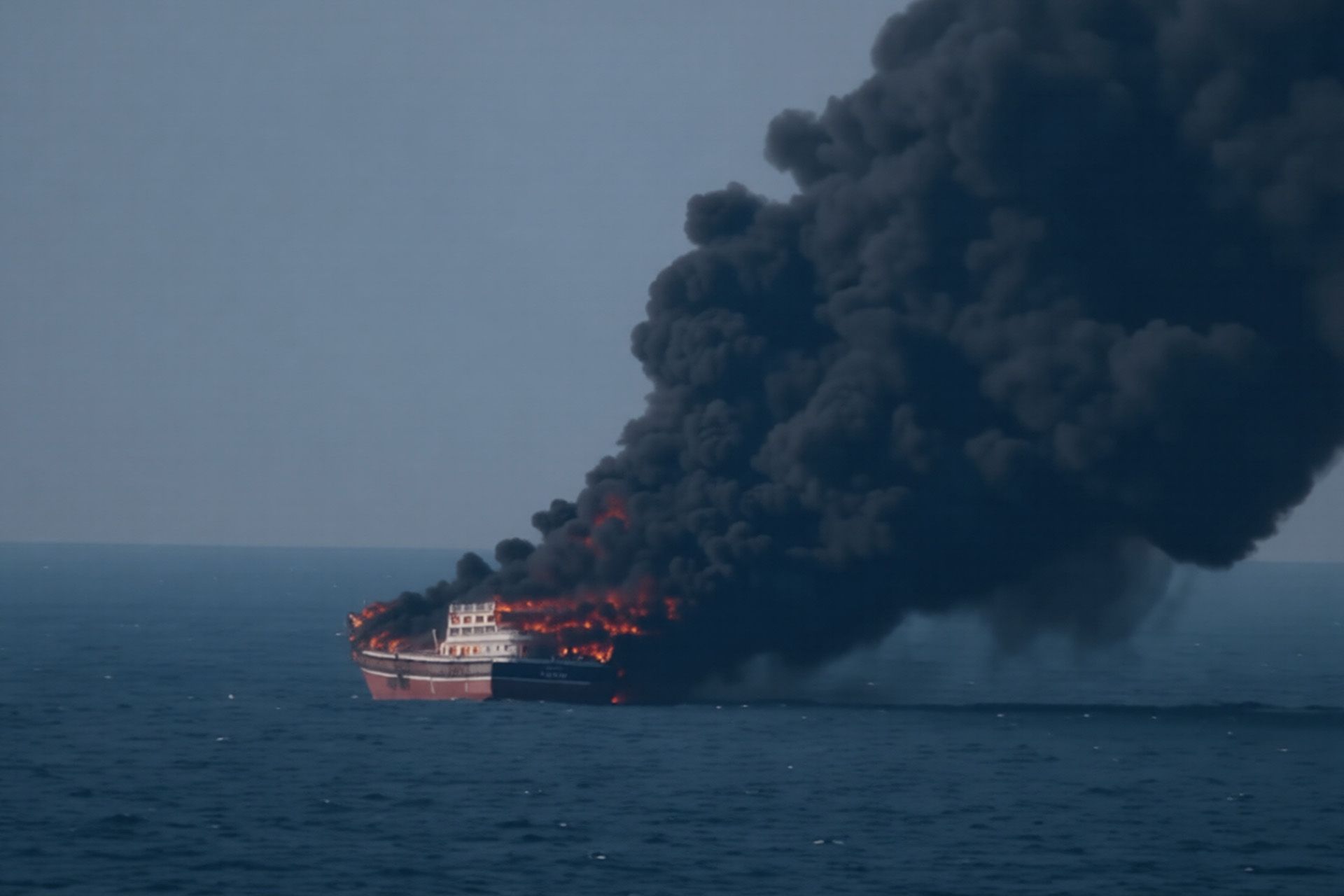
- The reported mine strikes on two tankers near Khasab are not sufficiently corroborated to establish an Iranian mine attack or the reported loss of a burning supertanker. The reports place the incident near Khasab but differ over whether the location was in Omani or Iranian waters. This judgment rests on thin, largely single-source social-media and IRGC-attributed reporting, with no independent confirmation of the cause or damage. (Confidence: low · ASSESSED)
- I&W: An incident report, vessel positions or imagery independently confirms that two named tankers struck mines near Khasab and records their damage. (0-7 days)
- I&W: Vessel records or an independent investigation place the reported tankers elsewhere or find no mine damage. (0-7 days)
Outlook & scenarios
Prolonged, managed disruption (50%)
Hormuz traffic remains below normal while some tankers continue to transit under heightened controls and escort activity. Houthi attacks keep Bab-el-Mandeb exposed, and shipowners and insurers sustain elevated costs. Saudi energy sites remain at risk, but reporting does not establish a lasting shutdown of Jazan or Ras Tanura.
Further regional widening (30%)
Verified attacks on Saudi ports or energy facilities follow the Jazan strike, while new incidents in Hormuz or Bab-el-Mandeb prompt further rerouting. The conflicting Hormuz traffic measures resolve towards persistently low commercial passage, compounding insurance and vessel-availability pressures.
Containment and partial recovery (15%)
A Kuwait investigation narrows the dispute over the drone attack, and no further attacks interrupt Saudi refinery operations. Hormuz transit counts rise on comparable datasets, while Bab-el-Mandeb remains under threat but open to commercial passage.
High-impact maritime confrontation (5%)
Independent evidence confirms a serious mine strike near Khasab, followed by a direct confrontation involving Iranian forces and US escorts in Hormuz. A simultaneous attack on a Saudi export or refinery site would intensify the supply shock. This is a low-probability, high-impact path, not the baseline.
Recommendations
- Maintain a daily Hormuz transit table that separates all commercial vessels from tankers, LNG carriers and other vessel classes. Record the observation date, pre-crisis baseline and provider for each figure; flag changes in method or coverage.
- Do not present four of five straits disrupted or Brent at $108 as established facts. Require a named-strait comparison using consistent transit measures and a dated, specified Brent benchmark before using either headline.
- Track Saudi Ministry of Energy updates on Jazan operations and obtain fresh confirmation of Ras Tanura loading status. Distinguish confirmed facility impacts from Houthi claims and coalition interception statements.
- Seek an update on the Kuwaiti-Italian investigation before attributing the attack to Iran. Keep the confirmed deaths separate from disputed launch attribution in reporting.
- Request independent confirmation of the Khasab mine reports through vessel positions, imagery or a maritime incident report before assessing the incident as a successful attack or a tanker loss.
- Review insurer notices, carrier rerouting decisions and fuel-market data at least daily. Escalate the assessment if verified attacks coincide with sustained declines in comparable transit counts.
Confidence & uncertainty
Overall confidence is high in the broad assessment that maritime disruption is acute and is raising shipping costs. Major-media reporting, official ministry statements, trade data and satellite imagery corroborate key parts of the picture. Confidence is lower on exact Hormuz traffic levels, attribution of the Kuwait drone attack, the Khasab mine reports and the headline claims of four disrupted straits and $108 Brent.
Intelligence gaps
- [EEI 2.1 · PARTIAL] US, coalition, Iranian, Saudi, Omani, and other naval force posture changes, including escorts, convoy schedules, mine-countermeasure deployments, air patrols, and rules-of-engagement announcements. Recommended collection: maritime/defense-reporting
- [EEI 2.2 · PARTIAL] Tanker and container-ship rerouting through the Cape of Good Hope or other alternatives, including added sailing days, fuel consumption, and available vessel capacity. Recommended collection: shipping-industry/AIS
- [EEI 3.1 · PARTIAL] Brent and Dubai crude price movements, futures-curve shifts, volatility, and the spread between regional and global crude benchmarks. Recommended collection: commodity-markets
- [EEI 3.3 · UNCOVERED] Fertilizer shipment delays, canceled or redirected cargoes, regional price increases for urea and ammonia, and reported inventory levels in import-dependent markets. Recommended collection: commodity-trade/port-data
- [EEI 3.4 · UNCOVERED] Container freight rates, vessel charter rates, bunker costs, port congestion, and manufacturing or retail supply disruptions attributable to the chokepoint crisis. Recommended collection: shipping-and-logistics-markets
- [EEI 4.2 · UNCOVERED] Diplomatic commitments, deconfliction arrangements, prisoner or vessel releases, and publicly announced conditions for reopening commercial transit. Recommended collection: diplomatic-reporting
- [EEI 4.4 · UNCOVERED] New incidents, military alerts, vessel diversions, or port restrictions at other critical chokepoints indicating geographic spread beyond Hormuz and Bab-el-Mandeb. Recommended collection: maritime/AIS-official-notices
Red cell review: CONCUR
TLP:CLEAR