TLP:CLEAR · Disclosure is not limited.
Sahel Security Crisis: JNIM Pressure, Fuel Disruption and Junta Cohesion
Time window: Last 7 days · Audience: General analyst · Type: Situation report · DTG: 2026-09-19 04:06Z · Overall confidence: MEDIUM
BLUF
Jihadist violence across Mali, Burkina Faso and Niger is likely to remain high through the next 1-3 months. JNIM and the Azawad Liberation Front are sustaining pressure on Malian and Russian forces, while JNIM attacks and territorial seizures in Burkina Faso are increasing the risk of further disruption to fuel routes into Bamako. Niger's junta is likely to retain control of Niamey, but the 29 August mutiny and subsequent command reshuffle leave military cohesion vulnerable.
Executive summary
ACLED recorded 2,145 jihadist-related events in Mali, Burkina Faso and Niger by 16 September 2026, placing the annual total on course to exceed 3,000 if the current pace continues. Recent reporting adds evidence of sustained battlefield pressure: JNIM claimed responsibility for the Dioura attack in Mali, where reported losses exceeded 100 Malian soldiers and five Africa Corps personnel, while JNIM seized army posts in Kassoum and Dedougou in Burkina Faso. JNIM and Islamic State Sahel Province have also disrupted Malian fuel routes, prompting the Malian army to escort more than 900 tankers to Bamako. Civilian-harm allegations from Malian drone operations remain active and contested. Burkina Faso's expulsion of the UN humanitarian coordinator and Niger's post-mutiny military reshuffle indicate additional pressure on external monitoring and internal command arrangements.
Change from previous assessment
Since the 18 September brief, the core assessment of high jihadist violence and continued Russian support is unchanged. This brief adds fresh reporting on the Dioura attack, the Kaka ambush, JNIM seizures of army posts in Burkina Faso and the escort of more than 900 fuel tankers to Bamako. Confidence in the Burkina Faso territorial-pressure assessment is maintained at medium because the new incidents come largely from one low-reliability source. The low-confidence assessment of Niger's junta remains in place, with the command reshuffle reinforcing evidence of internal vulnerability rather than resolving it.
Key judgments
- Jihadist-related violence in Mali, Burkina Faso and Niger is likely to remain high over the next 1-3 months, and the 2026 total is likely to exceed 3,000 events if the current reporting pace continues. The 2,145-event count comes from ACLED reporting that appears to rely heavily on the same underlying dataset across outlets, limiting independent corroboration. (Confidence: medium · ASSESSED)
- I&W: Confirm: ACLED's next reporting continues to record jihadist-related events across all three states at a pace consistent with more than 3,000 events in 2026. (0-14 days)
- I&W: Break: ACLED or independently corroborated local reporting shows a sustained decline in events across Mali, Burkina Faso and Niger that places the 2026 total below 3,000. (1-3 months)
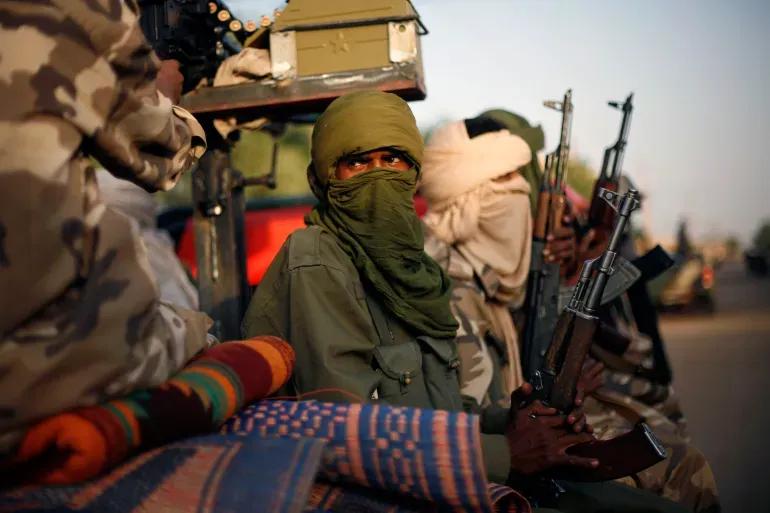
- JNIM and the Azawad Liberation Front are likely to sustain pressure on FAMa and Russia's Africa Corps in northern and central Mali over the next 1-3 months. The reported 10 September attack on the Dioura military camp killed more than 100 Malian soldiers and five Africa Corps personnel, while a separate JNIM-claimed ambush at Kaka killed 11 people, including at least four Africa Corps personnel. The seizure of Kidal and parts of northern Mali indicates that Bamako and its Russian partner have not restored uncontested control. The casualty figures and territorial reporting come from mixed-quality sources. (Confidence: medium · ASSESSED)
- I&W: Confirm: JNIM or the Azawad Liberation Front seizes another FAMa or Africa Corps position, or inflicts another mass-casualty attack in Kidal, Timbuktu or Mopti regions. (0-14 days)
- I&W: Break: FAMa and Africa Corps publicly re-establish control over Kidal and demonstrate sustained freedom of movement along the northern routes. (1-3 months)
- JNIM and other armed groups are likely to retain the local initiative in Burkina Faso over the next 1-3 months. The government is reported to control around 40% of the country, while JNIM attacked Manni three times in less than a week, seized army posts at Kassoum and in Dedougou Province, and left government forces unable to retake Mantu as of 10 September. The latest post-seizure reporting comes largely from one low-reliability monitoring source, so the geographic extent and durability of these gains remain uncertain. (Confidence: medium · ASSESSED)
- I&W: Confirm: JNIM releases verifiable footage or local reporting confirms the seizure of another Burkinabe army or army-VDP position in the Eastern, Sahel or Boucle du Mouhoun regions. (0-14 days)
- I&W: Break: Burkinabe forces retake Kassoum, Dedougou or Mantu and hold the positions without a reported immediate counter-attack. (1-3 months)
- JNIM and Islamic State Sahel Province are likely to continue using attacks on fuel convoys and transport corridors to impose economic pressure on Mali over the next 1-3 months. JNIM pressure on central Mali and routes linking Mali with Senegal and Côte d'Ivoire has coincided with attacks on convoys, while the Malian army escorted more than 900 fuel tankers to Bamako and some escorted convoys still came under attack. (Confidence: medium · ASSESSED)
- I&W: Confirm: Another large fuel convoy requires a Malian army escort, or JNIM or Islamic State Sahel Province claims an attack on a route serving Bamako. (0-14 days)
- I&W: Break: Two consecutive weeks of reported fuel deliveries to Bamako without an attack on the convoy or its route. (1-3 months)
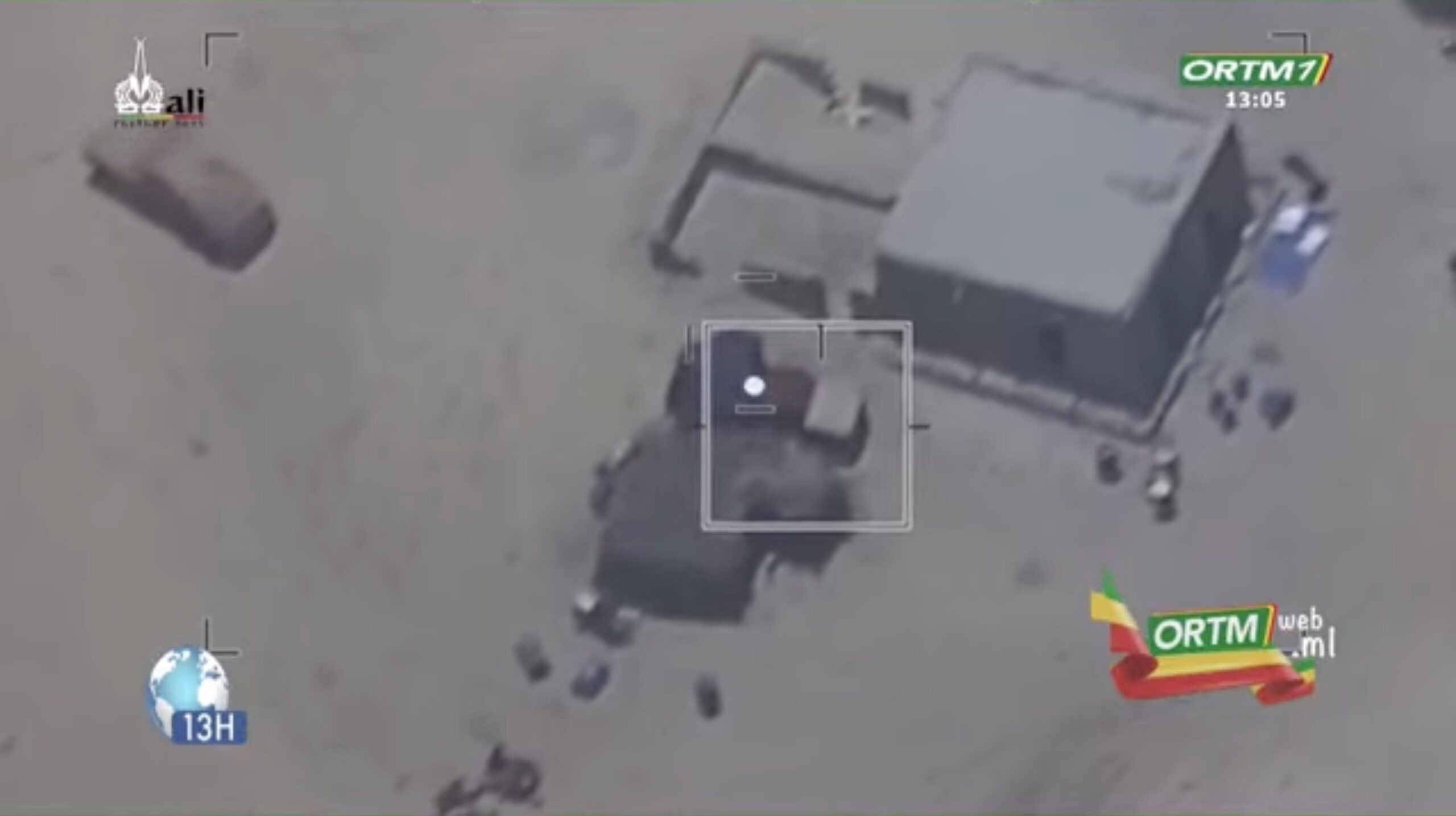
- Civilian-harm allegations linked to Malian military drone strikes are likely to persist over the next 1-3 months, while attribution of individual strikes is likely to remain contested. Bellingcat geolocated the Zouera strike, MSF reported four civilian deaths and five injuries, and Amnesty International reported at least 13 civilians killed in the Amasrakad strikes. FAMa and ORTM1 presented the Zouera incident as an attack on a terrorist supply vehicle, creating a direct dispute over the target and outcome. (Confidence: medium · ASSESSED)
- I&W: Confirm: Bellingcat, MSF, Amnesty International or another independent source publishes new geolocated evidence linking a Malian drone strike to civilian deaths. (0-14 days)
- I&W: Break: Independent geolocation and medical reporting establish that the named strike sites contained military targets and no civilian casualties. (1-3 months)
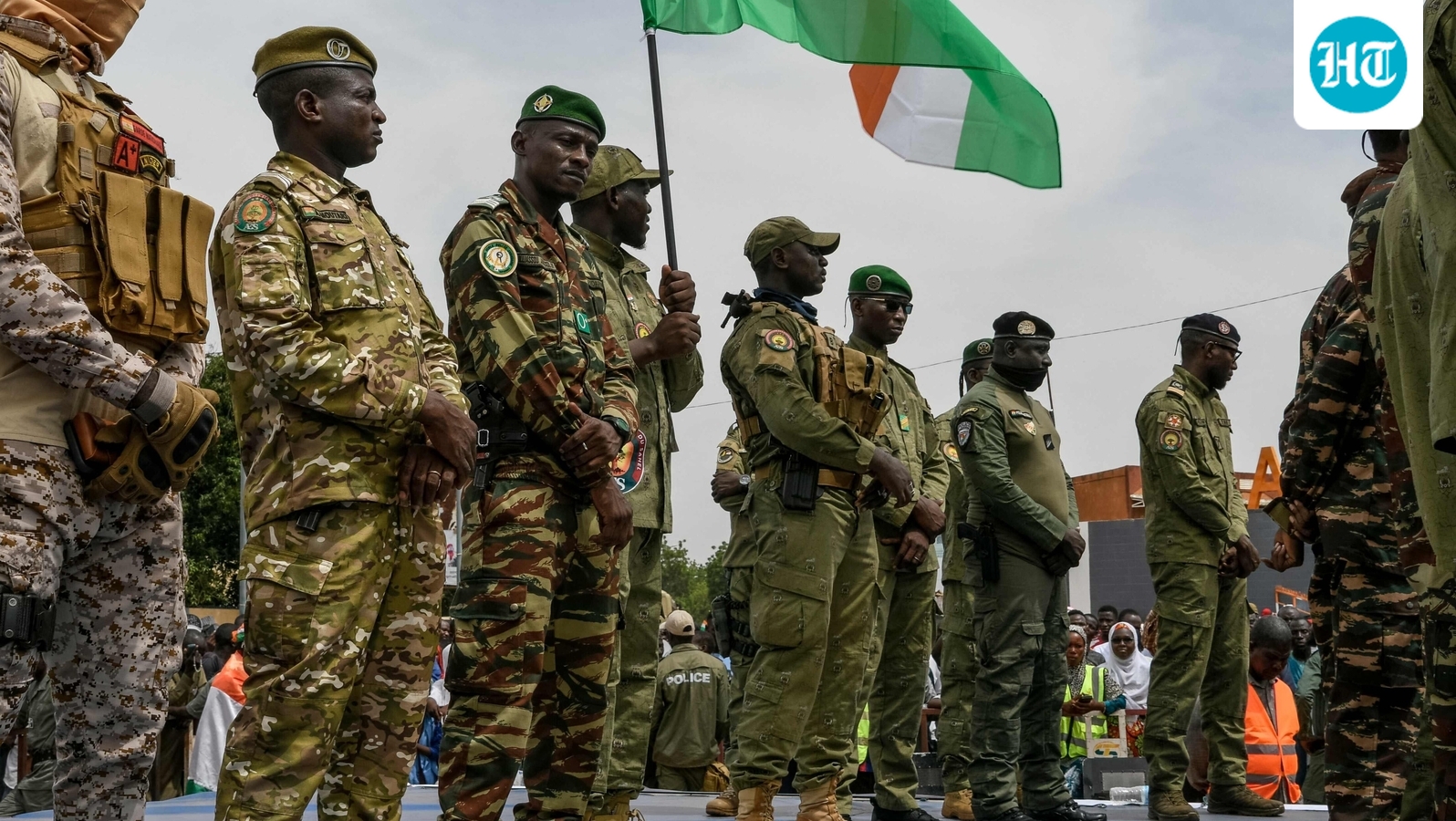
- General Abdourahamane Tiani is likely to retain control of Niamey over the next 1-3 months, but Nigerien military cohesion is likely to remain vulnerable. Tiani appointed a new chief of staff and reshuffled the senior command after the 29 August mutiny reached Air Base 101. The available reporting is thin and disagrees over whether the mutiny failed independently or was halted by Russia's Africa Corps, so this assessment remains low confidence. (Confidence: low · ASSESSED)
- I&W: Confirm: Tiani announces another senior military dismissal or reshuffle, or unrest reaches Air Base 101 or another military installation in Niamey. (0-14 days)
- I&W: Break: Independent reporting establishes uninterrupted command continuity in Niamey, no further military unrest and no additional senior command changes. (1-3 months)
- Conflict-related displacement and abuses affecting Malian civilians are likely to continue over the next 1-3 months. Amnesty International documented village expulsions, forced recruitment attempts and killings attributed to jihadist groups, while UNHCR registered 290,000 Malian refugees in Hodh Ech-Chargui, Mauritania, in July 2026. The refugee figure is single-source and provides limited evidence on the pace of new arrivals. (Confidence: medium · ASSESSED)
- I&W: Confirm: UNHCR or local humanitarian reporting records new Malian arrivals in Hodh Ech-Chargui or new village expulsions in Ségou, Timbuktu or Mopti. (0-14 days)
- I&W: Break: Humanitarian reporting records no new expulsions or material increase in Malian arrivals for a sustained two-month period. (1-3 months)
Outlook & scenarios
Persistent multi-front attrition (60%)
JNIM maintains pressure in central Mali and Burkina Faso, while the Azawad Liberation Front retains positions or operating freedom in northern Mali. Malian authorities continue escorting fuel convoys to Bamako, FAMa and Africa Corps conduct strikes and local operations, and Tiani remains in control of Niamey. This is the most likely path because current reporting shows sustained attacks, contested territory and no evidence of a decisive reversal.
Further jihadist gains and supply disruption (30%)
JNIM seizes additional army positions in Burkina Faso or Mali and intensifies attacks on fuel routes serving Bamako. The result is a wider gap between government claims of control and effective access outside major centres. Civilian displacement and allegations of indiscriminate Malian drone strikes increase as security forces respond.
Limited containment by state forces (20%)
Malian army escorts keep fuel moving into Bamako, while FAMa and Africa Corps prevent further major losses around Dioura, Kidal and the central routes. Burkinabe forces retake at least one recently lost position. JNIM retains the ability to conduct attacks, but territorial expansion slows.
Niger command crisis (10%)
A renewed mutiny or senior command rupture in Niamey challenges Tiani's control and prompts a visible Africa Corps role in securing state institutions. This is very unlikely, but it would have a high impact on Nigerien military cohesion and the stability of the Alliance of Sahel States.
Recommendations
- Treat the ACLED total as a trend indicator rather than three independent confirmations. Maintain a rolling 14-day event log that separates JNIM, Islamic State Sahel Province, the Azawad Liberation Front and unidentified armed-group reporting.
- Prioritise collection on Dioura, Kaka, Kidal, Kassoum, Dedougou and Mantu. Cross-check claims of territorial control against geolocated imagery, local reporting and evidence of government access or resupply.
- Track every fuel convoy movement into Bamako, including escort size, route, arrival and any reported attack. Flag a second large escorted convoy or a successful attack on an escorted convoy as an early warning of worsening supply pressure.
- Maintain separate files for FAMa's stated targets and independent civilian-harm reporting on Zouera and Amasrakad. Do not merge official military claims with casualty reporting until geolocation, medical evidence and source provenance are reconciled.
- Monitor Tiani's senior command appointments, activity at Air Base 101 and any reported involvement by Russia's Africa Corps. Treat a further reshuffle or unrest at another Niamey installation as an immediate warning indicator.
- Track new Malian refugee registrations and reports of expulsions, forced recruitment and killings in Ségou, Timbuktu and Mopti. Distinguish cumulative refugee stocks from new arrivals when assessing deterioration.
Confidence & uncertainty
Overall confidence is medium because the main trend is supported by ACLED reporting, Bellingcat geolocation, Amnesty International, MSF and think-tank assessments. Confidence is reduced by the apparent reliance on a common ACLED dataset, the concentration of recent Burkina Faso incident reporting in a low-reliability source, and unresolved disputes over the Zouera strike and the role of Russia's Africa Corps in Niger's August mutiny. The refugee total and several casualty figures also lack strong time-series or independent corroboration.
Intelligence gaps
- [EEI 1.1 · PARTIAL] Number, location, and scale of attacks (IEDs, ambushes, complex attacks) per week against towns, military bases, police posts, or convoys, with casualty and equipment-loss counts. Recommended collection: ground/HUMINT
- [EEI 1.2 · UNCOVERED] Observed movement and size of armed columns (vehicle counts, heavy weapons present) along approach routes to population centers or borders documented by imagery, local reporting, or border guards. Recommended collection: imagery/SATCOM
- [EEI 1.4 · UNCOVERED] Seizure or acquisition of heavy weapons or air-defense systems (mortars >81mm, artillery, armored vehicles, MANPADS) attributed to specific groups as evidenced by photos, captured weapons inventories, or weapons interdictions. Recommended collection: forensics/field reporting
- [EEI 2.1 · PARTIAL] Internal security force movements: redeployment of army units, garrison withdrawals, or mass troop movements toward/away from capitals and regional command posts. Recommended collection: imagery/SATCOM
- [EEI 2.2 · PARTIAL] Detentions, public dismissals, resignations, or public statements by senior military, police, or government officials indicating factional splits (named individuals, ranks, units). Recommended collection: diplomatic/OSINT
- [EEI 2.4 · PARTIAL] Targeted external support actions: sanctions, suspension of aid, delivery of weapons or logistics from foreign state or non-state actors (documented shipments, bank transfers, public announcements). Recommended collection: financial/diplomatic
- [EEI 3.1 · PARTIAL] Interdictions or seizures at borders/markets of weapons, ammunition, fuel, or contraband (type/quantity, seizure location, alleged origin/destination). Recommended collection: border/customs
- [EEI 3.2 · PARTIAL] Recorded movements of known smuggling routes and convoy volumes: counts of commercial/privately registered vehicles and informal river crossings on specific cross-border corridors. Recommended collection: ground/HUMINT
- [EEI 3.3 · UNCOVERED] Monitored financial flows linked to illicit trade: large cash movements, changes in declared gold exports at named mines/ports, or arrests of money couriers with amounts and origins. Recommended collection: financial/forensics
- [EEI 3.4 · UNCOVERED] Observed changes at border security posts: closures, reductions in personnel, destroyed checkpoints, or documented agreements allowing free movement at named crossings. Recommended collection: imagery/OSINT
Cited sources
[1] The Sudan Times · Al-Qaeda-linked attacks surge across Mali, Burkina Faso and Niger - The Sudan Times (D) · Wed Sep 16 2026 13:30:00 GMT+0000 (Coordinated Universal Time) · sha256:01161a3c4af4 [2] CrisisBrief · Sahel Security Crisis: Jihadist Pressure and Junta Cohesion (D) · Fri Sep 18 2026 04:57:11 GMT+0000 (Coordinated Universal Time) · sha256:b7fe6d2f59a7 [3] 3ayni.com · 3ayni — L'œil sur l'actualité mauritanienne (D) · sha256:12b00133fec1 [4] Bellingcat · “A Recurring Pattern”: Civilians Paying the Price in Mali’s Drone Campaign - bellingcat (B) · Wed Sep 16 2026 16:04:19 GMT+0000 (Coordinated Universal Time) · sha256:240eaaf5fb84 [5] Africalix (@Africa_lix) · Africalix (@Africa_lix) on X (E) · Sun Sep 13 2026 14:01:12 GMT+0000 (Coordinated Universal Time) · sha256:f149c9c08d6a [6] Hindustan Times (opinion by MP-IDSA fellow) · Where is India in West Africa’s security bet? | Hindustan Times (C) · Sat Sep 19 2026 01:02:33 GMT+0000 (Coordinated Universal Time) · sha256:8f2fc4c2f018 [7] GeoBit · Burkina Faso Security Brief — September 14, 2026 (E) · Mon Sep 14 2026 05:00:45 GMT+0000 (Coordinated Universal Time) · sha256:172f65d27f1f [8] Modern Tokyo Times · Sahel Region and Crisis in Mali: Military Rule, Islamist Insurgency, and Fragmentation – Modern Tokyo Times (D) · sha256:5b7a9f6f6152
Source content hashes were computed at collection time; the cited text is preserved unmodified for the life of this product.
TLP:CLEAR