TLP:CLEAR · Disclosure is not limited.
Sahel Security Situation Report: Burkina Faso Penal Code and Unverified Security Claims
Time window: Last 7 days · Audience: General analyst · Type: Situation report · DTG: 2026-10-23 04:09Z · Overall confidence: MEDIUM
BLUF
Burkina Faso's parliament very likely voted unanimously on 20 October to restore the death penalty for offences including terrorism, espionage and treason. The vote raises concern about coercive enforcement, but the available reporting does not establish implementation. Reports of JNIM-ISSP clashes and Nigerien FDS operations remain thinly corroborated, while Mali's latest thermal detections do not establish combat activity.
Executive summary
Burkina Faso's 20 October parliamentary vote is the week's clearest political development. Human rights organisations have criticised the measure, and reporting describes past abuses by state security forces and allied militias, but no implementation case is reported. A think-tank account says JNIM and ISSP fighters likely clashed around Tessit in Mali and Oudalan province in Burkina Faso; the reported toll of about 60 fighters remains unverified. Nigerien FDS operations in early October were reported by one local outlet. NASA FIRMS recorded 187 thermal detections in Mali over the two days to 22 October, but those detections identify heat, not its cause. The Algeria-Niger military cooperation agreement remains reported, with its provisions undisclosed. Historical humanitarian estimates point to severe pressure: more than two million people displaced in Burkina Faso and the Burkina Faso-Mali-Niger tri-border zone identified as a food insecurity hotspot in mid-2025.
Change from previous assessment
Since the 22 October prior brief, this assessment adds Burkina Faso's 20 October parliamentary vote to restore the death penalty and includes reporting on early-October Nigerien FDS operations, JNIM-ISSP clashes and the reported Malian re-entry into Kidal. The latest NASA FIRMS count is 187 detections, compared with 146 in the prior brief's snapshot; the two-day windows overlap, and the higher count does not establish increased hostile activity. The Algeria-Niger agreement remains likely, but no operational detail has emerged. The earlier report of more than 400 ISSP fighters killed in Oudalan remains unverified; the separate estimate of about 60 fighters killed also lacks independent confirmation. Initial confidence in those casualty figures is unchanged.
Key judgments
- Burkina Faso's parliament very likely voted unanimously on 20 October to adopt a new penal code restoring the death penalty for offences including terrorism, espionage and treason. Reporting says all 71 legislators voted in favour. A major-media report and local reporting agree on the vote; the available claims do not establish whether the code has been promulgated or how it will be implemented. (Confidence: high · REPORTED)
- I&W: Publication of the penal code in Burkina Faso's official gazette, specifying terrorism, espionage or treason as capital offences, would confirm its formal legal effect. (0-30 days)
- I&W: An official correction stating that the vote did not pass or was withdrawn would break the reported account of the vote. (0-30 days)
- Burkina Faso's capital-eligible provisions are likely to heighten the risk of coercive or politically selective prosecutions. This is an analytic inference: Captain Ibrahim Traoré has threatened to execute captured foreign spies and local accomplices, while rights organisations have reported abuses by state security forces and allied militias and criticised the bill as repressive. No reported case establishes how the new provisions will be applied, so confidence is medium. (Confidence: medium · ASSESSED)
- I&W: A publicly reported prosecution under the terrorism, espionage or treason provisions carrying potential capital punishment would confirm that the law is being applied in security cases. (0-3 months)
- I&W: Published implementation rules setting out judicial safeguards, followed by no capital prosecutions under these provisions, would weaken the assessment of near-term coercive application. (0-3 months)
- JNIM and ISSP fighters likely clashed around Tessit in eastern Mali and Oudalan province in northern Burkina Faso. A think-tank account gives a reported toll of about 60 fighters killed, including about 50 JNIM members, but says the figures are unverified; reported continuation of the fighting on 11 and 12 October is also unverified. The assessment rests on thin, single-source reporting, so confidence is low. (Confidence: low · REPORTED)
- I&W: Independent reporting that confirms clashes at Tessit or in Oudalan and corroborates the reported dates would strengthen this judgment. (0-14 days)
- I&W: A credible local account establishing that the reported clashes or locations were misidentified would break it. (0-14 days)
- NASA FIRMS almost certainly recorded 187 thermal detections in Mali over the two days to 22 October, including 23 classified as high-confidence detections, within the reported bounding box from 13.87,-4.79 to 18.87,0.21. Those readings do not establish hostile activity: VIIRS records heat, not cause. The count is direct official data, while the limitation on interpreting its cause is well supported. (Confidence: high · ASSESSED)
- I&W: Geolocated imagery or independently verified reporting linking a specific VIIRS detection in the reported Mali bounding box to a strike would confirm hostile activity at that location. (0-14 days)
- I&W: A verified attribution of detections to non-hostile fires would break the hostile interpretation for those specific locations. (0-14 days)
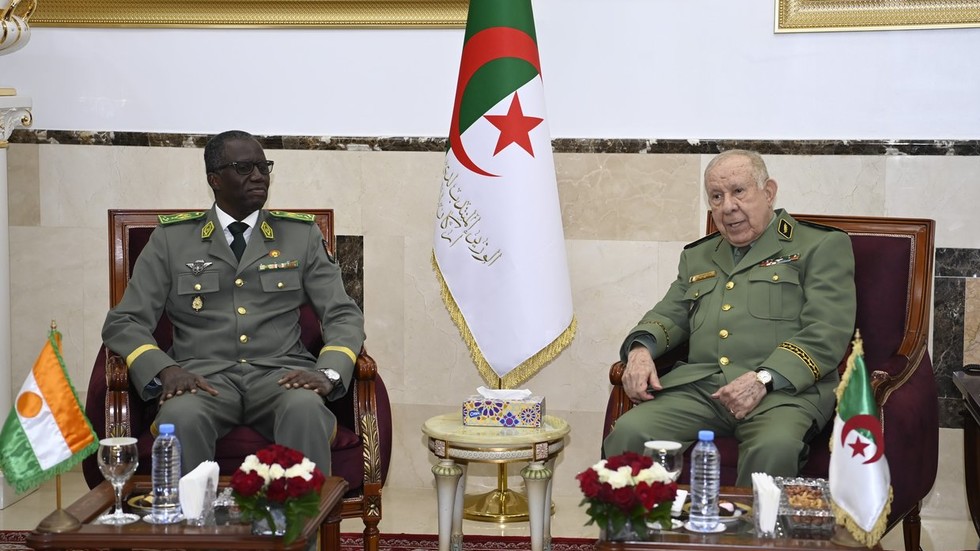
- Algeria and Niger likely signed a military cooperation agreement following talks in Algiers between Algeria's chief of staff, Lieutenant General Said Chengriha, and Niger's defence minister, Lieutenant General Salifou Modi. The reported agreement is supported by major-media reporting, but the Algerian Ministry of National Defense has not disclosed its provisions or an implementation timetable. Confidence is medium because the agreement is reported but its operational content remains unknown. (Confidence: medium · REPORTED)
- I&W: Publication by either defence ministry of the signed text or an annex describing joint training, patrols or other activities would confirm operational detail. (0-3 months)
- I&W: An official statement from Algeria or Niger denying that the agreement was signed would break the reported account. (0-3 months)
- Nigerien FDS forces likely conducted several operations reported for 6-8 October, including near Gadamata, Amzeger, Tanout and Kawara. FDS reporting says two mercenaries were killed near Kawara and an FM 80 machine gun, an AK-47 and three Honda motorcycles were recovered; near Amzeger, forces reportedly seized 12 automatic pistols and 925 cartridges of 7.62x39mm ammunition. These details come from one local outlet and lack independent confirmation, so confidence is low and the reports do not establish a wider change in Niger's threat level. (Confidence: low · REPORTED)
- I&W: Independent reporting or geolocated evidence matching the reported weapons seizures at Amzeger or Kawara would strengthen the account of these operations. (0-14 days)
- I&W: A credible local or official account establishing that the reported locations or seizure inventories were incorrect would weaken it. (0-14 days)
- Malian forces backed by Russia's Africa Corps likely re-entered Kidal on 6 October after the Azawad Liberation Front withdrew. The reporting does not establish how durable government-aligned control is. This judgment relies on a single think-tank account and the available reporting itself leaves control unresolved, so confidence is low. (Confidence: low · REPORTED)
- I&W: Independent, geolocated imagery showing Malian forces or government administration operating in Kidal would confirm continued government-aligned presence. (0-30 days)
- I&W: Verified reporting or geolocated imagery showing the Azawad Liberation Front re-entering Kidal would break the assessment of continued government-aligned presence. (0-30 days)
Outlook & scenarios
Burkina Faso begins formal implementation (55%)
The 20 October vote is followed by publication of the penal code or implementing guidance, moving the issue from parliamentary action to practical enforcement. A first prosecution under the terrorism, espionage or treason provisions would increase concern about coercive application. The timing and content of the Algeria-Niger agreement remain undisclosed, and the JNIM-ISSP casualty estimates remain unverified.
Implementation remains delayed or limited (35%)
The vote stands, but no early prosecution or implementing detail establishes how the capital provisions will work. Human rights criticism continues while reporting on clashes around Tessit and Oudalan remains inconclusive. The Nigerien FDS accounts remain uncorroborated beyond local reporting.
Early capital case creates a high-impact political and rights dispute (10%)
An unlikely, high-impact path is an early capital case under the security-related provisions, particularly against a person accused of espionage or terrorism. That would test the gap between the reported parliamentary vote and its application, and sharpen the concerns already raised by human rights organisations.
Recommendations
- Track publication of Burkina Faso's penal code and any implementing rules. Record whether terrorism, espionage and treason carry capital punishment in the final text, and distinguish formal enactment from a parliamentary vote.
- Monitor publicly reported cases under the new provisions, including the offence charged, court process and any stated safeguards. Do not treat political statements as evidence that an execution has occurred.
- Seek independent corroboration of the reported JNIM-ISSP clashes around Tessit and Oudalan before using the casualty estimate in assessments of force balance.
- Compare Mali VIIRS detections with geolocated imagery and independently reported incidents before classifying any hotspot as a strike. Report the number of detections separately from the number classified as high confidence.
- Look for a published Algeria-Niger agreement or verifiable joint activity before assessing the protocol's operational significance.
- Check the Nigerien FDS accounts against independent local reporting or geolocated evidence before treating the reported seizures and deaths as indicators of a broader change in security conditions.
Confidence & uncertainty
Overall confidence is medium. The Burkina Faso parliamentary vote is reported by major-media and local sources, and the Mali thermal count comes from direct NASA FIRMS data. Confidence is lower for the JNIM-ISSP casualty figures, Nigerien FDS operations and government-aligned control of Kidal because the available accounts are thin, single-source or explicitly unresolved. The Algeria-Niger agreement is reported, but its provisions and implementation remain undisclosed.
Alternative analysis (red cell)
The available evidence supports reports of a proposed legal change and official rhetoric, but it does not yet show that capital provisions will be used selectively; claims, and 9c0539ec-c9b0-4eb6-8c71-6eeff96ef031 establish context, not application. Likewise, claim 8bd537e7-52c8-4105-8801-9312d7c4d567 and the unverified continuation in aa752c11-1913-4242-a46a-677a28d73c1c may represent an uncorroborated account rather than a likely clash. Both judgments should therefore be treated as provisional until implementation or independent battlefield evidence is available.
Intelligence gaps
- [EEI 1.1 · PARTIAL] Number, location, and scale of attacks (IEDs, ambushes, complex attacks) per week against towns, military bases, police posts, or convoys, with casualty and equipment-loss counts. Recommended collection: ground/HUMINT
- [EEI 1.2 · UNCOVERED] Observed movement and size of armed columns (vehicle counts, heavy weapons present) along approach routes to population centers or borders documented by imagery, local reporting, or border guards. Recommended collection: imagery/SATCOM
- [EEI 1.3 · PARTIAL] Reports of occupation, administration, or imposition of checkpoints/taxes by armed groups in named towns, villages, markets, or on specified road segments. Recommended collection: OSINT (local media/social)
- [EEI 1.4 · UNCOVERED] Seizure or acquisition of heavy weapons or air-defense systems (mortars >81mm, artillery, armored vehicles, MANPADS) attributed to specific groups as evidenced by photos, captured weapons inventories, or weapons interdictions. Recommended collection: forensics/field reporting
- [EEI 2.1 · PARTIAL] Internal security force movements: redeployment of army units, garrison withdrawals, or mass troop movements toward/away from capitals and regional command posts. Recommended collection: imagery/SATCOM
- [EEI 2.2 · UNCOVERED] Detentions, public dismissals, resignations, or public statements by senior military, police, or government officials indicating factional splits (named individuals, ranks, units). Recommended collection: diplomatic/OSINT
- [EEI 3.2 · UNCOVERED] Recorded movements of known smuggling routes and convoy volumes: counts of commercial/privately registered vehicles and informal river crossings on specific cross-border corridors. Recommended collection: ground/HUMINT
- [EEI 3.3 · UNCOVERED] Monitored financial flows linked to illicit trade: large cash movements, changes in declared gold exports at named mines/ports, or arrests of money couriers with amounts and origins. Recommended collection: financial/forensics
- [EEI 3.4 · UNCOVERED] Observed changes at border security posts: closures, reductions in personnel, destroyed checkpoints, or documented agreements allowing free movement at named crossings. Recommended collection: imagery/OSINT
Red cell review: PARTIAL DISSENT
TLP:CLEAR