TLP:CLEAR · Disclosure is not limited.
Sudan Conflict Situation Report: Drone Harm, Kordofan Displacement and Regional Tensions
Time window: Last 7 days · Audience: General analyst · Type: Situation report · DTG: 2026-11-24 15:26Z · Overall confidence: HIGH
BLUF
Very likely, armed drone strikes will remain a leading source of civilian harm in Sudan, while the precise toll and responsibility for the 22 November attacks in Khartoum remain unresolved. Humanitarian pressure is acute, and Sudan’s allegations that drones were launched from Ethiopia have not been independently verified.
Executive summary
Reporting confirms damage to a UN-occupied building and civilian deaths from drone attacks in Khartoum and nearby areas on 22 November, but casualty totals differ and some reports also describe drones intercepted by Sudanese air defences. Sudan has again accused Ethiopia of hosting drone launches; Ethiopia has denied allowing attacks from its territory, and the origin of the drones remains unverified. New reporting records defections by Ammar Mohammed Zain Rabih and Tayyib Cabara, more than 5,200 people displaced from Abu Zabad in West Kordofan, and disruption to dialysis services at Umm Badda hospital. Egypt and Sudan issued supportive statements on Sudanese sovereignty during Prime Minister Kamil Idris’s visit to Cairo.
Change from previous assessment
Since the 23 November brief, reporting has added defections by Ammar Mohammed Zain Rabih and Tayyib Cabara, IOM reporting that more than 5,200 people fled Abu Zabad, and WHO reporting that attacks on electrical installations and fuel depots disrupted dialysis at Umm Badda hospital. Egypt and Sudan issued a joint statement during Prime Minister Kamil Idris’s 24 November visit to Cairo. The assessment that drone strikes remain a leading source of civilian harm is unchanged; reporting has strengthened confirmation of damage to the UN premises but has not resolved casualty totals or responsibility. The assessment of low near-term risk of direct Sudan-Ethiopia military confrontation remains low confidence because the launch allegations are unverified and Ethiopia denies them. No settled forecast outcomes were provided for calibration.
Key judgments
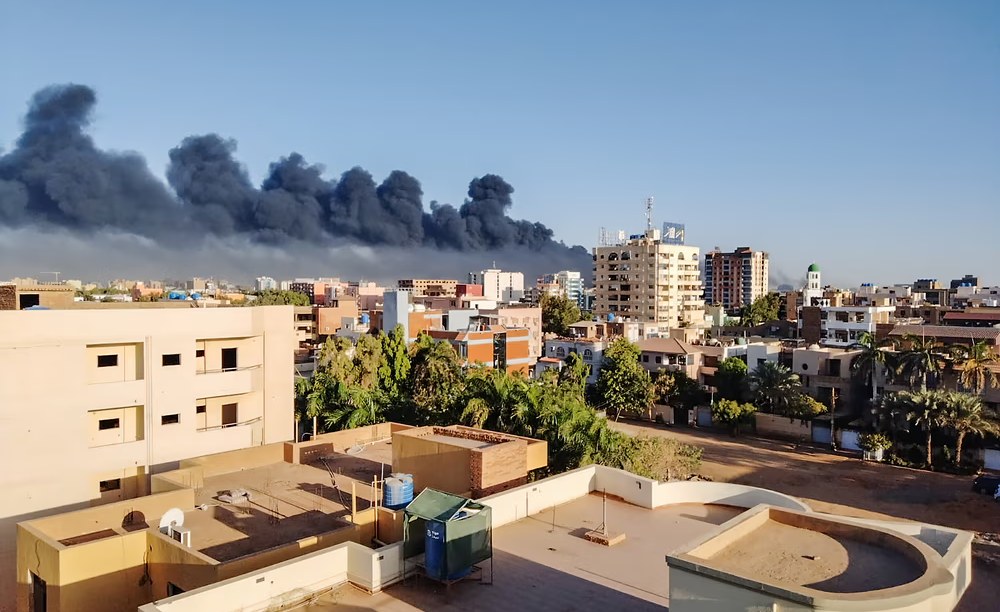
- Very likely, drone strikes in Khartoum, Omdurman and Jebel Aulia on 22 November killed at least four civilians and damaged a UN-occupied building. Reports differ on whether the Omdurman family deaths and the child killed south of Khartoum were included in the same casualty total, and witnesses also reported interceptions by Sudanese air defences. RSF responsibility has been reported but is not established. (Confidence: medium · REPORTED)
- I&W: A UN or OCHA incident update confirms damage to the Khartoum premises and identifies staff or civilian casualties, strengthening the reported account. (0-14 days)
- I&W: A verified incident review establishes that the reported deaths were unrelated to the 22 November strikes, or that the UN premises was not damaged, breaking key parts of the current account. (0-14 days)
- Very likely, armed drone strikes will remain a leading cause of civilian deaths in Sudan over the next 1-3 months. The UN Human Rights Office recorded about 1,630 drone-related civilian deaths among more than 2,230 civilians killed from January through October 2026, and documented strikes on markets, vehicles, fuel sites and health facilities. This trend does not establish responsibility for the Khartoum attacks. (Confidence: medium · ASSESSED)
- I&W: A new OHCHR civilian-casualty breakdown continues to attribute more than half of verified civilian deaths to drone strikes, confirming the assessment. (1-3 months)
- I&W: Verified OHCHR reporting shows another cause overtaking drone strikes as the leading source of civilian deaths, breaking the assessment. (1-3 months)
- Unlikely, Sudan and Ethiopia will exchange direct military strikes over the next 1-3 months. Sudan has filed complaints alleging launches from Ethiopian territory, including Bahir Dar airport, while Ethiopian authorities have denied allowing the RSF to launch attacks from Ethiopia. The allegations remain unverified, and the closure of consulates and expulsion of staff indicate strained relations rather than proof of imminent military action. (Confidence: low · ASSESSED)
- I&W: Sudan or Ethiopia announces a military deployment or reports a verified cross-border strike linked to the drone allegations, breaking the assessment. (0-3 months)
- I&W: The two governments restore consular operations or publicly establish a joint channel to examine the allegations, confirming reduced immediate risk. (1-3 months)
- Very likely, humanitarian needs in Sudan will remain acute over the next 1-3 months. OCHA reports 30.4 million people in need of assistance, IOM reports 8.6 million internally displaced and 4.6 million abroad, and one in three hospitals is reported non-operational. WHO reporting that attacks on electrical installations and fuel depots disrupted dialysis at Umm Badda hospital shows how infrastructure damage is affecting essential care. (Confidence: high · ASSESSED)
- I&W: OCHA or IOM reports that assistance needs or displacement remain at or above current levels, while WHO reports continued dialysis disruption at Umm Badda, confirming the assessment. (1-3 months)
- I&W: OCHA reports a sustained fall in the number of people needing assistance alongside restored hospital operations and reliable dialysis at Umm Badda, breaking the assessment. (1-3 months)
- Likely, the reported defections of Ammar Mohammed Zain Rabih and Tayyib Cabara will prompt further SAF outreach to RSF members, but the available reporting does not establish how many fighters followed them or whether their departures altered battlefield capability. The claims are supported by media reporting, but the scale and operational effect remain unclear. (Confidence: medium · ASSESSED)
- I&W: The SAF identifies assignments or publishes verifiable details of additional RSF personnel joining Rabih or Cabara, confirming follow-on recruitment. (0-30 days)
- I&W: The SAF or the named officers publicly retract the defections, or no additional personnel are identified as joining them, weakening the assessment of follow-on recruitment. (0-30 days)
- There is a low-confidence allegation that thousands of civilians were buried east of El Fasher airport in North Darfur. The reporting traces the claim to a defected RSF commander and does not independently verify the site, number of bodies or circumstances. (Confidence: low · REPORTED)
- I&W: Independent investigators obtain access to the area east of El Fasher airport and publish verifiable imagery or forensic findings, confirming the allegation. (1-3 months)
- I&W: Independent access and imagery show no burial site consistent with the allegation, breaking the current account. (1-3 months)
Outlook & scenarios
Continued drone strikes and worsening local humanitarian pressure (65%)
Drone attacks continue to threaten civilians and infrastructure, while disruption to power, fuel and health services compounds displacement in Khartoum State and Kordofan. The 22 November casualty and attribution questions remain unresolved.
Localized military shifts and further RSF defections (25%)
The SAF uses the public departures of Ammar Mohammed Zain Rabih and Tayyib Cabara to encourage further defections. Any battlefield effect remains local unless the SAF confirms additional personnel or units joining.
Sudan-Ethiopia diplomatic crisis escalates (10%)
Sudanese allegations about launches from Bahir Dar drive new diplomatic measures or a verified military incident. Ethiopia’s denial and the absence of independent confirmation leave the allegation a weak basis for attributing the Khartoum strikes.
El Fasher burial allegation is independently verified (5%)
Independent access confirms a mass burial site east of El Fasher airport. Verification of a large civilian death toll would sharply increase pressure for an international response and raise protection concerns in North Darfur.
Recommendations
- Maintain a single incident log for the 22 November attacks that separates confirmed impacts from intercepted drones. Reconcile the Omdurman family deaths, the child’s death in Jebel Aulia, the reported total of four deaths and the injury count before using a consolidated figure.
- Keep attribution of the Khartoum strikes provisional. Track independent evidence on launch locations and platform recovery separately from Sudanese statements naming the RSF or Ethiopia.
- Prioritise monitoring of Umm Badda hospital’s dialysis capacity, electricity and fuel supply, and request specific updates from WHO or health partners on service interruptions.
- Track IOM displacement updates from Abu Zabad and nearby West Kordofan communities, including destinations and access to shelter and assistance.
- Seek corroboration of the El Fasher burial allegation through independent imagery, site access or forensic reporting before treating the claimed scale as established.
- Assess the practical effect of the Rabih and Cabara defections by tracking named personnel, SAF assignments and any independently reported follow-on departures from the RSF.
Confidence & uncertainty
Overall confidence is high for the broad picture because UN and humanitarian reporting, including OCHA, OHCHR, IOM and WHO, supports the scale of humanitarian need and the continuing civilian impact of drone use. Multiple media reports and UN statements corroborate damage to a UN-occupied building in Khartoum. Confidence is lower on exact casualty totals, responsibility for the 22 November attacks, the alleged Ethiopian launch origin and the scale of the El Fasher burial claim.
Alternative analysis (red cell)
The burial allegation should be treated primarily as an unverified defector claim rather than as a distinct low-confidence event assessment. Because both supporting claims derive from the same origin cluster (3d0503c9-e4cb-4ea9-a26d-4145703174b0 and 39466ca4-b412-4b6a-9d8e-1e6167e8b2f2; kj_single_origin), the evidence does not materially distinguish genuine reporting from possible information operations or mischaracterisation. Until independent site or witness evidence is obtained, the existence and scale of the burials remain indeterminate.
Intelligence gaps
- [EEI 1.1 · PARTIAL] Observed concentrations and movement of armed units (size estimates, unit identifiers if visible) within X km of named towns/roads/airfields (e.g., El Fasher, Geneina, Nyala, Khartoum neighborhoods) including timestamps and direction of movement. Recommended collection: imagery/satellite
- [EEI 1.2 · PARTIAL] Changes in employment of heavy weapons and systems: documented use or emplacement of artillery, multiple-launch rocket systems, tanks, combat helicopters, and airstrikes at specific coordinates and times. Recommended collection: open-source/media
- [EEI 1.3 · PARTIAL] Reports or intercepts of orders, operational directives or public statements from RSF/SAF commanders indicating planned offensives, ceasefire acceptance/rejection, defensive postures or orders to withdraw from named locations. Recommended collection: signals/communications intercepts
- [EEI 1.4 · PARTIAL] Status of critical infrastructure and lines of communication: control or denial of named bridges, main highways (identify route numbers), airfields, fuel depots and telecommunication hubs and any reported sabotage/blockage incidents. Recommended collection: human intelligence/field reporting
- [EEI 2.1 · PARTIAL] Counts and locations of newly displaced persons arriving at formal sites, informal camps, border crossings or collective centers (daily/weekly arrivals, site coordinates), including demographics (women, children, elderly) where available. Recommended collection: humanitarian/UN OCHA reports
- [EEI 2.2 · PARTIAL] Access impediments to humanitarian assistance: reported attacks on, blockages of, or denial of passage for named humanitarian convoys (dates, GPS locations, responsible actor if known) and closure status of specific routes. Recommended collection: human intelligence/field reporting
- [EEI 3.1 · UNCOVERED] Detection of flights, ships or overland convoys delivering military materiel or foreign personnel to named airfields, ports or border crossings (flight/IMO numbers, manifests if available, timestamps, route origin/destination). Recommended collection: air-traffic / maritime / border customs
- [EEI 3.2 · PARTIAL] Imagery or on-the-ground confirmation of foreign military personnel or private military contractor bases/forward operating elements at specified coordinates or compounds, including vehicle/weapon types observed. Recommended collection: imagery/satellite
- [EEI 3.3 · PARTIAL] Financial and sanctions-relevant indicators: atypical large transfers, use of designated front companies, or shipments routed through third states linked to procurement of weapons or fuel for RSF or SAF (transaction dates, parties, amounts where obtainable). Recommended collection: financial intelligence
Red cell review: PARTIAL DISSENT
TLP:CLEAR