TLP:CLEAR · Disclosure is not limited.
Sudan: UNSC warns of imminent RSF assault on El Obeid as civilian harm rises and humanitarian collapse deepens
Time window: Last 7 days · Audience: General analyst · Type: Situation report · DTG: 2026-06-21 22:12Z · Overall confidence: HIGH
BLUF
A Rapid Support Forces ground assault on El Obeid is very likely imminent, with the UN Security Council on 20 June warning of mass atrocity risk and demanding the RSF halt its assault. RSF patterns of violence in Darfur and recent drone strikes killing civilians point to high danger for the 500,000-plus people in and around the city, while displacement and hunger remain extreme nationwide.
Executive summary
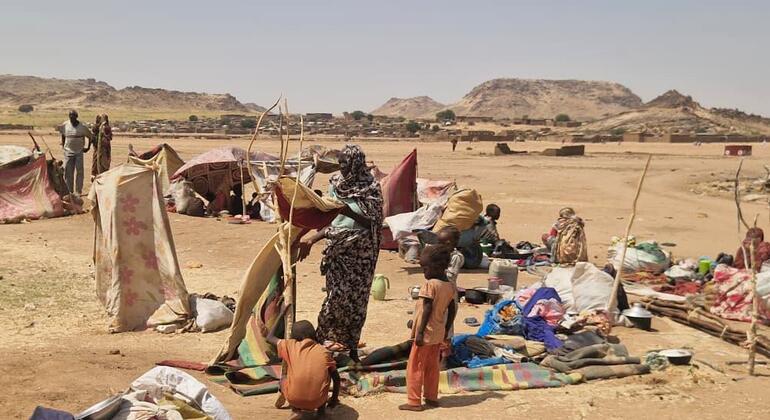
On 20 June, the UN Security Council expressed deep concern over Sudan’s violence, called on all parties to halt fighting, urged Member States to refrain from external interference, and warned of a potential Rapid Support Forces ground offensive on El Obeid in North Kordofan. The Council demanded the RSF immediately halt its assault and urged it not to attack the strategically located city linking central and western Sudan. On 14 June, RSF units looted and burned eight villages in Um Baru, North Darfur, and drone strikes reportedly killed 35 people last week, including 23 in El Obeid. The fighting has also flared beyond Darfur, with the Sudanese Armed Forces reporting it repelled a joint RSF and SPLM‑N attack in Blue Nile on 13 June. Humanitarian conditions remain dire, with more than 11.5 million displaced and roughly half the population facing hunger; UN reporting describes Sudan as among the world’s largest humanitarian crises.
Change from previous assessment
Since the 19 June brief, the UN Security Council on 20 June issued stronger public warnings about an RSF ground offensive on El Obeid, demanded the RSF halt its assault, and called for an immediate cessation of fighting and against external interference. Newly reported incidents include RSF looting and burning of eight villages in Um Baru, North Darfur, on 14 June and a joint RSF, SPLM‑N attack repelled by SAF in Blue Nile on 13 June. Reporting also cites 35 civilians killed by drone strikes last week, including 23 in El Obeid. Our judgment on the likelihood of an imminent RSF assault remains very likely, with confidence reinforced by the UNSC’s 20 June posture; we added a judgment on possible conflict widening along the Blue Nile, South Kordofan axis.
Key judgments
- The RSF is very likely preparing or attempting an imminent ground assault on El Obeid, creating a high risk of mass atrocities if the offensive proceeds. (Confidence: high · ASSESSED)
- I&W: Verified RSF entry into El Obeid urban districts or SAF reporting of ground engagements inside the city limits. (0-14 days)
- I&W: Observed RSF pullback from El Obeid approaches and a notable drop in thermal activity around North Kordofan. (0-14 days)
- RSF drone and remote‑strike tactics are likely killing civilians in North Kordofan, including at least 23 in El Obeid last week. (Confidence: medium · REPORTED)
- I&W: Additional verified casualty reports and geolocated imagery of UAV‑delivered munitions striking El Obeid neighbourhoods. (0-14 days)
- I&W: Sustained absence of UAV strike reports and imagery across El Obeid and North Kordofan for two consecutive weeks. (1-3 months)
- Sudan is almost certainly facing one of the world’s worst humanitarian emergencies, with more than 11.5 million displaced, roughly half the population hungry, and around 25 million people suffering severe food insecurity. (Confidence: high · REPORTED)
- I&W: UN or humanitarian cluster updates maintaining or raising displacement and IPC Phase 4-5 caseloads. (1-3 months)
- I&W: Verified large‑scale aid access into Kordofan and Darfur leading to reported reductions in extreme food insecurity. (1-3 months)
- RSF forces are almost certainly continuing systematic violence against civilians in Darfur, including village burnings and sexual violence, within a broader pattern documented as war crimes and recognised by the United States as genocidal acts. (Confidence: high · REPORTED)
- I&W: New verified reports of RSF torching villages or mass abuses in North or West Darfur, including imagery or survivor testimony. (0-14 days)
- I&W: Third‑party monitored cessation of abuses and safe humanitarian access across RSF‑held areas of Darfur. (1-3 months)
- There is a roughly even chance the conflict broadens along the Blue Nile, South Kordofan axis, given evidence of an RSF and SPLM‑N joint attack on 13 June. (Confidence: medium · ASSESSED)
- I&W: Additional RSF, SPLM‑N joint operations or SAF position losses reported in Blue Nile or South Kordofan. (1-3 months)
- I&W: Public SPLM‑N disengagement from RSF and absence of joint attack claims across two reporting cycles. (1-3 months)
- Intensifying diplomatic pressure, including the 20 June UNSC call to halt fighting and refrain from external interference, is unlikely to alter RSF operational tempo around El Obeid in the near term. (Confidence: medium · ASSESSED)
- I&W: RSF proceeds with ground operations against El Obeid despite UNSC demands. (0-14 days)
- I&W: Observed RSF pullback and initiation of a monitored cessation of hostilities around El Obeid. (0-14 days)
Outlook & scenarios
RSF launches ground assault on El Obeid and pushes into the city (60%)
RSF formations advance from assembly areas west and south of El Obeid, breach SAF lines, and attempt to consolidate control over key junctions and administrative sites. Civilian harm spikes, with reports of looting, abductions and summary killings mirroring patterns seen in Darfur. SAF prioritises air and artillery strikes inside and on the approaches to the city, raising collateral risk.
Protracted siege and remote‑strike campaign without full ground entry (40%)
RSF maintains a ring around El Obeid, relies on drones and indirect fire to attrit SAF and terrorise the population, and probes defences without decisive assault. Urban services and supply chains degrade further, displacement increases along eastern corridors, and famine risk intensifies as aid access remains blocked.
Limited de‑escalation around El Obeid under international pressure (20%)
Following sustained UNSC and high‑level messaging, the RSF pauses ground operations and reduces strike tempo around El Obeid, while negotiations focus on humanitarian corridors. The pause is fragile and localised, with continued clashes in Darfur and intermittent incidents in Kordofan.
Southern front widens with more RSF, SPLM‑N activity in Blue Nile and South Kordofan (30%)
The 13 June joint action proves a harbinger of broader coordination. RSF and SPLM‑N increase pressure on SAF positions along the Blue Nile, South Kordofan axis, stretching SAF logistics and complicating any ceasefire push centred on El Obeid.
Recommendations
- Stand up an El Obeid early‑warning watchboard tracking: RSF ground movements, reported strike locations, civilian casualty reports, and access status for humanitarian corridors. Use consistent geolocation and time‑stamping to support rapid warning.
- Task geospatial monitoring on North Kordofan and North Darfur approaches to El Obeid and Um Baru, using thermal‑anomaly feeds and commercial imagery to detect column movements, burn patterns, and fresh impact sites.
- Prioritise collection on RSF drone employment: launch sites, munitions types, and targeting patterns in El Obeid and North Kordofan, and fuse with casualty and damage reporting to characterise effects on civilians.
- Map plausible displacement routes from El Obeid to safer areas, flag likely chokepoints, and brief humanitarian counterparts on tripwires indicating a surge outflow.
- Track armed‑group dynamics outside Darfur, with focused monitoring for further RSF, SPLM‑N joint operations in Blue Nile and South Kordofan to assess risk of multi‑front escalation.
- Assess external‑influence vectors by monitoring statements and activities related to calls to refrain from interference and reporting on any political or material backing to SAF or RSF that could alter battlefield momentum.
- Institute a casualty‑verification cell to reconcile divergent fatality claims, using multi‑source triangulation and a clear confidence rubric to reduce misinformation risk.
Confidence & uncertainty
Overall confidence is high because multiple independent, generally reliable sources converge on the core picture: UN Security Council statements on 20 June warn of RSF reinforcements and a potential ground offensive on El Obeid, call for an immediate halt to fighting, and urge states to avoid interference; reporting details recent RSF drone‑related civilian deaths and village burnings; and UN and major media sources corroborate displacement and hunger at nationwide scale. Uncertainties remain significant on precise casualty figures and the timing of any RSF ground entry into El Obeid, with some humanitarian tallies varying widely, which we reflect in medium‑confidence or assessed judgments.
Intelligence gaps
- [EEI 1.1 · UNCOVERED] Observed concentrations and movement of armed units (size estimates, unit identifiers if visible) within X km of named towns/roads/airfields (e.g., El Fasher, Geneina, Nyala, Khartoum neighborhoods) including timestamps and direction of movement. Recommended collection: imagery/satellite
- [EEI 1.2 · UNCOVERED] Changes in employment of heavy weapons and systems: documented use or emplacement of artillery, multiple-launch rocket systems, tanks, combat helicopters, and airstrikes at specific coordinates and times. Recommended collection: open-source/media
- [EEI 1.3 · UNCOVERED] Reports or intercepts of orders, operational directives or public statements from RSF/SAF commanders indicating planned offensives, ceasefire acceptance/rejection, defensive postures or orders to withdraw from named locations. Recommended collection: signals/communications intercepts
- [EEI 1.4 · UNCOVERED] Status of critical infrastructure and lines of communication: control or denial of named bridges, main highways (identify route numbers), airfields, fuel depots and telecommunication hubs and any reported sabotage/blockage incidents. Recommended collection: human intelligence/field reporting
- [EEI 2.1 · UNCOVERED] Counts and locations of newly displaced persons arriving at formal sites, informal camps, border crossings or collective centers (daily/weekly arrivals, site coordinates), including demographics (women, children, elderly) where available. Recommended collection: humanitarian/UN OCHA reports
- [EEI 2.2 · UNCOVERED] Access impediments to humanitarian assistance: reported attacks on, blockages of, or denial of passage for named humanitarian convoys (dates, GPS locations, responsible actor if known) and closure status of specific routes. Recommended collection: human intelligence/field reporting
- [EEI 2.3 · UNCOVERED] Functional status of medical infrastructure in named locations: number of operational hospitals/clinics, reported shortages of key medicines/blood, and hospital casualty/occupancy figures for the last 72 hours. Recommended collection: medical/health cluster reporting
- [EEI 3.1 · UNCOVERED] Detection of flights, ships or overland convoys delivering military materiel or foreign personnel to named airfields, ports or border crossings (flight/IMO numbers, manifests if available, timestamps, route origin/destination). Recommended collection: air-traffic / maritime / border customs
- [EEI 3.2 · UNCOVERED] Imagery or on-the-ground confirmation of foreign military personnel or private military contractor bases/forward operating elements at specified coordinates or compounds, including vehicle/weapon types observed. Recommended collection: imagery/satellite
- [EEI 3.3 · UNCOVERED] Financial and sanctions-relevant indicators: atypical large transfers, use of designated front companies, or shipments routed through third states linked to procurement of weapons or fuel for RSF or SAF (transaction dates, parties, amounts where obtainable). Recommended collection: financial intelligence
Cited sources
[1] United Nations · Sudan: Security Council warns of mass atrocity risk in El Obeid (A) · sha256:a40f110d2df6 [2] armidaleexpress.com.au · UN warns of atrocities in Sudan as RSF advances on city (B) · sha256:bf41e5086560 [3] crisisbrief.ai · Sudan conflict SITREP, 10 to 17 June 2026: RSF village burnings in North Darfur, Blue Nile clash, drone‑related deaths, and deepening hunger (C) · sha256:c34a1b76ee0e [4] Wikipedia · Darfur genocide (2023–present) (B) · sha256:da25d31cd28f [5] blayneychronicle.com.au · UN warns of atrocities in Sudan as RSF advances on city (B) · sha256:baf0f52d1bb5 [6] Wikipedia · Sudanese civil war (2023–present) (B) · sha256:832bb0c9e0bd [7] perthnow.com.au · UN warns of atrocities in Sudan as RSF advances on city (B) · sha256:1c7f1b14becf [8] Wikipedia · Rapid Support Forces (B) · sha256:2e3c4ea8ad2a [9] Wikipedia · Sudanese Armed Forces (C) · sha256:94529ba05b15 [10] moderndiplomacy.eu · A Civilian Façade: Riyadh’s Push to Rebrand Burhan Collapses on His Record (B) · sha256:f9f3f7dd8c4b
Source content hashes were computed at collection time; the cited text is preserved unmodified for the life of this product.
TLP:CLEAR